 Talmud Bavli
Ketubot 79b : Youtube
Daf TubeYoutube
1 video class :
Ketubot Page 79b
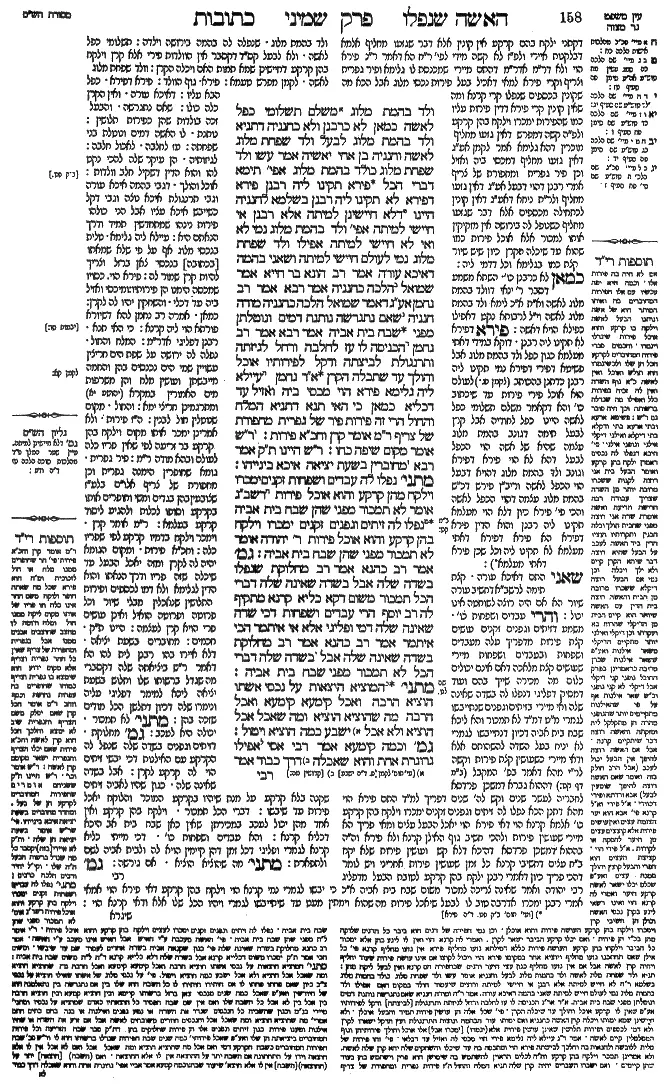
Ketubot 79b - Guemara
ולד בהמת מלוג משלם תשלומי כפל לאשה כמאן לא כרבנן ולא כחנניה דתניא ולד בהמת מלוג לבעל ולד שפחת מלוג לאשה וחנניה בן אחי יאשיה אמר עשו ולד שפחת מלוג כולד בהמת מלוג אפי' תימא דברי הכל פירא תקינו ליה רבנן פירא דפירא לא תקינו ליה רבנן בשלמא לחנניה היינו דלא חיישינן למיתה אלא רבנן אי חיישי למיתה אפי' ולד בהמת מלוג נמי לא ואי לא חיישי למיתה אפילו ולד שפחת מלוג נמי לעולם חיישי למיתה ושאני בהמה דאיכא עורה אמר רב הונא בר חייא אמר שמואל הלכה כחנניה אמר רבא אמר רב נחמן אע"ג דאמר שמואל הלכה כחנניה מודה חנניה שאם נתגרשה נותנת דמים ונוטלתן מפני שבח בית אביה אמר רבא אמר רב נחמן הכניסה לו עז לחלבה ורחל לגיזתה ותרנגולת לביצתה ודקל לפירותיו אוכל והולך עד שתכלה הקרן א"ר נחמן עיילא ליה גלימא פירא הוי מכסי ביה ואזיל עד דכליא כמאן כי האי תנא דתניא המלח והחול הרי זה פירות פיר של גפרית מחפורת של צריף ר"מ אומר קרן וחכ"א פירות:
ר"ש אומר מקום שיפה כחו:
ר"ש היינו ת"ק אמר רבא מחוברין בשעת יציאה איכא בינייהו:
מתני׳ נפלו לה עבדים ושפחות זקנים ימכרו וילקח מהן קרקע והוא אוכל פירות רשב"ג אומר לא תמכור מפני שהן שבח בית אביה נפלו לה זיתים וגפנים זקנים ימכרו וילקח בהן קרקע והוא אוכל פירות ר' יהודה אומר לא תמכור מפני שהן שבח בית אביה:
גמ׳ אמר רב כהנא אמר רב מחלוקת שנפלו בשדה שלה אבל בשדה שאינה שלה דברי הכל תמכור משום דקא כליא קרנא מתקיף לה רב יוסף הרי עבדים ושפחות דכי שדה שאינה שלה דמי ופליגי אלא אי איתמר הכי איתמר אמר רב כהנא אמר רב מחלוקת בשדה שאינה שלה אבל בשדה שלה דברי הכל לא תמכור מפני שבח בית אביה:
מתני׳ המוציא הוצאות על נכסי אשתו הוציא הרבה ואכל קימעא קימעא ואכל הרבה מה שהוציא הוציא ומה שאכל אכל הוציא ולא אכל ישבע כמה הוציא ויטול:
גמ׳ וכמה קימעא אמר רבי אסי אפילו גרוגרת אחת והוא שאכלה דרך כבוד אמר
Comments from Rashi on Masechet Ketubot Page 79b
ולד בהמת מלוג . שנפלה לה בהמה בירושה וילדה: תשלומי כפל לאשה . ולא לבעל קס"ד דקסבר אין הוולדות פירי אלא קרן וילקח בהן קרקע דחיישינן שמא תמות האם ויכלה הקרן: וולד שפחת מלוג לאשה . לקמן מפרש טעמא: פירא . גוף הוולד: פירא דפירא . כפל הבא עליו: דאיכא עורה . ואין הקרן כלה כולו: שאם נתגרשה . והבעל זכה בולדות שהן כפירות תלושין: נותנת . לו האשה דמים ונוטלת בני שפחתה: עז לחלבה . לאכול חלבה: אוכל והולך . דגבי בהמה איכא עורה וגבי תרנגולת איכא נוצה וגבי דקל כשייבש איכא עציו אבל הני כולהו פירות נינהו שמתחדשין תמיד ודרך הנאתם היא: עיילא ליה גלימא . טלית בנכסי מלוג אף על פי שלא שמאתו [בכתובה] בנכסי צאן ברזל וצריך להיות קרן שמור לה: פירא הוי . כסויו שמכסה הימנו הן פירותיו: ומיכסי ואזיל ביה עד דכלי . והשחקין יהיו לה לקרן: כמאן . אמרה רב נחמן להא דשיורא פורתא הוי ליה קרנא: כי האי תנא . רבנן דפליגי אדר"מ: המלח והחול . נפלה לה ירושה על שפת הים חריצין עשויין שמי הים נכנסים בהן והחמה מייבשתן ועושין מלח והן משרפות מים האמורין במקרא (יהושע יא) ומתרגמינן חריצי ימא: והחול . מקום שנוטלין חול לבנין: ה"ז פירות . ולא אמרינן ימכר אותו מקום וילקח בהן קרקע בר זריעה לפי שאין פריו כלה לעולם ובהא מודה ר"מ: פיר גפרית . גומא שחופרין הימנה גפרית וכן מחפורת של צריף אלו"ם בלע"ז שצובעין בהן בגדים ומשי וחופרים אותו בקרקע וסופו לכלות ולהגיע ליסוד קרקע בעלמא: ר"מ אומר קרן . וימכר וילקח בדמיו קרקע לפי שפריו כלה: ה"ז פירות . ולא אמרינן ימכר אותו מקום וילקח בהן קרקע בר זריעה לפי שאין פריו כלה לעולם ובהא מודה ר"מ: וחכ"א פירות . ומקום הגומא יהיה לה לקרן ומזה יאכל הבעל עד שיכלה שזה פריו ודרך הנאתו והוא הדין לגלימא ולא דמו לכספים ופירות התלושין שנאכלין מבלי שיור וכל פרוטה ופרוטה הואיל ואינן עושים פרי הויא קרן לעצמה: היינו ת"ק . חכמים: מחוברים בשעת יציאה . דלא איירו בהו רבנן לית להו הא דאמר ר"ש ביציאתה שלה דקסברי מה שגדל ברשותו שלו ותלוש בשעת יציאה ליכא למימר דפליגי עליה ונימרו שלה דכיון דתלשן הכל מודים שזכה בהן: מתני' לא תמכור . יכולה היא לעכב: גמ' מחלוקת . דזיתים וגפנים בשדה שלה שנפל לה הקרקע עם האילנות דכי יבשי זיתים הוי לה קרקע לקרן: אבל בשדה שאינה שלה . כגון שהיו לאביה זיתים שקנה בלא קרקע על מנת שיהיו בקרקע המוכר והלוקח יאכל פירות עד שיבשו: דברי הכל תמכור . וילקח בהן קרקע ואין אחד מהן יכול לעכב במכירתן שאין כאן שבח בית אב היכא דכליא קרנא: והא עבדים ושפחות כו' . דכי מייתי כליא קרנא לגמרי ופליגי דכל זמן דהן קיימין הויא לה ולבית אביה לשם ולתפארת: מתני' מה שהוציא הוציא . אם גירשה:
Comments from Tosafot - Ketubot 79b
כמאן לא כרבנן כו' . השתא משמע דסבר ר' ינאי דוולד בהמת מלוג לאשה וא"ת א"כ לימא ולד בהמת מלוג לאשה וי"ל לרבותא נקט דאפילו כפילא הויא דאשה: פירא דפירא לא תקינו ליה רבנן . דוקא במידי דאתי מעלמא כגון כפל ולד בהמת מלוג אבל פשיטא דפירי דפירא נמי תקינו ליה רבנן כדתנן בהכותב (לקמן כתובות פג.) לעולם הוא אוכל פירי פירות עד שיכתוב כו' והא דקאמר משלם תשלומי כפל לאשה היינו כפל לחודיה אבל קרן לבעל תימה דגונב בהמת מלוג עצמה שהיא של אשה הוי הכפל לבעל דהא לא הוי פירא דפירא וגונב ולד בהמת מלוג דהויא דבעל הוי הכפל לאשה וריב"ן פירש דכ"ש בהמת מלוג עצמה דהוי הכפל לאשה והכי פי' פירא כיון דלא הוי מעלמא תקינו ליה רבנן והוא הדין פירא דפירא הא פירא דפירא דאתי מעלמא לא תקינו ליה וכל שכן פירא דאתי מעלמא: שאני התם דאיכא עורה . קצת תימה לרשב"א דחשיב עורה שיור הא אם היה רוצה לשוחטה אינו יכול: והרי עבדים ושפחות כו' . משמע דזיתים וגפנים זקנים עושים קצת פירות מדפריך עלה מעבדים ושפחות ובעבדים ושפחות מיירי שעושים קצת מלאכה דאם אינם יכולים כלום מה מכירה שייך בהם ועוד דמסיק דפליגי דנפלו לה בשדה שאינה שלה ואי מיירי בזיתים וגפנים שנתייבשו לגמרי מ"ט דמ"ד לא תמכור והא ליכא שבח בית אביה דכיון דנתייבשו לגמרי לא יניח בעל השדה להשהותם אלא ודאי מיירי כשעושין קצת פירות וקשה לר"י מהא דאמר בפ' המקבל (ב"מ דף קט:) דההוא גברא דמשכן פרדסא לחבריה לעשר שנים וקש לה' שנים דפריך למ"ד התם פירא הוי מהא דתנן הכא נפלו לה זיתים וגפנים זקנים ימכרו וילקח בהן קרקע כו' אלמא קרנא הוי דאי פירא הוי יאכל הבעל עצים ומאי פריך הא מיירי שעושין פירות ולהכי חשיב גוף האילן קרנא ולא פירא וה"ה בההוא דמשכן פרדסא דהיכא דלא קש ועושין פירות שלא יקח ב"ח עצים דחשיבי קרנא כל זמן שעושין פירות אחריני ויש לומר דהכי פריך כיון דאמרי רבנן ילקח בהן קרקע לטובת הבעל מדפליג רבי יהודה ואמר שאינה צריכה למכור משום שבח בית אביה א"כ כי יבשו לגמרי נמי קרנא הוי וילקח בהן קרקע דאי פירא הוי אמאי אמרי רבנן ימכרו אדרבה טוב לו לבעל שיאכל פירות מה שהוא וימתין מעט עד שיתייבשו לגמרי ויהיו הכל שלו אלא ודאי קרנא הוי:
Ketubot 79b - Mishnah translated into english
the offspring of an animal of a woman’s usufruct property must pay payment of double the principal to the woman. Apparently this ruling is based on the assumption that the offspring is not treated as the produce of her property but as the principal, which belongs to the woman.
The Gemara asks: In accordance with whose opinion was this halakha stated? It is not in accordance with the opinion of the Rabbis, and not in accordance with that of Ḥananya. The Gemara explains the dispute alluded to here: As it is taught in a baraita: The offspring of a usufruct animal belongs to the husband, whereas the child of a usufruct maidservant belongs to the wife. And Ḥananya, son of Yoshiya’s brother, said: They made the status of the child of a usufruct maidservant like that of the offspring of a usufruct animal, which belongs to the husband. Both opinions in the baraita agree that the offspring of a usufruct animal belongs to the husband. Why, then, must the thief pay the double payment to the woman?
The Gemara answers: You can even say that all agree with Rabbi Yannai’s ruling, as there is a difference between the general use of property and the double payment. This is because the Sages instituted for the husband to consume the produce, but the Sages did not institute for him to consume the produce of the produce. The double payment does not have the status of the offspring itself but of produce resulting from its theft, which is considered the produce of the produce and therefore is given to the woman.
The Gemara asks: Granted, according to Ḥananya, who equates the halakha of a maidservant’s child to that of an animal’s offspring, this is because we are not concerned about the death of the mother. Therefore, the mother is the principal while its offspring is considered the produce.
But according to the Rabbis, if they are concerned about the death of the mother, and this is why a maidservant’s child belongs to the wife, even the offspring of a usufruct animal should not have the status of produce either. Rather, it should have the status of principal, because if the usufruct animal dies the woman will be left with nothing. Therefore, the offspring should be viewed as a replacement for its mother. And if they are not concerned about the death of the mother, even the child of a usufruct maidservant should also belong to the husband as the produce of her property. Why, then, do they distinguish between these two cases?
The Gemara answers: Actually, the Rabbis are concerned about death, but the halakha of an animal is different, as there is still its hide, which remains after death. Therefore, the principal is not entirely lost even if the animal dies.
Rav Huna bar Ḥiyya said that Shmuel said: The halakha is in accordance with the opinion of Ḥananya that the child of a maidservant belongs to the husband. Rava said that Rav Naḥman said: Although Shmuel said that the halakha is in accordance with the opinion of Ḥananya, Ḥananya concedes that if the woman was divorced, she pays money and takes the children of her maidservants, because they are assets of her paternal family, and it is unfitting for the children of her family’s slaves to belong to someone else.
Rava said that Rav Naḥman said: If she brought in to the marriage for him a goat for its milk, or a sheep for its shearings, or a hen for its eggs, or a palm tree for its produce, the husband continues to consume the produce until the principal is consumed, and there is no concern that the woman will remain with nothing of value. Similarly, Rav Naḥman said: If she brought in for him a cloak as her usufruct property, it is produce, and he may cover himself with it until it is consumed.
The Gemara comments: In accordance with whose opinion is this ruling? It is in accordance with this tanna, as it is taught in a baraita: If a wife’s usufruct property includes a location on the shore from which salt and sand are extracted, this extract is deemed produce. As for a quarry of sulfur or a mine of alum, Rabbi Meir says: These are deemed principal, as the mine contains a finite amount of substance, and the Rabbis say: Extractions from such locations are produce, while the location of the mine is the principal. Rav Naḥman’s ruling that the cloak is deemed produce is in accordance with the opinion of the Rabbis that the extractions are deemed produce.
§ The mishna stated that Rabbi Shimon says: In a case where his right is superior upon her entrance, his right is inferior upon her exit if he divorces her. Conversely, in the case where his right is inferior upon her entrance, his right is superior upon her exit. The Gemara asks: The statement of Rabbi Shimon is identical to that of the first tanna, i.e., the Rabbis. Why, then, are both necessary? Rava said: The practical difference between them is the status of produce that was attached at the time of her departure from the marriage. The Rabbis, who did not directly address this issue, maintain that it belongs to him, whereas Rabbi Shimon says it belongs to her.
MISHNA: If elderly slaves or maidservants were bequeathed to her, they are sold and land is acquired with them, and the husband consumes the produce of the land. Rabban Shimon ben Gamliel says: She need not sell these slaves and maidservants, because they are assets of her paternal family, and it would be shameful to the family if they were sold to others. Likewise, if old olive trees or grapevines were bequeathed to her, they are sold and land is acquired with them, and he consumes the produce. Rabbi Yehuda says: She need not sell them, because they are assets of her paternal family.
GEMARA: Rav Kahana said that Rav said: This dispute concerning olive trees and grapevines is referring to a case when they were bequeathed to her in her field, as they are assets of her paternal family, and therefore Rabbi Yehuda rules that she need not sell them. But if she received them in a field that is not hers, everyone agrees that she must sell them because the principal will be consumed. Since these trees will not yield much produce, they will eventually be uprooted, and transitory property is not included in the category of assets of her paternal family.
Rav Yosef objects to this: But elderly slaves and maidservants are considered like a field that is not hers, as nothing will remain of the principal, and yet Rabban Shimon ben Gamliel and the first tanna disagree over this case. The Gemara retracts: Rather, if the above statement of Rav Kahana was stated, it was stated as follows: Rav Kahana said that Rav said: This dispute with regard to olive trees and vines is referring to when they are located in a field that is not hers, but if they are located in her field, everyone agrees that she need not sell them, because they are assets of her paternal family.
MISHNA: With regard to one who pays expenditures for his wife’s property in an effort to improve it, if he paid a large amount in expenditures and ate only a small amount of produce before he divorced her, or if he paid a small amount in expenditures and ate a large quantity of produce, that which he spent he has spent, and that which he ate he has eaten. Therefore, none of it need be returned. However, if he paid expenditures for the property and did not eat any part of it, he takes an oath with regard to how much he paid and then takes his expenditures.
GEMARA: The Gemara asks: And how much is a small amount? Rabbi Asi said: It is even one dried fig, provided he ate it in a dignified manner befitting the owner of the produce and did not eat it by snatching the produce. It was said
Traduction : The William Davidson digital edition of the Koren Noé Talmud, with commentary by Rabbi Adin Even-Israel Steinsaltz.