 Talmud Bavli
The learning on the whole site is dedicated : L'ilui Nishmat Margalit bat Ledicia
The learning on the whole site is dedicated : L'ilui Nishmat Nissim ben Barukh Malka
The learning on the whole site is dedicated : L'ilui Nishmat Jamila bat Chlomo Abensour
Nedarim 68b : Youtube
Daf TubeYoutube
2 video classes :
Nedarim Page 68b
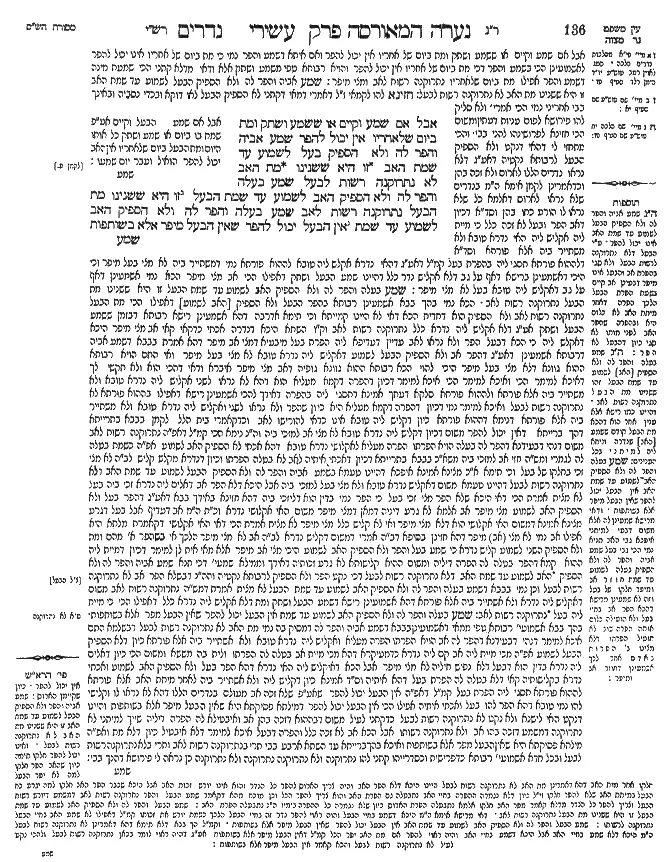
Nedarim 68b - Guemara
אבל אם שמע וקיים או ששמע ושתק ומת ביום שלאחריו אין יכול להפר שמע אביה והפר לה ולא הספיק בעל לשמוע עד שמת האב זו היא ששנינו מת האב לא נתרוקנה רשות לבעל שמע בעלה והפר לה ולא הספיק האב לשמוע עד שמת הבעל זו היא ששנינו מת הבעל נתרוקנה רשות לאב שמע בעלה והפר לה ולא הספיק האב לשמוע עד שמת אין הבעל יכול להפר שאין הבעל מיפר אלא בשותפות
Comments from Rashi on Masechet Nedarim Page 68b
אבל אם שמע . הבעל וקיים אע"פ שמת בו ביום או שמע ושתק כל אותו היום ומת הבעל ביום שלאחריו אין האב יכול להפר הואיל ועבר יום שמעו:
Comments from Tosafot - Nedarim 68b
ה''ג שמע אביה והפר לה ולא הספיק הבעל לשמוע עד שמת האב אינו יכול להפר . ע''י הבעל דלא נתרוקנה לרשות הבעל ולא סגי בהפרת אב והבעל אינו מיפר דבעינן אב קיים בשעת הפרת הבעל הלכך הפרה דאחר מיתת האב לא כלום היא ובהפרה שהפר האב לפני מותו לא סגי כיון דהבעל לא הפר: ה''ג שמע בעלה והפר לה ולא הספיק [האב] לשמוע עד שמת הבעל זהו ששנינו מת הבעל נתרוקנה רשות לאב . והיינו כמו רישא אלא ענין אחר הוא דהכא מת הבעל קודם ששמע [האב] שנדרה וניחא ליה למיתני בכל הענינים: שמע בעלה והפר לה ולא הספיק האב לשמוע עד שמת האב אין הבעל יכול להפר שאין הבעל מיפר אלא בשותפות . ודאי מרישא שמעינן לה אלא משום דבעי למיתני איפכא גבי האב תניא נמי הכי גבי בעל שמע אביה והפר לה ולא הספיק בעלה לשמוע עד שמת חוזר אב ומיפר חלקו של בעל וזה לא שמעינן מרישא דהבא הפר אב בחיי בעל ולא הועילה כלום אותה הפרה שוב לא תועיל הפרתו דלא מצינו ב' הפרות באדם אחד לכך אשמעינן דחוזר אב ומיפר:
Nedarim 68b - Mishnah translated into english
But if it is a case where the husband of a betrothed young woman heard and ratified the vow, or where he heard, and was silent, and died on the following day, in which case his silence is considered ratification of the vow, then the father cannot nullify the vow.
If her father heard or was made aware of the vow and nullified it for her but the husband did not manage to hear of the vow before the father died, this is what we learned in the same mishna (70a): If the father dies, the authority over her vows does not revert to the husband, i.e., a young woman’s betrothed cannot nullify her vows alone, without the father. If her husband heard the vow and nullified it for her, and the father did not manage to hear of the vow before the husband died, this is what we learned in the mishna: If the husband dies, the authority reverts to the father.
If her husband heard and nullified the vow for her, and the father did not manage to hear of the vow before he died, the husband cannot nullify it, although she no longer has a father, as the husband can nullify vows only in partnership with the father.
Traduction : The William Davidson digital edition of the Koren Noé Talmud, with commentary by Rabbi Adin Even-Israel Steinsaltz.