 Talmud Bavli
Nedarim 71b : Youtube
Daf TubeYoutube
2 video classes :
Nedarim Page 71b
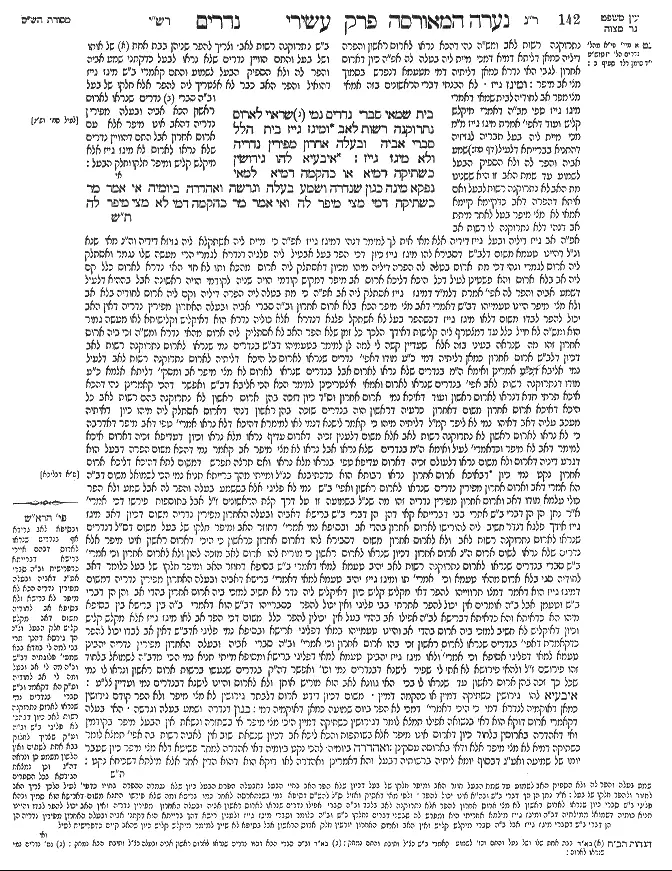
Nedarim 71b - Guemara
בית שמאי סברי נדרים נמי שראוי לארוס נתרוקנה רשות לאב ומיגז גייז בית הלל סברי אביה ובעלה אחרון מפירין נדריה ולא מיגז גייז איבעיא להו גירושין כשתיקה דמיא או כהקמה דמיא למאי נפקא מינה כגון שנדרה ושמע בעלה וגרשה ואהדרה ביומיה אי אמר מר כשתיקה דמי מצי מיפר לה ואי אמר מר כהקמה דמי לא מצי מיפר לה
Comments from Rashi on Masechet Nedarim Page 71b
ב"ש נתרוקנה רשות לאב וצריך להפר שניהן בבת אחת של אותו ושל בעל והתם הוויין נדרים שלא נראו לבעל כדקתני שמע אביה והפר לה ולא הספיק הבעל לשמוע והתם קאמרי ב"ש מיגז גייז דהואיל והפר האב כבר לא אצטריך ליה להפר אלא חלקו של בעל וב"ה סברי נדרים שנראו לארוס ראשון הכא אביה ובעלה מפירין נדריה דהאב אינו מיפר אלא עם ארוס אחרון אבל התם דהוויין נדרים שלא נראו לארוס לא מיגז גייז אלא מיקלש קליש ומיפר חלקו וחלק הבעל:
Nedarim 71b - Mishnah translated into english
The Gemara answers: Beit Shammai hold: Even with regard to vows that were disclosed to the betrothed, in the event of his death, his authority reverts to the father. In addition, when the father or husband of a young woman nullifies her vow, he severs his portion of it, enabling the father to nullify her vow on his own after the death of the betrothed. Beit Hillel hold that her father and her final husband together nullify her vows, and he who nullifies her vow does not sever it, but rather weakens its force. Even if the first betrothed was aware of the vow before his death, the father can nullify it in conjunction with another betrothed. This ruling is in accordance with the ruling of Shmuel that her final betrothed can nullify even those vows that she took while betrothed to the first man.
§ A dilemma was raised before the Sages: Is a husband’s divorce of his wife after she took a vow considered like silence, or is it considered like ratification of the vow?
The Gemara asks: What is the difference between the two possibilities? In any case, he did not nullify her vow before the divorce, and once he has divorced her he can no longer do so. The Gemara answers: There is a difference in a case where she took a vow, and her husband heard the vow, and divorced her, and he remarried her on the same day. If the Master says that divorce is like silence, the husband can now nullify the vow for her, since it is the same day. But if the Master says that divorce is like ratification, he cannot nullify the vow for her, as he has ratified it by divorcing her.
Traduction : The William Davidson digital edition of the Koren Noé Talmud, with commentary by Rabbi Adin Even-Israel Steinsaltz.