 Talmud Bavli
The learning on the whole site is dedicated : L'ilui Nishmat Yechayahou ben Moche
The learning on the whole site is dedicated : L'ilui Nishmat Jamila bat Chlomo Abensour
The learning on the whole site is dedicated : L'ilui Nishmat Yaakov ben Myriam
Nedarim 62b : Youtube
Daf TubeYoutube
2 video classes :
Nedarim Page 62b
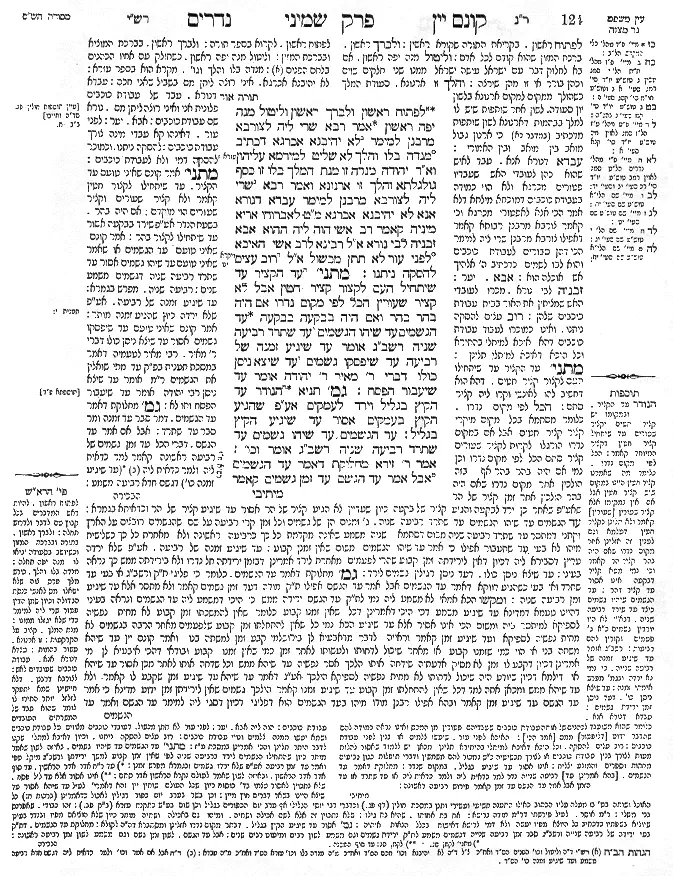
Nedarim 62b - Guemara
לפתוח ראשון ולברך ראשון וליטול מנה יפה ראשון אמר רבא שרי ליה לצורבא מרבנן למימר לא יהיבנא אכרגא דכתיב (עזרא ז, כד) מנדה בלו והלך לא שליט למירמא עליהון וא"ר יהודה מנדה זו מנת המלך בלו זו כסף גולגלתא והלך זו ארנונא ואמר רבא שרי ליה לצורבא מרבנן למימר עבדא דנורא אנא לא יהיבנא אכרגא מ"ט לאברוחי אריא מיניה קאמר רב אשי הוה ליה ההוא אבא זבניה לבי נורא א"ל רבינא לרב אשי האיכא (ויקרא יט, יד) לפני עור לא תתן מכשול א"ל רוב עצים להסקה ניתנו:
מתני׳ עד הקציר עד שיתחיל העם לקצור קציר חטין אבל לא קציר שעורין הכל לפי מקום נדרו אם היה בהר בהר ואם היה בבקעה בבקעה עד הגשמים עד שיהו הגשמים עד שתרד רביעה שניה רשב"ג אומר עד שיגיע זמנה של רביעה עד שיפסקו גשמים עד שיצא ניסן כולו דברי ר' מאיר ר' יהודה אומר עד שיעבור הפסח:
גמ׳ תניא הנודר עד הקיץ בגליל וירד לעמקים אע"פ שהגיע הקיץ בעמקים אסור עד שיגיע הקיץ בגליל:
עד הגשמים עד שיהו גשמים עד שתרד רביעה שניה רשב"ג אומר וכו':
אמר ר' זירא מחלוקת דאמר עד הגשמים אבל אמר עד הגשם עד זמן גשמים קאמר
Comments from Rashi on Masechet Nedarim Page 62b
לפתוח ראשון . לקרוא בספר תורה: ולברך ראשו . בברכת המוציא ובברכת המזון: וליטול מנה יפה ראשון . כשחולק עם אחיו הכהנים בלחם הפנים: מנדה בלו והלך וגו' . מקרא הוא בספר עזרא: לא יהיבנא אכרגא . איני רוצה ליתן מס בשביל שאני חכם: עבדא דנורא . עבד של עבודת כוכבים פלונית אני ואיני רוצה ליתן מס. נורא שם עבודת כוכבים: אבא . יער: לפני עור . דאינהו קא עבדי מינה צורך עבודת כוכבים: להסקה ניתנו . וכמוכר להסקה דמי ולא לעבודת כוכבים: מתני' אמר קונם שאיני טועם עדי הקציר . עד שיתחילו לקצור חטין קאמר ולא קציר שעורים וקציר שעורים הוי מוקדם: אם היה בהר . בשעת הנדר אע"פ שירד בבקעה אסור עד שיתחילו לקצור בהר: אמר קונם שאיני טועם עד הגשמים . או שאמר שאיני טועם עד שיהו גשמים אסור עד שתרד רביעה שניה דגשמים משמע שנים: רביעה שניה . מפרש בגמרא: עד שיגיע זמנה של רביעה . אע"פ שלא ירדה כיון שהגיע זמנה מותר: אמר קונם שאיני טועם עד שיפסקו גשמים אסור עדי שיצא ניסן כולו דבר ר' מאיר . רבי מאיר לטעמיה דאמר במסכת תענית בפ"ק עד מתי שואלין את הגשמים ר"מ אומר עד שיצא ניסן רבי יהודה אומר עד שיעבור הפסח ותו לא: גמ' מחלוקת דיאמר עד הגשמים . דמר סבר עד זמנה ומר סבר עד שתרד: אבל אם אמר עד הגשם . דברי הכל עד זמן גשמים של רביעה ראשונה קאמר למר כדאית ליה ולמר כדאית ליה עד שיגיע זמנה כו' דגשם חדא רביעה משמע:
Comments from Tosafot - Nedarim 62b
עבדא דנורא אנא . כלומר שהוא משועבד לכהנים של אותה עבודת כוכבים שעבדיהם פטורין מן המכס ואינו נראה כמודה להם שהדבר ידוע [דליפטור] ממס [אמר הכי]: האיכא לפני עור . שיעשו צלמים או בנין לפני עבודת כוכבים: רוב עצים להסקה . וכל היכא דאיכא למיתלי בהיתירא תלינן מכאן יש ללמוד שאסור להלות מעות לצורך בנין עבודת כוכבים או לצורך תכשיטיה כ''ש למכור להם משמשין ודברי תיפלות כגון גביעים מחתות וספרים והמונע יצליח: הנודר עד הקציר . ובמקומו יש קציר חטים וקציר שעורים עד שיתחיל קציר חטין דקציר המיוחד קאמר: הכל לפי מקום נדרו . כלומר מה שאמרנו קציר חטין היינו במקום שיש קציר חטין אבל אם אין במקומו אלא קציר שעורין [שעורין] קאמר ולא תלינן בקציר חטין דעלמא וגם לענין זה אזלינן אחר מקום נדרו שאם היה בהר קציר הר קאמר וכי נמי מטא קציר דבקעה אינו אסור עד קציר דהר: עד הגשמים שיהיו גשמים כיצד עד שירד רביעה שניה . דבא''י לא היו יורדין גשמים כ''א ג' פעמים וקורין להם רביעות: רשב''ג אומר עד שיגיע זמנה של רביעה שנייה . כי נמי לא ירדה ובגמ' מפרש אימתי זמנה: עד שיצא ניסן כו' . דעד . ניסן זמן ירידת גשמים: אינו אסור עד שיגיע בגליל . במקום שנדר: מחלוקת דאמר עד הגשמים . [בהא אמרינן עד] רביעה שנייה נדר למר כדאית ליה ולמר כדאית ליה או עד שתרד או עד הזמן אבל אמר עד הגשם עד זמן קאמר פירוש רביעה ראשונה:
Nedarim 62b - Mishnah translated into english
To open the Torah reading first, to recite a blessing first, and to take a fine portion first. When portions are distributed equally, a priest can choose his share first. The verse with regard to the sons of David proves that the same halakha applies to Torah scholars.
Furthermore, Rava said: It is permitted for a Torah scholar to say: I will not pay the head tax [karga], as it is written that the king of Persia wrote to Ezra, with regard to the priests, the Levites, and others who worked in the Temple: “It shall not be lawful to impose minda, belo, and halakh upon them” (Ezra 7:24). And Rabbi Yehuda said: Minda; this is the king’s portion. Belo; this is the money of the head tax. And halakh; this is arnona, a levy on people and their animals to perform physical labor in the service of the ruling authority. Since a Torah scholar is considered equivalent to a priest, as he is also dedicated to a sacred task, this exemption applies to him as well.
And Rava said further: It is permitted for a Torah scholar to say: I am a servant of the priests of fire worship and therefore I will not pay the head tax. Rava maintains that a scholar may issue a statement of this kind in a place where the priests of fire-worshippers are exempt from the head tax, because he actually is declaring himself a servant of God, who is referred to as “a devouring fire” (Deuteronomy 4:24). What is the reason that he is allowed to make this statement? He is saying it merely in order to chase a lion away from him, i.e., to avoid suffering a loss.
The Gemara relates that Rav Ashi had a particular forest, and he sold it for its wood to the temple of fire worship. Ravina said to Rav Ashi: Isn’t there the prohibition: “You shall not put a stumbling block before the blind” (Leviticus 19:14), which prohibits assisting others in committing transgressions? And yet you are providing assistance to an idolatrous cult. He said to him: Most of the wood they use is for kindling, not for their ritual service. Consequently, I need not be concerned that the particular wood that I have sold them will be used for idolatry.
MISHNA: If one takes a vow until the harvest, the vow remains in effect until people begin to harvest. This is referring to the wheat harvest but not the barley harvest. As for the exact date of this event, all is determined according to the place where he took his vow. If he was on a mountain, it is assumed that he referred to the time of the harvest on the mountain, and if he was in a valley, it is assumed that he meant the time of the harvest in the valley.
If one takes a vow until the rains, or until there are rains, the vow remains in effect until the second rain of the rainy season falls. Rabban Shimon ben Gamliel says: Until the time of the second rainfall arrives, even if rain does not fall. If one takes a vow until the rains end, the vow remains in effect until the entire month of Nisan has ended; this is the statement of Rabbi Meir. Rabbi Yehuda says: Until Passover has passed.
GEMARA: It is taught in a baraita: With regard to one who vows until the summer in the Galilee and subsequently descends to the valleys, even if the summer season has already arrived in the valleys, the subject of his vow remains forbidden to him until summer arrives in the Galilee, in accordance with the mishna’s ruling that the duration of a vow is in accordance with the place where it was made.
The mishna states that if one takes a vow until the rains, or until there are rains, he means until the second rain of the rainy season. Rabban Shimon ben Gamliel says: Until the time of the second rainfall arrives. The Gemara comments: Rabbi Zeira said: The dispute is in a case where one said: Until the rains. However, if he says: Until the rain, everyone agrees that he is saying that the vow should remain in effect until the time of the rains, but not necessarily until the rain actually falls.
Traduction : The William Davidson digital edition of the Koren Noé Talmud, with commentary by Rabbi Adin Even-Israel Steinsaltz.