 Talmud Bavli
Nedarim 63b : Youtube
Daf TubeYoutube
2 video classes :
Nedarim Page 63b
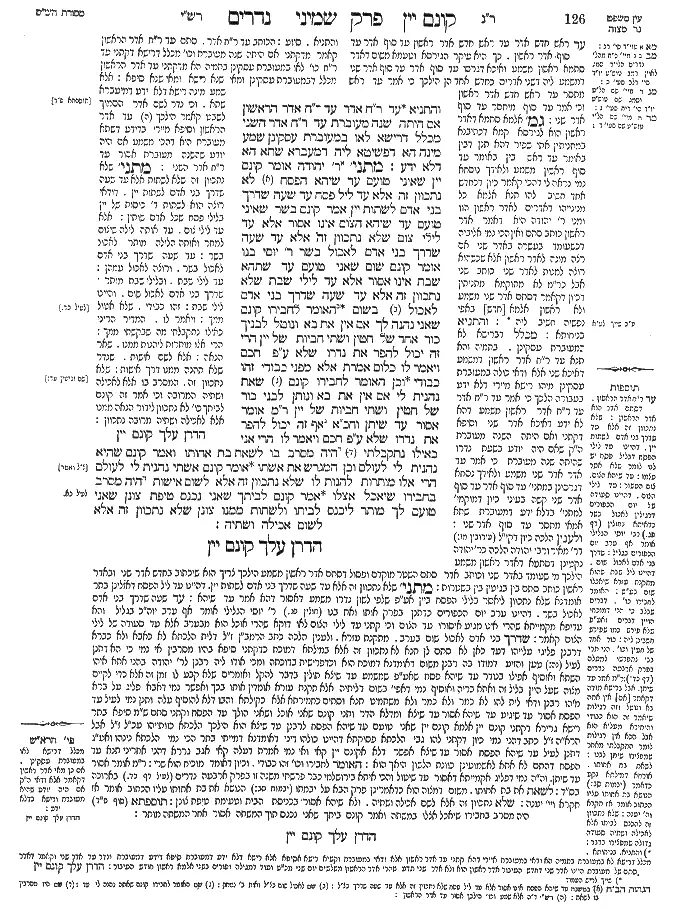
Nedarim 63b - Guemara
והתניא עד ר"ח אדר עד ר"ח אדר הראשון אם היתה שנה מעוברת עד ר"ח אדר השני מכלל דרישא לאו במעוברת עסקינן שמע מינה הא דפשיטא ליה דמעברא שתא הא דלא ידע:
מתני׳ ר' יהודה אומר קונם יין שאיני טועם עד שיהא הפסח לא נתכוון זה אלא עד ליל פסח עד שעה שדרך בני אדם לשתות יין אמר קונם בשר שאיני טועם עד שיהא הצום אינו אסור אלא עד לילי צום שלא נתכוון זה אלא עד שעה שדרך בני אדם לאכול בשר ר' יוסי בנו אומר קונם שום שאני טועם עד שתהא שבת אינו אסור אלא עד לילי שבת שלא נתכוון זה אלא עד שעה שדרך בני אדם לאכול בשום האומר לחבירו קונם שאני נהנה לך אם אין את בא ונוטל לבניך כור אחד של חטין ושתי חביות של יין הרי זה יכול להפר את נדרו שלא ע"פ חכם ויאמר לו כלום אמרת אלא מפני כבודי זהו כבודי וכן האומר לחבירו קונם שאת נהנית לי אם אין את בא ונותן לבני כור של חטין ושתי חביות של יין ר"מ אומר אסור עד שיתן וחכ"א אף זה יכול להפר את נדרו שלא ע"פ חכם ויאמר לו הרי אני כאילו נתקבלתי היה מסרב בו לשאת בת אחותו ואמר קונם שהיא נהנית לי לעולם וכן המגרש את אשתו אומר קונם אשתי נהנית לי לעולם הרי אלו מותרות להנות לו שלא נתכוון זה אלא לשום אישות היה מסרב בחבירו שיאכל אצלו אמר קונם לביתך שאני נכנס טיפת צונן שאני טועם לך מותר ליכנס לביתו ולשתות ממנו צונן שלא נתכוון זה אלא לשום אכילה ושתיה:
הדרן עלך קונם יין
Comments from Rashi on Masechet Nedarim Page 63b
והתניא . סיוע: הכותב עד ר"ח אדר . סתם עד ר"ח אכר הראשון קאמר מדקתני אם היתה שנה מעוברת וכו' מכלל דרישא דקתני עד ר"ח כו' לאו במעוברת עסקינן בתמיה הא מדקתני עד אדר הראשון מכלל דבמעוברת עסקינן ומאי שנא רישא ומאי שנא סיפא: אלא שמע מינה רישא דלא ידיע דמיעברא שתא . וכי נדר לשם אדר הסמוך לשבט קאמר הילכך עד אדר הראשון וסיפא מיירי בדידע דשתא מעוברת היא דהכי משמע אם היה יודע שהשנה מעוברת אסור עד ר"ח אדר השני: מתני' שלא נתכוון זה שלא לשתות אלא עד שעה שדרך בני אדם לשתות יין. דודאי רוצה הוא לשתות ד' כוסות של יין בלילי פסח שכל אדם שותין: אלא עד לילי צום . עד אותה לילה שיצום למחר ואותה הלילה מותר לאכול בשר: עדי שעה שדרך בני אדם לאכול בשר . ורוצה לאכול עמהן: עד לילי שבת . ובלילי שבת מותר: שדרך בני אדם לאכול שום . והיינו לילי שבת: זהו כבודי . שלא אטול ממך: ויאמר לו . המדיר הריני כאילו נתקבלתי מה שבקשתי ממך: הרי אלו מותרות ליהנות ממנו . שאר הנאה: אלא לשם אישות . שנדר שלא תהנה ממנו דרך אישות: שלא נתכוון זה . המסרב בו אלא לאכילה ושתיה המרובה וכי אמר זה קונם לביתך כו' לא נתכוון לידור הנאה ממנו אלא לאכילה ושתיה מרובה נתכוון:
Comments from Tosafot - Nedarim 63b
והתניא . בניחותא. מכלל דרישא לא במעוברת בתמיה הא ודאי במעוברת איירי דהא קתני עד אדר ראשון אלא ודאי במעוברת וקשיא רישא אסיפא אלא רישא דלא ידע דמעוברת סיפא דידע דמעוברת ונדר עד אדר שני וקאמר דאדר סתם של מעוברת היינו אדר שני דחדש העיבור אדר ראשון הוא ולא אדר שני תדע שהרי אדר הראשון משלשים יום שני מכ''ט ועוד דמגילה ופורים בשני אלמא ראשון חודש העיבור: עד ר''ח אדר הראשון . דסתם אדר הוא אדר הראשון: שלא נתכוון זה אלא עד שדרך בני אדם לשתות יין . דהיינו עד לילי הפסח דבליל פסח יש לנו לומר שלא אסר עצמו: עד שיהא הצום . צום העשור: עד לילי הצום . דהיינו סעודה של יום הכפורים דרגילין לאכול בשר כדאיתא בחולין (דף פג.) רבי יוסי הגלילי אומר אף ערב יום הכפורים בגליל: שדרך בני אדם לאכול שום . דהיינו ליל שבת שהוא מתקנת עזרא שיאכלו שום בע''ש: האומר לחבירו כו' . דברים שבלב כי הני דמוכחי הויין דברים ואע''פ שלא פירש כמו שפירש חשבינן ליה: כור אחד של חטין וכו' . הני תרי בבי נתפרשו למעלה בפרק ארבעה נדרים (דף כד.): ר''מ אמר עד שיתן . אבל ברישא מודה דקאמר [אם] אין אתה בא ונוטל וזה רגילות שיאמר זה הוא כבודי והיתירא מעליא הוא אבל הכא אין רגילות לומר התקבלתי מאחר שמפצירו שיתן לבנו: לשאת בת אחותו . אורחא דמילתא נקט כדאמר (יבמות סב:) הנושא בת אחותו עליו הכתוב אומר אז תקרא וה' יענה: שלא נתכוון זה להכנס לביתו אלא לאכילה ושתיה סעודה גדולה שמפצירו בדבר:
Nedarim 63b - Mishnah translated into english
And, so too, it is taught in a baraita: If one vows until the New Moon of Adar, the vow remains in effect until the New Moon of the first Adar, and if it was a leap year, it remains in effect until the New Moon of the second Adar.
The Gemara analyzes this baraita: Does the latter clause prove by inference that in the first clause, we are not dealing with a leap year? In a regular year there is only one month of Adar, so it is impossible to speak of a first or second Adar. Rather, learn from it that this latter clause is referring to a case where it is obvious to him that the year was extended, and therefore when he refers to the month of Adar he means the second Adar, whereas that first clause is referring to a case where he did not know that it was a leap year, in which case he means the first Adar.
MISHNA: Rabbi Yehuda says: In the case of one who says: Wine is konam for me, and for that reason I will not taste it until it will be Passover, it is understood that this individual intended for his vow to apply only until the night of Passover, i.e., until the time when it is customary for people to drink wine in order to fulfill the mitzva of drinking the four cups, but he did not intend to prevent himself from being able to fulfill this mitzva.
Similarly, if he said: Meat is konam for me, and for that reason I will not taste it until it will be the fast of Yom Kippur, he is prohibited from eating meat only until the eve of [leilei] the fast. This is because it is understood that this individual intended for his vow to apply only until the time when it is customary for people to eat meat in the festive meal before the fast, and he did not intend to prevent himself from being able to participate in that meal. Rabbi Yosei, his son, says: One who vows: Garlic is konam for me, and for that reason I will not taste it until it will be Shabbat, it is prohibited for him to eat garlic only until the eve of Shabbat, as it is understood that this individual intended for his vow to apply only until the time when it is customary for people to eat garlic.
In the case of one who says to another: Benefiting from you is konam for me, i.e., I am prohibited from deriving benefit from you, if you do not come and take for your son one kor of wheat and two barrels of wine as a gift, this other individual can dissolve his vow without the consent of a halakhic authority. This is because he can say to him: Did you say your vow for any reason other than due to my honor, in order to convince me to accept a gift for my son? This is my honor, that I refrain from accepting the gift, and consequently the vow is annulled.
And, so too, in the case of one who says to another: Benefiting from me is konam for you, i.e., you are prohibited from deriving benefit from me, if you do not come and give my son one kor of wheat and two barrels of wine, Rabbi Meir says: It is prohibited for the other individual to benefit from the speaker until he gives the gifts to his son. However, the Rabbis say: Even this individual who took the vow can dissolve his own vow without the consent of a halakhic authority. This is because he can say to him: I hereby consider it as though I have received the gift.
If an individual was urging another to marry the daughter of his sister, and in order to deflect the pressure, the other man said: Benefiting from me is konam for her forever, i.e., she is prohibited from deriving any benefit from me forever, and, so too, if there is one who divorces his wife and says: Benefiting from me is konam for my wife forever, these women are permitted to derive benefit from him, as this man intended to take this vow only for the purpose of prohibiting marriage between them, but not to prohibit all forms of benefit.
Similarly, if one was urging another to eat with him, and the latter said: Entering your house is konam for me, as is tasting even a drop of cold liquid of yours, the individual who took the vow is nevertheless permitted to enter his house and to drink a cold beverage of his. This is because this individual intended to take this vow only for the purpose of eating and drinking a meal, but not to prohibit himself from entering the house entirely or from drinking in small quantities (Commentary on Nedarim).
Traduction : The William Davidson digital edition of the Koren Noé Talmud, with commentary by Rabbi Adin Even-Israel Steinsaltz.