 Talmud Bavli
Nedarim 49b : Youtube
Daf TubeYoutube
2 video classes :
Nedarim Page 49b
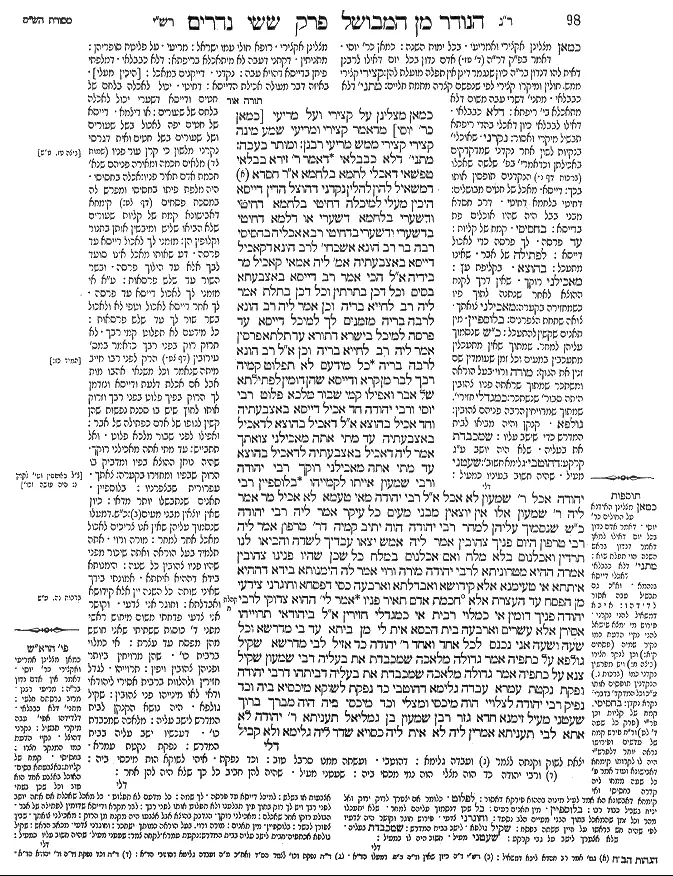
Nedarim 49b - Guemara
כמאן מצלינן על קצירי ועל מריעי [כמאן כר' יוסי] מדאמר קצירי ומריעי שמע מינה קצירי קצירי ממש מריעי רבנן:
ומותר בעבה:
מתני' דלא כבבלאי דאמר ר' זירא בבלאי טפשאי דאכלי לחמא בלחמא א"ר חסדא דמשאיל להון להלין נקדני דהוצל הדין דייסא היכין מעלי למיכלה דחיטי בלחמא דחיטי ודשערי בלחמא דשערי או דלמא דחיטי בדשערי ודשערי בדחיטי רבא אכליה בחסיסי רבה בר רב הונא אשכחי' לרב הונא דקאכיל דייסא באצבעתיה אמ' ליה אמאי קאכיל מר בידיה א"ל הכי אמר רב דייסא באצבעתא בסים וכל דכן בתרתין וכל דכן בתלת אמר ליה רב לחייא בריה וכן אמר ליה רב הונא לרבה בריה מזמנים לך למיכל דייסא עד פרסה למיכל בישרא דתורא עד תלתא פרסין אמר ליה רב לחייא בריה וכן א"ל רב הונא לרבה בריה כל מידעם לא תפלוט קמיה רבך לבר מן קרא ודייסא שהן דומין לפתילתא של אבר ואפילו קמי שבור מלכא פלוט רבי יוסי ורבי יהודה חד אכיל דייסא באצבעתיה וחד אכיל בהוצא א"ל דאכיל בהוצא לדאכיל באצבעתיה עד מתי אתה מאכילני צואתך אמר ליה דאכיל באצבעתיה לדאכיל בהוצא עד מתי אתה מאכילני רוקך רבי יהודה ורבי שמעון אייתו לקמייהו בלוספיין רבי יהודה אכל ר' שמעון לא אכל א"ל רבי יהודה מאי טעמא לא אכיל מר אמר ליה ר' שמעון אלו אין יוצאין מבני מעים כל עיקר אמר ליה רבי יהודה כ"ש שנסמוך עליהן למחר רבי יהודה הוה יתיב קמיה דר' טרפון אמר ליה רבי טרפון היום פניך צהובין אמר ליה אמש יצאו עבדיך לשדה והביאו לנו תרדין ואכלנום בלא מלח ואם אכלנום במלח כל שכן שהיו פנינו צהובין אמרה ההיא מטרוניתא לרבי יהודה מורה ורוי אמר לה הימנותא בידא דההיא איתתא אי טעימנא אלא קידושא ואבדלתא וארבעה כסי דפסחא וחוגרני צידעי מן הפסח עד העצרת אלא (קהלת ח, א) חכמת אדם תאיר פניו אמר לי' ההוא צדוקי לרבי יהודה פניך דומין אי כמלוי רבית אי כמגדלי חזירין א"ל ביהודאי תרוייהו אסירן אלא עשרים וארבעה בית הכסא אית לי מן ביתא עד בי מדרשא וכל שעה ושעה אני נכנס לכל אחד ואחד ר' יהודה כד אזיל לבי מדרשא שקיל גולפא על כתפיה אמר גדולה מלאכה שמכבדת את בעליה רבי שמעון שקיל צנא על כתפיה אמר גדולה מלאכה שמכבדת את בעליה דביתהו דרבי יהודה נפקת נקטת עמרא עבדה גלימא דהוטבי כד נפקת לשוקא מיכסיא ביה וכד נפיק רבי יהודה לצלויי הוה מיכסי ומצלי וכד מיכסי ביה הוה מברך ברוך שעטני מעיל זימנא חדא גזר רבן שמעון בן גמליאל תעניתא ר' יהודה לא אתא לבי תעניתא אמרין ליה לא אית ליה כסויא שדר ליה גלימא ולא קביל
Comments from Rashi on Masechet Nedarim Page 49b
מצלינן אקצירי . רופא חולי עמו ישראל: מריעי . על פליטת סופריהן: מתניתין . דקתני דעבה לא מיתאכלא בריפתא: דלא כבבלאי . דמלפתי פיתן בדייסא דהויא עבה: נקדני . דייקנים במאכל: [היכין מעלי] . באיזה דבר מעולה אכילת הדייסא: דחיטי . יכול לאכלה בלחם של חטים ודייסא דשערי יכול לאכלה בלחם של שעורים: או דילמא . דייסא של חטים יפה לאכול בשל שעורים ושל שעורים בשל חטים ואית דגרסי נקרני מלשון כי קרן עור פניו (שמות לד) מלאים חכמה ומאירה פניהם שנא' חכמת אדם תאיר פניו: אכלה בחסיסי . היה מלפת פיתו בחסיסי ומפרש לה במסכת פסחים (דף לט:) קימחא דאבישונא קמח של קליות שעורים שלא הביאו שליש ומיבשין אותן בתנור וקלופין הן: מזמני לך לאכל דייסא עד פרסה . דע שאותו מאכל איכו סועד לבך אלא עד הילוך פרסה. ובשר השור עד שלש פרסאות: ע"א אי מזמני לך לאכול דייסא עד פרסה לך אחר דייסא לאכול וטפי לא ולאכול בשר שור לך עד שלש פרסאות: כל מידעם לא תפלוט קמי רבך . לא תרוק רוק בפני רבך כדאמר במס' עירובין (דף צט.) הרק לפני רבו חייב מיתה שנאמר וכל משנאי אהבו מות אבל אם אכלת דלעת ודייסא ונזדמן לך הרוק בפיך פלוט בפני רבך וזרוק אותו לחוץ שיש בו סכנת נפשות שהן קשין לגופו של אדם כפתילה של אבר: ואפילו לפני שבור מלכא פלוט . ואל תתבייש: צאתך . עפרורית שבצפרניו: עד מתי אתה מאכילני רוקך . שהיה נותן ההוצא בפיו ומדביק בו הרוק שבפיו ומחזירו בקערה: בלוספיין . תאנים שנתבשלו יותר מדאי: כיון שאין יוצאין מבני מעים: כ"ש . דמעלו שנסמוך עליהן שאין אנו צריכים לאכול מאכל אחר למחר: מורה ורוי . אתה תלמיד בעל הוראה ואתה שיכור מפני שהיו פניו צהובין כל שעה: הימנותא בידא דההיא איתתא . אמונתי בידך שאיני שותה כל השנה יין אלא קידושא ואבדלתא: וחוגר אני צדעי . וקושר אני צדעי פדחתי משום מיחוש ראשי מפני ד' כוסות ששתיתי שאני חושש מהן מפסח עד עצרת: אי כמלוי ברבית כו' . שהן מרויחין ביותר ופניהן צהובין ויפין: תרוייהו . לגדל חזירין ולהלוות ברבית אסירי ליהודאי ודאי לאו מינייהו פני צהובין: שקיל גולפא . היה נושא הקנקן לבית המדרש לישב עליה: מלאכה שמכבדת כו' . דעכשיו ישב עליה בבית המדרש: נפקת נקטת עמרא . יצאת לשוק וקנתה לצמר ועבדה גלימא: דהוטבי . ועשתה ממנו סרבל טוב: וכד נפקת . איהי לשוקא הות ניכסי ביה: ורבי יהודה כד הוה מצלי הוה נמי מכסי ביה: שעטני מעיל . שתיה להן חביב כל כך שלא היה להן אחר:
Comments from Tosafot - Nedarim 49b
כמאן מצלינן האידנא על החולים כר' יוסי . דאמר אדם נדון בכל יום דאילו למאן דאמר דנדון בראש השנה הוי תפלת שוא: מתני' דלא כבבלאי דאכלי דייסא בנהמא . וא''כ גם תבשיל עבה אסור לדידהו: איכא דמשאיל להני נקרני . פירוש מי ימצא שישאל להני נקיי הדעת כמו נקיר שמיה (פסחים קיא:) וכן לנקר חצירו (ביצה ח:) ויש מפרשין נקדני כמו (ברכות נ .) הנקדנין תופסים אותו ע''כ וכל המדקד' בדברי' נקרא נקדן: בחסיסי . קמח של קליות וכן פר''י (פרק כל שעה ד' לט) ור''ח פירש קמח של עדשים ופירושו נראה יותר דלפרש''י היה לו לקרותו קימחא דאבישונא ועוד אמר פ' כל שעה ממחו ליה קדרה בחסיסי ואי קימחא דאבשונא הא אמר לעיל מיניה בההוא פירקא דאסור: לפלוט . כלומר אם יצטרך לרוק ירוק ואל יניח בשביל כבוד רבו: בלוספיין . מין תאנים רעים: כל שכן דנסמוך עליהם למחר . שלא יתעכלו מהר וכל זמן שהמאכל בתוך הבני מעיים הלב נסעד: וחוגרני צדעי . פירוש חוגר וקושר היה צדעיו לפי שהיה חש בראשו על היין ששתה בפסח: שקיל גולפא . לישב בבית המדרש: שמכבדת בעליה . שלא אצטרך לישב על גבי קרקע: שעטני מעיל . חשוב היה לו כמעיל:
Nedarim 49b - Mishnah translated into english
In accordance with whose opinion do we pray every day for the sick and for the suffering? In accordance with whose opinion? In accordance with the opinion of Rabbi Yosei, who holds that one is judged every day, not only on Rosh HaShana, and therefore it is appropriate to pray for people every day. From the fact that he said: The sick and the suffering, one can learn from his statement that the term: The sick, is referring to actual sick people, while the term: The suffering, is referring to the Sages, who typically are physically frail.
§ It is stated in the mishna that one who vowed that loose cooked food is forbidden to him is permitted to taste a thick cooked food. The Gemara comments: The mishna is not in accordance with the custom of the Babylonians, as Rabbi Zeira said: Babylonians are foolish, as they eat bread with bread. They eat thick porridge with their bread, which is essentially eating one kind of bread with another. According to their custom, one who vows that cooked foods are forbidden to him is prohibited from eating even a thick cooked food.
In that context, Rav Ḥisda said that those fastidious residents of Huzal, Babylonia were asked: How is it best to eat this porridge? Should wheat porridge be eaten with wheat bread and barley porridge with barley bread, or perhaps wheat porridge should be eaten with barley bread and barley porridge with wheat bread?
The Gemara relates: Rava would eat his bread with ḥasisei, a porridge made of toasted barley grains. Rabba, son of Rav Huna, found Rav Huna eating porridge with his fingers. He said to him: Why is the Master eating with his hands? Rav Huna said to him: This is what Rav said: Porridge eaten with a finger is tasty, and all the more so if it is eaten with two fingers, and all the more so with three. It is more enjoyable to eat porridge with your hands.
Rav said to his son Ḥiyya, and Rav Huna similarly said to his son Rabba: If you are invited to eat porridge, for such a meal you should travel up to the distance of a parasang [parsa]. If you are invited to eat ox meat, you should travel up to three parasangs. Rav said to his son Ḥiyya, and Rav Huna similarly said to his son Rabba: You should not spit out anything before your teacher, as this is disrespectful, apart from gourd and porridge, as they are like a burning lead wick in the intestines when they cannot be digested, and therefore spit them out even before King Shapur, due to the danger involved.
The Gemara relates more incidents: Rabbi Yosei and Rabbi Yehuda dined together. One of them ate porridge with his fingers, and the other one ate with a fork [hutza]. The one who was eating with a fork said to the one who was eating with his fingers: For how long will you keep feeding me your filth? Must I keep eating off of your dirty fingernails? The one who was eating with his fingers said to the one who was eating with a fork: For how long will you keep feeding me your spittle, as you eat with a fork which you then put back in the common bowl.
Belospayin, a type of figs, were brought before Rabbi Yehuda and Rabbi Shimon. Rabbi Yehuda ate them, but Rabbi Shimon did not eat them. Rabbi Yehuda said to him: What is the reason that the Master is not eating? Rabbi Shimon said to him: These do not leave the intestines at all. They remain undigested. Rabbi Yehuda said to him: If so, all the more that one can rely on them to feel full tomorrow.
Rabbi Yehuda was sitting before Rabbi Tarfon. Rabbi Tarfon said to him: Your face today is ruddy, i.e., a rosy, healthy color. Rabbi Yehuda said to him: Last night your servants, i.e., we students, went out to the field, and beets were brought to us, and we ate them without salt. This is the reason for our healthy complexion. And had we eaten them with salt, all the more so would our faces have been ruddy.
The Gemara cites related incidents: A certain gentile lady [matronita] said to Rabbi Yehuda, whose face was ruddy: How can one teach the Jews and be a drunk at the same time? He said to her: I place my integrity in the hands of this woman and should no longer be deemed credible if I ever taste any wine except for that of kiddush, havdala, and the four cups of Passover. And after I drink those four cups I tie my temples from Passover to Shavuot, as wine gives me a headache. Rather, my complexion is explained by the verse “A man’s wisdom makes his face to shine” (Ecclesiastes 8:1).
A certain heretic said to Rabbi Yehuda: Your face is similar either to usurers or to pig breeders. These people would earn a good living without expending much energy, which gave them plump, healthy complexions. Rabbi Yehuda said to him: Both of these occupations are prohibited to Jews. Rather, my face is ruddy because I have twenty-four bathrooms on the way from my home to the study hall, and all the time I enter each and every one of them. He did not suffer from constipation, which had a beneficial effect on his complexion.
§ The Gemara relates: When Rabbi Yehuda would go to the study hall he would carry a pitcher [gulefa] on his shoulder to sit on, saying: Labor is great, as it brings honor to the laborer who performs it. It brought him honor by enabling him to avoid sitting on the floor of the study hall. Similarly, Rabbi Shimon would carry a basket on his shoulder, saying: Labor is great, as it brings honor to the laborer who performs it.
The Gemara further relates: Rabbi Yehuda’s wife went out to the market, collected wool, and made a thick [hutevei] cloak. When she would go out to the market she would cover herself with it, and when Rabbi Yehuda would go out to pray he would cover himself with the cloak and pray. And when he would cover himself with it he would recite the blessing: Blessed is He who wrapped me in a coat, as he took much pleasure in it.
On one occasion Rabban Shimon ben Gamliel, the Nasi, decreed a fast. Rabbi Yehuda did not come to the house of the fast, where everyone gathered. The people said to Rabban Shimon ben Gamliel: Rabbi Yehuda does not have a dignified garment to cover himself with, and therefore he shies away from public events. Rabban Shimon ben Gamliel sent him a cloak of his own, but Rabbi Yehuda did not accept this gift.
Traduction : The William Davidson digital edition of the Koren Noé Talmud, with commentary by Rabbi Adin Even-Israel Steinsaltz.