 Talmud Bavli
Nedarim 39b : Youtube
Daf TubeYoutube
2 video classes :
Nedarim Page 39b
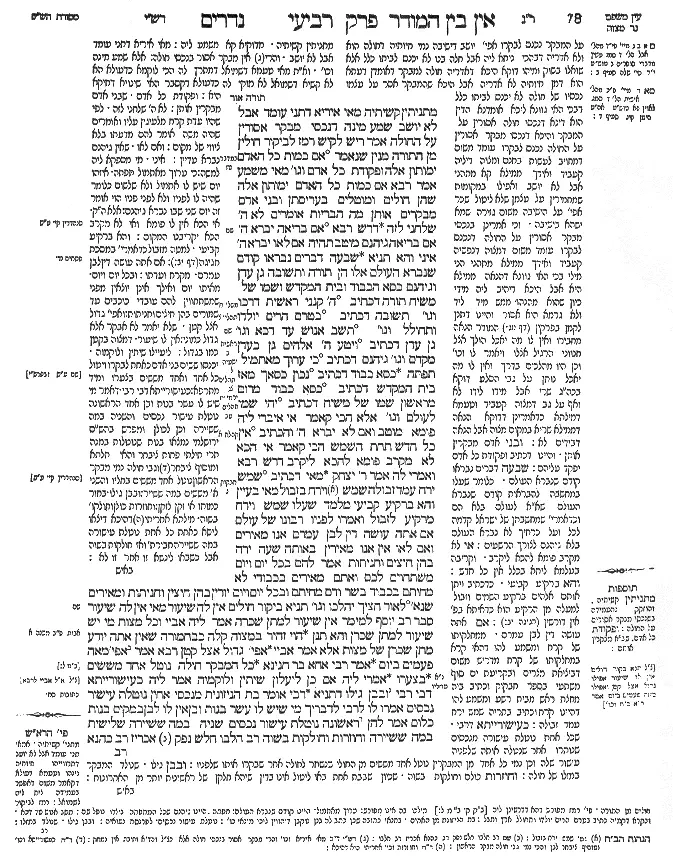
Nedarim 39b - Guemara
מתניתין קשיתיה מאי איריא דתני עומד אבל לא יושב שמע מינה דנכסי מבקר אסורין על החולה אמר ריש לקיש רמז לביקור חולין מן התורה מנין שנאמר (במדבר טז, כט) אם כמות כל האדם ימותון אלה ופקודת כל אדם וגו' מאי משמע אמר רבא אם כמות כל האדם ימותון אלה שהן חולים ומוטלים בעריסתן ובני אדם מבקרים אותן מה הבריות אומרים לא ה' שלחני לזה דרש רבא (במדבר טז, ל) אם בריאה יברא ה' אם בריאה גיהנם מוטב תהיה אם לאו יברא ה' איני והא תניא שבעה דברים נבראו קודם שנברא העולם אלו הן תורה ותשובה גן עדן וגיהנם כסא הכבוד ובית המקדש ושמו של משיח תורה דכתיב (משלי ח, כב) ה' קנני ראשית דרכו וגו' תשובה דכתיב (תהלים צ, ב) בטרם הרים יולדו ותחולל וגו' (תהלים צ, ג) תשב אנוש עד דכא וגו' גן עדן דכתיב (בראשית ב, ח) ויטע ה' אלהים גן בעדן מקדם וגו' גיהנם דכתיב (ישעיהו ל, לג) כי ערוך מאתמול תפתה כסא כבוד דכתיב (תהלים צג, ב) נכון כסאך מאז בית המקדש דכתיב (ירמיהו יז, יב) כסא כבוד מרום מראשון שמו של משיח דכתיב (תהלים עב, יז) יהי שמו לעולם וגו' אלא הכי קאמר אי איברי ליה פומא מוטב ואם לא יברא ה' והכתיב (קהלת א, ט) אין כל חדש תחת השמש הכי קאמר אי הכא לא מקרב פומא להכא ליקרב דרש רבא ואמרי לה אמר רבי יצחק מאי דכתיב (חבקוק ג, יא) שמש ירח עמד זבולה שמש וירח בזבול מאי בעיין והא ברקיע קביעי מלמד שעלו שמש וירח מרקיע לזבול ואמרו לפניו רבונו של עולם אם אתה עושה דין לבן עמרם אנו מאירים ואם לאו אין אנו מאירין באותה שעה ירה בהן חיצים וחניתות אמר להם בכל יום ויום משתחוים לכם ואתם מאירים בכבודי לא מחיתם בכבוד בשר ודם מחיתם ובכל יום ויום יורין בהן חיצין וחניתות ומאירים שנאמר (חבקוק ג, יא) לאור חציך יהלכו וגו' תניא ביקור חולים אין לה שיעור מאי אין לה שיעור סבר רב יוסף למימר אין שיעור למתן שכרה אמר ליה אביי וכל מצוות מי יש שיעור למתן שכרן והא תנן (משנה אבות ב א) הוי זהיר במצוה קלה כבחמורה שאין אתה יודע מתן שכרן של מצוות אלא אמר אביי אפילו גדול אצל קטן רבא אמר אפילו מאה פעמים ביום אמר רבי אחא בר חנינא כל המבקר חולה נוטל אחד משישים בצערו אמרי ליה אם כן ליעלון שיתין ולוקמוה אמר ליה כעישורייתא דבי רבי ובבן גילו דתניא רבי אומר בת הניזונית מנכסי אחין נוטלת עישור נכסים אמרו לו לרבי לדבריך מי שיש לו עשר בנות ובן אין לו לבן במקום בנות כלום אמר להן ראשונה נוטלת עישור נכסים שניה במה ששיירה שלישית במה ששיירה וחוזרות וחולקות בשוה רב חלבו חלש נפק אכריז רב כהנא
Comments from Rashi on Masechet Nedarim Page 39b
מתניתין קשיתיה . מדוקיא קא משמע ליה: מאי איריא דתני עומד אבל לא יושב . והרי אין מבקר אסור בנכסי חולה: אלא שמע מינה וכו' . וא"ת מאי טעמא דשמואל דמתרץ לה הכי לוקמא כדעולא הא לא קשיא דשמואל לא מוקי לה כדעולא דקסבר האי שינויא דחיקא היא: אפי' עומד לא . דהנאה היא לו שנהנה: ופקודת כל אדם . שבני אדם מבקרין אותן: לא ה' שלחני לזה . לפי שהיו עדת קרח מלעיגין עליו ואומרים שהיה משה אומר להם מדעתו בלא ציווי של מקום: ואם לאו . שאין גיהנם נברא עדיין: איני . מי מספקא ליה למשה: כי ערוך מאתמול תפתה . איזהו יום שיש לו אתמול ולא שלשום כלומר שהיה לו לפניו ולא לפני פניו הוי אומר זה יום שני שבו נברא גיהנם: אלא ה"ק . אי הכא אין לו פומא ואי לא מקרב הכא יקריבנו המקום: והא ברקיע קביעי . למטה מזבול כדאמרי' במסכת חגיגה (דף יב:): אם אתה עושה דין לבן עמרם . מקרח ועדתו: ובכל יום ויום . מאותו יום ואילך אינן יוצאין מפני שמשתחווין להם עובדי כוכבים עד שמורים בהן חיצים וחניתות: ואפי' גדול אצל קטן . שלא יאמר לא אבקר אלא גדול כמוני: אין לו שיעור דמצוה בקטן כמו בגדול: ליעיילו שיתין ולוקמוה . יכנסו ששים בני אדם כאחת לבקרו ויטול כל אחד ואחד מששים בצערו ומיד מתרפא: כעישורייתא דבי רבי . דאמר מי שיש לו עשר בנות ובן אחד הראשונה נוטלת עישור נכסים והשניה במה ששיירה וכן לכולן ומפרש בהש"ס ירושלמי נמצאו בנות שנוטלות במנה תרי תילתי פחות ציבחר והאי תלתא ומוסיף ציבחר וגבי חולה נמי מבקר הראשון נוטל אחד מששים בחליו והשני א' מששים במה ששייר: ובבן גילו . בחור כמותו או זקן לזקן: וחוזרות כולן וחולקו' בשוה . מילתא אחריתי דהיכא דיצאו לישא כאחת כל אחת נוטלת עישורה במה ששיירה חבירת' ואז חולקות בשוה אבל כשבאו לינשא זו אחר זו לא:
Comments from Tosafot - Nedarim 39b
מתניתין קשיתיה . והוזקק להעמידה בשנכסי מבקר אסורים על החולה: ופקודת כל אדם . שב''א מבקרין אותם:
Nedarim 39b - Mishnah translated into english
the mishna was difficult for him: Why does the tanna specifically teach: He stands in his house but may not sit? Conclude from it that the property of the visitor is forbidden to the ill person.
§ Apropos the halakhot of visiting the ill, the Gemara cites related statements. Reish Lakish said: From where is there an allusion from the Torah to visiting the ill? It is as it is stated: “If these men die the common death of all men, and be visited after the visitation of all men, then the Lord has not sent me” (Numbers 16:29). The Gemara asks: From where in this verse may visiting the ill be inferred? Rava said that this is what Moses is saying: If these men, the congregation of Korah, die the common death of all men, who become ill, and are confined to their beds, and people come to visit them; if that happens to them, what do the people say? They say: The Lord has not sent me for this task.
Apropos Korah and his congregation, Rava interpreted the repetitive formulation in this verse homiletically: “But if the Lord will create a creation [beria yivra], and the ground opens its mouth, and swallows them, and all that is theirs, and they will descend alive into the pit, then you shall understand that these men have despised God” (Numbers 16:30). Here, Moses is saying: If Gehenna is already a creation [beria] and exists, that is optimal; if not, God should create [yivra] it now.
The Gemara asks: Is that so? Was there uncertainty at that point as to whether Gehenna had already been created? But isn’t it taught in a baraita: Seven phenomena were created before the world was created, and they are: Torah, and repentance, the Garden of Eden, and Gehenna, the Throne of Glory, and the Temple, and the name of the Messiah.
The Gemara provides sources for each of these phenomena. Torah was created before the world was created, as it is written: “The Lord made me as the beginning of His way, the first of His works of old” (Proverbs 8:22). Based on the subsequent verses, this is referring to the Torah.
Repentance was created before the world was created, as it is written: “Before the mountains were brought forth, or ever You had formed the earth and the world, even from everlasting to everlasting, You are God” (Psalms 90:2), and it is written immediately afterward: “You return man to contrition; and You say: Repent, children of man” (Psalms 90:3).
The Garden of Eden was created before the world was created, as it is written: “And the Lord God planted a garden in Eden eastward [mikedem]” (Genesis 2:8). “Eastward [mikedem]” is interpreted in the sense of before [mikodem], i.e., before the world was created.
Gehenna was created before the world was created, as it is written: “For its hearth is ordained of old” (Isaiah 30:33). The hearth, i.e., Gehenna, was created before the world was created.
The Throne of Glory was created before the world was created, as it is written: “Your throne is established of old, You are from everlasting” (Psalms 93:2).
The Temple was created before the world was created, as it is written: “Your Throne of Glory on high from the beginning, in the place of our Temple” (Jeremiah 17:12).
The name of the Messiah was created before the world was created, as it is written about him: “May his name endure forever; his name existed before the sun” (Psalms 72:17). The name of the Messiah predated the creation of the sun and the rest of the world. Apparently, Rava’s explanation that Moses was uncertain whether Gehenna had been created yet is contradicted by this baraita.
Rather, the interpretation of the repetitive formulation of the verse is that this is what Moses is saying: If the opening was created for Gehenna, that is optimal, and if not, the Lord should create it now. The Gemara asks: But isn’t it written: “And there is nothing new under the sun” (Ecclesiastes 1:9)? How, then, could Moses request that God create the mouth of Gehenna now? The Gemara answers: This is what Moses said: If the mouth of Gehenna is not close to here, let God bring it closer.
Apropos the conflict between Moses and Korah, the Gemara cites an additional verse that Rava interpreted homiletically, and some say that it was Rabbi Yitzḥak who said: What is the meaning of that which is written: “The sun and moon stood still in their habitation [zevula], at the light of Your arrows as they go, at the shining of Your glittering spear” (Habakkuk 3:11)? What do the sun and moon seek in zevul, which is the fourth heaven; aren’t they fixed in rakia, the second heaven? Rather, this teaches that the sun and moon ascended from rakia to zevul and said before Him: Master of the Universe! If You do justice for the son of Amram, i.e., Moses, in his dispute with Korah, we will continue to illuminate the world, and if not, we will not illuminate the world.
At that moment, the Holy One, Blessed be He, shot arrows, and threw spears at them, and said to them: Each and every day idolaters bow to you and you continue to illuminate the world and do not protest. In My honor, you did not protest, but in honor of flesh and blood, you protested? And ever since, each and every day the heavenly hosts shoot arrows and throw spears at the sun and the moon, and only then do they emerge and illuminate the world, as it is stated: “At the light of Your arrows as they go, at the shining of Your glittering spear” (Habakkuk 3:11).
§ Returning to the topic of visiting the ill, the Gemara states: It is taught in a baraita: The mitzva of visiting the ill has no fixed measure. The Gemara asks: What is the meaning of: Has no fixed measure? Rav Yosef thought to say: There is no fixed measure for the granting of its reward. Abaye said to him: And do all other mitzvot have a fixed measure for the granting of their reward? But didn’t we learn in a mishna (Avot 2:1): Be as meticulous in the observance of a minor mitzva as a major one, as you do not know the granting of reward for mitzvot. Rather, Abaye said: There is no fixed measure for the disparity between the ill person and his visitor, as even a prominent person pays a visit to a lowly person and should not say that doing so is beneath a person of his standing. Rava said: There is no fixed measure for the number of times that one should visit the ill, as even one hundred times a day is appropriate.
Rav Aḥa bar Ḥanina said: Anyone who visits an ill person takes from him one-sixtieth of his suffering. The Sages said to him: If so, let sixty people enter to visit him, and stand him up, and restore him to health. Rav Aḥa bar Ḥanina said to them: It is like the tenths of the school of Rabbi Yehuda HaNasi, who said that each of one’s daughters inherits one-tenth of his possessions. His intent was that each daughter would receive one-tenth of the remainder after the previous daughter took her portion. Here too, each visitor takes from the ill person one-sixtieth of the suffering that remains, and consequently a degree of suffering will always remain with the ill person. Furthermore, visiting is effective in easing the suffering of the ill person only when the visitor is one born under the same constellation as the ill person.
The Gemara elaborates on the tenths of the school of Rabbi Yehuda HaNasi, as it is taught in a baraita that Rabbi Yehuda HaNasi says: A daughter who is supported from the property of her brothers after the death of their father receives one-tenth of the estate as her dowry. The Sages said to Rabbi Yehuda HaNasi: According to your statement, in the case of one who has ten daughters and a son, no property at all remains for the son in a place where there are daughters, as they receive the entire inheritance. Rabbi Yehuda HaNasi said to them: The first daughter takes one-tenth of the estate, the second takes one-tenth of that which the first left of the inheritance, the third takes one-tenth of that which the second left of the inheritance, and so on. After each succeeding daughter takes her share, they pool their resources and then divide the property equally. Therefore, the son is left with a share of the inheritance.
The Gemara relates: Rav Ḥelbo fell ill. Rav Kahana went out and announced:
Traduction : The William Davidson digital edition of the Koren Noé Talmud, with commentary by Rabbi Adin Even-Israel Steinsaltz.