 Talmud Bavli
The learning on the whole site is dedicated : L'ilui Nishmat Amram ben Itshak Loubaton
The learning on the whole site is dedicated : L'ilui Nishmat אסתר בת חיים
The learning on the whole site is dedicated : L'ilui Nishmat Chemouel Eliezer ben Batcheva
Nedarim 38b : Youtube
Daf TubeYoutube
2 video classes :
Nedarim Page 38b
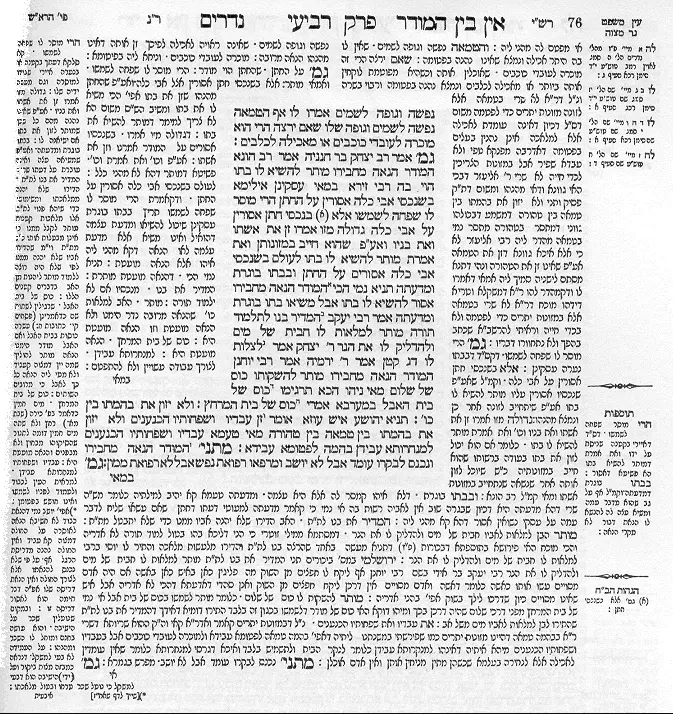
Nedarim 38b - Guemara
נפשה וגופה לשמים אמרו לו אף הטמאה נפשה לשמים וגופה שלו שאם ירצה הרי הוא מוכרה לנוכרים או מאכילה לכלבים:
גמ׳ אמר רב יצחק בר חנניה אמר רב הונא המודר הנאה מחבירו מותר להשיא לו בתו הוי בה רבי זירא במאי עסקינן אילימא בשנכסי אבי כלה אסורין על החתן הרי מוסר לו שפחה לשמשו אלא ב[ש]נכסי חתן אסורין על אבי כלה גדולה מזו אמרו זן את אשתו ואת בניו ואף על פי שהוא חייב במזונותן ואת אמרת מותר להשיא לו בתו לעולם בשנכסי אבי כלה אסורים על החתן ובבתו בוגרת ומדעתה תניא נמי הכי המודר הנאה מחבירו אסור להשיא לו בתו אבל משיאו בתו בוגרת ומדעתה אמר רבי יעקב המדיר בנו לתלמוד תורה מותר למלאות לו חבית של מים ולהדליק לו את הנר רבי יצחק אמר לצלות לו דג קטן אמר רבי ירמיה אמר רבי יוחנן המודר הנאה מחבירו מותר להשקותו כוס של שלום מאי ניהו הכא תרגימו כוס של בית האבל במערבא אמרי כוס של בית המרחץ:
ולא יזון את בהמתו בין כו':
תניא יהושע איש עוזא אומר זן עבדיו ושפחותיו הכנענים ולא יזון את בהמתו בין טמאה בין טהורה מאי טעמא עבדיו ושפחותיו הכנענים למנחרותא עבידן בהמה לפטומא עבידא:
מתני׳ המודר הנאה מחבירו ונכנס לבקרו עומד אבל לא יושב ומרפאו רפואת נפש אבל לא רפואת ממון:
Comments from Rashi on Masechet Nedarim Page 38b
נפשה וגופה לשמים . שאינה ראויה לאכילה לפיכך זן אותה דאינו מהנהו הנאה מרובה: מוכרה לעובדי כוכבים . וניחא ליה בפיטומא: גמ' על החת . שהחתן הוי מודר: הרי מוסר לו שפחה לשמשו . ואמאי מותר: אלא בשנכסי חתן אסורין אצל אבי הכלה . ואע"פ שהחתן מהנהו שזן את בתו אפי' הכי משיא לו את בתו ומשיב הש"ס משום הא לא צריך למימר דמותר להשיא את בתו: דגדולה מזו אמרו . בשנכסיו אסורים על הנודר אמרנו וזן את אשתו: אע"פ וכו' ואת אמרת וכו' . פשיטא דמותר דהא לא מהני כלל: לעולם בשנכסי אבי כלה אסורין על החתן . ודקאמרת הרי מוסר לו שפחה לשמשו תריץ בבתו בוגרת עסקינן שיכול להשיאו ומדעת עצמה דהואיל ואינו משיא אלא מדעת עצמה לאו הנאה דקא מהני ליה איהו אלא הנאה מועטת: תניא נמי הכי . דהנאה מועטת מותרת: המדיר את בנו . מנכסיו אם לא ילמוד תורה: מותר . האב למלאות כו' שהנאה מרובה נדר הימנו ולא הנאה מועטת וזו הנאה מועטת היא: כוס של בית המרחץ . הנאה מועטת היא: למנחרותא עבידן . לצורך עבודה עשויין ולא להתפטם: למנחרותא . לעבודתו והואיל וקי"ל יכול הרב לומר לעבד עשה עמי ואיני זנך אינה הנאה למודר אם זה מפרנס עבדיו: לפטומא עבידא . דטהורה לשחיטה וטמאה לעובד כוכבים: המודר הנאה מחבירו נכנס לבקרו עומד אבל לא יושב . כדמפרש לקמן:
Comments from Tosafot - Nedarim 38b
הרי מוסר שפחה לשמשו . דס''ד דאיירי בקטנה שניסת על ידו ואת אמרת דמותר להשיא בתו הא פשיטא דאסור: בבתו בוגרת דמדעתה . וקמ''ל אף על גב שהוא מדבר עמה ומשיא עצה לה להנשא לו הנאת דבור לא מקרי הנאה:
Nedarim 38b - Mishnah translated into english
both its being and its body belong to Heaven, as it is prohibited for its owner to eat its meat. The Rabbis said to him: The non-kosher animal too, its being belongs to Heaven, and its body is the property of its owner, because if the owner chooses, he sells it to gentiles or feeds it to dogs.
GEMARA: Rav Yitzḥak bar Ḥananya said that Rav Huna said: In the case of one for whom benefit from another is forbidden by vow, he is permitted to marry his daughter to him. Rabbi Zeira discussed it: With what case are we dealing? If we say that it is a case where the property of the father of the bride is forbidden to the groom, this cannot be, as when one marries his daughter to the groom, he provides him a maidservant to serve him and thereby benefits him.
Rather, it is a case where the property of the groom is forbidden to the father of the bride, and although the groom supports the bride, her father is not considered to have benefited from the property of the groom. However, it cannot be this case either, as the Sages stated a halakha with a greater novel element than that in the mishna itself: And with regard to one for whom benefit from another is forbidden by vow, that other person may feed his wife and children, although the one who is bound by the vow is obligated in their support. And you say that it is permitted to marry his daughter to him? Isn’t that obvious?
The Gemara answers: Actually, it is a case where the property of the father of the bride is forbidden to the groom, and where his daughter is a grown woman, and where her father may marry her to another only with her consent. Therefore, it is not from her father that the groom is deriving benefit.
The Gemara comments: That is also taught in a baraita. In the case of one for whom benefit from another is forbidden by vow, it is prohibited for that other person to marry his daughter to him. However, he may marry off his daughter, who is a grown woman, to that other person with her consent.
Similarly, Rabbi Ya’akov said: If one vows that benefit from him is forbidden to his son, in order to induce him to engage in Torah study, the one who took the vow may nevertheless perform actions that provide his son with minor benefit. It is permitted for him to fill a barrel of water for his son and to kindle a lamp for him. Rabbi Yitzḥak said: It is permitted for him to roast a small fish for him. Rabbi Yirmeya said that Rabbi Yoḥanan said: In the case of one for whom benefit from another is forbidden by vow it is permitted for the other to give him a cup of peace to drink. The Gemara asks: What is this cup of peace? Here, in Babylonia, the Sages interpreted this term as referring to a cup of wine given to mourners to drink at the meal of comfort in the house of mourning. In the West, Eretz Yisrael, the Sages said that it is the cup of wine that one drinks upon leaving the bathhouse.
§ We learned in the mishna: And he may not feed the animal of one for whom benefit from him is forbidden, whether it is a kosher animal or whether it is a non-kosher animal. It is taught in a baraita that Yehoshua of Uzza says: One who vows that benefit from him is forbidden to another may feed the other person’s Canaanite slaves and maidservants; however, he may not feed his animal, whether it is a non-kosher animal or whether it is a kosher animal. The Gemara asks: What is the reason for the distinction? The Gemara explains: His Canaanite slaves and maidservants are designated for labor, whereas an animal is designated for fattening. The one bound by the vow derives benefit from the other person feeding the kosher animal when he eats it and derives benefit from the other person feeding the non-kosher animal when he sells it to a gentile.
MISHNA: In the case of one for whom benefit from another is forbidden by vow and he enters his house to visit him, he stands there but does not sit. And that other person heals him with a cure of the nefesh but not a cure of mamon.
Traduction : The William Davidson digital edition of the Koren Noé Talmud, with commentary by Rabbi Adin Even-Israel Steinsaltz.