 Talmud Bavli
Nedarim 83b : Youtube
Daf TubeYoutube
2 video classes :
Nedarim Page 83b
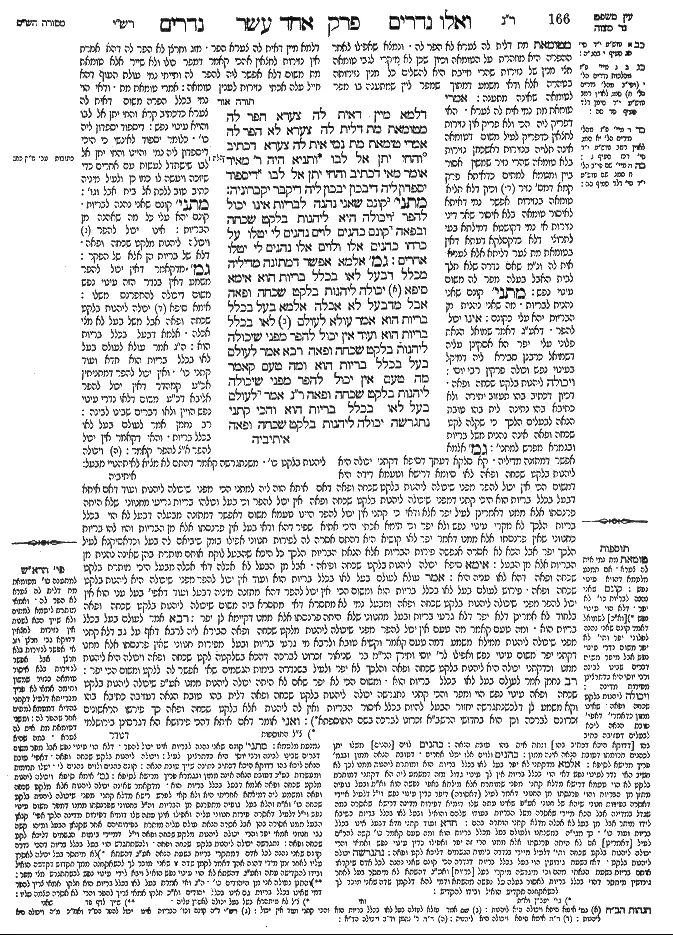
Nedarim 83b - Guemara
דלמא מיין דאית לה צערא הפר לה מטומאת מת דלית לה צערא לא הפר לה אמרי טומאת מת נמי אית לה צערא דכתיב (קהלת ז, ב) והחי יתן אל לבו ותניא היה ר' מאיר אומר מאי דכתיב והחי יתן אל לבו דיספוד יספדון ליה דיבכון יבכון ליה דיקבר יקברוניה מתני׳ קונם שאני נהנה לבריות אינו יכול להפר ויכולה היא ליהנות בלקט שכחה ובפאה קונם כהנים לוים נהנים לי יטלו על כרחו כהנים אלו ולוים אלו נהנים לי יטלו אחרים גמ׳ אלמא אפשר דמתזנה מדיליה מכלל דבעל לאו בכלל בריות הוא אימא סיפא יכולה ליהנות בלקט שכחה ופאה אבל מדבעל לא אכלה אלמא בעל בכלל בריות הוא אמר עולא לעולם לאו בכלל בריות הוא ועוד אין יכול להפר מפני שיכולה ליהנות בלקט שכחה ופאה רבא אמר לעולם בעל בכלל בריות הוא ומה טעם קאמר מה טעם אין יכול להפר מפני שיכולה ליהנות בלקט שכחה ופאה ר"נ אמר לעולם בעל לאו בכלל בריות הוא והכי קתני נתגרשה יכולה ליהנות בלקט שכחה ופאה
Comments from Rashi on Masechet Nedarim Page 83b
דלמא מיין דאית לה צערא הפר . מזג וחרצן לא הפר לה דהא אמרת אין נזירות לחצאין אהכי קאמר דמפר כולו ולא שייר אלא טומאת מת משום דלא אפשר ליה להפר לה ותייתי נמי עולת העוף דהא חייל עלה אכתי נזירות לענין טומאה: אמרי טומאת מת . ודאי הוי נמי בכלל הפרה משום דאית לה צערא כדכתיב קרא והחי יתן אל לבו והויא עינוי נפש: דיספוד יספדון ליה כו' . כלומר יספוד לאינשי כי היכי דיספדון ליה נמי והיינו והחי יתן אל לבו שישתדל לעשות עם אחרים כדי שיזכה ויעשה לו כמו כן ולעיל מיניה כתיב טוב ללכת אל בית אבל וגו': מתני' קונם שאני נהנה לבריות . קונם יהא עלי כל מה שאהנה מן הבריות: אינו יכול להפר ויכולה ליהנות מלקט שבחה ופאה . דלא של בריות הן אלא של הפקר: גמ' מדקאמר דאין יכול להפר משמע דאין בנדר הזה עינוי נפש משום דיכולה להתפרנס משלו: אימא סיפא יכולה ליהנות בלקט שכחה ופיאה אבל מן הבעל לא אכלה . דאי אכלה מבעל היכי מותרת בלקט שכחה ופאה דהא לאו עניה היא: ה"ג אמר עולא לעולם בעל לאו בכלל בריות הוא חדא ועודי קתני כו' . ואין יכול להפר דמתניתין אכ"ע קמהדר דאין יכול להפר אליבא דכ"ע משום דלאו נדרי עינוי נפש הויין ולאו דברים שבינו לבינה: רב נחמן אמר לעולם בעל לאו בכלל בריות . והאי דקאמר אין יכול להפר א"צ להפר קאמר: ויכולה ליהנות בלקט כו' . משנתגרשה קאמר דהתם לא מציא לאיתהנויי מבעל:
Comments from Tosafot - Nedarim 83b
טומאת מת נמי אית לה צערא . אם תמנע מלטמא דהויא עינוי נפש: קונם שאני נהנה לבריות כו' לא יפר . דלא הוי עינוי נפש [וא''כ] לשמואל דאמר קונם שאני נהנה לפלוני יפר ותי' לא יפר משום נדרי עינוי נפש אבל מיפר משום דברים שבינו לבינה ורבי יוסי היא כדתרצינן מפירות מדינה: ויכולה ליהנות בלקט שכחה ופאה . שאינו ממון כדאמרי' דאפי' טובת הנאה ליכא לבעלים דעזיבה כתיב בהו [דדוקא היכא דכתיב בהו] ונתת אית בהו טובת הנאה: כהנים לוים [נהנים] משלו יתן לכהנים תרומתו דטובת הנאה אינה ממון: כהנים ולוים אלו יטלו אחרים . דטובת הנאה ממון ובגמ' פריך מרישא לסיפא: אלמא מדקתני לא יפר בעל לאו בכלל בריות הוא ומותרת ליהנות ממנו לכך לא חשיב האי נדר לעינוי נפש דאי הוי בכלל בריות אין לך עינוי גדול מזה דמשמע ליה הא דקתני דמותרת בלקט לא הוי טעמא דרישא מדלא קתני מפני שמותרת אלא מילתא באפי נפשה הוא וא''ת ובעל גופיה מתזן מן הבריות והוי פרנסתו מן החנוני דאמר לעיל (דאסורה) דיפר כדין עינוי נפש וי''ל דלעיל איירי דאסרה בפירות חנוני שיהא של חנוני אע''פ שאינו עתה שלו דומיא דפירות מדינה דרישא שאסרה במה שגדל במדינה אבל הכא מיירי שאסרה משל הבריות בעודו שלהם והואיל ובעל לאו בכלל בריות כשיבא לידו מותר אבל מן בעל לא אכלה מדלא קתני הותרה בהם: חדא ועוד קתני חדא דבעל אינו בכלל בריות ועוד כו' . כך מגי''ה במשנתנו ולעולם בעל מכלל בריות הוא ומה טעם קאמר כו' קשה להר''ם לעיל [דאמרינן] אם לא היתה פרנסתו אלא ממנו הרי זה יפר ואפילו כדין עינוי נפש ואמאי והרי יכולה ליהנות בלקט שכחה ותי' דלעיל מיירי בנדרה בימות הגשמים דליכא לקט ופאה: נתגרשה יכולה ליהנות בלקט . דאז בשעת גירושין הוי בעל בכלל בריות דנדרה הכי קונם שאני נהנה לכל אדם שיקראו אותם בריות בשעת הנאתי מהם וכי מיגרשה מיקרי בעל [בריות] ואע''ג דהשתא לא מיתסר בעל לאחר גירושין מיתסר דהוי בכלל בריות לאסור בעלה על נפשה מהשתא ודמי להא דלקמן שדה שאני מוכר לך לכשאקחנה תקדיש הואיל ובידו להקדיש:
Nedarim 83b - Mishnah translated into english
Perhaps the husband nullified for her the vow that rendered wine forbidden to her, as she suffers pain when she refrains from drinking it. But as for her vow that impurity imparted by the dead is forbidden to her, he did not nullify it for her, as she suffers no pain by not becoming impure through contact with the dead. Why, then, does she not bring the offerings that must be brought by a nazirite who became ritually impure through contact with the dead? This implies that since the husband can nullify a vow with regard to a matter that would cause her to deprive herself, he can also nullify a vow with regard to a matter that would not cause her to deprive herself.
The Gemara rejects this argument: The Sages say in response that a woman who vows that impurity imparted by the dead is forbidden to her also suffers pain as a result. How so? As it is written: “And the living shall lay it to his heart” (Ecclesiastes 7:2), and it is taught in a baraita that Rabbi Meir would say: What is the meaning of that which is written: “And the living shall lay it to his heart”? This means that one who eulogizes others when they die will in turn be eulogized when he himself dies; one who weeps for others will be wept for when he himself passes away; and one who buries others will himself be buried upon his passing. A woman who cannot participate in the funerals of others because she is barred from contracting impurity through contact with a corpse is distressed by the thought that she will receive similar treatment when she dies. Therefore, her vow involves affliction and can be nullified by her husband. The conclusion is that this case does not present a difficulty for Rabbi Yoḥanan.
MISHNA: If a woman vowed: The property of other people is konam for me, and for that reason I will not benefit from it, her husband cannot nullify her vow, but nevertheless, if she is poor, she may benefit from the agricultural gifts that must be left for the poor: Gleanings, i.e., isolated stalks that fell during the harvest; forgotten sheaves; and produce of the corners [pe’a] of the field that the owner is obligated to leave for the poor. Enjoyment of these gifts is not considered as benefit derived from people, as these gifts are not given voluntarily out of the kindness of the donors, but in the performance of a mitzva.
If one said: I will not let priests and Levites benefit from me, as that is konam for me, they can take the priestly and Levitical gifts from him against his will. If, however, he said: I will not let these specific priests and these specific Levites benefit from me, as that is konam for me, they are taken by others.
GEMARA: The mishna teaches that if a woman vowed not to derive benefit from people, her husband cannot nullify her vow. The Gemara infers from this halakha: Apparently, this is because the woman can be sustained from his, i.e., her husband’s, property, without having to take from others. This proves by inference that in this context a husband is not included in her reference to people, as, although she mentioned people in her vow, she did not mean to prohibit herself from deriving benefit from her husband. The Gemara asks: But say the latter clause of that same part of the mishna, which states: But she may benefit from gleanings, forgotten sheaves, and pe’a. This implies that she may derive benefit from the gifts given to the poor, but she may not eat from property belonging to her husband. Apparently, a husband is in fact included in her reference to people, and she may not benefit from him either.
Ulla said: Actually, a husband is not included in her reference to people, and there is no contradiction. Rather, the mishna provides two reasons why he cannot nullify his wife’s vow. The first reason, which is merely implied by the mishna, is that she can be sustained by her husband. And furthermore there is the stated reason, that he cannot nullify the vow because she may benefit from gleanings, forgotten sheaves, and pe’a.
Rava said the opposite: Actually, a husband is included in her reference to people, and therefore his wife may not benefit from him. And when the mishna states the halakha, it employs the style known as: What is the reason, and it should be understood as follows: What is the reason that the husband cannot nullify his wife’s vow? Because she may benefit from gleanings, forgotten sheaves, and pe’a.
Rav Naḥman said: Actually, a husband is not included in her reference to people, and her vow not to derive benefit from all people does not include him, which is why he cannot nullify it. And this is what the mishna is teaching: The husband cannot nullify his wife’s vow, because even if she becomes divorced and can no longer derive benefit from her husband, as he is now included in her reference to people, she may still benefit from gleanings, forgotten sheaves, and pe’a.
Traduction : The William Davidson digital edition of the Koren Noé Talmud, with commentary by Rabbi Adin Even-Israel Steinsaltz.
Nedarim 83b : Significance
Next step
Finished studying Nedarim 83b? Carry on with the rest of the tractate.
Study Nedarim 84aFrequently asked questions: Nedarim 83b
Where is Nedarim 83b in tractate Nedarim?
Nedarim 83b is page 164 of 180 in tractate Nedarim (Seder Nashim).
When is daf 83 of Nedarim studied in Daf Yomi?
Daf Yomi covers one daf a day, both sides. Daf 83 of Nedarim will be studied on June 19, 2030.
Is there a video class on Nedarim 83b?
Yes, by Daf Tube, Rabbi Dr. Moshe Weisblum. These classes were published on YouTube by their authors and are gathered on this site.
What is tractate Nedarim about?
The Masechet Nedarim is the third tractate of the Seder Nashim. The gemara Nedarim is the study of the laws relating to the neder, a kind of vow or oath in Judaism. The Nedarim tractate is a gemara which contains 11 chapters.
Your study is also dedicated to them
- L'ilui Nishmat אליעזר בן רחל
- L'ilui Nishmat Rav Chlomo Ben Jamilla
- L'ilui Nishmat רינה בת לדיסיה