 Talmud Bavli
The learning on the whole site is dedicated : L'ilui Nishmat Rav Chlomo Ben Jamilla
The learning on the whole site is dedicated : L'ilui Nishmat Amram ben Itshak Loubaton
The learning on the whole site is dedicated : L'ilui Nishmat Avraham Ben Simha
Nedarim 4b : Youtube
Daf TubeYoutube
2 video classes :
Nedarim Page 4b
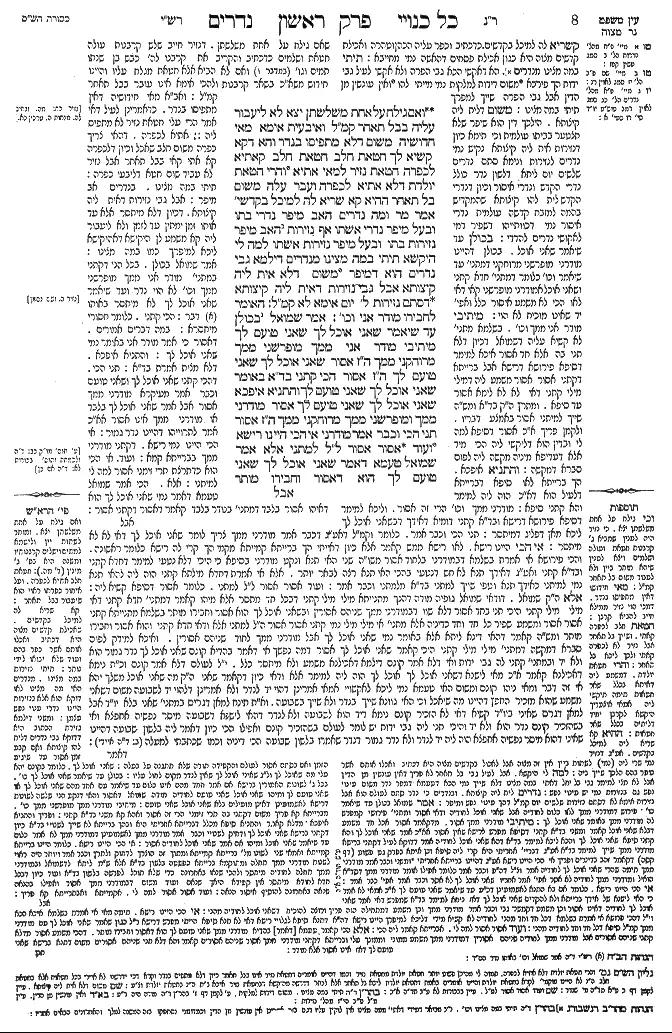
Nedarim 4b - Guemara
ואם גילח על אחת משלשתן יצא לא ליעבור עליה בבל תאחר קמ''ל ואיבעית אימא מאי חדושיה משום דלא מתפיסו בנדר והא דקא קשיא לך חטאת חלב חטאת חלב קאתיא לכפרה חטאת נזיר למאי אתיא והרי חטאת יולדת דלא אתיא לכפרה ועבר עלה משום בל תאחר ההיא קא שריא לה למיכל בקדשי' אמר מר ומה נדרים האב מיפר נדרי בתו ובעל מיפר נדרי אשתו אף נזירות האב מיפר נזירות בתו ובעל מיפר נזירות אשתו למה לי היקשא תיתי במה מצינו מנדרים דילמא גבי נדרים הוא דמיפר משום דלא אית ליה קיצותא אבל גבי נזירות דאית ליה קיצותא דסתם נזירות ל' יום אימא לא קמ''ל האומר לחבירו מודר אני וכו' אמר שמואל בכולן עד שיאמר שאני אוכל לך שאני טועם לך מיתיבי מודר אני ממך מופרשני ממך מרוחקני ממך ה''ז אסור שאני אוכל לך שאני טועם לך ה''ז אסור הכי קתני בד''א באומר שאני אוכל לך שאני טועם לך והתניא איפכא שאני אוכל לך שאני טועם לך אסור מודרני ממך ומופרשני ממך מרוחקני ממך ה''ז אסור תני הכי וכבר אמר מודרני אי הכי היינו רישא ועוד אסור אסור ל''ל למתני אלא אמר שמואל טעמא דאמר שאני אוכל לך שאני טועם לך הוא דאסור וחבירו מותר
Comments from Rashi on Masechet Nedarim Page 4b
שאם גילח על אחת משלשתן . דנזיר חייב שלש קרבנות עולה חטאת ושלמים כדכתיב והקריב את קרבנו לה' כבש בן שנתו תמים וגו' (במדבר ו) ואם לא הביא אלא חטאת מגלח עליו והיינו חידוש משא"כ בשאר קרבנות ולהכי אימא אינו עובר בבל תאחר קמ"ל: ואב"א מאי חידושיה דאין מתפיסו בנדר . כדאמרינן לעיל דאי אמר הרי עלי חטאת נזיר לא מתפיס ליה: אתיא לכפרה . דהאי צריך כפרה משום חלב שאכל וכיון דלכפרה קא אתי קאי בבל תאחר אבל נזיר לא עביד שום חטא דליבעי כפרה: תיתי במה מצינו . בנדרים אב מיפר: אבל גבי נזירות דאית ליה קיצותא . דכיון דלא מיתסר אלא עד אותו זמן ימתין עד לזמן ולא ליעבור ליה קא משמע לן היקישא דא היקישא ליכא למיפרך כמו במה מצינו: אמר שמואל בכולן . בכל הני דקתני במתני' מודר אני ממך מופרשני ממך וכו' לא הוי נדר ועד שיאמר שאני אוכל לך לא מיתסר באותו דבר: הכי קתני . כלומר חסורי מיחסרא: במה דברים אמורים . דאסור כי אמר מודר אני באומר נמי שאני אוכל לך: והתניא איפכא . דלא מצית אמרת בד"א: תני הכי . דהכי קתני שאני אוכל לך ושאני טועם וכבר אמר מעיקרא מודרני ממך אסור אבל אמר שאני אוכל לך בלבד או מודרני ממך אינו אסור אא"כ אמר לתרוייהו דהיינו נדר גמור: אי הכי היינו נמי רישא . דקתני מודרני ממך בברייתא קמא: ועוד . אי הכי הוא כדתרצת תרי זימני אסור למה לי למיתני: אלא . הכי אמר שמואל טעמא דאמר נמי שאני אוכל לך הוא דאיהו אסור בלבד דמתני' בנודר בלבד קאמר דאסור דקתני אסור:
Comments from Tosafot - Nedarim 4b
וכי גילח על אחת משלשתן יצא . כי נזיר היה לענין שמביא ג' קרבנות חטאת ועולה ושלמים ויצא לענין שיהא מותר ביין ולא לעבור משום בל תאחר קמ''ל: מאי חידושו דאין מתפיסו בנדר . דמכי הוי נזיר ממילא חייב להביא קרבן: חטאת חלב לכפרה קאתי . ושייך בל תאחר אבל נזיר לא לכפרה קאתי ולכך ליכא בל תאחר: והרי חטאת יולדת . דמשמע ליה דאיתא בכלל שאר חטאות תימה תיקשי ליה אמאי איצטריך היקשא לקרבן יחיד דליתיה בכלל שאר חטאות: ההיא קא שריא ליה למיכל בקדשים . אע''ג דנזיר נמי שרי ליה (נמי) לשתות ביין אין זה מצוה אבל לאכול בקדשים מצוה היא דכתיב ואכלו אותם אשר כופר בהם הלכך שייך ביה: למה לי היקשא . אבל לעיל גבי בל תאחר לא פריך דאין עונשין מן הדין אבל לא מצי למימר גבי בל יחל דאתי במה מצינו דלא שייך נמי הכא דטעמא דמפר נדר משום עינוי נפש גם בנזירות נמי יש עינוי נפש: נדרים לית ליה קיצותא . ובנדרים כי נדר סתם לעולם הוא אבל נזירות אימא לא דסתם נזירות שלשים יום קמ''ל דהך עינוי נפש ומיפר: אמר שמואל בכולן עד שיאמר כו' . פירוש דמודרני ממך לאו כלום לחודיה אבל שאני אוכל לחודיה ודאי אסור ומתני' פירושי קמפרש לה מודרני ממך באומר שאני אוכל לך: מיתיבי מודרני ממך אסור . מדקאמר אסור אכל חד משמע דבלא שאני אוכל קאמר ומשני בד''א קתני דסיפא מפרש לרישא שאין אסור אא''כ אמר שאני אוכל לך והא קתני סיפא שאני אוכל לך והכא ליכא למימר בד''א דהא שאני אוכל לחודיה אמר דדוקא לעיל דקתני ברישא מודרני ממך שייך למימר בד''א אע''ג דבריי' אחריתי היא קרי ליה סיפא וכן איתא בפרק גט פשוט (דף קסה) דקאמר זהב בדינרים ופריך אי הכי היינו רישא אע''ג דהיינו ברייתא אחריתי ומשני וכבר אמר מודרני ממך תימה שהרי שאני אוכל לך לחודיה אמר וצ''ל דה''פ וכבר אמר כלומר אפילו אומר מודרני ממך דסד''א הואיל ומודרני ממך לחודיה לא אסר אפי' אמר אחריו שאני אוכל לך לא אסר וכבר אמר אפי' כבר אמר: אי הכי היינו רישא . כלומר אם בא התנא לאשמועינן דכ''ע עד שיאמר שאני טועם לך א''כ אמאי לא אמר כי האי לישנא של אידך ברייתא ולא להקדים שאני אוכל לך דאז ניחא למימר בד''א שמפרש דאי אמר שאני אוכל לך לחודיה דאינו אסור וכן משמע דקמשני גבי וכבר אמר מודרני ממך וכן משמע דמתחילה הוה פריך ורוצה להוכיח דשאני אוכל לחודיה מהני: אי הכי היינו רישא . תימה מאי אי אמרת בשלמא איכא הכא וי''ל דהכי פרושא אי אמרת בשלמא דכל חד וחד מהני לחודיה לא קשיא מידי דליכא למיפרך היינו רישא דה''א דתנא סיפא לגלויי רישא דאי לא תנא סיפא הייתי מפרש דרישא ר''ל כגון שאמר שאני אוכל לך עם מודרני ממך קמ''ל סיפא דכל חד וחד לחודיה מהני: ועוד אסור אסור למה לי . אברייתא קאמר ליה הכי: אלא הכי קאמר טעמא [דאמר] בהדיא מודרני ממך שאני טועם לך הוא דאסור וחבירו מותר . דהכי משמע אסור מדלא קתני שניהם אסורים אבל מודרני ממך לחודיה שניהם אסורין דמודרני ממך משמע ממוני וממונך עלי וברייתא דקתני מודרני ממך אסור שניהם אסורים קאמר והא דלא תני שניהם אסורים משום דתנא ברישא שאני טועם לך דאז אינו אסור אלא מודר:
Nedarim 4b - Mishnah translated into english
if he shaves upon bringing one of the three offerings that a nazirite must bring when completing his term as a nazirite, i.e., a burnt-offering, a sin-offering, and a peace-offering, he has fulfilled his obligation to shave and the restrictions of a nazirite are lifted, he therefore does not violate the prohibition: You shall not delay, for delaying the other offerings. Consequently, it teaches us that the prohibition against delaying applies to these offerings.
And if you wish say: What is the novelty of the nazirite? The halakha of naziriteship is considered a novelty because the offerings of a nazirite cannot be accepted through a vow. And that which poses a difficulty for you based on the fact that one cannot accept upon himself a sin-offering of forbidden fat through a vow either, and nevertheless the prohibition against delaying applies, can be resolved. A sin-offering of forbidden fat comes for the purpose of atonement, and therefore if one delays bringing it he violates the prohibition against delaying. However, for what does the sin-offering of a nazirite come? Since it does not come to atone for a sin, one might have thought that the prohibition against delaying does not apply.
The Gemara asks: But there is the precedent of the sin-offering of a woman who gave birth, which also does not come for the purpose of atonement, and yet if she does not bring the offering on time she still transgresses due to the prohibition: You shall not delay. The Gemara answers: That sin-offering of a woman who gave birth permits the woman to eat consecrated food. Although it does not come to effect atonement, it does come to permit a matter. On the other hand, the sin-offering of a nazirite does not permit anything, and therefore the fact that one cannot accept upon himself an obligation to bring this offering is a novelty. Consequently, it was necessary for there to be a separate source to indicate that one is liable for violating the prohibition against delaying in the case of this offering.
§ The Master said in the baraita cited above: Just as with regard to vows, a father may nullify the vows of his daughter and a husband may nullify the vows of his wife, so too, with regard to nazirite vows, a father may nullify the nazirite vows of his daughter and a husband may nullify the nazirite vows of his wife. The Gemara asks: Why do I need the juxtaposition in the verse to teach us this halakha? Let this halakha come through the method of analogy known as: What do we find, from the halakha with regard to vows. In other words, the halakha in the case of regular vows should serve as a legal precedent that can be applied to nazirite vows even without a biblical juxtaposition.
The Gemara responds: If not for the juxtaposition, one might have said that perhaps it is only with regard to vows that he may nullify her statements because there is no time limit with regard to vows, but with regard to naziriteship, which has a time limit, as unspecified naziriteship is for thirty days, one might say no, he may not nullify her vows. Therefore, it teaches us through juxtaposition that he may nevertheless nullify her vows.
§ It is taught in the mishna with regard to one who says to his fellow: I am avowed from you, or another intimation of a vow, that the vow takes effect. Shmuel said: In all these cases, the vow does not take effect until he says: I am avowed from you with regard to that which I eat of yours, or: That which I taste of yours. Without this addition, the statement: I am avowed from you, is not considered even an intimation of a vow.
The Gemara raises an objection based on the following baraita: If one says: I am avowed from you, or: I am separated from you, or: I am distanced from you, he is prohibited from benefiting from that individual. If he says: That which I eat of yours, or: That which I taste of yours, he is prohibited from eating or tasting that individual’s food. This indicates that the phrases mentioned in the first clause of the baraita take effect as vows even if he does not add the phrases mentioned in the latter clause. The Gemara answers: This is what the baraita is teaching: In what case is this statement said i.e., if one says: I am avowed from you, or the like, the vow takes effect? It is in a case of one who says: That which I eat of yours, or: That which I taste of yours.
The Gemara asks: But isn’t it taught in a baraita in the opposite order? If one says: That which I eat of yours, or: That which I taste of yours, he is prohibited from eating or tasting that individual’s food, i.e., the vow takes effect. If he says: I am avowed from you, or: I am separated from you, or: I am distanced from you, he is likewise prohibited. In this case, the baraita cannot be interpreted as explained above, and it appears that if one said: I am avowed from you, the vow takes effect even if he did not say: I am avowed from you with regard to that which I taste of yours. The Gemara answers: Teach the baraita as follows: The vow takes effect in the cases mentioned in the first clause when he already said: I am avowed.
The Gemara asks: If so, this is the same as the first baraita cited above. And furthermore, if the vow takes effect only if he combined the statements mentioned in the first and latter clauses of the baraita, why does the baraita teach that he is prohibited in the first clause of the baraita and then repeat that he is prohibited in the second clause of the baraita? The repetition of this ruling indicates that these are two separate cases.
Rather, Shmuel actually said as follows: The reason is that he said: I am avowed from you with regard to that which I eat of yours, or with regard to that which I taste of yours; it is for this reason that he is prohibited from benefiting from his fellow, and his fellow is permitted to benefit from him, as this formulation indicates that he is applying his vow only to himself.
Traduction : The William Davidson digital edition of the Koren Noé Talmud, with commentary by Rabbi Adin Even-Israel Steinsaltz.