 Talmud Bavli
Nedarim 3b : Youtube
Daf TubeYoutube
2 video classes :
Nedarim Page 3b
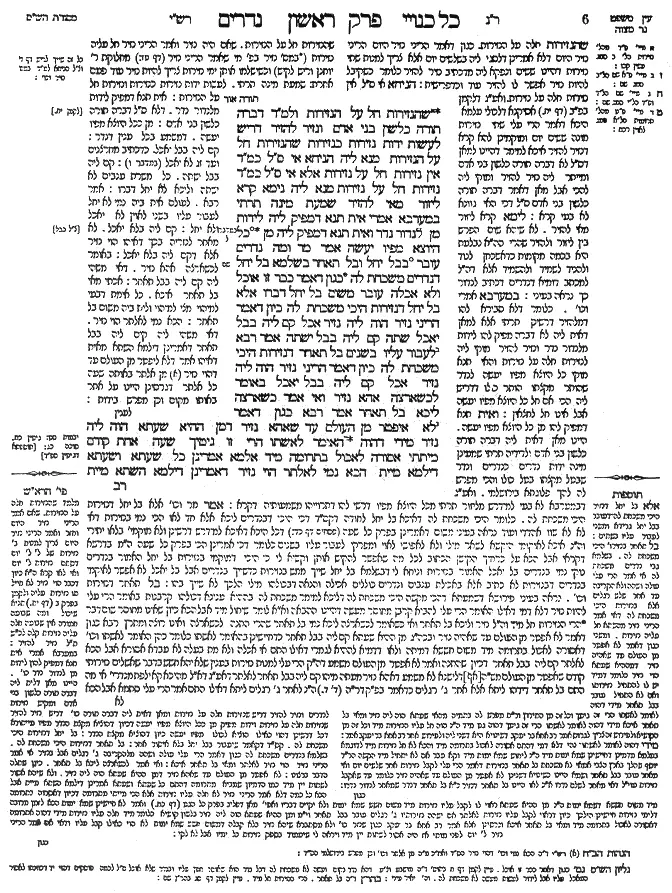
Nedarim 3b - Guemara
שהנזירות חל על הנזירות ולמ''ד דברה תורה כלשון בני אדם ונזיר להזיר דריש לעשות ידות נזירות כנזירות שהנזירות חל על הנזירות מנא ליה הניחא אי ס''ל כמ''ד אין נזירות חל על נזירות אלא אי ס''ל כמ''ד נזירות חל על נזירות מנא ליה נימא קרא ליזור מאי להזיר שמעת מינה תרתי במערבא אמרי אית תנא דמפיק ליה לידות מן לנדור נדר ואית תנא דמפיק ליה מן (במדבר ל ג) כל היוצא מפיו יעשה אמר מר ומה נדרים עובר (במדבר ל ג) בבל יחל ובל תאחר בשלמא בל יחל דנדרים משכחת לה כגון דאמר ככר זו אוכל ולא אכלה עובר משום בל יחל דברו אלא בל יחל דנזירות היכי משכחת לה כיון דאמר הריני נזיר הוה ליה נזיר אכל קם ליה בבל יאכל שתה קם ליה בבל ישתה אמר רבא לעבור עליו בשנים בל תאחר דנזירות היכי משכחת לה כיון דאמר הריני נזיר הוה ליה נזיר אכל קם ליה בבל יאכל באומר לכשארצה אהא נזיר ואי אמר כשארצה ליכא בל תאחר אמר רבא כגון דאמר לא איפטר מן העולם עד שאהא נזיר דמן ההיא שעתא הוה ליה נזיר מידי דהוה האומר לאשתו הרי זו גיטיך שעה אחת קודם מיתתי אסורה לאכול בתרומה מיד אלמא אמרינן כל שעתא ושעתא דילמא מיית הכא נמי לאלתר הוי נזיר דאמרינן דילמא השתא מיית
Comments from Rashi on Masechet Nedarim Page 3b
שהנזירות חל על הנזירות . שאם היה נזיר ואמר הריני נזיר חל עליה נזירות (במס' נזיר בפ' מי שאמר הריני נזיר (דף טז:) מחלוקת ר' יוחנן וריש לקיש) וכשישלמו אותן ימי נזירות צריך להיות נזיר עוד פעם אחרת: שמעת מינה תרתי . לעשות ידות נזירות כנזירות ונזירות חל על הנזירות: אית תנא דמפיק לידות מלנדור נדר . דלא ס"ל דברה תורה כלשון בני אדם: מן ככל היוצא מפיו יעשה . דמשמע בכל ענין דנדר: קם ליה בבל יאכל . כדכתיב מחרצנים ועד זג לא יאכל (במדבר ו): קם ליה בבל ישתה . כל משרת ענבים לא ישתה וליכא לא יחל דברו: אמר רבא . לעולם אית ביה כמי לא יחל לעבור עליו בשני לאוין לא יאכל ולא יחל: קם ליה בלא יאכל . לא מאחר לנזריה בכך דאיהו הוי נזיר אלא דקם ליה בלא יאכל: באומר לכשארצה אהא נזיר . דאי משהי ליה קם ליה בבל תאחר: אכתי מאי בל תאחר איכא . כל אימת דבעי למיהוי מצי למיהוי ולית ביה משום בל תאחר: הכא נמי לאלתר הוי נזיר . דאי משהי ליה קים ליה בבל תאחר דאמרינן דילמא השתא מאית דאיהו אמר דלא ליפטר מן העולם עד דהוי נזיר מן אלתר באותה שעה כל אלתר דגרסינן היינו על אתר באותו מקום וכן מפרש בידות:
Comments from Tosafot - Nedarim 3b
אלא בל יחל דנזיר היכי משכחת לה . דעובר בבל יחל גרידא ומשני לעבור עליו בשתים: בל תאחר בנזירו' היכי משכחת לה . בשלמא גבי נדרים משכחת לה אי אמר הרי עלי עולה ושהה ולא הקריבה עד אחר שלש רגלים אלא בנזירות היכי משכחת לה דאי אמר הריני נזיר מהשתא חל עליה נזירות ומשני . כגון דאמר לא אפטר מן העולם עד שאהיה נזיר דמההיא שעתא הוי נזיר כלומר דמיד יש לו להתחיל נזירותו ואם לא התחיל עובר בבל תאחר מידי דהוה לאומר לאשתו הרי זה גיטך וכל זה מן התירוץ ור''ת מפרש לה בתמיה מהאי שעתא הוה ליה נזיר ומאי בל תאחר איכא מידי דהוה לאומר לאשתו הרי זה גיטך דהוה גט מיד ה''נ הוה חל עליו הנזירות מיד וכל זה מן הקושיא ולפירוש זה צריך לגרוס אמר רב אחא בר יעקב דשינויא היא דשני ליה ולפירוש אחר רב אחא בר יעקב אמר: מידי דהוה לאומר לאשתו . נהי דלא דמי דהתם אסורה לאכול בתרומה מיד והכא לא חל נזירות מיד לדוגמא בעלמא מדמינן דחיישינן שמא ימות מיד ה''נ ליחוש שמא ימות מיד וקא עבר אם לא יתחיל מיד הקשה הר''ר יוסף שהלך בארץ הצבי אמאי לא משכחת בל תאחר בנזירות דאמר הרי עלי לקבל נזירות אחר שלשים יום ואי מאחר עובר בבל תאחר ושמא היינו כשינויא דשנינן לא אפטר מן העולם עד שאהיה נזיר כלומר עד שאקבל נזירות עוי''ל דאי מאחר לשלם נדרו א''כ לאו היינו בל תאחר דנזיר כ''א בל תאחר דנדר שמאחר לנדור נדרו:
Nedarim 3b - Mishnah translated into english
that a term of naziriteship takes effect upon a previously accepted term of naziriteship. Consequently, if one became a nazirite and then again declared: I am hereby a nazirite, then when his term of naziriteship is completed he must observe a second term of naziriteship.
The Gemara asks: And according to the one who says that the Torah spoke in the language of men and therefore nothing can be derived from the phrase “to utter a vow [lindor neder],” and he expounds the phrase “the vow of a nazirite to consecrate himself [nazir lehazir]” to render intimations of nazirite vows like nazirite vows, from where does he derive that a term of naziriteship takes effect upon a previously accepted term of naziriteship? This works out well if he holds in accordance with the one who says that a term of naziriteship does not take effect upon a previously accepted term of naziriteship; however, if he holds in accordance with the one who says that a term of naziriteship takes effect upon a previously accepted term of naziriteship, from where does he derive this halakha?
The Gemara answers: Let the verse say: To consecrate himself [lizor]. What is the reason the verse expressed this same idea with the word lehazir? Learn two halakhot from this: That intimations of nazirite vows are considered nazirite vows, and that a term of naziriteship takes effect upon a previously accepted term of naziriteship.
The Gemara adds: In the West, Eretz Yisrael, they say: There is a tanna who derives intimations of vows from the phrase “to utter a vow [lindor neder],” as he holds that the Torah did not speak in the language of men. And conversely, there is a tanna who holds that the Torah spoke in the language of men, and therefore derives this halakha of intimations from the verse: “He shall do according to all that proceeds out of his mouth” (Numbers 30:3). The inclusive formulation of this verse comes to include intimations of vows.
§ The Master said in the baraita cited earlier: Just as with regard to vows, one who breaks his vow transgresses the prohibition: He shall not profane, and one who does not fulfill his vow in time transgresses the prohibition: You shall not delay, so too, the same is true with regard to nazirite vows. The Gemara asks: Granted, you can find a case where one transgresses the prohibition: He shall not profane, in the case of vows. For example, where one said: I will eat this loaf, and he does not eat it, he violates the prohibition: He shall not profane his word.
However, with regard to transgressing the prohibition: He shall not profane, in the case of nazirite vows, how can you find these circumstances? Once he said: I am hereby a nazirite, he is a nazirite as of that moment. If he then ate grapes, he is liable for violating the prohibition: He shall not eat (see Numbers 6:4), and if he drank wine, he is liable for violating the prohibition: He shall not drink (see Numbers 6:3). When would he ever become liable for violating the prohibition against profanation? Rava said: The prohibition against profanation serves to render him liable for violating two prohibitions. Consequently, if he eats grapes or drinks wine, he transgresses the relevant prohibition in addition to the prohibition against profanation.
The Gemara further asks: With regard to violating the prohibition: You shall not delay, in the case of nazirite vows, how can you find these circumstances? Once he said: I am hereby a nazirite, he is a nazirite as of that moment. If he then ate grapes, he is liable for violating the prohibition: He shall not eat. When would he ever become liable for violating the prohibition against delaying? The Gemara answers: It is when he specifically says: I will become a nazirite when I wish, in which case he does not become a nazirite immediately. The Gemara asks: But if he said: When I wish, there is no prohibition of: You shall not delay, as there is no particular time by which he must become a nazirite.
Rava said: It is, for example, when he said: I will not depart the world until I become a nazirite, as he is a nazirite from that time because he does not know when he will depart this world. This is just as it is in the case of a man who says to his wife: This is your bill of divorce that will take effect one hour before my death. If he is a priest and she is the daughter of a non-priest, she is prohibited from partaking of teruma immediately. Apparently, we say every moment that perhaps he is now dead and she is therefore already divorced. Here, too, with regard to naziriteship, he is a nazirite immediately, as we say that perhaps he is now about to die.
Traduction : The William Davidson digital edition of the Koren Noé Talmud, with commentary by Rabbi Adin Even-Israel Steinsaltz.