 Talmud Bavli
Nedarim 32b : Youtube
Daf TubeYoutube
2 video classes :
Nedarim Page 32b
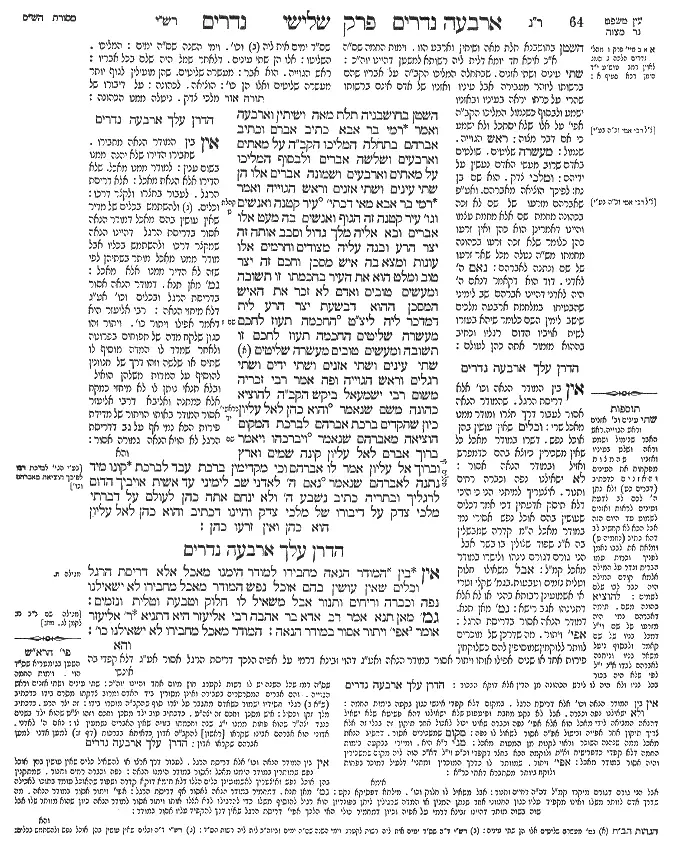
Nedarim 32b - Guemara
השטן בחושבניה תלת מאה ושיתין וארבעה ואמר רמי בר אבא כתיב אברם, וכתיב אברהם בתחילה המליכו הקב"ה על מאתיים וארבעים ושלושה איברים ולבסוף המליכו על מאתיים וארבעים ושמונה איברים אלו הן שתי עינים ושתי אזניים וראש הגוייה ואמר רמי בר אבא מאי דכתיב עיר קטנה ואנשים וגו' (קהלת ט, יד) עיר קטנה זה הגוף ואנשים בה מעט אלו איברים ובא אליה מלך גדול וסבב אותה זה יצר הרע ובנה עליה מצודים וחרמים אלו עוונות ומצא בה איש מסכן וחכם זה יצר טוב ומלט הוא את העיר בחכמתו זו תשובה ומעשים טובים ואדם לא זכר את האיש המסכן ההוא דבשעת יצר הרע לית דמדכר ליה ליצר טוב החכמה תעוז לחכם מעשרה שליטים (קהלת ז, יט) החכמה תעוז לחכם זו תשובה ומעשים טובים מעשרה שליטים שתי עיניים ושתי אזניים ושתי ידיים ושתי רגליים וראש הגוייה ופה אמר רבי זכריה משום רבי ישמעאל ביקש הקב"ה להוציא כהונה משֵם שנאמר והוא כהן לאל עליון (בראשית יד, יח) כיוון שהקדים ברכת אברהם לברכת המקום הוציאה מאברהם שנאמר ויברכהו ויאמר ברוך אברם לאל עליון קונה שמים וארץ וברוך אל עליון (בראשית יד יט-כ) אמר לו אברהם וכי מקדימין ברכת עבד לברכת קונו מיד נתנה לאברהם שנאמר נאם ה' לאדני שב לימיני עד אשית אויביך הדום לרגליך (תהלים קי, א) ובתריה כתיב נשבע ה' ולא ינחם אתה כהן לעולם על דברתי מלכי צדק (תהלים קי, ד) על דיבורו של מלכי צדק והיינו דכתיב והוא כהן לאל עליון הוא כהן ואין זרעו כהן
הדרן עלך ארבעה נדרים
מתני׳ אין בין המודר הנאה מחבירו למודר הימנו מאכל אלא דריסת הרגל וכלים שאין עושין בהם אוכל נפש המודר מאכל מחבירו לא ישאילנו נפה וכברה וריחיים ותנור אבל משאיל לו חלוק וטבעת וטלית ונזמים גמ׳ מאן תנא אמר רב אדא בר אהבה רבי אליעזר היא דתניא רבי אליעזר אומר אפילו ויתור אסור במודר הנאה המודר מאכל מחבירו לא ישאילנו כו'
Comments from Rashi on Masechet Nedarim Page 32b
שס''ד ימים אית ליה וכו' . וימי השנה שס''ה ימים: המליכו . השליטו: אלו הן שתי עיניים . דלאחר שמל היה שלם בכל אבריו: ראש הגוייה . הוא אבר: מעשרה שליטים . שהן מועילין לגוף יותר מעשרה שליטים ואלו הן כו': הוציאה . לכהונה: על דיבורו של מלכי צדק . ניטלה ממנו הכהונה: אין בין המודר הנאה מחבירו . שחבירו הדירו שלא יהנה ממנו בשום ענין: למודר ממנו מאכל . שלא הדירו אלא הנאת מאכל: אלא דריסת הרגל . לעבור בחצרו ולקצר דרכו: וכלים . ולהשתמש בכלים של מדיר שאין עושין בהם מאכל דמודר הנאה אסור בדריסת הרגל דהיינו הנאה שמקצר דרכו ולהשתמש בכליו אבל מודר ממנו מאכל מותר בשתיהן לפי שזה לא הדיר ממנו אלא מאכל: גמ' מאן תנא . דמודר הנאה אסור בדריסת הרגל ובכלים וכו' אע''ג דלא מיחזי הנאה: רבי אליעזר היא דאמר אפילו ויתור כו' . ויתור זהו כגון שלקח מדה של תפוחים בפרוטה ולאחר שמדד לו המדה מוסיף לו שתים או שלשה וזהו דרך של חנוונין להוסיף על המדות משלהן הואיל ובלא תנאי נותן לו לא מיחזי כמקח אלא כמתנה ואליבא דרבי אליעזר אסור המודר באותו הויתור של מדידת פירות הכא נמי אף על גב דדריסת הרגל לא הויא הנאה גמורה אסור:
Comments from Tosafot - Nedarim 32b
שתי עינים וב' אזנים וראש הגוייה . ראש האבר שנימול ושמע וראה ושלט בעיניו ואזניו שהמצות מפקחות את העינים והאזנים כדכתיב (דברים כט) ולא נתן ה' לכם לב לדעת ועינים לראות ואזנים לשמוע עד היום הזה אבל הכא לא קחשיב לב דהא כתיב (נחמיה ט) ומצאת את לבבו נאמן לפניך וכרות עמו הברית ונדר על המילה אלמא קודם המילה היה כבר לבו שלם לשמים: להוציא כהונה משם . תימה דאברהם נמי היה מזרעו של שם וי''ל דמכל בניו של שם קאמר ולבסוף ניטל משאר בניו וניתנה לאברהם לבדו א''נ י''ל לפי שלא היה בכור בכל בניו ולא היה לו לירש הכהונה מן הדין אלא דוקא הבכור: אין בין המודר הנאה וכו' אלא דריסת הרגל . במקום דלא קפדי אינשי כגון בקעה בימות החמה: ולא ישאילנו נפה וכברה . אבל לא נקט מחבת ופיטפוט שלא ישאילנו דהא פשיטא שלא ישאיל דהנאה המביאה לידי מאכל הוא אלא אפי' נפה וכברה שאינו יכול לאכול אחר תיקון זה בכלי זה אלא צריך תיקון אחר אפייה ובישול אפ''ה אסור לשאול לו נפה: מקום שמשכירים אסור . דחשיב הנאת מאכל ממה שנהנה השוכר וראוי לקנות מן המעות מאכל: מני ר''א היא . ומיירי בבקעה בימות החמה דלא קפדי כדפרישית וא''ת ולוקמה הכא בחצר דקפדי וכ''ע וי''ל דא''כ הוה ליה מקום שמשכירין והיה אסור במודר מאכל: אפי' ויתור . שמוותר לו כדרך המוכרין ומתני' דלעיל דמוכר בפחות ולוקח ביותר מסתברא דאתי כר''א:
Nedarim 32b - Mishnah translated into english
The letters of the term the Satan [haSatan] in numerical value is 364, which equals the number of days of the year, except for Yom Kippur, during which he has no power. And Rami bar Abba said: It is written “Abram,” and after he was commanded to perform circumcision it is written “Abraham” (Genesis 17:5). Initially the Holy One, Blessed be He, enthroned him as ruler over 243 limbs, which is the numerical equivalent of the letters of the word Abram. And in the end, after he was circumcised, He enthroned him as ruler over 248 limbs, which is the numerical equivalent of the letters of the word Abraham.
These are the additional limbs: Two eyes, and two ears, and the tip of the sex organ. Following his circumcision, he had total control over them, and they performed only according to his will.
And Rami bar Abba said: What is the meaning of that which is written: “There was a little city and few men in it, and there came a great king against it, and besieged it, and built great bulwarks against it. Now there was found in it a man poor and wise, and he by his wisdom delivered the city; yet no man remembered that same poor man” (Ecclesiastes 9:14–15)? “A little city,” this is referring to the body; “and few men in it,” this is referring to the limbs; “and there came a great king against it and besieged it,” this is referring to the evil inclination; “and built great bulwarks against it,” these are sins.
The Gemara expounds on the next section of the verse: “Now there was found in it a man poor and wise,” this is referring to the good inclination; “and he by his wisdom delivered the city,” this is referring to repentance and good deeds that are caused by the good inclination. “Yet no man remembered that same poor man” means that when the evil inclination overcomes the good inclination no one remembers the good inclination.
The Gemara interprets the following verse in a similar homiletical manner: “Wisdom is a stronghold to the wise man more than ten rulers that are in a city” (Ecclesiastes 7:19). “Wisdom is a stronghold to the wise man,” this is referring to repentance and good deeds. “More than ten rulers,” these are the two eyes, and two ears, and two hands, and two legs, and the tip of the sex organ, and the mouth, which are the limbs that are used by a person to interact with the world.
Rabbi Zekharya said in the name of Rabbi Yishmael: The Holy One, Blessed be He, wanted the priesthood to emerge from Shem, so that his children would be priests, as it is stated: “And Melchizedek king of Salem brought forth bread and wine; and he was priest of God the Most High” (Genesis 14:18). Once Melchizedek, traditionally identified as Shem, placed the blessing of Abraham before the blessing of the Omnipresent, He had the priesthood emerge from Abraham in particular, and not from any other descendant of Shem.
As it is stated: “And he blessed him and said: Blessed be Abram of God Most High, Maker of heaven and earth, and blessed be God the Most High” (Genesis 14:19–20). Abraham said to him: And does one place the blessing of the servant before the blessing of his master? You should have blessed God first. Immediately the Holy One, Blessed be He, gave the priesthood to Abraham, as it is stated: “The Lord says to my lord: Sit at My right hand, until I make your enemies your footstool” (Psalms 110:1), and afterward it is written: “The Lord has sworn, and will not repent: you shall be a priest forever, because you are a king of righteousness [al divrati malki tzedek]” (Psalms 110:4), which is explained homiletically to mean: Due to the improper words [divrati] of Melchizedek, the offspring of Abraham shall be priests of God forever.
The Gemara comments: And this is as it is written: “And he was priest of God the Most High” (Genesis 14:18), which emphasizes that he, Melchizedek, is a priest, but his children will not be priests.
MISHNA: The difference between one for whom benefit from another is forbidden by vow [hamuddar hana’a meḥaveiro] and one for whom benefit from his food is forbidden by vow concerns only setting foot on the other person’s property and borrowing from that person utensils that one does not use in preparation of food but for other purposes. Those two benefits are forbidden to the former but permitted to the latter.
Therefore, with regard to one for whom benefit from another’s food is forbidden by vow, that person may not lend him utensils used in the preparation of food, e.g., a sieve, or a strainer, or a millstone, or an oven. However, he may lend him a garment, or a finger ring, or a cloak, or nose rings, as these are not used in the preparation of food. However, he may not lend them to one for whom benefit from him is forbidden by vow.
GEMARA: Who is the tanna who taught this mishna? Rav Adda bar Ahava said: It is Rabbi Eliezer, as it is taught in a baraita that Rabbi Eliezer said: Even overlooking [vittur] a matter for which one is typically indifferent to the actions of others, e.g., people setting foot on one’s property, is prohibited in the case of one prohibited by vow from deriving benefit from another.
§ We learned in the mishna: With regard to one for whom benefit from another’s food is forbidden by vow, that person may not lend him utensils used in the preparation of food.
Traduction : The William Davidson digital edition of the Koren Noé Talmud, with commentary by Rabbi Adin Even-Israel Steinsaltz.