 Talmud Bavli
Nedarim 24b : Youtube
Daf TubeYoutube
2 video classes :
Nedarim Page 24b
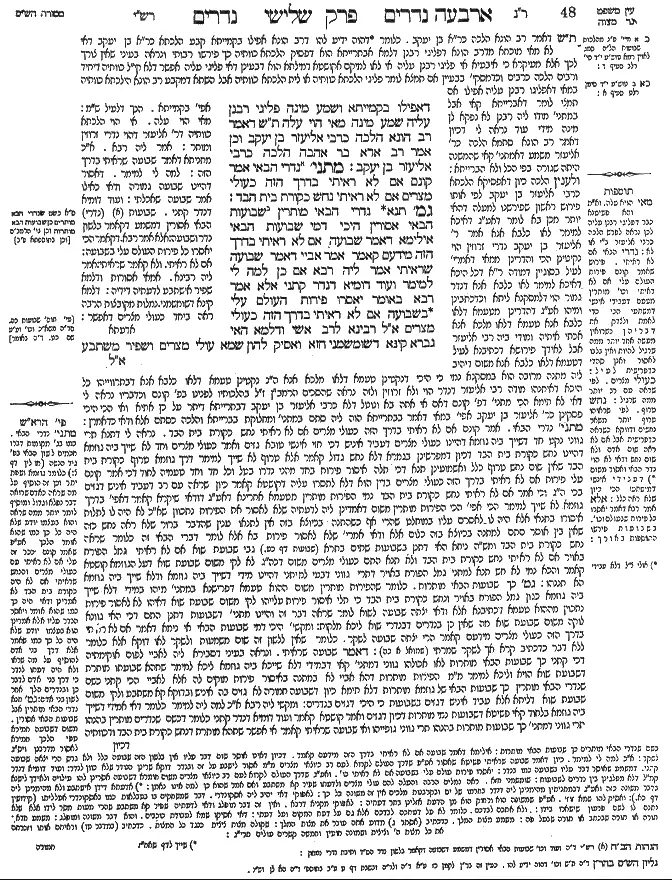
Nedarim 24b - Guemara
דאפילו בקמייתא ושמע מינה פליגי רבנן עליה שמע מינה מאי הוי עלה תא שמע דאמר רב הונא הלכה כרבי אליעזר בן יעקב וכן אמר רב אדא בר אהבה הלכה כרבי אליעזר בן יעקב מתני׳ נדרי הבאי אמר קונם אם לא ראיתי בדרך הזה כעולי מצרים אם לא ראיתי נחש כקורת בית הבד גמ׳ תנא נדרי הבאי מותרין שבועות הבאי אסורין היכי דמי שבועות הבאי אילימא דאמר שבועה אם לא ראיתי בדרך הזה מידעם קאמר אמר אביי דאמר שבועה שראיתי אמר ליה רבא אם כן למה לי למימר ועוד דומיא דנדר קתני אלא אמר רבא באומר ייאסרו פירות העולם עלי בשבועה אם לא ראיתי בדרך הזה כעולי מצרים אמר ליה רבינא לרב אשי ודילמא האי גברא קינא דשומשמני חזא ואסיק להון שמא עולי מצרים ושפיר משתבע
Comments from Rashi on Masechet Nedarim Page 24b
אפי' בקמייתא . הנך דלעיל ש"מ: מאי הוי עלה . אי הוי הלכתא כוותיה דר' אליעזר דהוי נדרי זרוזין ומותר: אמר ליה רבא . א"כ מתניתא דאמר שבועה שראיתי בדרך הזה: למה לי למימר . דאסור דהיינו שבועה גמורה ודאי כאילו אמר שבועה שאכלתי: ועודי דומיא דנדר קתני . שבועות (נדרי) הבאי אסורין דמשמע דקאמר בלשון נדר ושבועה: אלא אמר רבא . קאמר הכי יאסרו כל פירות העולם עלי בשבועה: אם לא ראיתי . ולא קאמר שראיתי: אמר ליה רבינא . אמאי אסורות ודלמא שפיר אישתבע לדעתיה דידיה: דלמא קינא דשומשמני . נמלות מקובצות הרבה ראה ביחד כעולי מצרים דאפשר:
Comments from Tosafot - Nedarim 24b
מאי הויא עלה . וא''ת והא פשיטנא כבר דפליגי רבנן עליה לכן נראה לפרש הלכה כרבי אליעזר ב''י או לא: נדרי הבאי אם לא ראיתי . פירוש שאמר קונם פירות העולם עלי אם לא ראיתי וכו' מותרין מטעם דעבידי אינשי דמשתעי הכי כדי לאמת ולצדק את דבריהן כשרואין מעשה אחד יותר ממה שרגיל להיות ואין בלבו לאסור ואנן סהדי כדפרישית לעיל: כעולי מצרים . לפי שראה עם רב יותר ממה שרגיל: נחש טרוף . לפי שראוהו טרוף . יותר משאר נחשים ודווקא כשראה כדפרישית אבל אם לא ראה שום אדם ולא שום נחש ודאי לא הוי נדר הבאי ואסור משום דעבידי אינשי דמישתעו הכי כיון שלא ראה כלל: אלא אמר רבא דאמר יאסרו כל פירות שבעולם וכו'. [בשבועות פירשו התוספות באורך]:
Nedarim 24b - Mishnah translated into english
mean that even in the earlier cases, where he did not become irritated, they disagree with regard to vows of exhortation and hold that these vows are indeed valid, and can one conclude from here that the Rabbis disagree with him? The Gemara concludes: Conclude from here that this is so.
With regard to the practical conclusion of this dispute, the Gemara asks: What halakhic conclusion was reached about this matter? Does the halakha follow the opinion of the Rabbis or that of Rabbi Eliezer ben Ya’akov? The Gemara answers: Come and hear that which Rav Huna said: The halakha is in accordance with the opinion of Rabbi Eliezer ben Ya’akov. And so said Rav Adda bar Ahava: The halakha is in accordance with the opinion of Rabbi Eliezer ben Ya’akov.
MISHNA: Vows of exaggeration that the Sages dissolved without a request to a halakhic authority, as described in the first mishna in the chapter, include the following examples. If one said concerning a certain item: It is konam for me if I did not see on this road as many people as those who ascended from Egypt, or if he said: It is konam for me if I did not see a snake as large as the beam of an olive press, in these cases the speaker did not intend to vow but used hyperbole to demonstrate a point, and it is understood by others that the expression is not to be taken literally.
GEMARA: A Sage taught: Items rendered forbidden through vows of exaggeration [havai] are permitted; items rendered forbidden through oaths of exaggeration are forbidden. Since oaths are very severe, one does not take an oath unless he intends it seriously. Therefore, it is not viewed as an oath of exaggeration.
The Gemara clarifies the details: What are the circumstances of the case of oaths of exaggeration? If we say that it is when one said: I take an oath if I did not see on this road as many people as those who ascended from Egypt, is he saying anything? This statement is not formulated in the form of an oath and therefore has no validity at all, even if he was serious.
The Gemara answers: Abaye said that in a case where one says: I take an oath that I saw on this road as many people as those who ascended from Egypt, the oath is valid. If he did not see that many people, he has taken a false oath. Rava said to him: If so, why do I need to say this; it is not a novelty? And furthermore, it teaches that the case of an oath is similar to that of a vow: Just as in the case of a vow he speaks of not seeing, so too with regard to an oath he must be speaking of not seeing. Rather, Rava said: An oath of exaggeration is where he says: All the produce of the world shall be forbidden to me by an oath if I did not see on this road as many people as those who ascended from Egypt.
Ravina said to Rav Ashi: And perhaps this man saw an anthill and called them: Those who ascended from Egypt, because the quantity of ants was so numerous, and he took an oath properly. Why, then, do we say that this is an oath taken in vain?
Traduction : The William Davidson digital edition of the Koren Noé Talmud, with commentary by Rabbi Adin Even-Israel Steinsaltz.