 Talmud Bavli
Pesahim 116b : Youtube
Daf TubeYoutube
3 video classes :
Pesahim Page 116b
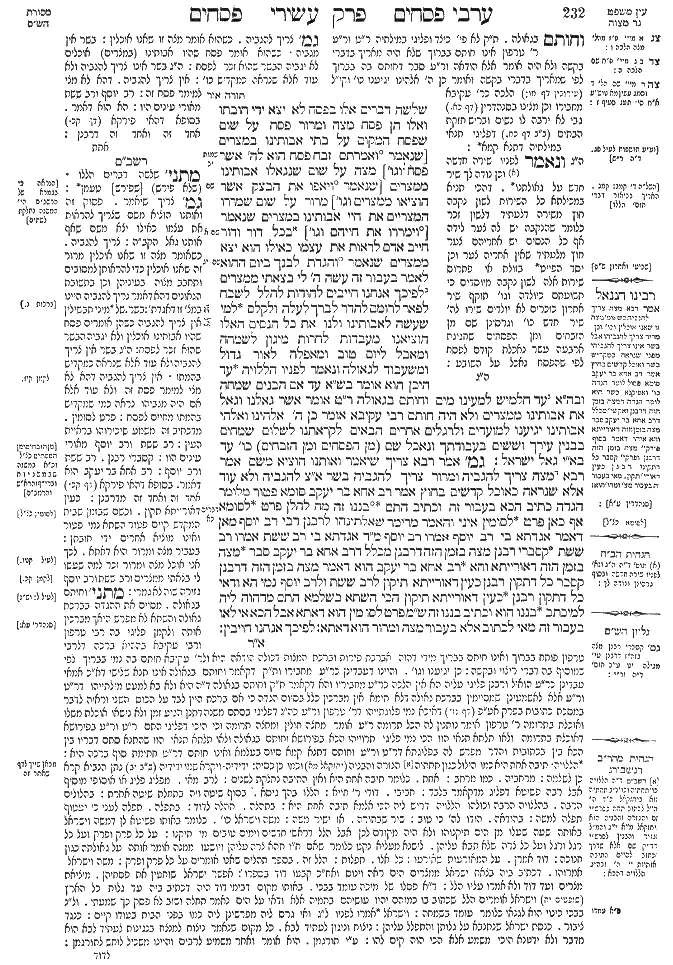
Pesahim 116b - Guemara
שלשה דברים אלו בפסח לא יצא ידי חובתו ואלו הן פסח מצה ומרור פסח על שום שפסח המקום על בתי אבותינו במצרים [שנאמר (שמות יב, כז) ואמרתם זבח פסח הוא לה' אשר פסח וגו'] מצה על שום שנגאלו אבותינו ממצרים [שנאמר (שמות יב, לט) ויאפו את הבצק אשר הוציאו ממצרים וגו'] מרור על שום שמררו המצריים את חיי אבותינו במצרים שנאמר [(שמות א, יד) וימררו את חייהם וגו'] בכל דור ודור חייב אדם לראות את עצמו כאילו הוא יצא ממצרים שנאמר (שמות יג, ח) והגדת לבנך ביום ההוא לאמר בעבור זה עשה ה' לי בצאתי ממצרים לפיכך אנחנו חייבים להודות להלל לשבח לפאר לרומם להדר לברך לעלה ולקלס למי שעשה לאבותינו ולנו את כל הנסים האלו הוציאנו מעבדות לחרות מיגון לשמחה ומאבל ליום טוב ומאפלה לאור גדול ומשעבוד לגאולה ונאמר לפניו הללויה עד היכן הוא אומר בש"א עד אם הבנים שמחה ובה"א עד חלמיש למעינו מים וחותם בגאולה ר"ט אומר אשר גאלנו וגאל את אבותינו ממצרים ולא היה חותם רבי עקיבא אומר כן ה' אלהינו ואלהי אבותינו יגיענו למועדים ולרגלים אחרים הבאים לקראתנו לשלום שמחים בבנין עירך וששים בעבודתך ונאכל שם (מן הפסחים ומן הזבחים) כו' עד בא"י גאל ישראל:
גמ׳ אמר רבא צריך שיאמר ואותנו הוציא משם אמר רבא מצה צריך להגביה ומרור צריך להגביה בשר א"צ להגביה ולא עוד אלא שנראה כאוכל קדשים בחוץ אמר רב אחא בר יעקב סומא פטור מלומר הגדה כתיב הכא בעבור זה וכתיב התם (דברים כא, כ) בננו זה מה להלן פרט לסומא אף כאן פרט לסומין איני והאמר מרימר שאלתינהו לרבנן דבי רב יוסף מאן דאמר אגדתא בי רב יוסף אמרו רב יוסף מ"ד אגדתא בי רב ששת אמרו רב ששת קסברי רבנן מצה בזמן הזה דרבנן מכלל דרב אחא בר יעקב סבר מצה בזמן הזה דאורייתא והא רב אחא בר יעקב הוא דאמר מצה בזמן הזה דרבנן קסבר כל דתקון רבנן כעין דאורייתא תיקון לרב ששת ולרב יוסף נמי הא ודאי כל דתקון רבנן כעין דאורייתא תיקון הכי השתא בשלמא התם מדהוה ליה למיכתב בננו הוא וכתיב בננו זה ש"מ פרט לסומין הוא דאתא אבל הכא אי לאו בעבור זה מאי לכתוב אלא בעבור מצה ומרור הוא דאתא:
לפיכך אנחנו חייבין:
Comments from Rashi on Masechet Pesahim Page 116b
גמ' צריך להגביה . כשהוא אומר מצה זו שאנו אוכלין: בשר אין מגביה . כשהוא אומר פסח שהיו אבותינו (במצרים) אוכלים לא יגביה הבשר שהוא זכר לפסח: ה"ג בשר אינו צריך להגביה ולא עוד אלא שנראה כמקדיש כו': אין צריך להגביה . דהא לא מצי למימר פסח זה: רב יוסף ורב ששת . מאורי עינים היו: הא הוא דאמר . בסופא דהאי פירקא (דף קכ.) אחד זה ואחד זה דרבנן:
Comments from Rashbam - Pesahim 116b
תרגימא . פירות ובשר בלא לחם והא דנקט מטבל שכל מאכלם ע''י טיבול הללויה . תיבה אחת היא כמו הילול כגון תחתיה הגזרה והבניה (יחזקאל מא) וכמו כן כסיה: בהודאה . הודו לה' כי טוב: מתני' וחותם בגאולה . מסיים את ההגדה בברכת גאולה והשתא לא מפרש היאך מברכין אותה ולקמן פליגי בה רבי טרפון ורבי עקיבא בההיא ברכה דלרבי טרפון פותח בברוך ואינו חותם בברוך מידי דהוה אברכת פירות וברכת המצות דכולה הודאה היא ולר' עקיבא חותם בה נמי בברוך לפי שמוסיף בה דברי ריצוי ובקשה: כן יגיענו וגו' . והיינו דעבדינן כר''ע מחבירו ות''ק דקאמר וחותם בגאולה אינו תנא שלישי דא''כ אמאי עבדינן כר''ע הואיל ורבנן פליגי עליה הא אין הלכה כר''ע מחביריו והא דקאמר ת''ק וחותם בגאולה ד''ה היא ולא בא למעט מילתייהו דר''ט ור''ע אלא לאשמעינן שמסיימין בברכת גאולה דלא תימא אין מברכין כלל בסיום הגדה כי אם ברכת היין לבד על הכוס השני וראיה לדבר במסכת כתובות בפרק אע''פ (דף נז.) דאיכא נמי פלוגתייהו דר' טרפון ור''ע כה''ג דפליגי בסתם משנה דתנן הגיע זמן ולא נישאו אוכלת משלו ואוכלת בתרומה ר' טרפון אומר נותנין לה הכל תרומה ר''ע אומר מחצה חולין ומחצה תרומה וכי היכי דפליגי התם ר''ט ור''ע בפירושא דאוכלת בתרומה ולאו תלתא תנאי הוו הכי נמי פליגי תרוייהו הכא בפירושא וחותם בגאולה ולאו תלתא תנאי הוו שהתנא סתם דבריו בין הכא בין בכתובות והדר מפרש לה בפלוגתא דר''ט ור''ע וחותם דתנא קמא סיום בעלמא ואינו חותם דר''ט חתימת סוף ברכה היא: אחת . כלומר תיבה אחת היא ואין התיבה נחלקת לשנים: גמ' צריך שיאמר . פסוק זה ואותנו הוציא משם שצריך להראות את עצמו כאילו יצא משם שאף אותנו גאל הקב''ה צריך להגביה . כשאומר מצה זו שאנו אוכלין מרור זה שאנו אוכלין כדי להראותן למסובים ותחבב מצוה בעיניהן וכן בתשובת הגאונים דהא דאמר צריך להגביה היינו במצ' זו דאגדת': בשר . של מיני תבשילין אין צריך להגביה כשהן אומרים פסח שהיו אבותינו אוכלין ולא יגביה הבשר שהוא זכר לפסח: ה''ג בשר אין צריך להגביה ולא עוד אלא שנראה כמקדיש בהמתו . אין צריך להגביה דהא לא מצי למימר פסח זה ולא עוד אלא אם היה מגביהו נראה כמי שמקדיש בהמתו מחיים לפסח: פרט לסומין . מדכתיב זה משמע שיכירוהו בראיית העין: רב ששת ורב יוסף מאורי עינים הוו: קסברי רבנן . רב ששת ורב יוסף רב אחא בר יעקב הוא דאמר . בסופא דהאי פירקא (דף קכ.) אחד זה ואחד זה מדרבנן: כעין דאורייתא תקון . וכשם שבזמן שבית המקדש קיים פטור השתא נמי פטור ואינו מוציא אחרים ידי חובתן: לרב מאי . מפליג פליג או אוסופי מוסיף אבל רבה פשיטא דפליג מדקאמר בלבד: בעבור מצה ומרור הוא דאתא . לכך אני אוכל מצה ומרור זכר למה שעשו לי בצאתי ממצרים ורב ששת ורב יוסף גזירה שוה לא גמרי:
Comments from Tosafot - Pesahim 116b
ואמרתם זבח פסח הוא . פי' באמירה שצריך לומר פסח זה שאנו אוכלין ואיתקש מצה ומרור לפסח וצ"ל נמי מצה זו מרו' זה: לפיכך אנחנו כו' . י"א שבע הודאות ולא יותר כנגד ז' רקיעים: ה"ג ונאמר לפניו שירה חדשה וכן נודה לך שיר חדש על גאולתנו . דהכי תניא במכילתא כל השירות לשון נקבה חוץ משירה דלעתיד דלשון זכר כלומר שהנקבה יש לה צער לידה אף כל הנסים יש אחריהם צער חוץ מלעתיד שאין אחריה צער וכן יסד הפייט בזולת אי פתרוס שירות אלה לשון נקבה מיוסדים כי תשועתם כיולדה וגו' תוקף שיר אחרון כזכרים לא יולדים שירו לה' שיר חדש כו' וגרסינן שם מן הזבחים ומן הפסחים שחגיגת ארבעה עשר נאכלת קודם לפסח לפי שהפסח נאכל על השובע: וחותם בגאולה . ת"ק לא פי' כיצד ופליגי במילתיה ר"ט ור"ע ר' טרפון אינו חותם בברוך שלא היה מאריך בדברי בקשה ולא היה אומר אלא הודאה ור"ע סבר דחותם בה בברוך לפי שמאריך בדברי בקשה ואומר כן ה' אלהינו יגיענו כו' וקי"ל (עירובין דף מו:) הלכה כר' עקיבא מחבירו וכן מצינו בסנהדרין (דף כא.) גבי לא ירבה לו נשים ובריש חזקת הבתים (ב"ב דף כח.) דפליגי תנאי במילתיה דתנא קמא:
Pesahim 116b - Mishnah translated into english
these three matters on Passover has not fulfilled his obligation: The Paschal lamb, matza, and bitter herbs. When one mentions these matters, he must elaborate and explain them: The Paschal lamb is brought because the Omnipresent passed over [pasaḥ] the houses of our forefathers in Egypt, as it is stated: “That you shall say: It is the sacrifice of the Lord’s Paschal offering for He passed over the houses of the children of Israel in Egypt, when he smote the Egyptians, and delivered our houses” (Exodus 12:27).
Rabban Gamliel continues to explain: The reason for matza is because our forefathers were redeemed from Egypt, as it is stated: “And they baked the dough that they took out of Egypt as cakes of matzot, for it was not leavened, as they were thrust out of Egypt and could not tarry, neither had they prepared for themselves any victual” (Exodus 12:39). The reason for bitter herbs is because the Egyptians embittered our forefathers’ lives in Egypt, as it is stated: “And they embittered their lives with hard service, in mortar and in brick; in all manner of service in the field, all the service that they made them serve was with rigor” (Exodus 1:14).
The tanna of the mishna further states: In each and every generation a person must view himself as though he personally left Egypt, as it is stated: “And you shall tell your son on that day, saying: It is because of this which the Lord did for me when I came forth out of Egypt” (Exodus 13:8). In every generation, each person must say: “This which the Lord did for me,” and not: This which the Lord did for my forefathers.
The mishna continues with the text of the Haggadah. Therefore we are obligated to thank, praise, glorify, extol, exalt, honor, bless, revere, and laud [lekales] the One who performed for our forefathers and for us all these miracles: He took us out from slavery to freedom, from sorrow to joy, from mourning to a Festival, from darkness to a great light, and from enslavement to redemption. And we will say before Him: Halleluya. At this point one recites the hallel that is said on all joyous days.
Since one does not complete hallel at this point in the seder, the mishna asks: Until where does one recite hallel? Beit Shammai say: Until “Who makes the barren woman dwell in her house as a joyful mother of children, halleluya” (Psalms 113:9). And Beit Hillel say: Until “Who turned the rock into a pool of water, the flint into a fountain of waters” (Psalms 114:8). And one concludes this section of hallel with a blessing that refers to redemption. Rabbi Tarfon says that although one should recite: Who redeemed us and redeemed our forefathers from Egypt, one who did so would not conclude with the formula: Blessed are You, Lord.
Rabbi Akiva says that one recites a different version of this blessing: So too, the Lord our God and the God of our forefathers will bring us to future holidays and Festivals in peace, happy over the building of Your city and joyous in Your service. And there we will eat from the Paschal lamb and other offerings, etc., until: Blessed are You, Lord, Who redeemed Israel.
GEMARA: Rava said: When mentioning the exodus from Egypt one must say: And He took us out from there. Furthermore, Rava said: When one mentions matza in the list of the three matters one must recall during the seder, he must lift it for display before the assembled company. Likewise, when discussing bitter herbs, one must raise them. However, nowadays one need not raise the meat. And not only that, but it is prohibited to do so, for if one lifts the meat it appears as though he is eating sacrificial meat outside the Temple. An observer might think he is presenting it as the meat of a Paschal lamb, and it is prohibited by Torah law to slaughter a sheep as a Paschal lamb outside the Temple.
Rav Aḥa bar Ya’akov said: A blind person is exempt from reciting the Haggadah. The proof is that it is written here, with regard to the Paschal lamb: “And you shall tell your son on that day saying, it is because of this which the Lord did for me when I came forth out of Egypt” (Exodus 13:8), and it was written there, with regard to the stubborn and rebellious son, that his parents say: “This son of ours is stubborn and rebellious, he does not listen to our voice; he is a glutton, and a drunkard” (Deuteronomy 21:20). The Gemara explains the verbal analogy of the word “this”: Just as there, in the case of the rebellious son, the Sages expound that the verse excludes a blind person, as a blind parent cannot say: This son of ours, for he cannot point to him; so too here, in the case of the recitation of the Passover Haggadah, the word “this” excludes blind people.
The Gemara asks: Is that so? But didn’t Mareimar say: I asked the Sages from the school of Rav Yosef, who was blind: Who recited the Haggadah in the house of Rav Yosef? They said to him: Rav Yosef himself recited it. Mareimar subsequently asked: Who recited the Haggadah in the house of Rav Sheshet, who was also blind? They said to him: Rav Sheshet himself recited it. This indicates that a blind person is obligated to recite the Haggadah. The Gemara answers: These Sages, Rav Yosef and Rav Sheshet, maintain that nowadays the halakhot of eating matza and the recitation of the Haggadah that accompanies it apply by rabbinic law. For this reason, blind people can recite the Haggadah for others.
The Gemara asks: Does this prove by inference that Rav Aḥa bar Ya’akov maintains that eating matza nowadays applies by Torah law? But isn’t Rav Aḥa bar Ya’akov the one who said that eating matza nowadays applies by rabbinic law? Rav Aḥa bar Ya’akov apparently contradicts himself. The Gemara answers: Rav Aḥa bar Ya’akov maintains that everything the Sages instituted through their decrees, they instituted similar to the model established by Torah law. In other words, although the obligations to eat matza and recite the Haggadah are rabbinic, the stringencies and restrictions that apply to Torah mitzvot apply here as well. Therefore, a blind person is exempt from reciting the Haggadah.
The Gemara asks: According to the opinion of Rav Sheshet and Rav Yosef too, certainly everything the Sages instituted through their decrees, they instituted similar to the model established by Torah law. Why, then, did these blind Sages recite the Haggadah themselves?
The Gemara rejects this difficulty: How can these cases, the verses dealing with rebellious son and the Passover Haggadah, be compared? Granted, there, in the case of the rebellious son, as the verse could have written: He is our son, and instead it is written: “This son of ours,” I can learn from it that the parents must point with a finger to their son, which comes to exclude blind parents. However, here, if the verse did not use the phrase “because of this,” what could it have written in reference to matzot and bitter herbs? Rather, this verse comes because of the matza and bitter herbs. Consequently, there is no need to actually point with one’s finger in this instance, and therefore the blind are also obligated to recite the Haggadah.
The mishna states: Therefore we are obligated to thank.
Traduction : The William Davidson digital edition of the Koren Noé Talmud, with commentary by Rabbi Adin Even-Israel Steinsaltz.