 Talmud Bavli
Pesahim 108a : Youtube
Daf TubeYoutube
3 video classes :
Pesahim Page 108a
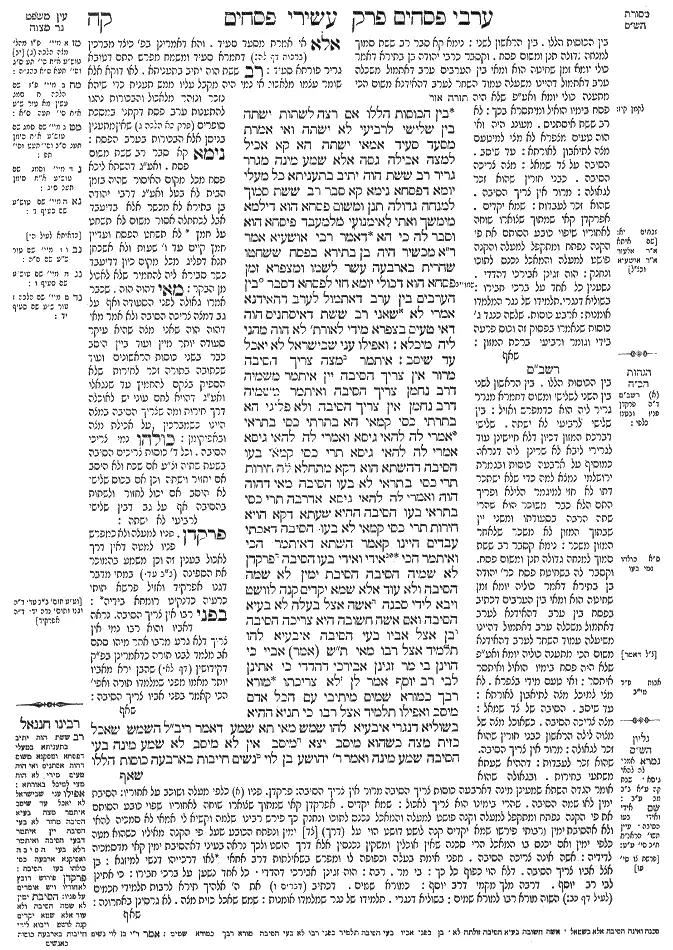
Pesahim 108a - Guemara
בין הכוסות הללו אם רצה לשתות ישתה בין שלישי לרביעי לא ישתה ואי אמרת מסעד סעיד אמאי ישתה הא קא אכיל למצה אכילה גסה אלא שמע מינה מגרר גריר רב ששת הוה יתיב בתעניתא כל מעלי יומא דפסחא נימא קא סבר רב ששת סמוך למנחה גדולה תנן ומשום פסחא הוא דילמא מימשך ואתי לאימנועי מלמעבד פיסחא הוא וסבר לה כי הא דאמר רבי אושעיא אמר ר"א מכשיר היה בן בתירא בפסח ששחטו שחרית בארבעה עשר לשמו ומצפרא זמן פסחא הוא דכולי יומא חזי לפסחא דסבר (שמות יב, ו) בין הערבים בין ערב דאתמול לערב דהאידנא אמרי לא שאני רב ששת דאיסתניס הוה דאי טעים בצפרא מידי לאורת' לא הוה מהני ליה מיכלא:
ואפילו עני שבישראל לא יאכל עד שיסב:
איתמר מצה צריך הסיבה מרור אין צריך הסיבה יין איתמר משמיה דרב נחמן צריך הסיבה ואיתמר משמיה דרב נחמן אין צריך הסיבה ולא פליגי הא בתרתי כסי קמאי הא בתרתי כסי בתראי אמרי לה להאי גיסא ואמרי לה להאי גיסא אמרי לה להאי גיסא תרי כסי קמאי בעו הסיבה דהשתא הוא דקא מתחלא לה חירות תרי כסי בתראי לא בעו הסיבה מאי דהוה הוה ואמרי לה להאי גיסא אדרבה תרי כסי בתראי בעו הסיבה ההיא שעתא דקא הויא חירות תרי כסי קמאי לא בעו הסיבה דאכתי עבדים היינו קאמר השתא דאיתמר הכי ואיתמר הכי אידי ואידי בעו הסיבה פרקדן לא שמיה הסיבה הסיבה ימין לא שמה הסיבה ולא עוד אלא שמא יקדים קנה לוושט ויבא לידי סכנה אשה אצל בעלה לא בעיא הסיבה ואם אשה חשובה היא צריכה הסיבה בן אצל אביו בעי הסיבה איבעיא להו תלמיד אצל רבו מאי ת"ש (אמר) אביי כי הוינן בי מר זגינן אבירכי דהדדי כי אתינן לבי רב יוסף אמר לן לא צריכתו מורא רבך כמורא שמים מיתיבי עם הכל אדם מיסב ואפילו תלמיד אצל רבו כי תניא ההיא בשוליא דנגרי איבעיא להו שמש מאי תא שמע דאמר ריב"ל השמש שאכל כזית מצה כשהוא מיסב יצא מיסב אין לא מיסב לא שמע מינה בעי הסיבה שמע מינה ואמר ר' יהושע בן לוי נשים חייבות בארבעה כוסות הללו
Comments from Rashi on Masechet Pesahim Page 108a
בין הכוסות הללו . בין הראשון לשני: נימא קא סבר רב ששת סמוך למנחה גדולה תנן ומשום פסח . וקסבר כרבי יהודה בן בתירא דאמר כולי יומא זמן שחיטה הוא ומאי בין הערבים ערב דאתמול משכלה ערב דאתמול דהיינו משעלה עמוד השחר לערב דהאידנא משום הכי מתענה כולי יומא ואע"פ שלא היה פסח בימיו הואיל ומיתסרא בכך: לא רב ששת איסתניס . מעונג היה ואי הוה טעים מצפרא לא מצי למיטעם מצה לתיאבון לאורתא: עד שיסב . הסיבה על צד שמאל: מצה צריכה הסיבה . כבני חורין שהוא זכר לגאולה: מרור אין צריך הסיבה . שהוא זכר לעבדות: שמא יקדים . אפרקדן קאי שמתוך שצוארו שוחה לאחריו שיפוי כובע הסותם את פי הקנה נפתח ומתקפל למעלה והקנה פושט למעלה והמאכל נכנס לתוכו ונחנק: הוה זגינן אבירכי דהדדי . נשענין כל אחד על ברכי חבירו: בשוליא דנגרי . תלמידו של נגר המלמדו אומנות: ארבע כוסות . שלשה כנגד ג' כוסות שנאמרו בפסוק זה וכוס פרעה בידי וגומר ורביעי ברכת המזון:
Comments from Rashbam - Pesahim 108a
בין הכוסות הללו . בין הראשון לשני בין השני לשלישי ומשום דחמרא מגרר גריר ליה הוא כדמפרש ואזיל: בין שלישי לרביעי לא ישתה . שלישי דברכת המזון דכיון דלא חיישינן עוד לגרירי ליבא לא שרינן ליה דנראה כמוסיף על ארבעה כוסות ובגמרת ירושלמי נמצא למה כדי שלא ישתכר דתו לא חזי למיגמר הלילא ופריך התם הלא כבר משוכר הוא שהרי שתה הרבה בסעודתו ומשני יין שבתוך המזון לא משכר שלאחר המזון משכר: נימא קסבר רב ששת סמוך למנחה גדולה תנן ומשום פסח . וקסבר לה בשחיטת פסח כר' יהודה בן בתירא דאמר כוליה יומא זמן שחיטה הוא ומאי בין הערבים דכתיב בפסח בין ערב דהאידנא לערב דאתמול משכלה ערב דאתמול דהיינו משיעלה עמוד השחר לערב דהאידנא משום הכי מתענה כוליה יומא ואע''פ שלא היה פסח בימיו הואיל ואיתסר איתסר: ואי טעם מידי בצפרא . לא מצי למיכל מצה לתיאבון לאורתא: עד שיסב . הסיבה של צד שמאל: מצה צריכה הסיבה . כשאוכל מצה של מצוה לילה הראשון כבני חורין שהוא זכר לגאולה מרור אין צריך הסיבה . שהוא זכר לעבדות: בן אצל אביו צריך הסיבה . דלא הוי כפוף כל כך: דההיא שעתא משתעי בחירות . ובגאולה שהוא אומר הגדה השתא שמעינן מינה דארבעה כוסות צריך הסיבה מרור אין צריך הסיבה פרקדן . פניו כלפי למעלה ושוכב על אחוריו: הסיבת ימין לאו שמה הסיבה . שהרי בימינו הוא צריך לאכול: שמא יקדים . אפרקדן קאי שמתוך שצוארו שוחה לאחוריו שפוי כובע הסותם את פי הקנה נפתח ומתקפל למעלה וקנה פושט למעלה והמאכל נכנס לתוכו ונחנק כך פירש רבינו שלמה וקשיא לי אמאי לא סמכיה להאי ולא אהסיבת ימין ורבותי פירשו שמא יקדים קנה לושט דושט הוי על (דרך) ימין ונפתח הכובע שעל פי הקנה מאיליו כשהוא מטה כלפי ימין ואם יכנס בו המאכל הרי סכנה שאין אוכלין ומשקין נכנסין אלא דרך הושט ולכך נראה בעיני דאהסיבת ימין קאי מדסמכיה לדידיה: אשה אינה צריכה הסיבה . מפני אימת בעלה וכפופה לו ומפרש בשאילתות דרב אחאי לאו דרכייהו דנשי למיזגא בי מר . רבה: הוה זגינן אבירכי דהדדי . כל אחד נשען על ברכי חבירו: כי אתינן לבי רב יוסף . דרבה מלך מקמי דרב יוסף: כמורא שמים . דכתיב (דברים ו) את ה' אלהיך תירא לרבות תלמידי חכמים (לעיל פסחים דף כב:) השוה מורא רבו למורא שמים: בשוליא דנגרי . תלמידו של נגר שמלמדו אומנות: שמש שאכל כזית מצה . לא גרסינן באחרונה:
Comments from Tosafot - Pesahim 108a
אלא אי אמרת מסעד סעיד . והא דאמרינן בפ' כיצד מברכין ' (ברכות דף לה:) דחמרא סעיד ומשמח מפרש התם דטובא גריר פורתא סעיד: רב ששת הוה יתיב בתעניתא . לאו דוקא אלא שומר עצמו מלאכול אי נמי היה מקבל עליו ממש תענית כדי שיהא נזכר ונזהר מלאכול והבכורות נהגו להתענות ערב פסח דקתני במסכת סופרים (פרק כא הלכה ג) שאין מתענין בניסן אלא הבכורות בערב הפסח: נימא קא סבר רב ששת משום פסח . ואע"ג דהשתא ליכא פסח מכל מקום האיסור שהיה בזמן הבית לא בטל ואע"ג דרבי יהודה בן בתירא לא מכשר אלא בדיעבד אבל לכתחלה אסור משום לא תשחט על חמץ לא תשחט הפסח ועדיין חמץ קיים עד ו' שעות ולא אשכחן תנא דפליג מכל מקום כיון דדיעבד כשר סבירא ליה להחמיר שלא לאכול מן הבקר: מאי דהוה הוה . שכבר אמרו גאולה לפני הסעודה ואף על גב דמצה צריכה הסיבה ולא אמר מאי דהוה הוה שאני מצה שהיא עיקר סעודה יותר מיין ועוד ביין היסב כבר בשני כוסות הראשונים ועוד שכתובה בתורה זכר לחירות שלא הספיק בצקם להחמיץ עד שנגאלו ואע"ג דהויא לחם עוני יש לאוכלה דרך חירות ומה שצריך הסיבה במצה היינו כשמברכין לעל אכילת מצה ובאפיקומן: כולהו נמי צריכי הסיבה . וכל ד' כוסות צריכים הסיבה בשעת שתיה וצ"ע אם שכח ולא היסב אם יחזור וישתה וכן אם בכוס שלישי לא היסב אם יכול לחזור ולשתות בהסיבה אף על גב דבין שלישי לרביעי לא ישתה: פרקדן . פניו למעלה ולא כמפרש פניו למטה דאין דרך לאכול בענין זה וכן משמע בהמוכר את הספינה (ב"ב עד.) במתי מדבר דגנו אפרקיד ואזיל פרשא תותי ' כרעיה כדנקיט רומחא בידיה: בפני רבו אין צריך הסיבה . נראה דאביו והוא רבו נמי אין צריך דלא גרע מרבו אחר מיהו סתם אב מלמד לבנו תורה כדאמרינן בפ"ק דקידושין (דף לא.) שהבן ירא מאביו יותר מאמו מפני שמלמדו תורה ואפי' הכי קאמר בפני אביו צריך הסיבה:
Pesahim 108a - Mishnah translated into english
During the Passover seder, between these cups that one is obligated to drink, e.g., between the first two of the four cups of wine, if one wants to drink he may drink. However, between the third and fourth cups, which are consumed after the meal, one may not drink. And if you say that wine satisfies a person, why may one drink extra cups? He will later eat matza when he is already satiated, which will constitute an excessive eating. Rather, learn from this that wine whets the appetite.
The Gemara relates that Rav Sheshet would fast the entire eve of Passover. The Gemara asks: Shall we say that Rav Sheshet maintains that this practice was necessary because of two factors? First, when the mishna states that one may not eat adjacent to minḥa time, we learned this ruling with regard to the period of time adjacent to the greater minḥa, and the reason for the prohibition is due to the Paschal lamb, lest one be drawn after one’s meal and come to refrain from performing the sacrifice of the Paschal lamb.
And second, Rav Sheshet maintains in accordance with that statement that Rabbi Oshaya said that Rabbi Elazar said: Ben Beteira would deem valid a Paschal lamb that was slaughtered in the morning on the fourteenth of Nisan for its own purpose, as from the morning it is already the time during which a Paschal lamb may be sacrificed, as the whole day is fit for the Paschal lamb.
As ben Beteira maintained that when the Torah says the Paschal lamb must be sacrificed “bein ha’arbayim” (Exodus 12:6), which literally means: Between the evenings, but is often rendered: In the afternoon, the term refers to any time between the evening of yesterday and the current evening of the fourteenth. In other words, as Rav Sheshet maintained that the reason one may not eat on Passover eve is to prevent him from being distracted from preparing the Paschal lamb, and he also maintained that the Paschal offering may be sacrificed during the entire day of the fourteenth of Nisan, therefore, he would not eat that entire day.
They say in response to this suggested interpretation of Rav Sheshet’s practice: No, it is by no means clear that this was his reasoning. Rav Sheshet was different, as he was delicate [istenis], for if he would taste some food in the morning, the food he ate at night would not be effective for him. He would therefore fast the whole day so that he could eat matza at night with a hearty appetite.
We learned in the mishna that even the poorest of Jews should not eat until he reclines. It was stated that amora’im discussed the requirement to recline. Everyone agrees that matza requires reclining, i.e., one must recline when eating matza, and bitter herbs do not require reclining. With regard to wine, it was stated in the name of Rav Naḥman that wine requires reclining, and it was also stated in the name of Rav Naḥman that wine does not require reclining.
The Gemara explains: And these two statements do not disagree with each other: This statement is referring to the first two cups, and that statement is referring to the last two cups. However, it was not clear which two cups require reclining according to Rav Naḥman. Some say the explanation in this manner and some say it in that manner. The Gemara elaborates: Some say it in this manner, that the first two cups require reclining, as it is now that freedom begins. Since reclining is a sign of freedom, while discussing the exodus from Egypt it is appropriate to drink while reclining. By contrast, the last two cups do not require reclining, because what was already was. In other words, by this point one has completed the discussion of the Exodus and has reached the latter stages of the seder.
And some say it in that manner and claim that on the contrary, the last two cups require reclining, as it is at that time that there is freedom. However, the first two cups do not require reclining, as one still says: We were slaves. The Gemara concludes: Now that it was stated so, and it was stated so, i.e., there are two conflicting opinions and it cannot be proven which two cups require reclining, both these sets of cups and those require reclining.
The Gemara continues to discuss the halakha of reclining. Lying on one’s back is not called reclining. Reclining to the right is not called reclining, as free men do not recline in this manner. People prefer to recline on their left and use their right hand to eat, whereas they find it more difficult to eat the other way. And not only that, but if one reclines to the right, perhaps the windpipe will precede the esophagus. The food will enter the windpipe, and one will come into danger of choking.
A woman who is with her husband is not required to recline, but if she is an important woman, she is required to recline. A son who is with his father is required to recline. A dilemma was raised before the Sages: What is the halakha with regard to a student who is with his teacher? Perhaps he is not obligated to recline, as he is in awe of his rabbi, and reclining is a sign of complete freedom and independence.
Come and hear a proof that Abaye said: When we were in the house of my Master, Rabba, there was not enough room for everyone to recline on Passover, so we reclined on each other’s knees, to fulfill the obligation to recline. When we came to the house of Rav Yosef, he said to us: You need not recline, as the fear of your teacher is like the fear of Heaven. A student is subject to the authority of his teacher and may not display freedom in his presence.
The Gemara raises an objection: A person must recline in the presence of anyone, and even a student who is with his teacher must do so. This baraita directly contradicts the statement of Rav Yosef. The Gemara answers: When that baraita was taught, it was with regard to a craftsman’s apprentice, not a student of Torah in the company of his rabbi. One who is in the presence of a person teaching him a trade is not in awe of his instructor, and he is therefore obligated to recline.
A dilemma was raised before the Sages: What is the halakha with regard to a waiter? Is a waiter obligated to recline? The Gemara answers: Come and hear a solution, as Rabbi Yehoshua ben Levi said: A waiter who ate an olive-bulk of matza while reclining has fulfilled his obligation. The Gemara infers: If he ate matza while reclining, yes, he has fulfilled his obligation; if he was not reclining, no, he has not fulfilled the obligation. Learn from this that a waiter requires reclining. The Gemara concludes: Indeed, learn from it that this is the case.
And Rabbi Yehoshua ben Levi said: Women are obligated in these four cups of wine at the Passover seder.
Traduction : The William Davidson digital edition of the Koren Noé Talmud, with commentary by Rabbi Adin Even-Israel Steinsaltz.