 Talmud Bavli
Pesahim 59a : Youtube
Daf TubeYoutube
3 video classes :
Pesahim Page 59a
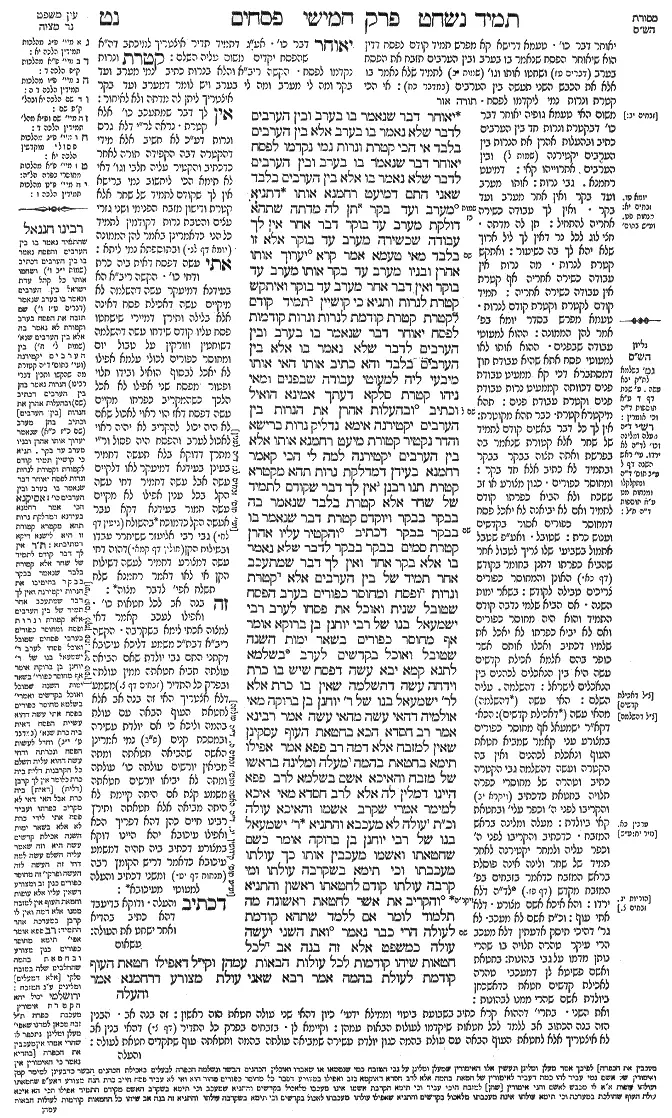
Pesahim 59a - Guemara
יאוחר דבר שנאמר בו בערב ובין הערבים לדבר שלא נאמר בו בערב אלא בין הערבים בלבד אי הכי קטרת ונרות נמי נקדמו לפסח יאוחר דבר שנאמר בו בערב ובין הערבים לדבר שלא נאמר בו אלא בין הערבים בלבד שאני התם דמיעט רחמנא אותו דתניא (שמות כז, כא) מערב ועד בקר תן לה מדתה שתהא דולקת מערב עד בוקר דבר אחר אין לך עבודה שכשירה מערב עד בוקר אלא זו בלבד מאי טעמא אמר קרא (שמות כז, כא) יערוך אותו אהרן ובניו מערב עד בקר אותו מערב עד בוקר ואין דבר אחר מערב עד בוקר ואיתקש קטרת לנרות ותניא כי קושיין תמיד קודם לקטרת קטרת קודמת לנרות ונרות קודמות לפסח יאוחר דבר שנאמר בו בערב ובין הערבים לדבר שלא נאמר בו אלא בין הערבים בלבד והא כתיב אותו האי אותו מיבעי ליה למעוטי עבודה שבפנים ומאי ניהו קטרת סלקא דעתך אמינא הואיל וכתיב (שמות ל, ח) ובהעלות אהרן את הנרות בין הערבים יקטירנה אימא נדליק נרות ברישא והדר נקטיר קטורת מיעט רחמנא אותו אלא בין הערבים יקטירנה למה לי הכי קאמר רחמנא בעידן דמדלקת נרות תהא מקטרא קטרת תנו רבנן אין לך דבר שקודם לתמיד של שחר אלא קטרת בלבד שנאמר בה בבקר בבקר ויוקדם קטרת דבר שנאמר בו בבקר בבקר דכתיב (שמות ל, ז) והקטיר עליו אהרן קטרת סמים בבקר בבקר לדבר שלא נאמר בו אלא בקר אחד ואין לך דבר שמתעכב אחר תמיד של בין הערבים אלא קטרת ונרות ופסח ומחוסר כפורים בערב הפסח שטובל שנית ואוכל את פסחו לערב רבי ישמעאל בנו של רבי יוחנן בן ברוקא אומר אף מחוסר כפורים בשאר ימות השנה שטובל ואוכל בקדשים לערב בשלמא לתנא קמא יבא עשה דפסח שיש בו כרת וידחה עשה דהשלמה שאין בו כרת אלא לר' ישמעאל בנו של ר' יוחנן בן ברוקה מאי אולמיה דהאי עשה מהאי עשה אמר רבינא אמר רב חסדא הכא בחטאת העוף עסקינן שאין למזבח אלא דמה רב פפא אמר אפילו תימא בחטאת בהמה מעלה ומלינה בראשו של מזבח והאיכא אשם בשלמא לרב פפא היינו דמלין לה אלא לרב חסדא מאי איכא למימר אמרי שקרב אשמו והאיכא עולה וכ"ת עולה לא מעכבא והתניא ר' ישמעאל בנו של רבי יוחנן בן ברוקה אומר כשם שחטאתו ואשמו מעכבין אותו כך עולתו מעכבתו וכי תימא בשקרבה עולתו ומי קרבה עולתו קודם לחטאתו ראשון והתניא (ויקרא ה, ח) והקריב את אשר לחטאת ראשונה מה תלמוד לומר אם ללמד שתהא קודמת לעולה הרי כבר נאמר (ויקרא ה, י) ואת השני יעשה עולה כמשפט אלא זה בנה אב לכל חטאות שיהו קודמות לכל עולות הבאות עמהן וקי"ל דאפילו חטאת העוף קודמת לעולת בהמה אמר רבא שאני עולת מצורע דרחמנא אמר
Comments from Rashi on Masechet Pesahim Page 59a
יאוחר דבר כו' . טעמא דרישא קא מפרש תמיד קודם לפסח דדין הוא שיאוחר הפסח שנאמר בו בערב ובין הערבים תזבח את הפסח בערב (דברים טז) ושחטו אותו וגו' (שמות יב) לתמיד שלא נאמר בו אלא את הכבש השני תעשה בין הערבים (במדבר כח): אי הכי קטרת ונרות נמי ליקדמו לפסח . משום האי טעמא גופיה יאוחר דבר כו' דבקטרת ונרות חד בין הערבים כתיב ובהעלות אהרן את הנרות בין הערבים יקטירנה (שמות ל) ובין הערבים אתרוייהו קאי: דמיעט רחמנא . גבי נרות: תן לה מדתה . חצי לוג לכל נר דאין לך ליל ארוך שלא יהא לך בה כשיעור: אותו מערב ועד בקר ואין אחר מערב ועד בקר . ואין לך עבודה כשירה אחריה להתחיל: ואתקש קטרת לנרות . מה נרות אין עבודה כשירה אחריה אף קטרת אין עבודה כשירה אחריה: תמיד קודם לקטרת וקטרת קודם לנרות . טעמא מפרש בסדר יומא בפרק אמר להן הממונה: ההוא למעוטי עבודה שבפנים . ההוא אותו לאו למעוטי פסח אתא שהיא עבודת חוץ דמסתברא דכי קא ממעיט עבודת פנים דכוותה קממעיט נרות עבודת פנים וקטרת עבודת פנים: תהא מיקטרא קטרת . כבר תהא מוקטרת: אין לך כל דבר באשים קודם לתמיד של שחר אלא קטורת שנאמר בה בפרשת ואתה תצוה בבקר בבקר ובתמיד לא כתיב אלא חד בקר: ומחוסר כפורים . כגון מצורע או זב ששכח ולא הביא כפרתו קודם לתמיד ואם לא יביאנה לא יאכל פסח דמחוסר כפורים אסור בקדשים וענוש כרת: שטובל . ואע"פ שטבל אתמול בשביעי שלו צריך לטבול אחר שהביא כפרתו דתנן בחומר בקודש (דף כא.) האונן והמחוסר כפורים צריכים טבילה לקודש: בשאר ימות השנה . אם הביא שלמי נדבה קודם התמיד והוא היה מחוסר כפורים ואם לא יביא כפרתו לא יאכל את שלמיו דכתיב ואכלו אותם אשר כופר בהם אלמא אכילת קדשים עשה היא בין הנאכלים לכהנים בין הנאכלים לישראל: דהשלמה . עליה השלם: האי עשה (דהשלמה) מהאי עשה (דאכילת קדשים): הכא . דקא"ר ישמעאל אף מחוסר כפורים במצורע עני קאמר שמביא חטאת העוף ונאכלת לכהנים ואין בה הקטרה ועשה דהשלמה גבי הקטרה כתיב וטהרה של מחוסרי כפרה תלויה בחטאת כדכתיב (ויקרא יב) והקריבו לפני ה' וכפר עלי' ובחטאת קאי ביולדת: מעלה ומלינה בראש המזבח . כדכתיב והקריבו לפני ה' וכפר עליה ולמחר יקטירנה לאחר תמיד של שחר ולינה אינה פוסלת בראש המזבח כדאמר בזבחים בפ' המזבח מקדש (דף פז.) לד"ה דלא ירדו: והא איכא אשם מצורע . דלא אתי עוף: וכ"ת אשם לא מעכב . לא גר' דהיכי תיסק אדעתין דלא מעכב הרי עיקר טהרה תלויה בו שהרי נותן מדמו על גבי בהונות: בחטאת ואשם פשיטא לן דמעכבי טהרה לאכילת קדשים חטאת כדאשכחן ביולדת אשם שהרי ממנו לבהונות: ואת השני . בתרי' דהאי קרא כתיב בשבועת ביטוי וממילא ידעי' כיון דהאי שני עולה חטאת הוה ראשון: וקיימא לן . בזבחים בפרק כל התדיר (דף צ.) דהאי בנין אב לא איצטריך אלא לחטאת העוף הבאה עם עולת בהמה כגון יולדת עשירה שמביאה עולתה בהמה וחטאתה עוף שתקדים חטאת לעולה: זה בנה אב . הבנין הזה בנה הכתוב אב ללמד לכל חטאות שיקדמו לעולות הבאות עמהן: יאוחר דבר כו' . טעמא דרישא קא מפרש תמיד קודם לפסח דדין הוא שיאוחר הפסח שנאמר בו בערב ובין הערבים תזבח את הפסח בערב (דברים טז) ושחטו אותו וגו' (שמות יב) לתמיד שלא נאמר בו אלא את הכבש השני תעשה בין הערבים (במדבר כח):
Comments from Tosafot - Pesahim 59a
יאוחר דבר כו' . אע"ג דתמיד תדיר איצטריך למיכתב דה"א שהפסח יקדים משום עליה השלם: קטרת ונרות נקדמו לפסח . הקשה ריב"א והלא בנרות כתיב נמי מערב ועד בקר ומה לי מערב ומה לי בערב ויש לומר דמערב ועד בקר איצטריך ליתן לה מדתה ולא לאיחור: אין לך דבר שמתעכב כו' אלא קטרת . נראה לר"י דלא גרס ונרות דע"כ לא חשיב אלא מידי דהקטרה דבה הקפידה תורה לאחר כדכתיב והקטיר עליה חלבי וגו' דאי לא תימא הכי ליחשוב נמי ברישא אין לך שקודם לתמיד של שחר אלא קטרת ודישון מזבח הפנימי ושני גזרי עצים והטבת נרות דקודמין לתמיד כל הני כדאמרינן באמר להן הממונה (יומא דף לג) ובתוספתא נמי ליתא: אתי עשה דפסח דאית ביה כרת ודחי כו' . הקשה ריב"א הא בעידנא דמיעקר עשה דהשלמה לא מיקיים עשה דאכילת פסח דאינה אלא בלילה ותירץ דמיירי שישחטו פסח עליו קודם שידחו עשה דהשלמה דשוחטין וזורקין על טבול יום ומחוסר כפורים לכולי עלמא אפילו לא יאכל לבסוף הואיל ובידו תלוי ופטור מפסח שני אפילו לא אכל הלכך כשהמקריב כפרתו מקיים עשה דפסח דאז הוי ראוי לאכול שאם לא היה יכול להקריב לא יהיה ראוי לאכול לערב והפסח היה פסול ור"י מתרץ דדוקא בלא תעשה דחמיר בעינן בעידנא דמיעקר לאו דלקיים עשה אבל עשה דחמיר דחי עשה הקל בכל ענין אפילו לא מקיים עשה חמור בעידנא דקא עבר אעשה הקל כדמוכח בהשולח (גיטין דף לח.) גבי רבי אליעזר ששיחרר עבדו ובשילוח הקן (חולין דף קמא.) דהוה דחי עשה דמצורע דחמיר לעשה דשילוח הקן אי לאו דאמר רחמנא שלח תשלח אפי' לדבר מצוה: זה בנה אב לכל חטאות כו' . ואפילו לעכב קאמר דאי למצוה אכתי לימא בשקרבה. הקשה ריב"א דבת"כ (תזריע יולדת פרק ד מ"ג) משמע דליכא עיכובא, דקתני התם גבי יולדת שאם הביאה עולתה תביא חטאתה ממין עולתה ובפרק כל התדיר (זבחים דף צ.) משמע דלא אצטריך האי זה בנה אב אלא לחטאת העוף הבאה עם עולת בהמה וליכא כי אם יולדת עשירה ובמסכת קנים (פ"ב) נמי אמרינן האשה שהביאה חטאתה ומתה מביאין יורשים עולתה כו' עולתה ומתה לא יביאו יורשים חטאתה משמע קצת אם היתה קיימת לא היתה מביאה אלא חטאתה ותירץ רבינו חיים כהן דהא דפריך הכא ואפילו עיכובא יהא היינו דוקא במצורע דכתיב ביה תהיה דמשמע עיכובא כדאמר בריש הקומץ רבה (מנחות דף יט.) ומשני דכתיב והעלה למעוטי מעיכובא: דכתיב והעלה . ודוקא בדיעבד דהא כתיב בהדיא ואחר ישחט את העולה:
Pesahim 59a - Mishnah translated into english
An item, i.e., the Paschal lamb, about which it is stated: “In the evening” and “in the afternoon,” should be sacrificed after an item, the daily afternoon offering, about which it is not stated “in the evening,” but only “in the afternoon.” With regard to the Paschal lamb, the verse says: “You shall sacrifice the Paschal lamb in the evening, at the going down of the sun, at the season in which you came out of Egypt” (Deuteronomy 16:6), and it also says: “And the whole assembly of the congregation of Israel shall slaughter it in the afternoon” (Exodus 12:6), whereas regarding the daily afternoon offering it only says: “And the second lamb you shall offer in the afternoon” (Numbers 28:4).
The Gemara asks: If that is so, that the halakha that the Paschal lamb is offered after the daily afternoon offering is derived from these verses, then the burning of the incense and the lighting of the lamps of the candelabrum should also precede the offering of the Paschal lamb. The item, the Paschal lamb, about which it is stated “in the evening” and “in the afternoon” should be sacrificed after the item about which it is stated only: “And when Aaron lights the lamps in the afternoon he shall burn it, a perpetual incense before the Lord throughout your generations” (Exodus 30:8), which relates to both the burning of the incense and the lighting of the lamps.
The Gemara answers: It is different there, in the case of lamps, as the Merciful One explicitly excludes in the Torah the possibility that the lamps will be kindled first by means of the word it [oto], which emphasizes that the lamps are kindled later. The Gemara clarifies: As it was taught in a baraita concerning the verse pertaining to the lamps: “In the tent of meeting, outside of the veil, which is before the testimony, Aaron and his sons shall set it in order from evening to morning before the Lord; it shall be a statute forever to their generations on behalf of the children of Israel” (Exodus 27:21). The phrase “from evening to morning” indicates that you shall allocate the candelabrum its measure of oil, so that it will burn from evening until morning.
The baraita continues: Alternatively, the same verse can be interpreted as follows: There is no rite that is valid from evening until morning but this one alone, since all the other rites are performed only during the day. What is the reason that this verse is interpreted to mean that lighting the lamps is the only rite valid from evening until morning? It is because the verse said with regard to the candelabrum: “Aaron and his sons shall set [ya’arokh] it [oto] in order, to burn from evening to morning.” The verse uses the separate word it [oto], rather than a pronominal suffix attached to the word ya’arokh to form the word ya’arkhenu, in order to emphasize that it, the lighting of the candelabrum, is from evening until morning, but no other rite is from evening until morning.
And the Torah juxtaposes the burning of the incense to the kindling of the lamps, as it explicitly states that the incense is burned at the time the lamps are kindled: “And when Aaron lights the lamps in the afternoon, he shall burn it, a perpetual incense” (Exodus 30:8). From this it is derived that no other rite is performed in the Temple after burning the incense and lighting the lamps, not even the Paschal lamb.
That explains the opinion cited in the previous baraita and its sources. It should, however, be noted that it was explicitly taught in a baraita in accordance with our difficulty and contrary to the opinion cited in the previous baraita: The daily afternoon offering precedes the afternoon burning of the incense, the burning of the incense precedes the lighting of the lamps, and the lighting of the lamps precedes the Paschal lamb. This is proof that this is the correct order: An item, the Paschal lamb, about which it is stated “in the evening” and “in the afternoon” should be delayed until after an item, i.e., the incense and lamps, about which it is stated only “in the afternoon.”
The Gemara asks: As already stated, isn’t “it” written in the verse, from which it is derived that lighting the lamps is the final Temple rite of the day? The Gemara answers: This word “it” is necessary, in order to exclude a rite that is performed inside the sanctuary, as opposed to the Paschal lamb, which is sacrificed outside, in the courtyard. The Gemara asks: And what is this rite? The Gemara answers: The burning of the incense. It could have entered your mind to say that since it is written: “And when Aaron lights the lamps in the afternoon he shall burn it” (Exodus 30:8), say that perhaps we should light the lamps first and then we should burn the incense, as the verse does not clearly state which of the two comes first. Therefore, the Merciful One excludes this possibility by use of the word “it,” from which it is derived that no other rite is performed inside the sanctuary after the lamps are kindled.
The Gemara asks: However, if that is the halakha, why do I need the phrase “in the afternoon he shall burn it,” which seems to add nothing? The Gemara answers that this is what the Merciful One is saying: This verse does not come to establish the time for lighting the lamps; it comes to teach that at the time when you light the lamps, the incense should already be burning.
The Sages taught in a baraita: Nothing may precede the daily morning offering but the morning burning of the incense alone, as it is stated about the burning of the incense: “In the morning, in the morning.” And it is derived that the incense, an item about which it is stated: “In the morning, in the morning,” as it is written: “And Aaron shall burn upon it incense of sweet spices; in the morning, in the morning, when he dresses the lamps, he shall burn it” (Exodus 30:7), should precede an item, the daily offering, about which only one morning is stated: “The one lamb you shall offer in the morning” (Numbers 28:4).
And similarly, nothing may be delayed until after the daily afternoon offering but the afternoon burning of the incense, the lighting of the lamps, the offering of the Paschal lamb, and one who lacks atonement on Passover eve, i.e., one who was ritually impure, such as a leper or a zav, and who immersed in a ritual bath to become pure. Such a person is required to bring an offering before he may partake of consecrated food, and he is referred to as one who lacks atonement until he does so. In the event that he neglects to bring his offering before the daily afternoon offering on Passover eve, the Sages instituted a special ordinance to enable him to bring his offering even after the daily offering. He immerses a second time after bringing the offering, thereby becoming fit to eat sacrificial foods, and he eats his Paschal lamb in the evening.
Rabbi Yishmael, son of Rabbi Yoḥanan ben Beroka, says that even one who lacks atonement on the rest of the days of the year brings his offering after the daily afternoon offering, and that he immerses and eats sacrificial food from a voluntary offering that he brought during the day, in the evening.
The Gemara asks: Granted, according to the first tanna, who permits sacrificing offerings after the daily afternoon offering only for one who lacks atonement on Passover eve, there is good reason for this policy: The positive mitzva of the Paschal lamb, which carries with it the punishment of karet for one who is qualified to bring the Paschal lamb and does not do so, will come and override the positive mitzva of completion. There is a positive mitzva to complete all the offerings before the daily afternoon offering. Failure to fulfill this command certainly does not involve karet, and therefore it is overridden by the more stringent mitzva of the Paschal lamb. However, according to the opinion of Rabbi Yishmael, son of Rabbi Yoḥanan ben Beroka, in what way is the strength of this positive mitzva to eat sacrificial meat greater than the strength of that positive mitzva to complete all the offerings of the day before the daily afternoon offering?
Ravina said that Rav Ḥisda said: Here we are dealing with the special case of a bird brought as a sin-offering. This occurs when the person lacking atonement, e.g., an impoverished leper, is required to bring only a bird as a sin-offering, as in that case the altar has only the bird’s blood. Its meat is not brought on the altar at all; it is eaten by the priests. The mitzva to complete all offerings before the daily afternoon offering applies only to burning fats on the altar. Sprinkling blood onto the altar is permitted even after the daily afternoon offering.
Rav Pappa said: Even if you say that we are dealing here with a person lacking atonement who is required to bring an animal sin-offering, it is possible to sacrifice it and still observe the mitzva of completion. How? The sacrificial parts of this sin-offering that are burned on the altar are not burned on the same day. Rather, the priest brings them up and leaves them overnight on the top of the altar. They are then burned the next day after the daily morning offering. If these sacrificial parts are left elsewhere overnight, they become disqualified; however, if they are left overnight on the top of the altar they remain fit. Consequently, it is possible for one to bring his offering and still observe the positive commandment of completion.
The Gemara asks: But isn’t there also a guilt-offering that one who lacks atonement, e.g., a leper or a zav, must bring, and only sheep may be brought as a guilt-offering? Granted, according to Rav Pappa, the solution in the case of the guilt-offering is also for the priest to leave it overnight on the top of the altar. However, according to Rav Ḥisda, what can be said, as sprinkling the blood of the guilt-offering alone does not suffice to achieve atonement? They say: According to the opinion of Rav Ḥisda, Rabbi Yishmael, son of Rabbi Yoḥanan ben Beroka, is referring here to one who lacks atonement and who already sacrificed his guilt-offering. He has only to bring a sin-offering, for which he can sacrifice even a bird, in order to achieve full atonement.
The Gemara asks: But isn’t there also a burnt-offering among the atonement offerings? And if you say that the failure to sacrifice the burnt-offering does not prevent atonement, wasn’t it taught in a baraita: Rabbi Yishmael, son of Rabbi Yoḥanan ben Beroka, himself says: Just as failure to sacrifice his sin-offering and his guilt-offering prevents the leper from achieving full ritual purity, so too does failure to sacrifice his burnt-offering.
And if you say, in an attempt to answer as before, that the baraita here is dealing with a situation in which he already offered his burnt-offering; may his burnt-offering be brought before his sin-offering? Wasn’t it taught in a baraita: It is written concerning one who entered the Temple or ate consecrated food while ritually impure: “And he shall bring them to the priest and he shall offer that which is for the sin-offering first and pinch off its neck close by its head, but shall not divide it” (Leviticus 5:8). To what purpose does the verse state that the sin-offering is first? If it is to teach that this sin-offering should be offered prior to the burnt-offering, it is already stated: “And he shall offer the second as a burnt-offering according to the ordinance” (Leviticus 5:10), and there is no need for two verses.
Rather, this is a paradigm and a foundation for the principle that all sin-offerings should precede all burnt-offerings that come with them. In every case, the sin-offering is sacrificed first. And we maintain that this principle is so weighty that even the sin-offering of a bird precedes a burnt-offering of an animal.
Rava said: The halakha of the burnt-offering of a leper is different from other sin-offerings and burnt-offerings, as the Merciful One says with regard to the halakhot of a leper:
Traduction : The William Davidson digital edition of the Koren Noé Talmud, with commentary by Rabbi Adin Even-Israel Steinsaltz.