 Talmud Bavli
Pesahim 14a : Youtube
Daf TubeYoutube
3 video classes :
Pesahim Page 14a
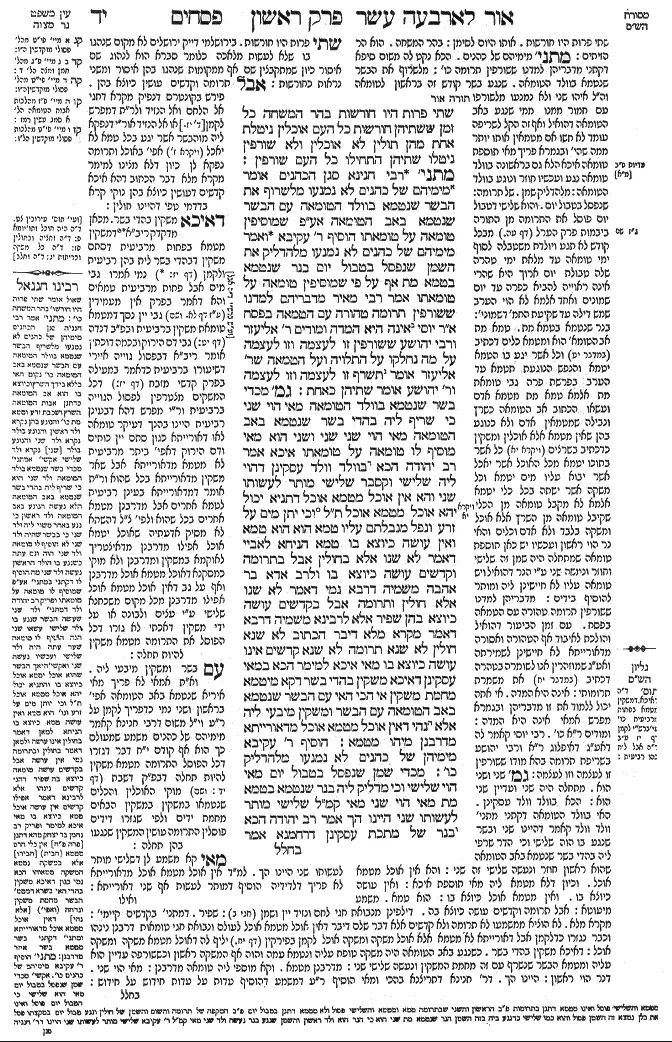
Pesahim 14a - Guemara
שתי פרות היו חורשות בהר המשחה כל זמן ששתיהן חורשות כל העם אוכלין ניטלת אחת מהן תולין לא אוכלין ולא שורפין ניטלו שתיהן התחילו כל העם שורפין:
מתני׳ רבי חנינא סגן הכהנים אומר מימיהם של כהנים לא נמנעו מלשרוף את הבשר שנטמא בוולד הטומאה עם הבשר שנטמא באב הטומאה אע"פ שמוסיפין טומאה על טומאתו הוסיף ר' עקיבא ואמר מימיהם של כהנים לא נמנעו מלהדליק את השמן שנפסל בטבול יום בנר שנטמא בטמא מת אף על פי שמוסיפין טומאה על טומאתו אמר רבי מאיר מדבריהם למדנו ששורפין תרומה טהורה עם הטמאה בפסח א"ר יוסי אינה היא המדה ומודים ר' אליעזר ורבי יהושע ששורפין זו לעצמה וזו לעצמה על מה נחלקו על התלויה ועל הטמאה שר' אליעזר אומר תשרף זו לעצמה וזו לעצמה ור' יהושע אומר שתיהן כאחת:
גמ׳ מכדי בשר שנטמא בוולד הטומאה מאי הוי שני כי שריף ליה בהדי בשר שנטמא באב הטומאה מאי הוי שני שני ושני הוא מאי מוסיף לו טומאה על טומאתו איכא אמר רב יהודה הכא בוולד וולד עסקינן דהוי ליה שלישי וקסבר שלישי מותר לעשותו שני והא אין אוכל מטמא אוכל דתניא יכול יהא אוכל מטמא אוכל ת"ל (ויקרא יא, לח) וכי יתן מים על זרע ונפל מנבלתם עליו טמא הוא הוא טמא ואין עושה כיוצא בו טמא הניחא לאביי דאמר לא שנו אלא בחולין אבל בתרומה וקדשים עושה כיוצא בו ולרב אדא בר אהבה משמיה דרבא נמי דאמר לא שנו אלא חולין ותרומה אבל בקדשים עושה כיוצא בהן שפיר אלא לרבינא משמיה דרבא דאמר מקרא מלא דיבר הכתוב לא שנא חולין לא שנא תרומה לא שנא קדשים אינו עושה כיוצא בו מאי איכא למימר הכא במאי עסקינן דאיכא משקין בהדי בשר דקא מיטמא מחמת משקין אי הכי האי עם הבשר שנטמא באב הטומאה עם הבשר ומשקין מיבעי ליה אלא נהי דאין אוכל מטמא אוכל מדאורייתא מדרבנן מיהו מטמא:
הוסיף ר' עקיבא מימיהן של כהנים לא נמנעו מלהדליק כו':
מכדי שמן שנפסל בטבול יום מאי הוי שלישי וכי מדליק ליה בנר שנטמא בטמא מת מאי הוי שני מאי קמ"ל שלישי מותר לעשותו שני היינו הך אמר רב יהודה הכא בנר של מתכת עסקינן דרחמנא אמר
Comments from Rashi on Masechet Pesahim Page 14a
שתי פרות היו חורשות . אותו היום לסימן: בהר המשחה . הוא הר הזיתים: מתני' מימיהם של כהנים . הכא נקט לה משום סיפא דקתני מדבריהן למדנו ששורפין תרומה כו': מלשרוף את הבשר שנטמא בוולד הטומאה . שנגע בשר קודש זה בראשון לטומאה וה"ל איהו שני ולא נמנעו מלשורפו עם חמור ממנו ממי שנגע באב הטומאה דהואיל ואף זה הקל לשריפה עומד לא חשו אם מטמאין אותו יותר ממה שהי' ובגמרא פריך מאי תוספת טומאה איכא הלא גם בראשונה בוולד טומאה נגע ועכשיו חוזר ונוגע בוולד הטומאה: מלהדליק שמן . של תרומה: שנפסל בטבול יום . והוא שלישי דטבול יום פוסל את התרומה מן התורה ביבמות פרק הערל (דף עה.) מבכל קודש לא תגע ויולדת משטבלה לסוף ימי טומאה עד מלאת ימי טהרה שלה טבולת יום ארוך היא שהרי אינה ראוייה להביא כפרה עד יום שמונים ואחד אלמא לא הוי הערב שמש דילה עד שקיעת החמ' דשמוני': בנר שנטמא בטמא מת . טמא מת אב הטומא' הוא ומטמא כלים דכתיב (במדבר יט) וכל אשר יגע בו הטמא יטמא והנפש הנוגעת תטמא עד הערב בפרשת פרה גבי טומאת מת אלמא טמא מת מטמא אדם ועשאו הכתוב אב הטומאה כשרץ ונבילה שמטמאין אדם ולא כנוגע בהן שאין מטמא אלא אוכלין ומשקין כדכתיב בשרצים (ויקרא יא) כל אשר בתוכו יטמא מכל האוכל אשר יאכל אשר יבוא עליו מים יטמא וכל משקה אשר ישתה בכל כלי יטמא אלמא לא מקבל טומאה מן הכלי שקיבל טומאה מן השרץ אלא אוכל ומשקה בלבד ולא אדם וכלים והאי נר הוי ראשון ועכשיו יש כאן תוספת טומאה שמתחלה היה שמן זה שלישי וחוזר ונעשה שני ע"י הנר דהואיל ויש טומאה עליו לא חיישינן ליה ומותר להוסיף בידים: מדבריהן למדנו ששורפין תרומה טהורה עם הטמאה בפסח . עם זמן הביעור דהואיל והולכת לאיבוד אף הטהורה ואסורה מדאורייתא לא חיישינן לשמירתה ואע"ג שמוזהרין אנו לשומרה בטהרה דכתיב (במדבר יח) את משמרת תרומותי: אינה היא המדה . אי אתה יכול ללמוד את זו מדבריהן ובגמרא מפרש אמאי אינה היא המדה: ומודים ר"א כו' . ר' יוסי קאמר לה דאע"ג דאיפלוג ר"א ורבי יהושע בשריפת תרומה בהא מודו ששורפין זו לעצמה וזו לעצמה: גמ' שני ושני הוא . מתחלה היה שני ועדיין שני הוא: הכא בוולד וולד עסקינן . האי בוולד הטומאה דקתני מתניתין וולד וולד קאמר דהיינו שני ובשר שנגע בו הוה שלישי וכי הדר שרפי ליה בהדי בשר שנטמא באב הטומאה שהוא ראשון חוזר ונעשה שלישי זה שני: והא אין אוכל מטמא אוכל . וכיון דלא מטמא ליה מאי תוספת איכא: ואין עושה כיוצא בו . ואין מטמא אוכל כיוצא בו: הוא טמא . משמע מיעוטא: אבל תרומה וקדשים עושה כיוצא בה . דילפינן מנבואת חגי לחם ונזיד יין ושמן (חגי ב): שפיר . דמתניתין בקדשים קיימי': מקרא מלא . לא הוציא ממשמעו לא תרומה ולא קדשים אלא דבר שלם דיבר דאין אוכל מטמא אוכל לעולם ונבואת חגי טומאות דרבנן נינהו וכבר נגזרו כדלקמן אבל דאורייתא לא מטמא אלא אוכל משקה ומשקה אוכל לקמן בפירקין (פסחים דף יח.) יליף לה דאוכל מטמא משקה ומשקה אוכל: דאיכא משקין בהדי בשר . כשנגע באב הטומאה היה משקה טופח עליה ונטמא עמה והוה אף המשקה ראשון וכששורפה עדיין הוא עליה ומטמא הבשר שנשרף עם זה מחמת המשקין ונעשה שלישי שני: מדרבנן מטמא . וקא מוספי ליה טומאה מדרבנן: מתני' מימיהם של כהנים . הכא נקט לה משום סיפא דקתני מדבריהן למדנו ששורפין תרומה כו': מאי הוי שני . דנר הוי ראשון: היינו הך . דר' חנינא דתריצנא בהכי ומאי הוסיף ר"ע דמשמע דהוסיף עדות על עדות חידוש על חידוש:
Comments from Tosafot - Pesahim 14a
שתי פרות היו חורשות . בירושלמי דייק ירושלים לא מקום שנהגו בו שלא לעשות מלאכה כלומר סברא הוא לנהוג שם איסור כיון שמתקבצין שם אף ממקומות שנהגו בהן איסור ומשני נראות כחורשות: אבל תרומה וקדשים עושין כיוצא בהן . פירש בקונטרס דנפיק מקרא דחגי אל הלחם ואל הנזיד ולר"ת דמפרש לקמן [פסחים ד' יז.] או אל הנזיד אור"י דנפקא ליה מוהבשר אשר יגע בכל טמא לא יאכל (ויקרא ז') אפי' באוכל ותרומה נפקא לן כיון דלא מצינו למימר מקרא מלא דבר הכתוב דהא איכא קדשים דעושין כיוצא בהן נוקי קרא בדדמי טפי דהיינו חולין: דאיכא משקין בהדי בשר . מכאן מדקדק ריב"א דמשקין מטמא בפחות מרביעית דסתם משקין דבהדי בשר לית בהן רביעית ולקמן (פסחים דף יז:) נמי אמרו גבי מים אבל פחות מרביעית טמאים והא דאמר בפרק אין מעמידין (ע"ז דף לא. ושם) גבי יין נסך דמטמא טומאת משקין ברביעית ובפ"ב דנדה (דף יט:) גבי דם הירוק ובכמה דוכתין אומר ריב"א דבפסול גוייה איירי דשיעורו ברביעית כדאמר במעילה בפרק קדשי מזבח (דף יז:) דכל המשקים מצטרפין לפסול הגוייה ברביעית ור"י מפרש דהא דבעינן רביעית היינו בהנך דעיקר טומאה לאו דאורייתא כגון סתם יין כותים ודם הירוק דאפי' ביתר מרביעית לא מטמא מדאורייתא אבל שאר משקין מדאורייתא בכל שהוא ור"ת אומר דמדאורייתא בעינן רביעית לטמא אחרים אבל מדרבנן מטמא אחרים בכל שהוא ולפי' צ"ל דהשתא לא מסיק אדעתיה שאוכל יטמא אוכל אפילו מדרבנן מדאיצטריך לאוקמא במשקין ומדרבנן ולא מוקי כמסקנא דאוכל מטמא אוכל מדרבנן ואף על גב דאין אוכל מטמא אוכל אפילו מדרבנן מכל מקום משכחנא שלישי ע"י עצים ולבונה או על ידי משקין דאכתי לא גזרו דכל הפוסל את התרומה מטמא משקין להיות תחלה: עם בשר ומשקין מיבעי ליה . וא"ת אמאי לא פריך מאי איריא שנטמא באב הטומאה אפי' בראשון ושני נמי כדפריך לקמן על ר"ע וי"ל משום דרבי חנינא קאמר מימיהם של כהנים משמע שמעולם כך הוא אף קודם י"ח דבר דגזרו דכל הפוסל התרומה מטמא משקין להיות תחלה דבפ"ק דשבת (דף יד: ושם) מוקי האוכלין והכלים שנטמאו במשקין במשקין הבאים מחמת ידים ולפי שגזרו דידים פוסלין התרומה עושין המשקין שנגעו בהן תחלה: מאי קא משמע לן דשלישי מותר לעשותו שני היינו הך . למ"ד אין אוכל מטמא אוכל מדאורייתא לא פריך דלדידיה הוסיף דמותר לעשות אף שני דאורייתא:
Pesahim 14a - Mishnah translated into english
Two cows would plow on the Mount of Olives on Passover eve. As long as both of them are plowing, the entire nation continues to eat leavened bread. When one of the cows is taken away, the people know that the time has come to place their leaven in abeyance, meaning that they neither eat nor burn it. When both of them were taken away, the entire nation began burning their leaven.
MISHNA: Apropos the removal of leaven on Passover eve, including the consecrated loaves of thanks-offerings and teruma, the mishna cites a related halakha. Rabbi Ḥanina the deputy High Priest says: In all the days of the priests, they did not refrain from burning meat that became ritually impure by coming into contact with a secondary source of ritual impurity, i.e., an object that had come into contact with a primary source of impurity, together with meat that became ritually impure by contact with a primary source of impurity. They would do so even though they would thereby add a degree of impurity to the impurity of the first piece of meat, which was previously impure to a lesser degree.
Rabbi Akiva added to the statement of Rabbi Ḥanina the deputy High Priest and said: In all the days of the priests, they did not refrain from lighting teruma oil that was ritually disqualified by coming into contact with one who immersed himself during that day and who does not become completely purified until nightfall in a lamp that became ritually impure with first-degree impurity through contact with one who became ritually impure with impurity imparted by a corpse. They did so even though they would thereby add impurity to the impurity of the oil. A person who immersed himself during that day assumes the status of second-degree ritual impurity. His contact renders the oil ritually impure with third-degree ritual impurity. The lamp with first-degree ritual impurity renders the oil ritually impure with second-degree impurity.
Rabbi Meir said: From their statements we learned that one may burn ritually pure teruma with impure teruma when removing leaven on Passover eve. The rationale that applies to the two previous cases applies here as well. Since both items are being burned, one may disregard the fact that one item will assume a higher degree of ritual impurity in the process. Rabbi Yosei said: That is not the inference from which the halakha in the case of ritually pure and ritually impure teruma can be learned. In those first two cases, the two items are both ritually impure, albeit at different degrees of ritual impurity. Rabbi Meir is referring to the combination of impure teruma with pure teruma, which would render pure teruma ritually impure.
And in fact Rabbi Eliezer and Rabbi Yehoshua, who disagree with regard to the burning of leavened teruma, nevertheless concede that one burns this ritually pure teruma by itself and that impure teruma by itself. With regard to what did they disagree? They disagreed with regard to whether one may burn teruma in abeyance, i.e., teruma whose purity is uncertain, and definitely impure teruma together, as Rabbi Eliezer says: This teruma in abeyance should be burned by itself, and that impure teruma should be burned by itself; and Rabbi Yehoshua says: In that case, both of them may be burned as one.
GEMARA: The Gemara analyzes the mishna’s first statement: Now consider, what is the status of meat that became ritually impure by coming into contact with a secondary source of impurity? It assumes second-degree ritual impurity status. When one burns that meat together with meat that became ritually impure by coming into contact with a primary source of ritual impurity, what is the status of that first piece of meat? It assumes second-degree ritual impurity status. Meat that touches a primary source of impurity assumes first-degree ritual impurity status, which transmits second-degree impurity to other meat.
The Gemara continues: Since when the first piece of meat is placed next to the meat that came into contact with a primary source it assumes second-degree impurity, this is a case where the meat is with second-degree status, and through contact with the primary source it would assume second-degree status. In what sense is there a case of adding impurity to its impurity here? There is no change in the status of the first piece of meat at all.
Rav Yehuda said: The above interpretation is incorrect, as here we are dealing with the secondary source of a secondary source of ritual impurity, i.e., meat that came in contact with second-degree ritual impurity. The statement in the mishna: That became ritually impure by coming into contact with a secondary source of ritual impurity, should not be understood as saying that it came into contact with meat with first-degree ritual impurity status, as in this case, the meat came into contact with meat with second-degree ritual impurity status and is impure with third-degree ritual impurity. And Rabbi Ḥanina the deputy High Priest maintains that it is permitted to render impure with second-degree impurity an object with third-degree ritual impurity by burning it with meat that came into contact with a primary source of ritual impurity.
The Gemara raises a difficulty: Isn’t there a principle that food does not transmit ritual impurity to other food, as it was taught in a baraita: I might have thought that food transmits impurity to other food; therefore, the verse states: “And if water is placed upon the seed, and any part of a carcass falls upon it, it is impure” (Leviticus 11:38). The Sages derived from this verse: It, the food exposed to the source of impurity, is impure, but it does not render similar foods impure. Apparently, food does not transmit impurity to other food.
This works out well according to the opinion of Abaye, who said: They taught this principle that food does not transmit ritual impurity to other food only with regard to non-sacred food; however, with regard to teruma and consecrated food, food transmits impurity to other foods it touches, and it renders the teruma or consecrated food similar to it in terms of impurity.
And this is also the case according to the opinion stated by Rav Adda bar Ahava in the name of Rava, who said: They taught this principle, that food does not transmit ritual impurity to other food, only with regard to non-sacred food and teruma; however, with regard to consecrated food, food transmits impurity to other foods it touches, and it renders the consecrated food similar to it in terms of impurity. According to this opinion, it works out well. As the mishna is dealing with a case of consecrated meat, impurity can be transmitted from one food item to another.
However, this is not the case according to the opinion stated by Ravina in the name of Rava, who said: The Torah stated this principle in a categorical verse, without any exceptions, meaning it is no different with regard to non-sacred food, and it is no different with regard to teruma, and it is no different with regard to consecrated food, as in all of these cases one type of food does not render other food similar to it in terms of impurity. According to this opinion, what can be said in terms of understanding the statement in the mishna: Even though they thereby add impurity to its impurity?
The Gemara answers in defense of this opinion: With what are we dealing here? It is with a case where there are liquids with the meat when it comes into contact with the primary source of ritual impurity. Since the other piece of meat comes into contact with the liquid on that meat, it becomes impure due to contact with the liquid. Although food does not transmit impurity to food, liquid transmits impurity to food.
The Gemara raises a difficulty: If so, this phrase: With meat that became ritually impure by contact with a primary source of impurity, is imprecise. The tanna should have said: With meat and liquids, as the liquids are essential for the transmission of impurity. Rather, the Gemara explains: Although food does not transmit impurity to other food by Torah law, in any event, by rabbinic law, food transmits impurity to other food. The mishna is based on the rabbinic decree that food transmits impurity to other food.
It was stated in the mishna that Rabbi Akiva added: In all the days of the priests, they did not refrain from lighting teruma oil that was ritually disqualified by coming into contact with one who immersed himself during that day, in a lamp that was rendered ritually impure with first-degree impurity through contact with one who became ritually impure with impurity imparted by a corpse. The Gemara asks: Now consider, what is the status of oil that was disqualified by one who immersed himself during that day? As one who immersed himself during that day assumes second-degree impurity, the oil that he touches assumes third-degree ritual impurity status. And when he lights it in a lamp that was rendered ritually impure through contact with one who became ritually impure with impurity imparted by a corpse, who has first-degree impurity status, what is the impurity status of the oil? It assumes second-degree ritual impurity status.
If so, what is Rabbi Akiva teaching us by this halakha? This statement apparently teaches us that with regard to an object that is ritually impure with third-degree impurity status, it is permitted to render it impure with second-degree impurity status. Yet this is the same halakha as that which was taught by Rabbi Ḥanina the deputy High Priest. What is novel about the halakha taught by Rabbi Akiva? Rav Yehuda said: Here, we are dealing with a metal lamp, which has a unique halakhic status. As the Merciful One states:
Traduction : The William Davidson digital edition of the Koren Noé Talmud, with commentary by Rabbi Adin Even-Israel Steinsaltz.