 Talmud Bavli
Pesahim 73a : Youtube
Daf TubeYoutube
3 video classes :
Pesahim Page 73a
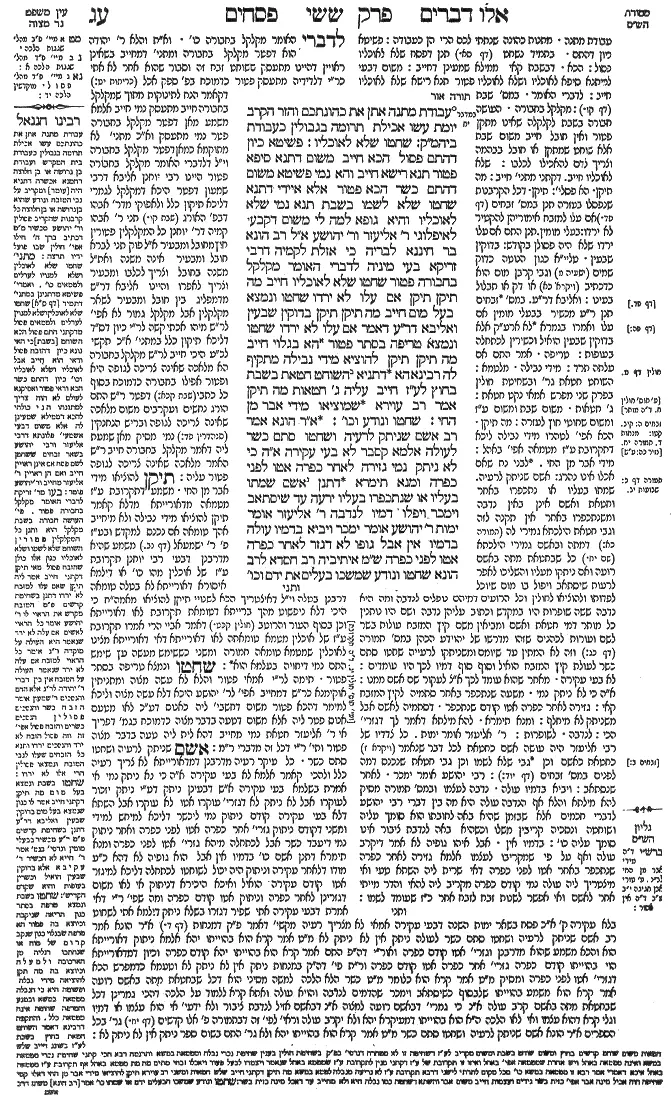
Pesahim 73a - Guemara
(במדבר יח, ז) עבודת מתנה אתן את כהונתכם והזר הקרב יומת עשו אכילת תרומה בגבולין כעבודת ביהמ"ק:
שחטו שלא לאוכליו:
פשיטא כיון דהתם פסול הכא חייב משום דתנא סיפא פטור תנא רישא חייב והא נמי פשיטא משום דהתם כשר הכא פטור אלא איידי דתנא שחטו שלא לשמו בשבת תנא נמי שלא לאוכליו והיא גופא למה לי משום דקבעי לאיפלוגי ר' אליעזר ור' יהושע א"ל רב הונא בר חיננא לבריה כי אזלת לקמיה דרבי זריקא בעי מיניה לדברי האומר מקלקל בחבורה פטור שחטו שלא לאוכליו חייב מה תיקן תיקן אם עלו לא ירדו שחטו ונמצא בעל מום חייב מה תיקן תיקן בדוקין שבעין ואליבא דר"ע דאמר אם עלו לא ירדו שחטו ונמצא טריפה בסתר פטור הא בגלוי חייב מה תיקן תיקן להוציא מידי נבילה מתקיף לה רבינא הא דתניא השוחט חטאת בשבת בחוץ לע"ז חייב עליה ג' חטאות מה תיקן אמר רב עוירא שמוציאו מידי אבר מן החי:
שחטו ונודע וכו':
א"ר הונא אמר רב אשם שניתק לרעיה ושחטו סתם כשר לעולה אלמא קסבר לא בעי עקירה א"ה כי לא ניתק נמי גזירה לאחר כפרה אטו לפני כפרה ומנא תימרא דתנן אשם שמתו בעליו או שנתכפרו בעליו ירעה עד שיסתאב וימכר ויפלו דמיו לנדבה ר' אליעזר אומר ימות ר' יהושע אומר ימכר ויביא בדמיו עולה בדמיו אין אבל גופו לא דגזר לאחר כפרה אטו לפני כפרה ש"מ איתיביה רב חסדא לרב הונא שחטו ונודע שמשכו בעלים את ידם וכו'
Comments from Rashi on Masechet Pesahim Page 73a
עבודת מתנה . מתנות כהונה שנתתי לכם הרי הן כעבודה: פשיטא כיון דהתם . בתמיד נשחט (דף סא.) תנן דפסח שלא לאוכליו פסול: הכא . דבשבת קאי ממילא שמעינן דחייב: משום דבעי למיתנא סיפא לאוכליו ושלא לאוכליו פטור תנא רישא שלא לאוכליו חייב: לדברי האומר . במס' שבת (דף קו.): מקלקל בחבורה . העושה חבורה בשבת לקלקלה שאינו מתקן פטור ואין חובל חייב משום שבת אלא שוחט שמתקן או חובל בבהמה וצריך לדם להאכילו לכלבו: שלא לאוכליו חייב . דקתני מתני' חייב: מה תיקן . הא פסלי': תיקן . דכל הקרבנות שנפסלו בעזרה תנן במס' זבחים (דף פד.) אם עלו למזבח אימוריהן להקטיר לא ירדו: בעלי מומין . תנן התם אם עלו ירדו שלא היה פסולן בקודש: בדוקין שבעין . טליי"א (טייל"א: תבלול (כתם בעין המצמצם את הראייה)) כגון הנוטה כדוק שמים (ישעיהו מ) וגבי קרבן מום הוא כדכתיב (ויקרא כא) או דק או תבלול בעינו: ואליבא דר"ע . במס' זבחים תנן ר"ע מכשיר בבעלי מומין אם עלו ואמרו בגמרא לא ארע"ק אלא בדוקין שבעין הואיל וכשירין לכתחלה בעופות: טריפה . אמר התם אם עלתה תרד: מידי נבילה . מלטמא: השוחט חטאת . גר' ובשחיטת חולין בפרק שני מפרש אמאי נקט חטאת: ג' חטאות . משום שבת ומשום ע"ז ומשום שחוטי חוץ לעזרה: מה תיקן . הכא אפי' לטהרו מידי נבילה ליכא דתקרובת ע"ז מטמאה אפי' באהל: מידי אבר מן החי . לבני נח שאם אכלו אינו נהרג: אשם שניתק לרעיה . שמתו בעליו או נתכפרו באחר וחטאת ואשם אינן באין נדבה ומשנתכפרו באחר אין תקנה לזה וגבי חטאת הילכתא גמירי לה (תמורה כא:) דמתה ובאשם גמירי הילכתא (שם יח.) כל שבחטאת מתה באשם רועה ואם ניתקו מעליו והשליכו לאפר לרעות שיסתאב ויפול בו מום שיוכל לפדותו ולהוציאו לחולין וכל הרועים דמיהם נופלים לנדבה ומה היא נדבה ששה שופרות היו במקדש וכתוב עליהן נדבה ושם היו נותנין כל מותר דמי חטאת ואשם ומביאין משם קיץ המזבח עולות בשר לשם ועורות לכהנים שזהו מדרשו של יהוידע הכהן במס' תמורה (דף כג:) וזה לא המתין עד שיומם ומשניתקו לרעייה שחטו סתם כשר לעולת קיץ המזבח הואיל וסוף סוף דמיו לכך היו עומדים: לא בעי עקירה . מאחר שהוא עומד לכך א"צ לעקור שם אשם ממנו: א"ה כי לא ניתק נמי . משעה שנתכפר באחר סתמיה לקיץ המזבח קאי: גזירה לאחר כפרה אטו קודם שנתכפר . דסתמיה לאשם אבל משניתק לא מיחלף: ומנא תימרא . להא מילתא דאמר לך דגזרי' הכי: לנדבה . לשופרות: ר' אליעזר אומר ימות . כל צדדיו של רבי אליעזר היה עושה אשם כחטאת לכל דבר שנאמר (ויקרא ז) כחטאת כאשם וכן גבי שלא לשמו וכן גבי חטאת שנכנס דמה לפנים במס' זבחים (דף יוד:): רבי יהושע אומר ימכר . לאחר שנסתאב: ויביא בדמיו עולה . נדבה לעצמו ובמס' תמורה מסיק להא מילתא והלא אף הנדבה עולה היא מה בין דברי רבי יהושע לדברי חכמים אלא שבזמן שהיא באה לחובתו הוא סומך עליה ושוחטה ונסכיה קריבין משלו וכשהיא באה לנדבת ציבור אינו סומך עליה כו': בדמיו אין . אבל איהו גופיה לא אמר דיקרב עולה ואף על פי שמקריבו לעצמו אלמא גזירה לאחר כפרה שנתכפר באחר אטו לפני כפרה דאי שרית ליה השתא טעי ואי מיצטריך ליה עולה נמי קודם כפרה מקריב ליה להאי והדר מייתי אחר לאשם ואי אפשר לשנות זבח לזבח אחר כ"ז שעומד לשמו:
Comments from Tosafot - Pesahim 73a
לדברי האומר מקלקל בחבורה כו' . וא"ת והלא ר' יהודה הוא דפטר מקלקל בחבורה ומתני' דמחייב בשאינן ראויין דהיינו מתעסק ששוחט זבח זה וסבור שהוא אחר לא אתי כר"י דלדידיה מתעסק פטור כדמוכח בפ' ספק אכל (כריתות יט:) דקאמר הנח לתינוקות מתוך שמקלקל בחבורה חייב מתעסק נמי חייב אלמא משמע מאן דפטר מקלקל בחבורה פטר נמי מתעסק וא"כ מתני' לא מתוקמא כמאן דפטר מקלקל בחבורה וי"ל דלדברי האומר מקלקל בחבורה פטור היינו רבי יוחנן אליבא דרבי שמעון דפטר היכא דמקלקל לגמרי דליכא תיקון כלל ולאפוקי מדר' אבהו דבפ' האורג (שבת קו.) תני ר' אבהו קמיה דר' יוחנן כל המקלקלין פטורין חוץ מחובל ומבעיר א"ל פוק תני לברא חובל ומבעיר אינה משנה ואת"ל משנה בחובל וצריך לכלבו ומבעיר וצריך לאפרו והיינו אליבא דר"ש מדמפליג בין חובל ומבעיר לשאר מקלקלין אבל מקלקל גמור לא אפי' לר"ש מיהו אכתי קשה לר"י כיון דס"ד דליכא תיקון כלל במתני' א"כ תקשי לכ"ע היכי חייב לר"ש מקלקל בחבורה הא מלאכה שאינה צריכה לגופה היא ופטור אפילו בחבורה כדמוכח בסוף כל כתבי (שבת קכא:) דפטר ר"ש התם הורג נחשים ועקרבים משום מלאכה שאינה צריכה לגופה ובריש הנחנקין (סנהדרין פד:) נמי מסיק מאן שמעת ליה דאמר מקלקל בחבורה חייב ר"ש האמר מלאכה שאינה צריכה לגופה פטור עליה: שחטו ונמצא טריפה בסתר פטור . תימה לר"י אמאי פטור והלא לא עשה מצוה ומתניתין אוקימנא כר"ש דמחייב אפי' לר' יהושע היכא דלא עשה מצוה וליכא למימר דהכא פטור משום דחשבי' ליה כאנוס דע"כ לאו מטעם אנוס פטר ליה אלא משום דטעה בדבר מצוה כדמוכח בגמ' דפריך אי ר' אליעזר חטאת נמי מחייב דהא לית ליה טעה בדבר מצוה פטור ותי' ר"י דכל זה מדברי ר"מ: תיקן להוציאו מידי אבר מן החי . משמע דתקרובת ע"ז מטמאה מדאורייתא מדלא קאמר תיקן להוציאו מידי נבילה ולא מיחייב אהך טומאה אם נכנס למקדש ובע"ז פ' ר' ישמעאל (דף נב.) משמע שהיא מדרבנן דבעי רבי יוחנן תקרובת ע"ז של אוכלין מהו כו' או דילמא איסורא דאורייתא לא בטלה טומאה דרבנן בטלה וי"ל דאיצטריך הכא לשנויי תיקן להוציאו מאמה"ח כי היכי דלא ניפשוט מהך ברייתא דטומאת תקרובת לאו דאורייתא וכן בסוף העור והרוטב (חולין קכט.) דאמר אביי הרי אמרו תקרובת ע"ז של אוכלין מטמא טומאתה לאו דאורייתא דאי דאורייתא מצינו לאוכלין שמטמא טומאה חמורה ומשני כששימש מעשה עץ שימש התם נמי דיחויה בעלמא הוא: אשם שניתק לרעיה ושחטו סתם כשר . כל עיקר רעיה מדרבנן דמדאורייתא לא צריך רעיה כלל ולהכי קאמר אלמא לא בעי עקירה א"ה כי לא ניתק נמי אי אמרת בשלמא בעי עקירה א"ש דבעינן ניתק דע"י ניתק יזכור לעוקרו אבל לא ניתק לא דגזרי' עוקרו אטו לא עוקרו אבל השתא דלא בעי עקירה קודם ניתוק נמי ליכשר דליכא למיחש למידי ומשני דקודם ניתוק גזרי' אחר כפרה אטו לפני כפרה ואחר ניתוק נמי דיעבד כשר אבל לכתחלה מיהא גזרי' אטו לפני כפרה ומנא תימרא דתנן אשם כו' בדמיו אין אבל הוא גופיה לא דהא כ"ע מודו דלאחר עקירה וניתוק היה יכול לשוחטו לכתחלה דליכא למיגזר אטו קודם עקירה הואיל ואיכא היכירא דניתוק אי לאו משום דגזרינן לאחר כפרה וניתוק אטו קודם כפרה ומה שפי' ר"י דאי אמרת דבעי עקירה אתי שפיר דגזרו בשלא ניתק דילמא אתי לשחוט בלא עקירה ק' א"כ פסח בשאר ימות השנה דבעי עקירה אמאי לא מצריך רעיה מקשי' דאמר פ"ק דמנחות (דף ד.) א"ר הונא אמר רב אשם שניתק לרעיה ושחטו סתם כשר לעולה ניתק אין לא ניתק לא מ"ט אמר קרא הוא בהוייתו יהא אלמא ניתוק דאורייתא הוא והכא משמע שהוא מדרבנן וגזרי' אטו קודם כפרה ואור"י דה"פ התם אמר קרא הוא בהוייתו יהא קודם כפרה וכיון דמדאורייתא הוי בהוייתו קודם כפרה גזרי' אחר כפרה אטו קודם כפרה ור"ת פי' דה"ק במנחות ניתק אין לא ניתק לא וטעמא כדמפרש הכא דגזרי' אטו לפני כפרה ומסיק מ"ט אמר קרא הוא כלומר מ"ט כשר הלא הלכה למשה מסיני הוא דכל שבחטאת מתה באשם רועה אמר קרא הוא משמע בהוייתו שלבסוף כשיסתאב וימכר שהדמים לנדבה והויא עולה ואתא קרא ללמוד על הלכה דהכי גמרינן דכל שבחטאת מתה באשם קרב עולה א"נ כי גמרי' דבאשם רועה למצוה א"נ דבאשם אזיל לנדבת ציבור ולא ידעי' אי הוא עצמו או דמיו וגלי קרא דהוא עצמו ואי לאו הלכה ה"א הוא בהוייתו דמעיקרא יהא ולא יקרב עולה וראי' לפי' זה דבתמורה פ' אלו קדשים (דף יח.) גר' בכל הספרים א"ר הונא אשם שניתק לרעיה ושחטו סתם כשר מ"ט אמר קרא הוא בהוייתו יהא ולא גר' התם בשום ספר ניתק אין לא ניתק לא:
Pesahim 73a - Mishnah translated into english
“I have given you the priesthood as a service of gift; and the stranger that comes near shall be put to death” (Numbers 18:7). This verse is found in the context of the priestly gifts, including teruma, and comes to teach us that they made the eating of teruma in the outlying areas, i.e., outside the Temple, like the service of the Temple.
We learned in our mishna that if one unwittingly slaughtered the Paschal lamb on Shabbat for those who cannot eat it or for those who did not register for it, he is liable to bring a sin-offering. The Gemara asks: It is obvious. Since there, with regard to the slaughter itself, it is invalid, here, with regard to Shabbat, he is liable, for it turns out that he performed a prohibited labor that was not necessary for sacrificing an offering. The Gemara answers: Since the latter clause of the mishna taught cases in which he is exempt from bringing a sin-offering, the first clause taught cases in which he is liable, even though it does not really teach us anything new.
The Gemara asks: But this also is obvious, since there, the offering is valid, here with regard to Shabbat he is exempt, as the slaughter did not involve a desecration of Shabbat. Rather, since the mishna taught the case of one who slaughtered the Paschal lamb for a different purpose on Shabbat, it also taught the case of one who slaughtered it for those who cannot eat it. The Gemara asks further: And it itself, the case of slaughtering the Paschal offering for a different purpose, why do I need it? The halakha there is also obvious. The Gemara answers: Since the mishna wished to teach the dispute between Rabbi Eliezer and Rabbi Yehoshua, it taught all these other halakhot as well.
The Gemara relates that Rav Huna bar Ḥinnana said to his son: When you go before Rabbi Zerika, ask him: According to the opinion that says that one who inflicts a destructive wound is exempt, i.e., that one who causes a wound on Shabbat that has no constructive effect but rather is purely destructive in nature has not performed a prohibited labor and is therefore exempt from bringing a sin-offering, how are we to understand the mishna’s ruling that one who slaughtered the Paschal lamb for those who cannot eat it is liable? Since the slaughter is invalid, he should be seen as having wounded the animal in a way that brings no benefit and is simply destructive. What has he improved through the slaughter that he should be liable for having performed a prohibited labor?
The Gemara answers: He has improved it in that if the sacrificial parts of the offering ascended to the top of the altar, they do not descend. The halakha is that if the sacrificial parts of a disqualified offering are inadvertently brought up to the top of the altar, they need not be removed and they may be burned on the altar. Thus, the slaughter had some constructive effect.
The Gemara asks further: We learned in the mishna that if one slaughtered the Paschal lamb and it was found to have a blemish, he is liable to bring a sin-offering. Here too, it may be asked: What has he improved through the slaughter, so that he should be liable? The Gemara answers: He has improved it if the blemish was small, e.g., if it was on the animal’s eyelid, and in accordance with the opinion of Rabbi Akiva, who said that in the case of an offering with such a small blemish, if its sacrificial parts ascended to the top of the altar, they do not descend from it, because it is not a disgrace to the altar for the sacrificial parts of such an offering to be burned on it.
We learned in the next clause of our mishna that if one slaughtered the Paschal lamb and it was found to have a hidden condition that would cause it to die within twelve months [tereifa], he is exempt from bringing a sin-offering. The mishna’s wording indicates that if the animal’s condition is visible, its owner is liable. It may be asked: What has he improved by slaughtering an animal with a such a condition? The Gemara answers: He has improved it in that he removed it from the category of an animal carcass [neveila], i.e., an animal that died of natural causes or as the result of an improperly carried out act of ritual slaughter. Had the animal died on its own it would have been treated as a neveila, which is a primary source of ritual impurity, rendering those who touch or carry it ritually impure. Proper slaughter of the animal prevents it from falling into that category and imparting ritual impurity.
Ravina strongly objects to this: With regard to that which was taught elsewhere in a baraita, that one who unwittingly slaughters a sin-offering on Shabbat outside the Temple for the sake of idolatry is liable to bring three sin-offerings for it: For desecrating Shabbat, for slaughtering an offering outside the Temple, and for practicing idolatry; here too, the question may be raised: What has he improved by slaughtering the animal? Here we cannot answer that he removed it from the category of an animal carcass and prevented it from becoming a primary source of ritual impurity, because any animal that was used as an idolatrous offering imparts ritual impurity. Therefore, it would seem that the slaughter served no constructive purpose.
Rav Avira said: Even here he has improved it in that he removed it from the category of limbs from a living creature. Even a gentile is liable if he eats meat taken from a living animal, but once the animal is slaughtered there is no longer any liability. Accordingly, even this act of slaughter has achieved a productive result.
We learned in the mishna that if one slaughtered the Paschal lamb and it became known afterward that the owners had died, he is exempt from bringing a sin-offering. Rav Huna said that Rav said: Regarding a guilt-offering that was consigned to grazing: If the owner of a guilt-offering dies or achieves atonement through a different guilt-offering, the animal is sent out to graze in the field until it develops a blemish, at which point it can be sold. The money from the sale is used to purchase a burnt-offering. And if, before it developed a blemish, someone slaughtered it without specifying its purpose, it is valid as a burnt-offering. The Gemara concludes that Rav apparently holds that it does not require uprooting. There is no need for an explicit declaration in order to change the status of the offering; even if it is slaughtered without its purpose specified it is valid.
The Gemara asks: If so, even when it has not yet been consigned to grazing, it should also be valid, for any guilt-offering whose owner has achieved atonement through a different offering is presumably going to be brought as a free-will burnt-offering. The Gemara answers: This invalidation stems from a rabbinic decree with regard to a guilt-offering after its owner achieved atonement with a different offering due to concern about a guilt-offering before its owner achieved atonement with a different offering. Before the owner achieves atonement the animal is certainly considered a guilt-offering; it is only after the owner achieves atonement that the offering becomes valid for use as a burnt-offering, and then by strict halakha it is immediately valid for that purpose, even before the animal develops a blemish.
From where do you say that this is the case? As we learned elsewhere in a mishna: A guilt-offering whose owner has died or whose owner has achieved atonement through a different guilt-offering grazes until it becomes unfit, whereupon it is sold and its money is used for a communal free-will burnt-offering. Rabbi Eliezer says: This guilt-offering is made to die on its own. Rabbi Yehoshua says: When it develops a blemish, it is sold, and he brings a burnt-offering for himself with its money.
This indicates that according to Rabbi Yehoshua, as soon as the owner achieves atonement, his animal loses its status as a guilt-offering and it becomes a burnt-offering. Nevertheless, even he says that the animal that is bought with its money may indeed be brought as a burnt-offering, but the guilt-offering itself must not be sacrificed as a burnt-offering. Undoubtedly, his reason must be that the Sages issued a decree with regard to a guilt-offering after its owner achieved atonement with a different offering, due to concern about a guilt-offering before its owner achieved atonement with a different offering. The Gemara concludes: Indeed, learn from it that this is correct.
Rav Ḥisda raised an objection to Rav Huna with regard to his opinion about uprooting the status of an offering from what we learned in our mishna: If one slaughtered a Paschal lamb on Shabbat and afterward it became known that the owners had withdrawn from it and registered for a different one, or that they had died or become ritually impure, he is exempt from bringing a sin-offering, because he slaughtered with permission.
Traduction : The William Davidson digital edition of the Koren Noé Talmud, with commentary by Rabbi Adin Even-Israel Steinsaltz.