 Talmud Bavli
The learning on the whole site is dedicated : L'ilui Nishmat Reuven ben Rivka SEBBAG
The learning on the whole site is dedicated : L'ilui Nishmat אליעזר בן רחל
The learning on the whole site is dedicated : L'ilui Nishmat Margalit bat Ledicia
Pesahim 56a : Youtube
Daf TubeYoutube
3 video classes :
Pesahim Page 56a
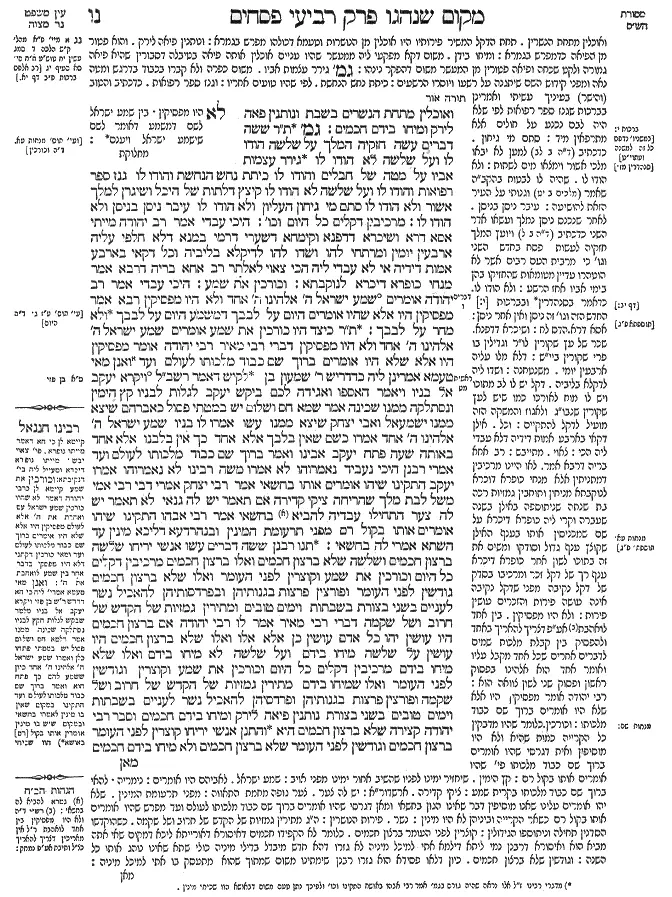
Pesahim 56a - Guemara
ואוכלין מתחת הנשרים בשבת ונותנין פאה לירק ומיחו בידם חכמים:
גמ׳ ת"ר ששה דברים עשה חזקיה המלך על שלשה הודו לו ועל שלשה לא הודו לו גירר עצמות אביו על מטה של חבלים והודו לו כיתת נחש הנחשת והודו לו גנז ספר רפואות והודו לו ועל שלשה לא הודו לו קיצץ דלתות של היכל ושיגרן למלך אשור ולא הודו לו סתם מי גיחון העליון ולא הודו לו עיבר ניסן בניסן ולא הודו לו:
מרכיבין דקלים כל היום וכו':
היכי עבדי אמר רב יהודה מייתי אסא דרא ושיכרא דדפנא וקימחא דשערי דרמי במנא דלא חלפי עליה ארבעין יומין ומרתחי להו ושדו להו לדיקלא בליביה וכל דקאי בארבע אמות דידיה אי לא עבדי ליה הכי צאוי לאלתר רב אחא בריה דרבא אמר מנחי כופרא דיכרא לנוקבתא:
וכורכין את שמע:
היכי עבדי אמר רב יהודה אומרים (דברים ו, ד) שמע ישראל ה' אלהינו ה' אחד ולא היו מפסיקין רבא אמר מפסיקין היו אלא שהיו אומרים היום על לבבך דמשמע היום על לבבך ולא מחר על לבבך:
ת"ר כיצד היו כורכין את שמע אומרים שמע ישראל ה' אלהינו ה' אחד ולא היו מפסיקין דברי רבי מאיר רבי יהודה אומר מפסיקין היו אלא שלא היו אומרים ברוך שם כבוד מלכותו לעולם ועד ואנן מאי טעמא אמרינן ליה כדדריש ר' שמעון בן לקיש דאמר רשב"ל (בראשית מט, א) ויקרא יעקב אל בניו ויאמר האספו ואגידה לכם ביקש יעקב לגלות לבניו קץ הימין ונסתלקה ממנו שכינה אמר שמא חס ושלום יש במטתי פסול כאברהם שיצא ממנו ישמעאל ואבי יצחק שיצא ממנו עשו אמרו לו בניו שמע ישראל ה' אלהינו ה' אחד אמרו כשם שאין בלבך אלא אחד כך אין בלבנו אלא אחד באותה שעה פתח יעקב אבינו ואמר ברוך שם כבוד מלכותו לעולם ועד אמרי רבנן היכי נעביד נאמרוהו לא אמרו משה רבינו לא נאמרוהו אמרו יעקב התקינו שיהו אומרים אותו בחשאי אמר רבי יצחק אמרי דבי רבי אמי משל לבת מלך שהריחה ציקי קדירה אם תאמר יש לה גנאי לא תאמר יש לה צער התחילו עבדיה להביא בחשאי אמר רבי אבהו התקינו שיהו אומרים אותו בקול רם מפני תרעומת המינין ובנהרדעא דליכא מינין עד השתא אמרי לה בחשאי:
תנו רבנן ששה דברים עשו אנשי יריחו שלשה ברצון חכמים ושלשה שלא ברצון חכמים ואלו ברצון חכמים מרכיבין דקלים כל היום וכורכין את שמע וקוצרין לפני העומר ואלו שלא ברצון חכמים גודשין לפני העומר ופורצין פרצות בגנותיהן ובפרדסותיהן להאכיל נשר לעניים בשני בצורת בשבתות וימים טובים ומתירין גמזיות של הקדש של חרוב ושל שקמה דברי רבי מאיר אמר לו רבי יהודה אם ברצון חכמים היו עושין יהו כל אדם עושין כן אלא אלו ואלו שלא ברצון חכמים היו עושין על שלשה מיחו בידם ועל שלשה לא מיחו בידם ואלו שלא מיחו בידם מרכיבין דקלים כל היום וכורכין את שמע וקוצרין וגודשין לפני העומר ואלו שמיחו בידם מתירין גמזיות של הקדש של חרוב ושל שקמה ופורצין פרצות בגנותיהן ופרדסיהן להאכיל נשר לעניים בשבתות וימים טובים בשני בצורת נותנין פיאה לירק ומיחו בידם חכמים וסבר רבי יהודה קצירה שלא ברצון חכמים היא והתנן אנשי יריחו קוצרין לפני העומר ברצון חכמים וגודשין לפני העומר שלא ברצון חכמים ולא מיחו בידם חכמים
Comments from Rashi on Masechet Pesahim Page 56a
ואוכלין מתחת הנשרין . תחת הדקל המשיר פירותיו היו אוכלין מן הנושרות וטעמא דכולהו מפרש בגמרא: ונותנין פיאה לירק . והוא פטור מן הפיאה כדמפרש בגמרא: ומיחו בידן . משום דקא מפקעי ליה ממעשר שהיו עניים אוכלים פיאה בטיבלה דסבורין שהיא פיאה גמורה ולקט שכחה ופיאה פטורין מן המעשר משום דהפקר נינהו: גמ' גירר עצמות אביו . משום כפרה ולא קברו בכבוד בדרגש ומטה נאה ומפני קידוש השם שיתגנה על רשעו ויוסרו הרשעים: כיתת נחש הנחשת . לפי שהיו טועים אחריו: וגנז ספר רפואות . כדכתיב והטוב (והישר) בעיניך עשיתי ואמרינן בברכות שגנז ספר רפואות לפי שלא היה לבם נכנע על חולים אלא מתרפאין מיד: סתם מי גיחון . כדכתיב (ד"ה ב לב) למען לא יבאו מלכי אשור וימצאו מים לשתות: ולא הודו לו . שהיה לו לבטוח בהקב"ה שאמר (מלכים ב יט) וגנותי על העיר הזאת להושיעה: עיבר ניסן בניסן . לאחר שנכנס ניסן נמלך ועשאו אדר השני כדכתיב (ד"ה ב ל) ויועץ המלך חזקיה לעשות פסח בחדש השני וגו' כי מרבית העם רבים אשר לא הוטהרו עדיין מטומאות שהחזיקו בהן בימי אביו אחז הרשע: ולא הודו לו . כדאמר בסנהדרין ובברכות החדש הזה וגו' זה ניסן ואין אחר ניסן: אסא דרא . הדס לח: ושיכרא דדפנא . שכר של עץ שקורין לו"ר (דפנה) וגדילין בו פרי שקורין ביי"ש (גרגירים (ובפרט פירות הדפנה)) : דלא מלו עליה ארבעין יומי . משנטחנה: ושדו ליה לדקלא בליביה . דקל יש לו לב מתוכו ויש לו מוח לאורכו כמו שיש לעץ שקורין שנבו"ג (שיאו"ר: סמבוק (צמח)) ולאגוז והמשקה הזה מועיל לדקל להתקיים: וכל . אילן דקאי בארבע אמות דידיה דלא עבדי ליה הכי: צאוי . מתייבש: רב אחא בריה דרבא אמר . לאו היינו מרכיבין דמתניתין אלא מנחי כופרא דוכרא לנוקבתא מניחין ותוחבין גמזיות רכה בת שנתה שניתוספה באילן בשנה שעברה וקרי ליה כופרא דיכרא על שם שמכניסין אותו בענף האילן שקוצץ ענף גדול וסודקו ומשים את זה בתוכו לשון אחר כופרא דיכרא ענף רך של דקל זכר ומרכיבו בסדק של דקל נקיבה מפני שדקל נקיבה אינה עושה פירות והזכרים עושין פירות: וכורכין . כלומר שהיו מדבקין כל הקרייה כמות שהיא ולא היו מוסיפין ואית דגרסי שהיו אומרים ברוך שם כבוד מלכותו פי' שהיו אומרים אותו בקול רם: ולא היו מפסיקין . בין אחד לואהבת אע"פ דצריך להאריך באחד ולהפסיק בין קבלת מלכות שמים לדברים אחרים שכל אחד מקבל עליו ואומר אחד הוא אלהינו בפסוק ראשון ופסוק שני לשון צוואה היא: ר' יהודה אומר . מפסיקין היו אלא שלא היו אומרים ברוך שם כבוד מלכותו: קץ הימין . שיחזיר ימינו לפניו שהשיב אחור ימינו מפני אויב: שמע ישראל . לאביהם היו אומרים: נימריה . להאי ברוך שם כבוד מלכותו בקריאת שמע: ציקי קדירה . ארשדור"א (ארשידור"א: בשר מטוגן ומתובל) : יש לה צער . צער גופה מחמת התאווה: מפני תרעומת המינין . שלא יהו אומרים עלינו שאנו מוסיפין דבר שאינו הגון בחשאי ומאן דגרסי שהיו אומרים ברוך שם כבוד מלכותו לעולם ועד מפרש שהיו אומרים אותו בקול רם כשאר הקרייה וביניהן לא היו מינין: נשר . פירות הנושרין: ה"ג מתירין גמזיות של הקדש של חרוב ושל שקמה . כשהוקדשו הסדנין תחילה וניתוספו הגידולין: קוצרין לפני העומר ברצון חכמים . כלומר לא הקפידו חכמים דאיסורא דאורייתא ליכא דמקום שאי אתה מביא הוא ואיסורא דרבנן נמי ליתא דילמא אתי למיכל מיניה לא גזרו דהא חדש מיבדל בדילי מיניה כולי שתא שאינו נוהג אותו כל השנה: וגודשין שלא ברצון חכמים . כיון דלאו פסידא הוא גזרו רבנן שימתינו משום שמתוך שהוא מתעסק בו אתי למיכל מיניהוגודשין שלא ברצון חכמים . כיון דלאו פסידא הוא גזרו רבנן שימתינו משום שמתוך שהוא מתעסק בו אתי למיכל מיניה:
Comments from Tosafot - Pesahim 56a
לא היו מפסיקין . בין שמע ישראל לשם דמשמע דאומר לשם שישמע ישראל ויענם:
Pesahim 56a - Mishnah translated into english
and they would eat fallen fruit from beneath palm trees that shed fruit that had fallen on Shabbat; and they would designate the produce in the corner for the poor in a field of vegetables, which is exempt from this obligation even by rabbinic law. And the Sages reprimanded the people of Jericho for doing these three things.
GEMARA: Apropos the people of Jericho, who were reprimanded for some of their actions and not reprimanded for others, the Gemara cites a similar baraita. The Sages taught: King Hezekiah performed six actions. With regard to three of them, the Sages of his generation conceded to him; and with regard to three of them, the Sages did not concede to him. Due to King Hezekiah’s father’s wickedness, he dragged the bones of his father Ahaz on a bier of ropes and did not afford him the respect due to a king, and the Sages conceded to him. He ground the copper snake that Moses fashioned in the desert because Israel worshipped it, and the Sages conceded to him. He suppressed the Book of Cures, and they conceded to him.
And with regard to three actions, the Sages did not concede to him. He cut off the doors of the Sanctuary and sent them to the King of Assyria, and they did not concede to him because he thereby demeaned the Temple. He sealed the waters of the upper Gihon stream, diverting its water into the city by means of a tunnel, and they did not concede to him, because he harmed the local populace in the process and should have relied upon God (Me’iri). He intercalated the year, delaying the advent of the month of Nisan during Nisan, and they did not concede to him. The Gemara explains that he declared the first of Nisan to be the thirtieth of Adar and only then intercalated the year (see II Chronicles 30:2).
We learned in the mishna: They would graft palm trees the entire day of the fourteenth of Nisan. The Gemara asks: How did they perform this grafting? Rabbi Yehuda said: They brought fresh myrtle, strong beer made from the fruit of the laurel tree, and barley flour that was cast into a vessel, and forty days has not passed since it was ground. They boiled them together and poured the mixture into the core of the palm tree. And for any tree standing within four cubits of that tree, if they did not perform this treatment with it, it would immediately wither because the tree that received the treatment would grow faster at the expense of the surrounding trees. Rav Aḥa, son of Rava, said: They placed a branch of a male palm tree on the female, and by doing so the female tree would yield fruit.
We learned in the mishna that the residents of Jericho would bundle Shema. The Gemara asks: What does it mean that they bundled Shema? How did they do so? Rabbi Yehuda said that they recited: “Hear Israel: The Lord is our God, the Lord is One” (Deuteronomy 6:4), and they would not pause between words. Rava said: They would pause between words, but instead of reciting this verse in the proper manner: “That which I command you today, shall be on your heart” (Deuteronomy 6:5), pausing after the word today; they would say: Today shall be on your heart, inferring: Today it will be on your heart, and tomorrow it will not be on your heart. The Sages taught in the Tosefta: How would they bundle Shema? They recited: “Hear Israel, the Lord is our God the Lord is One,” without pausing; this is the statement of Rabbi Meir. Rabbi Yehuda says: They paused, but they would not recite: Blessed be the name of His glorious kingdom for ever and ever.
The Gemara asks: What is the reason that we recite that passage: Blessed be the name of His glorious kingdom for ever and ever, even though it does not appear in the Torah? The Gemara answers: We recite it in accordance with that which Rabbi Shimon ben Lakish interpreted homiletically.
As Rabbi Shimon ben Lakish said that it is written: “And Jacob called his sons and said, Gather around and I will tell you what will occur to you in the end of days” (Genesis 49:1). Jacob wanted to reveal to his sons when the complete redemption would arrive at the end of days (see Daniel 12:13), but the Divine Presence abandoned him, rendering him unable to prophesy. He said: Perhaps the Divine Presence has abandoned me because, Heaven forfend, one of my descendants is unfit, as was the case with my grandfather Abraham, from whom Ishmael emerged, and like my father Isaac, from whom Esau emerged. His sons said to him: Hear Israel, our father, the Lord is our God, the Lord is One. They said: Just as there is only one God in your heart, so too, there is only one in our hearts. At that moment Jacob our father said in praise: Blessed be the name of His glorious kingdom for ever and ever, as all his children were righteous.
The Rabbis said: What should we do? Shall we recite this verse? But Moses our teacher did not say it in the Torah as part of Shema. Shall we not recite it? But Jacob said it. In order to resolve this dilemma they established that this passage should be recited surreptitiously. Rabbi Yitzḥak said that the school of Rabbi Ami said: This is analogous to the daughter of a king who smelled the fragrance of the dried spices stuck to the bottom of the pot and craved to eat them. What can she do? If she tells her servants to give it to her, she will be disgraced, as the dried spices are a contemptible food. However, if she does not say she wants to eat them, she will endure suffering. Her servants began to bring them to her surreptitiously. One should conduct himself in that manner in similar cases of uncertainty.
Rabbi Abbahu said: The Sages instituted that the people should recite it aloud due to the grievance of the heretics. It was instituted to prevent the heretics from claiming that the Jews are surreptitiously reciting inappropriate statements. The Gemara adds: In Neharde’a, where there are no heretics, they recite it surreptitiously even now.
The Sages taught a related matter in the Tosefta: The people of Jericho performed six actions, three in keeping with the will of the Sages and three against the will of the Sages. And these are what they did in keeping with the will of the Sages: They would graft palm trees the entire day of the fourteenth of Nisan; and they would bundle Shema; and they would harvest grain before the omer offering was brought. And these are what they did against the will of the Sages: They would pile the harvest before the omer; and they would make breaches in the walls of their gardens and their orchards to feed fallen fruit to the poor during drought years, so that the poor could take the fruit that had fallen on Shabbat and Festivals; and they would permit the use of consecrated branches of carob and of sycamore trees. This is the statement of Rabbi Meir.
Rabbi Yehuda said to him: It is inaccurate to formulate it in that manner, as if they acted in keeping with the will of the Sages, all people would do so, not only the residents of Jericho. Rather, formulate it in this manner: Both these three acts and those three were performed against the will of the Sages. With regard to three the Sages reprimanded them; and with regard to three the Sages did not reprimand them. Since one could contend that the latter are permitted and the people of Jericho had already performed them, the Sages chose not to reprimand them.
And these are what they did for which the Sages did not reprimand them: They would graft palm trees the entire day; and they would bundle Shema; and they would harvest and pile grain before the omer offering was brought. And these are what they did for which the Sages reprimanded them: They would permit the use of consecrated branches of carob and of sycamore trees; they would make breaches in the walls of their gardens and orchards on Shabbat and Festivals, in order to feed the poor fallen fruit during drought years; and they would designate for the poor the produce in the corner in a field of vegetables. And the Sages reprimanded them for those actions.
The Gemara asks: And does Rabbi Yehuda maintain that this harvest performed by the residents of Jericho was against the will of the Sages? Didn’t we learn in a mishna: The people of Jericho would harvest before the omer, in keeping with the will of the Sages, and they would pile the grain before the omer, against the will of the Sages, but the Sages did not reprimand them?
Traduction : The William Davidson digital edition of the Koren Noé Talmud, with commentary by Rabbi Adin Even-Israel Steinsaltz.