 Talmud Bavli
Pesahim 102a : Youtube
Daf TubeYoutube
3 video classes :
Pesahim Page 102a
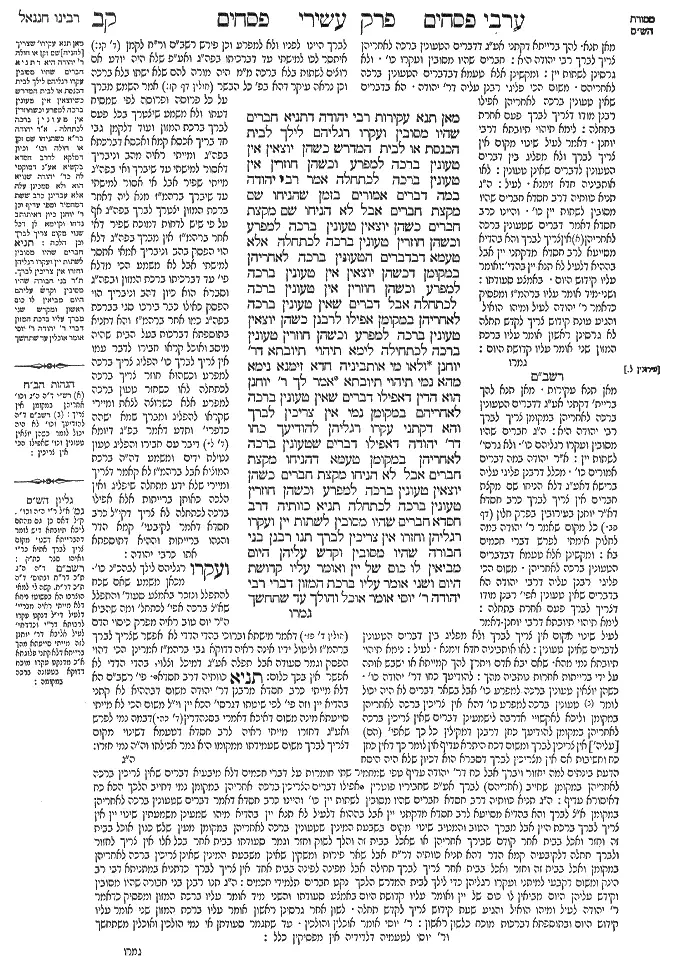
Pesahim 102a - Guemara
מאן תנא עקירות רבי יהודה דתניא חברים שהיו מסובין ועקרו רגליהם לילך לבית הכנסת או לבית המדרש כשהן יוצאין אין טעונין ברכה למפרע וכשהן חוזרין אין טעונין ברכה לכתחלה אמר רבי יהודה במה דברים אמורים בזמן שהניחו. שם מקצת חברים אבל לא הניחו שם מקצת חברים כשהן יוצאין טעונין ברכה למפרע וכשהן חוזרין טעונין ברכה לכתחלה אלא טעמא דבדברים הטעונין ברכה לאחריהן במקומן דכשהן יוצאין אין טעונין ברכה למפרע וכשהן חוזרין אין טעונין ברכה לכתחלה אבל דברים שאין טעונין ברכה לאחריהן במקומן אפילו לרבנן כשהן יוצאין טעונין ברכה למפרע וכשהן חוזרין טעונין ברכה לכתחילה לימא תיהוי תיובתא דר' יוחנן ולאו מי אותביניה חדא זימנא נימא מהא נמי תיהוי תיובתא אמר לך ר' יוחנן הוא הדין דאפילו דברים שאין טעונין ברכה לאחריהם במקומן נמי אין צריכין לברך והא דקתני עקרו רגליהן להודיעך כחו דר' יהודה דאפילו דברים שטעונין ברכה לאחריהן במקומן טעמא דהניחו מקצת חברים אבל לא הניחו מקצת חברים כשהן יוצאין טעונין ברכה למפרע וכשהן חוזרין טעונין ברכה לכתחלה תניא כוותיה דרב חסדא חברים שהיו מסובין לשתות יין ועקרו רגליהן וחזרו אין צריכין לברך תנו רבנן בני חבורה שהיו מסובין וקדש עליהן היום מביאין לו כוס של יין ואומר עליו קדושת היום ושני אומר עליו ברכת המזון דברי רבי יהודה ר' יוסי אומר אוכל והולך עד שתחשך
Comments from Rashi on Masechet Pesahim Page 102a
מאן תנא . להך ברייתא דקתני אע"ג דדברים הטעונין ברכה לאחריהן צריך לברך רבי יהודה היא: חברים שהיו מסובין ועקרו כו' . ולא גרסינן לשתות יין: ומקשינן אלא טעמא דבדברים הטעונין ברכה לאחריהם . משום הכי פליגי רבנן עליה דר' יהודה: הא בדברים שאין טעונין ברכה לאחריהן . אפילו רבנן מודו דצריך לברך פעם אחרת בתחלה: לימא תיהוי תיובתא דרבי יוחנן . דאמר לעיל שינוי מקום אין צריך לברך ולא מפליג בין דברים הטעונין לדברים שאינן טעונין: לאו אותביניה חדא זימנא . לעיל: ה"ג תניא כוותיה דרב חסדא חברים שהיו מסובין לשתות יין כו' . והיינו כרב חסדא דאמר דברים שטעונין ברכה לאחריהן אין צריך לברך והא בהדיא מסייעא לרב חסדא מדקתני יין אבל בההיא דלעיל לא תנא יין בהדי': ואומר עליו קידוש היום . באמצע סעודתו: ושני . מיד אומר עליו ברהמ"ז ומפסיק כדאמר ר' יהודה לעיל ומיהו הואיל והגיע עונת קידוש צריך לקדש תחלה לא גרסינן ראשון אומר עליו ברכת המזון שני אומר עליו קדושת היום:
Comments from Rashbam - Pesahim 102a
מאן תנא עקירות . מאן תנא להך בריית' דקתני אע''ג דדברים הטעונין ברכה לאחריהן במקומן צריך לברך רבי יהודה היא: ה''ג חברים שהיו מסובין ועקרו רגליהם כו' . ולא גרסי' לשתות יין: א''ר יהודה במה דברים אמורים כו' . מכלל דרבנן פליגי עליה ברישא דאע''ג דלא הניחו שם מקצת חברים אין צריך לברך כרב חסדא דא''ר יוחנן בעירובין בפרק חלון (דף פב.) כל מקום שאמר ר' יהודה במה לחלוק אימתי לפרש דברי חכמים בא: ומקשינן אלא טעמא דבדברים הטעונין ברכה לאחריהם . משום הכי פליגי רבנן עליה דרבי יהודה הא בדברים שאין טעונין אפי' רבנן מודו דצריך לברך פעם אחרת בתחלה: לימא תיהוי תיובתא דרבי יוחנן . דאמר לעיל שינוי מקום אין צריך לברך ולא מפליג בין דברים הטעונין לדברים שאינן טעונין: נימא תיהוי תיובתא נמי מהא . שאם יבא אדם ויתרץ להך קמייתא או ישבש אותה על ידי ברייתות אחרות נותביה מהך: לאו אותביניה חדא זימנא . לעיל: להודיעך כחו דר' יהודה כו' . כשהן יוצאין טעונין ברכה למפרע כו' אבל בשאר דברים לא היה יכול לומר טעונין ברכה למפרע כו' דהא אין צריכין ברכה לאחריהן במקומן וליכא לאקשויי אדרבה לישמעינן דברים שאין צריכין ברכה לאחריהם במקומן להודיעך כחן דרבנן דמקילין כל כך שאפי' (הם) [עליה'] אין צריכין לברך ומשום דכח היתרא עדיף אין לומר כך דאין כחן כח וחשיבות אם אין מצריכין לברך דסברא הוא דכיון שלא היה היסח הדעת בינתים למה יחזור ויברך אבל כח דר' יהודה עדיף טפי שמחמיר שתי חומרות על דברי חכמים דלא מיבעיא דברים שאין צריכין ברכה לאחריהן במקומן שחייב (אחריהם) לברך אע''פ שחביריו פוטרין אפילו דברים הצריכין ברכה אחריהן במקומן נמי דחייב הלכך הכא כח דאיסורא עדיף: ה''ג תניא כוותיה דרב חסדא חברים שהיו מסובין לשתות יין כו' . והיינו כרב חסדא דאמר דברים שטעונין ברכה לאחריהן במקומן א''צ לברך והא בהדיא מסייעא לרב חסדא מדקתני יין אבל בההוא דלעיל לא תנא יין בהדיא מיהו שמעינן משמעתין שינוי יין אין צריך לברך ברכת היין אבל מברך הטוב והמטיב שינוי מקום בשעת המינין שטעונין ברכה לאחריהן במקומן מעין שלש כגון אוכל בבית זה וחזר ואכל בבית אחר קודם שבירך אחריהן או שאכל בבית זה והלך לשוק וחזר וגמר סעודתו בבית אחר בכל אלו אין צריך לחזור ולברך תחלה דלקיבעיה קמא הדר דהא תניא כוותיה דר''ח אבל שאר פירות ומשקין שאינן משבעת המינין שאינן צריכין ברכה לאחריהן במקומן ואכל בבית זה וחזר ואכל בבית אחר צריך לברך תחילה אבל מפינה לפינה בבית אחד אין צריך לברך כדתניא במתניתא דבי רב הינק ומשום דקבעי למיתני ועקרו רגליהן כדי לילך לבית המדרש הלכך נקט חברים תלמידי חכמים ה''ג תנו רבנן בני חבורה שהיו מסובין וקידש עליהן היום מביאין לו כוס של יין ואומר עליו קדושת היום באמצע סעודתו והשני מיד אומר עליו ברכת המזון ומפסיק כדאמר ר' יהודה לעיל ומיהו הואיל והגיע שעת קידוש צריך לקדש תחלה . לשון אחר גרסינן ראשון אומר עליו ברכת המזון שני אומר עליו קידוש היום ובתוספתא דברכות מוכח כלשון ראשון: ר' יוסי אומר אוכלין והולכין . עד שתגמר סעודתן אי נמי הולכין ואוכלין משתחשך ור' יוסי לטעמיה דלדידיה אין מפסיקין כלל
Comments from Tosafot - Pesahim 102a
ועקרו רגליהם לילך לבהכ"נ כו' . מכאן משמע שאם שכח להתפלל ונזכר באמצע סעוד' והתפלל שא"צ ברכה אפי' לכתחל' ומה שהביא ה"ר יום טוב ראיה מפרק כיסוי הדם (חולין ד' פז.) דאמר מישתא וברוכי בהדי הדדי לא אפשר שצריך לברך ברהמ"ז וליטול ידיו אינה ראיה דדוקא גבי ברהמ"ז אמרינן הכי דהוי הפסק וגמר סעודה אבל תפלה אע"ג דמיכל וצלוי בהדי הדדי לא אפשר אין בכך כלום: תניא כוותיה דרב חסדא . פי' רשב"ם הא דלא מייתי כרב חסדא מרבנן דר' יהודה משום דבההיא לא קתני בהדיא יין וזה פי' לפי שיטתו דגרסי' הכא יין וי"ל משום הכי לא מייתי סייעתא מינה משום דאיכא דאמרי בסנהדרין (ד' כה.) דבמה נמי לפרש ואע"ג דחזרו מייתי ראיה לרב חסדא דטעמא דשינוי מקום דצריך לברך משום שעמידתו ממקומו היא גמר אכילתו וה"ה נמי חזרו:
Pesahim 102a - Mishnah translated into english
Who is the tanna that taught that even in cases of uprooting oneself from a meal that requires a blessing of significance afterward, one nevertheless is required to recite a new blessing before resuming his meal?
It is Rabbi Yehuda, as it was taught in a baraita: With regard to friends who were reclining and eating a meal and uprooted themselves to go to the synagogue or to the study hall, when they exit, these foods do not require a blessing to be recited afterward, and when they return, these foods do not require an introductory blessing before resuming eating. Rabbi Yehuda said: In what case is this statement said? When they left some of the friends there, at the meal. However, if they did not leave some of the friends there, when they exit, these foods require a blessing to be recited afterward, and when they return, these foods require an introductory blessing. According to Rav Naḥman bar Yitzḥak, the baraita that served as the basis of the Gemara’s objection to the explanation of Rav Ḥisda actually represents the minority opinion of Rabbi Yehuda, whereas Rav Ḥisda holds in accordance with the majority opinion of the Rabbis.
The Gemara infers from the above baraita: The reason for this halakha is that it is only with regard to items of food that require a blessing after them in their place, that when the people eating them exit, these foods do not require a blessing to be recited afterward, and when they return, these foods do not require an introductory blessing. However, if they ate items of food that do not require a blessing that must be recited specifically in their place, even according to the opinion of the Rabbis, who disagree with Rabbi Yehuda, when these people exit, these foods require a blessing to be recited afterward, and when they return these foods require an introductory blessing.
The Gemara suggests: Shall we say that this is a conclusive refutation of the opinion of Rabbi Yoḥanan, who holds that a change of location never obligates one to recite a new blessing? The Gemara expresses surprise at this proposition: But didn’t we already refute Rabbi Yoḥanan’s opinion once? Why is it necessary to refute his ruling yet again? The Gemara admits that this is true but adds: Nevertheless, let us say that this baraita is also a conclusive refutation of the opinion of Rabbi Yoḥanan.
The Gemara responds that Rabbi Yoḥanan’s ruling cannot be definitively refuted from this baraita, as Rabbi Yoḥanan could have said to you: The same is true that even with regard to items of food that do not require a blessing afterward in their place, the people who ate them are also not required to recite a new blessing. And with regard to that which the baraita teaches: They uprooted themselves, from which it was inferred that the people were eating foods that require a blessing afterward in the place of eating, this phrase serves to convey the far-reaching nature of Rabbi Yehuda’s stringent opinion.
The Gemara explains the previous statement: According to Rabbi Yehuda, even if they were eating items of food that require a blessing after them in their place, and they will definitely return to the meal, the reason that these foods do not require a new blessing is that they left some of their friends at the meal. However, if they did not leave some of their friends, when they exit, these foods require a blessing to be recited afterward, and when they return, these foods require an introductory blessing. Nevertheless, it is possible that the Rabbis are lenient and do not obligate them to recite a new blessing, even if they are eating food that does not require a blessing afterward in the place in which they ate.
The Gemara points out that it was taught in a baraita in accordance with the opinion of Rav Ḥisda: With regard to friends who were reclining to drink wine together and uprooted themselves from their place and subsequently returned to their original location, they need not recite a new blessing. Wine is considered an important beverage that requires a concluding blessing in the place where it was consumed. This baraita explicitly supports the opinion of Rav Ḥisda, who rules with regard to items of this kind that if one left the place where he was drinking and later returned, no new blessing is necessary.
The Gemara returns to the subject of interrupting one’s meal to recite kiddush. The Sages taught: With regard to members of a group who were reclining and eating a meal, and the day of Shabbat was sanctified, they bring one of the diners a cup of wine and he recites over it the sanctification of the day, i.e., kiddush, and a second cup over which he recites Grace after Meals; this is the statement of Rabbi Yehuda. Rabbi Yosei says: One may continue eating the rest of his meal, even until dark.
Traduction : The William Davidson digital edition of the Koren Noé Talmud, with commentary by Rabbi Adin Even-Israel Steinsaltz.