 Talmud Bavli
The learning on the whole site is dedicated : L'ilui Nishmat רינה בת לדיסיה
The learning on the whole site is dedicated : L'ilui Nishmat Ledicia bat David Banoun
The learning on the whole site is dedicated : L'ilui Nishmat Yechayahou ben Moche
Pesahim 4a : Youtube
Daf TubeYoutube
3 video classes :
Pesahim Page 4a
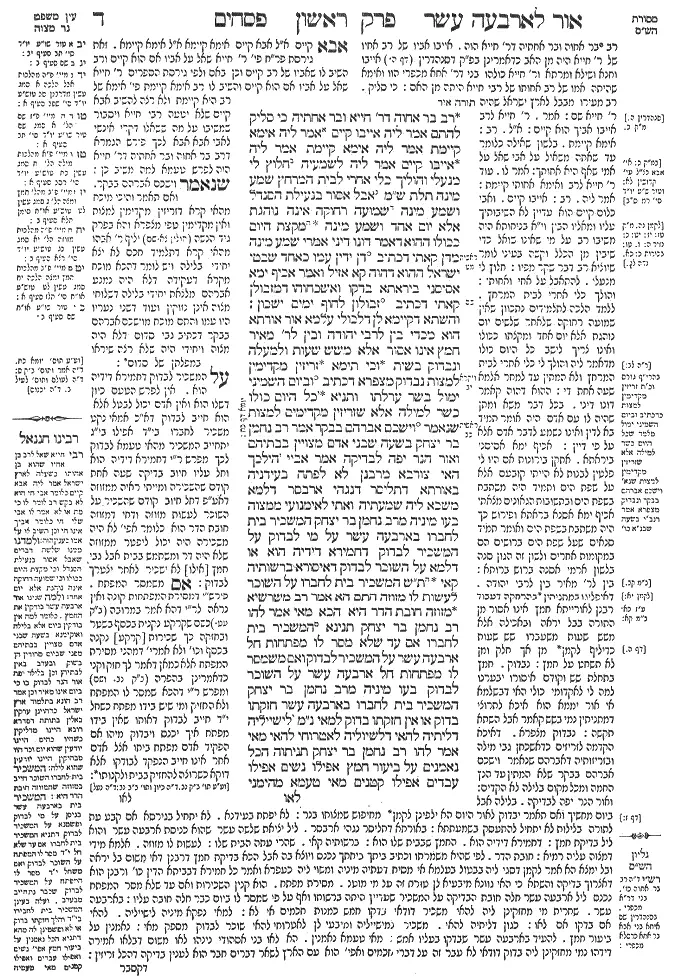
Pesahim 4a - Guemara
רב בר אחוה דר' חייא ובר אחתיה כי סליק להתם אמר ליה אייבו קיים אמר ליה אימא קיימת אמר ליה אימא קיימת אמר ליה אייבו קיים אמר ליה לשמעיה חלוץ לי מנעלי והוליך כלי אחרי לבית המרחץ שמע מינה תלת ש"מ אבל אסור בנעילת הסנדל ושמע מינה שמועה רחוקה אינה נוהגת אלא יום אחד ושמע מינה מקצת היום ככולו ההוא דאמר דונו דיני אמרי שמע מינה מדן קאתי דכתיב (בראשית מט, טז) דן ידין עמו כאחד שבטי ישראל ההוא דהוה קא אזיל ואמר אכיף ימא אסיסני ביראתא בדקו ואשכחוהו דמזבולן קאתי דכתיב (בראשית מט, יג) זבולון לחוף ימים ישכון:
והשתא דקיימא לן דלכולי עלמא אור אורתא הוא מכדי בין לרבי יהודה ובין לר' מאיר חמץ אינו אסור אלא משש שעות ולמעלה ונבדוק בשית וכי תימא זריזין מקדימין למצות נבדוק מצפרא דכתיב (ויקרא יב, ג) וביום השמיני ימול בשר ערלתו ותניא כל היום כולו כשר למילה אלא שזריזין מקדימים למצות שנאמר (בראשית כב, ג) וישכם אברהם בבקר אמר רב נחמן בר יצחק בשעה שבני אדם מצויין בבתיהם ואור הנר יפה לבדיקה אמר אביי הילכך האי צורבא מרבנן לא לפתח בעידניה באורתא דתליסר דנגהי ארבסר דלמא משכא ליה שמעתיה ואתי לאימנועי ממצוה בעו מיניה מרב נחמן בר יצחק המשכיר בית לחברו בארבעה עשר על מי לבדוק על המשכיר לבדוק דחמירא דידיה הוא או דלמא על השוכר לבדוק דאיסורא ברשותיה קאי ת"ש המשכיר בית לחברו על השוכר לעשות לו מזוזה התם הא אמר רב משרשיא מזוזה חובת הדר היא הכא מאי אמר להו רב נחמן בר יצחק תנינא המשכיר בית לחברו אם עד שלא מסר לו מפתחות חל ארבעה עשר על המשכיר לבדוק ואם משמסר לו מפתחות חל ארבעה עשר על השוכר לבדוק בעו מיניה מרב נחמן בר יצחק המשכיר בית לחברו בארבעה עשר חזקתו בדוק או אין חזקתו בדוק למאי נ"מ לישייליה דליתיה להאי דלשיוליה לאטרוחי להאי מאי אמר להו רב נחמן בר יצחק תניתוה הכל נאמנים על ביעור חמץ אפילו נשים אפילו עבדים אפילו קטנים מאי טעמא מהימני
Comments from Rashi on Masechet Pesahim Page 4a
רב בר אחוה ובר אחתיה דר' חייא הוה . אייבו אביו של רב אחיו של ר' חייא היה מן האב כדאמרינן בפ"ק דסנהדרין (דף ה.) אייבו וחנא ושילא ומרתא ור' חייא כולהו בני דר' אחא מכפרי הוו ואימא שהיתה אמו של רב אחותו של ר' חייא היתה מן האם: כי סליק . רב מעירו מבבל לארץ ישראל שהיה ר' חייא שם: אמר . ר' חייא לרב אייבו אביך הוא קיים: א"ל . רב: אימא קיימת . בלשון שאילה כלומר עד שאתה משאיל על אבי שאל על אמי שאף היא אחותך: אמר לו . עוד ר' חייא לרב ואימא אחותי קיימת: אמר ליה . רב: אייבו קיים . ואבי כלום קיים הוא עדיין לא השיבותיך עליו ומאליו הבין וי"א בניחותא היה משיבו רב על מי שאינו שואל כדי שיבין מן הכלל וקשה בעיני לומר שיוציא רב דבר שקר מפיו: חלוץ לי מנעלי . להתאבל על אחי ואחותי: והולך כלי אחרי לבית המרחץ . ללמד הלכה לתלמידים נתכוון שאין שמועה רחוקה שלאחר שלשים יום נוהגת אלא יום אחד ומקצתו ככולו ואינו צריך לישב כל היום כולו מדאמר ליה והולך לי כלי אחרי לבית המרחץ ולא המתין עד למחר אלמא שעה אחת די: ההוא דהוה קאמר דונו דיני . בכל דבר משא ומתן שהיה לו עם אדם היה אומר תמיד בא לדין ואינו נשמע לדבר אדם אלא על פי דיין: אכיף ימא אסיסני ביראתא . אתקן בירונות אם היו לי פלטין לבנות לא הייתי קובעם אלא על שפת הים ותמיד היה משתבח בשפת הים ובתשובות הגאונים מצאתי אכיף ימא אסנא בראתא ופירוש כך היה משתבח בשפת הים ואומר תמיד סנאים שעל שפת הים ברושים הם במקומות אחרים ולשון זה הגון סנה בלשון ארמי אסנה ברוש ברותא: בין לר' מאיר ובין לרבי יהודה . דאיפליגו במתניתין בהרחקה דעבוד רבנן לדאורייתא חמץ אינו אסור מן התורה בבל יראה ובאכילה אלא משש שעות משעברו שש שעות כדיליף לקמן מן אך חלק ומן לא תשחט על חמץ: נבדוק . חמץ בתחלת שש וקודם איסורו יבערנו למה לי לאקדומי כולי האי דבשלמא אי אור יממא הוא איכא לתרוצי דמתניתין נמי בשש קאמר אבל השתא תקשה: נבדוק מצפרא . דאיכא הקדמה לזריזים כדאשכחן גבי מילה ובזריזותיה דאברהם שנאמר וישכם אברהם בבקר שלא המתין עד הנץ החמה ומכל מקום בלילה לא הקדים: ואור הנר יפה לבדיקה . בלילה אבל ביום מחשיך ואם תאמר יבדוק לאור היום הא ילפינן לקמן מחיפוש שמצותו בנר: לא יפתח בעידנא . לא יתחיל בגירסא אם קבע עת לתורה בלילות לא יתחיל להתעסק בשמעתתא: באורתא דתליסר נגהי ארבסר . לילי יציאת שלשה עשר שהוא כניסת ארבעה עשר והוא ליל בדיקת חמץ: דחמירא דידיה הוא . החמץ שבבית שלו הוא: ברשותיה קאי . שהרי עתה הבית שלו: לעשות לו מזוזה . אלמא מידי דמצוה עליה רמיא: חובת הדר . לפי שהיא משמרתו וכתיב ביתך ביאתך נכנס ויוצא בה אבל הכא בדיקת חמץ דרבנן דאי משום בל יראה ובל ימצא הא אמר לקמן דסגי ליה בבטול בעלמא אי מסיח דעתיה מיניה ומשוי ליה כעפרא ואמר כל חמירא דבביתא הדין כו' ורבנן הוא דאצרוך בדיקה והשתא כי האי גוונא מיבעיא לן טורח זה על מי מוטל: מסירת מפתח . הוא קנין השכירות ואם עד שלא מסר המפתח נכנס ליל ארבעה עשר חלה חובת הבדיקה על המשכיר שעדיין היתה ברשותו ואף על פי שמסר לו ביום כבר חלה חובה עליו: בארבעה עשר . שחרית מי מחזקינן ליה להאי משכיר דודאי בדקו אמש כמצות חכמים אי לא: למאי נפקא מיניה לישייליה . להאי אם בדקו אם לאו: כגון דליתיה להאי . משכיר למישייליה ומיבעי לן לאטרוחי להאי שוכר לבדוק מספק מאי: נאמנין על ביעור חמץ . להעיד בארבעה עשר שבדקו בעליו אמש: מאי טעמא נאמנין . הא לאו בני אסהודי נינהו לאו משום דבלאו אמירה דידהו נמי מחזקינן ליה בדוק דודאי לא עבר זה על דברי חכמים ואפילו הוא עם הארץ לשאר דברים חבר הוא לענין בדיקה דהכל זריזין:
Comments from Tosafot - Pesahim 4a
אבא קיים א"ל אבא קיים אימא קיימא א"ל אימא קיימא . זאת גירסת פר"ח פי' ר' חייא שאל על אביו אם הוא קיים ורב השיב לו שאביו של רב קיים וכן באם ולפי גירסת הספרים ר' חייא שאל על אביו אם הוא קיים והשיב לו רב אימא קיימת פי' אימא של רב היא קיימת ולא רצה להשיב אבא קיים שלא יטעה רבי חייא ויסבור שמשיבו על מה ששאלו דקרי אינשי לאבי אבא אבא לכך פירש הגמרא דרב בר אחוה ובר אחתיה דר' חייא הוה לפרש טעמא למה משיב כן: שנאמר וישכם אברהם בבקר . ואם תאמר והיכי מוכח מהאי קרא דזריזין מקדימין למצות ואין מקדימין טפי מצפרא והא בפרק גיד הנשה (חולין צא. שם) יליף ר' אבהו מהאי קרא דתלמיד חכם לא יצא יחידי בלילה ויש לומר דהכא מוכח מקרא דעקידה דלא היה נמנע אברהם מלצאת יחידי בלילה דשלוחי מצוה אינן נזוקין ועוד דשני נעריו היו עמו והתם מוכח מוישכם אברהם בבקר דכתיב גבי סדום דלא היה מצוה ויחידי היה שלא רצה שיראו במפלתן של סדום: על המשכיר לבדוק דחמירא דידיה הוא . אין לפרש הטעם כיון דשלו הוא ואין אדם יכול לבטל אלא הוא חייב לבדוק דא"כ אמאי נקט משכיר לחברו בי"ד אפילו בי"ג יתחייב המשכיר מהאי טעמא לבדוק לכך מפרש ר"י דחמירא דידיה הוא וחל עליו חיוב בדיקה שעה אחת קודם שהשכירה ומייתי ראיה ממזוזה דאע"פ דחל חיוב קודם שהשכיר על השוכר לעשות מזוזה ודחי דמזוזה חובת הדר הוא כלומר אפי' לא היה משכירה היה יכול ליפטר ממזוזה שלא היה דר ומשתמש בבית אבל גבי חמץ [אילו] לא ישכיר לאחר יצטרך לבדוק: אם משמסר המפתח . פירש"י דמסירת המפתחות קונה ואין נראה לר"י דהא אמר במרובה (ב"ק עט.) כשם שקרקע נקנית בכסף בשטר ובחזקה כך שכירות [קרקע] נקנה בכסף וכו' ולא אמרי' דמהני מסירת המפתח אלא כמאן דאמר לך חזק וקני כדאמרינן בהפרה (ב"ק נב. ושם) ומפרש ר"י דהכא שמסר לו המפתח ולא החזיק ומי שיש בידו מפתח כשחל י"ד חייב לבדוק דאותו שאין בידו מפתח איך יכנס ויבדוק מיהו אם הפקיד אדם מפתח ביתו אצל אדם אחר אינו חייב הנפקד לבודקו אלא דוקא כשרוצה להחזיק בבית ולקנותו [וע"ע תו' ב"ק נב. ד"ה כיון ותו' ב"ב נב: ד"ה נעל]:
Pesahim 4a - Mishnah translated into english
The Gemara relates: Rav was the son of Rabbi Ḥiyya’s half brother and the son of Rabbi Ḥiyya’s half sister, as Ayevu, Rav’s father, married his own stepsister, Imma. When Rav ascended there, to Eretz Yisrael, Rabbi Ḥiyya said to Rav: Is your father, Ayevu, alive? He said to him, replying with a question: Is your sister, Imma, alive? He said to him: Indeed, is Imma alive? He said to him: Is Ayevu alive? Upon hearing this, Rabbi Ḥiyya understood that both Ayevu and Imma had passed away, and Rav did not wish to say so explicitly.
Rabbi Ḥiyya said to his attendant: Remove my shoes and carry my garments after me to the bathhouse. The Gemara comments: Learn from Rabbi Ḥiyya’s instructions three halakhot. Learn from it that wearing shoes is prohibited for a mourner, which is why he instructed his servant to remove his shoes. And learn from it that for distant tidings mourning is practiced only one day. One who receives tidings of the death of a relative more than thirty days after he died, does not mourn for seven days. The halakhot of mourning apply for only a single day. And learn from it that with regard to the halakhot of mourning, the legal status of part of the day is like that of an entire day. The Gemara derives this halakha from the fact that Rabbi Ḥiyya removed his shoes and immediately thereafter went to the bathhouse, an act that is prohibited for a mourner. He was permitted to do so because the restrictions of the mourning period were no longer in effect after briefly going without shoes.
With regard to the precision required in language, the Gemara relates: A certain man would regularly say whenever involved in conflict: Adjudicate my case [dunu dini]. The Sages said: Learn from it that he descends from the tribe of Dan, as it is written: “Dan will judge [yadin] his people like one of the tribes of Israel” (Genesis 49:16). He expressed himself that way due to his lineage.
The Gemara relates a similar incident: A certain man would regularly walk and say: The bushes on the seashore are cypresses (ge’onim), i.e., items located by the sea are more beautiful than those found in other places. They examined his lineage and found that he descends from the tribe of Zebulun, as it is written: “Zebulun shall dwell by the seashore” (Genesis 49:13). That explains his love of all things close to the sea.
The Gemara returns to the issue of the search for leaven. And now that we maintain that everyone agrees the word or in the mishna is evening, consider the following: After all, both according to the opinion of Rabbi Yehuda and according to that of Rabbi Meir, who disagree with regard to the deadline decreed by the Sages to remove all leaven, it is prohibited to derive benefit from leavened bread by Torah law only from the sixth hour of the day and onward. And if so, let us search for leaven at six hours of the day, and eliminate the leaven at that point.
And lest you say that this halakha is in accordance with the principle that the vigilant are early in the performance of mitzvot, let us search in the morning. The principle: The vigilant are early in the performance of mitzvot, is derived, as it is written: “And on the eighth day the flesh of his foreskin shall be circumcised” (Leviticus 12:3). And it was taught in a baraita: The entire day is suitable for performance of the mitzva of circumcision; however, the vigilant are early in the performance of mitzvot, and circumcise in the morning. As it is stated with regard to the binding of Isaac: “And Abraham arose early in the morning” (Genesis 22:3) after hearing God’s command. This indicates that Abraham arose early in his eagerness to perform God’s commandment.
The Gemara cites an answer to its initial question of why the search for leaven is not conducted in the morning. Rav Naḥman bar Yitzḥak said: One searches for leaven in the evening as it is a time when people are found in their homes, and they have the opportunity to perform the search. And furthermore, the light of the lamp is favorable for conducting a search specifically at night. As the search is conducted with a lamp, it is preferable to search at night.
Abaye said: Therefore, in light of the above halakha, a Torah scholar should not begin his regularly scheduled period of Torah study in the evening at the conclusion of the thirteenth of Nisan that is the evening of the fourteenth, as perhaps he will become engrossed in the halakha he is studying and will come to be prevented from performing the mitzva of searching for leaven.
They raised a dilemma before Rav Naḥman bar Yitzḥak: With regard to one who lets a house to another on the fourteenth of Nisan, upon whom is it incumbent to search for leaven? Is it incumbent upon the lessor to search for leaven, as the leavened bread is his; or is it perhaps incumbent upon the lessee to search, as the source of the prohibition is in his domain since he will be living in the house during Passover? He answered: Come and hear an answer from a baraita: With regard to one who lets a house to another, the obligation is upon the lessee to affix a mezuza for it. Apparently, the person renting the house is obligated to perform the mitzvot connected to the house.
The Gemara rejects this proof: There, in the case of mezuza, didn’t Rav Mesharshiya say: Affixing a mezuza is the obligation of the resident? The fact is that the owner of an uninhabited house is not obligated to affix a mezuza to its doors. If so, the question remains, what is the halakha here? Rav Naḥman bar Yitzḥak said to them that we already learned the resolution to this dilemma in a baraita: One who rents a house to another, if before he delivered the keys to the renter the fourteenth of Nisan began, the obligation is upon the lessor to search for leaven. And if it was after he delivered the keys to him that the fourteenth began, the obligation is upon the lessee to search for leaven.
They raised another dilemma before Rav Naḥman bar Yitzḥak: With regard to one who lets a house to another on the fourteenth of Nisan, is its presumptive status that it has been searched or is it not its presumptive status that it has been searched? The Gemara asks: What is the practical difference between these possibilities? Let him ask the owner of the house. The Gemara responds: The situation here is one where the owner is not here to ask him. The dilemma is whether or not to impose upon the renter to search for the leaven. What is the halakha?
Rav Naḥman bar Yitzḥak said to them that we already learned the resolution to this dilemma based on a related baraita: Everyone is believed to provide testimony about the elimination of leavened bread; even women, even slaves, and even minors. Although these people are typically not relied upon to deliver testimony, they are believed when they provide testimony that they have eliminated leaven. The Gemara asks: What is the reason that they are believed?
Traduction : The William Davidson digital edition of the Koren Noé Talmud, with commentary by Rabbi Adin Even-Israel Steinsaltz.