 Talmud Bavli
Pesahim 105a : Youtube
Daf TubeYoutube
3 video classes :
Pesahim Page 105a
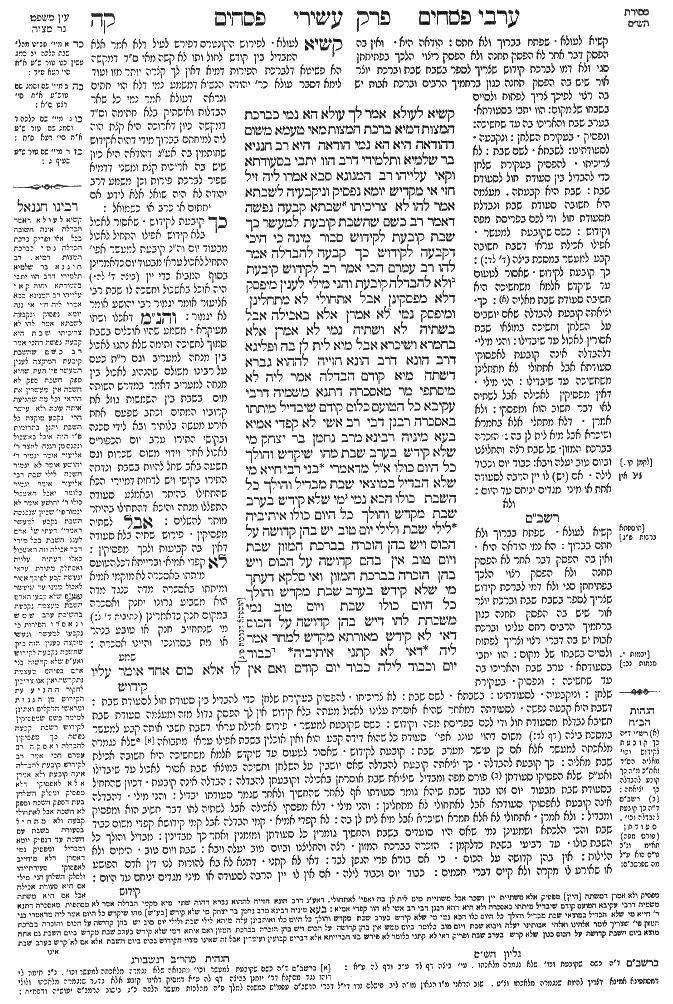
Pesahim 105a - Guemara
קשיא לעולא אמר לך עולא הא נמי כברכת המצות דמיא ברכת המצות מאי טעמא משום דהודאה היא הא נמי הודאה היא רב חנניא בר שלמיא ותלמידי דרב הוו יתבי בסעודתא וקאי עלייהו רב המנונא סבא אמרו ליה זיל חזי אי מקדיש יומא נפסיק וניקבעיה לשבתא אמר להו לא צריכיתו שבתא קבעה נפשה דאמר רב כשם שהשבת קובעת למעשר כך שבת קובעת לקידוש סבור מינה כי היכי דקבעה לקידוש כך קבעה להבדלה אמר להו רב עמרם הכי אמר רב לקידוש קובעת ולא להבדלה קובעת והני מילי לענין מיפסק דלא מפסקינן אבל אתחולי לא מתחלינן ומיפסק נמי לא אמרן אלא באכילה אבל בשתיה לא ושתיה נמי לא אמרן אלא בחמרא ושיכרא אבל מיא לית לן בה ופליגא דרב הונא דרב הונא חזייה לההוא גברא דשתה מיא קודם הבדלה אמר ליה לא מיסתפי מר מאסכרה דתנא משמיה דרבי עקיבא כל הטועם כלום קודם שיבדיל מיתתו באסכרה רבנן דבי רב אשי לא קפדי אמיא בעא מיניה רבינא מרב נחמן בר יצחק מי שלא קידש בערב שבת מהו שיקדש והולך כל היום כולו א"ל מדאמרי בני רבי חייא מי שלא הבדיל במוצאי שבת מבדיל והולך כל השבת כולו הכא נמי מי שלא קידש בערב שבת מקדש והולך כל היום כולו איתיביה לילי שבת ולילי יום טוב יש בהן קדושה על הכוס ויש בהן הזכרה בברכת המזון שבת ויום טוב אין בהם קדושה על הכוס ויש בהן הזכרה בברכת המזון ואי סלקא דעתך מי שלא קידש בערב שבת מקדש והולך כל היום כולו שבת ויום טוב נמי משכחת להו דיש בהן קדושה על הכוס דאי לא קידש מאורתא מקדש למחר אמר ליה דאי לא קתני איתיביה כבוד יום וכבוד לילה כבוד יום קודם ואם אין לו אלא כוס אחד אומר עליו
Comments from Rashi on Masechet Pesahim Page 105a
קשיא לעולא . שפתח בברוך ולא חתם: הודאה היא . ואין בה הפסק דבר אחר לא הפסק תחנה ולא הפסק ריצוי הלכך בפתיחתן סגי ולא דמו לברכת קידוש שצריך לספר בשבח שבת וברכת יוצר אור שיש בה הפסק תחנה כגון ברחמיך הרבים וברכת אבות יש בה רצוי לפיכך צריך לפתוח ולסיים בשבחו של מקום: הוו יתבי בסעודתא . בערב שבת והאריכו בה עד שחשיכה: ונפסיק . בעקירת השלחן: ונקבעה . לסעודתינו: לשבתא . לשם שבת: לא צריכיתו . להפסיק בעקירת שלחן כדי להבדיל בין סעודת חול לסעודת שבת: שבת היא קבעתה . מעצמה היא חשובה סעודת שבת ונבדלת מסעודת חול ודי לכם בפריסת מפה וקידוש: כשם שקובעת למעשר . אפילו אכילת עראי דשבת חשובה קבע למעשר במסכת ביצה (ד' לד:): כך קובעת לקידוש . שאסור לטעום עד שיקדש אלמא משחשיכה היא חשובה סעודת שבת מאליה: כך . יציאתה קובעת להבדלה שאם יושבים על השלחן וחשיכה במוצאי שבת אסורין לאכול עד שיבדילו: והני מילי . דלהבדלה אינה קובעת לאפסוקי סעודתא אבל אתחולי לא מתחלינן משחשיכה עד שיבדילו: הני מילי . דאין מפסיקין לאכילה אבל לשתיה לאו דבר חשוב הוא ומפסקי: ולא אמרן . דלא מתחלי אלא בחמרא ושיכרא אבל מיא לית לן בה: הזכרה בברכת המזון . של שבת רצה והחליצנו וביום טוב יעלה ויבא: כבוד יום וכבוד לילה . אם (יש) לו יין הרבה לסעודה אחת או מיני מגדים יניחם עד היום:
Comments from Rashbam - Pesahim 105a
קשיא לעולא . שפתח בברוך ולא חתם בברוך: הא נמי הודאה היא . ואין בה הפסק דבר אחר לא הפסק תחנה ולא הפסק רצוי הלכך בפתיחתן סגי ולא דמי לברכת קידוש שצריך לספר בשבח שבת וברכת יוצר אור שיש בה הפסק תחנה כגון ברחמיך הרבים רחם עלינו וברכת אבות יש בה דברי רצוי וצריך לפתוח ולסיים בשבחו של מקום: הוו יתבי בסעודתא . ערב שבת והאריכו בה עד שחשיכה: ונפסיק . בעקירת שלחן: וניקבעיה . לסעודתינו: בשבתא . לשם שבת: לא צריכיתו . להפסיק בעקירת שלחן כדי להבדיל בין סעודת חול לסעודת שבת: דשבת היא קבעה נפשה . לסעודתה דמאחר שהיא אוסרת עלינו לאכול מעתה בלא קידוש אין לך הפסק גדול מזה ומעצמה סעודת שבת חשיבא נבדלת מסעודת חול ודי לכם בפריסת מפה וקידוש: כשם שקובעת למעשר . פירוש אכילת עראי דשבת חשבי אותה קבע למעשר במסכת ביצה (דף לד:) משום דהוי עונג אפי' סעודת כל שהוא דידה קבע הוא ואין אוכלין בשבת אפילו עראי מתבואה שלא נגמרה מלאכתה למעשר אלא אם כן עישר מערב שבת: קובעת לקידוש . שאסור לטעום עד שיקדש אלמא משחשיכה היא חשובה אכילת שבת מאליה: כך קובעת להבדלה . כך יציאתה קובעת להבדלה שאם יושבין על השלחן וחשיכה במוצאי שבת אסור לאכול עד שיבדילו ואע''פ שלא הפסיקו סעודתן פורס מפה ומבדיל שיציאת שבת אוסרתן באכילה וקובעתן להבדלה: הבדלה אינה קובעת . דכיון שהתחיל בסעודת שבת מבעוד יום זהו כבוד שבת שיהא גומר סעודתו אף לאחר שהחשיך ולאחר שגמר סעודתו יבדיל: והני מילי . דהבדלה אינה קובעת לאפסוקי סעודתא אבל לאתחולי לא מתחלינן: והני מילי . דלא מפסקי לאכילה אבל לשתיה לאו דבר חשוב הוא ומפסיק ומבדיל: ולא אמרן . אתחולי לא אלא חמרא ושיכרא אבל מיא לית לן בה לא קפדי אמיא . קמי הבדלה אבל קמי קידושא קפדי משום כבוד שבת והכי הלכתא ושמעינן נמי שאם היו סועדים בשבת והחשיך גומרין כל סעודתן ומזמנין ואחר כך מבדילין: מבדיל והולך כל השבת כולו . עד רביעי בשבת כדלקמן: הזכרה בברכת המזון . רצה והחליצנו וביום טוב יעלה ויבא: שבת ויום טוב . הימים ולא הלילות: אין בהן קדושה על הכוס . כי אם בורא פרי הגפן לבד: דאי לא קתני . דתנא לא בא להורות לנו דין אדם הפושע או שאירע לו מקרה ולא קיים דברי חכמים: כבוד יום וכבוד לילה . אם אין לו יין הרבה לסעודה או מיני מגדים יניחם עד היום:
Comments from Tosafot - Pesahim 105a
קשיא לעולא . לפירוש הקונטרס דפירש לעיל דלא אמר אלא המבדיל בין קודש לחול ותו לא קשה מאי ס"ד דמקשה הא פשיטא דלברכת הפירות דמיא דאין לך קצרה יותר מזו ועוד לימא דסבר עולא כר' יהודה הנשיא דמשמע נמי דלא הוי חתים ונראה דעולא אמר נמי כל שאר הבדלות ואישתיק בלא חתימה וס"ד דמקשה כיון דארוכה היא קצת הוה ליה למיחתם בברוך מידי דהוה אקידוש שחותמין בה אע"ג דהודאה היא כיון שיש בה אריכות קצת ומשני דדמיא שפיר לברכת פירות וכן משמע דרב יהודה לא היה שואל אלא לידע אם יחתום או כרב או כשמואל: כך קובעת לקידוש . שאסור לאכול בלא קידוש אפילו התחיל לאכול מבעוד יום וה"נ קובעת למעשר אפי' התחיל לאכול עראי מבעוד יום כדאמרינן בסוף המביא כדי יין (ביצה ד' לה.) היה אוכל באשכול וחשכה לו שבת רבי אליעזר אומר יגמור רבי יהושע אומר לא יגמור: והנ"מ דאכלו ושתו מעיקרא . משמע שהיו אוכלים בשבת סמוך לחשיכה ותימה שלא נהגו לאכול בין מנחה למעריב וגם ר"ת כעס על רבינו משולם שהנהיג לאכול בין מנחה למעריב דאמר במדרש השותה מים בשבת בין השמשות גוזל את קרוביו המתים וכתב שפעם אחת אירע מעשה בלותיר ובא לידי סכנה ובקושי התירו ערב יום הכפורים לאכול אחר וידוי משום שכרות וגם תשעה באב שחל להיות בשבת ונדחה התירו בקושי ויש לדחות דמיירי הכא שהתחילו בהיתר ובאמצע סעודה התפללו מנחה והיכא דהתחילו בהיתר מותר להשלים: אבל לשתיה מפסיקין . פירוש שתיה בלא סעודה דאין בה קביעות ולכך מפסיקין: לא קפדי אמיא . וברייתא דכל הטועם מיתתו באסכרה לא מוקמי אמיא ומיתתו באסכרה מדה כנגד מדה הוא משביע גרונו יחנק ואסכרה במקום חנק כדאמרינן (כתובות ד' ל:) מי שנתחייב חנק או טובע בנהר או מת בסרונכי והיינו אסכרה:
Pesahim 105a - Mishnah translated into english
This is difficult for the opinion of Ulla, who began but did not conclude the blessing of havdala with: Blessed. The Gemara answers: Ulla could have said to you: This blessing is also considered like a blessing over mitzvot, and therefore it does not require a separate conclusion. The Gemara clarifies this response: What is the reason that blessings over mitzvot do not require a distinctive conclusion? It is because a blessing over a mitzva is a statement of praise, and as it does not include anything unrelated to the praise, e.g., a request or supplication, it is unnecessary to add a separate concluding blessing. This havdala blessing also is comprised only of praise.
The Gemara relates that Rav Ḥananya bar Shelemya and other students of Rav were sitting at a meal on Shabbat eve shortly before nightfall, and Rav Hamnuna the Elder was standing over them to serve them. They said to him: Go and see if the day of Shabbat has become sanctified through nightfall. If so, we will interrupt our meal by removing the tables and establish its continuation as the meal for Shabbat. Rav Hamnuna the Elder said to them: You do not need to do this, as Shabbat establishes itself. Whatever you eat after nightfall is automatically considered a Shabbat meal, even without any specific action that designates it as such.
Rav Hamnuna the Elder explained his ruling. As Rav said: Just as Shabbat establishes food consumption as a regular, set meal with regard to tithes, so Shabbat establishes the requirement to recite kiddush. Generally, one may eat untithed produce in a casual, incidental manner. On Shabbat, however, the strictures of a regular, set meal apply even to casual eating. Consequently, on Shabbat it is entirely prohibited to eat produce from which the appropriate dues and tithes have not yet been separated. Similarly, Shabbat automatically initiates the requirement to recite kiddush, and it is prohibited to eat until one does so. This halakha indicates that whatever one eats at this stage is considered part of his Shabbat meal, even if he does not remove the table and bring it back.
They understood from it that just as the start of Shabbat automatically establishes the requirement to recite kiddush, so its conclusion establishes the requirement to recite havdala. This would mean that one must interrupt his meal to recite havdala, and whatever he eats after that would not be considered part of his Shabbat meal. Rav Amram said to them: This is what Rav said: Shabbat establishes an obligation to recite kiddush, but it does not establish an obligation to recite havdala.
The Gemara comments: And this applies only with regard to the matter of interrupting a meal that one has begun before the conclusion of Shabbat, that one does not have to interrupt to recite havdala. However, one may not begin a meal after nightfall until after reciting havdala. The Gemara adds: And with regard to interrupting also, we only said that one need not interrupt his eating; but with regard to drinking, which is considered less significant, no, one must interrupt his drinking upon nightfall, even if he began drinking before the conclusion of Shabbat.
And with regard to drinking also, we only said it is prohibited to drink after nightfall before havdala with regard to wine and beer, which are significant beverages; but with regard to water, we have no problem with it. One may begin drinking water even after Shabbat has concluded and before he has recited havdala.
The Gemara points out that this last statement disagrees with the opinion of Rav Huna. As Rav Huna saw a certain man drinking water before he recited havdala at the conclusion of Shabbat. He said to him: Is the Master not afraid of the ailment called askara? As it was taught in the name of Rabbi Akiva that whoever tastes anything before he recites havdala, his death will come through askara. Nevertheless, the Gemara notes that the Sages of the school of Rav Ashi were not particular with regard to water. They refrained only from drinking more significant beverages before havdala.
Ravina raised a dilemma before Rav Naḥman bar Yitzḥak: With regard to one who did not recite kiddush on Shabbat eve, i.e., on the night of Shabbat, what is the halakha with regard to his ability to recite kiddush at any time over the course of the entire day? May one recite kiddush later, or has he lost his opportunity by failing to recite kiddush at the proper time? Rav Naḥman bar Yitzḥak said to him: From the fact that the sons of Rabbi Ḥiyya say that one who did not recite havdala at the conclusion of Shabbat may recite havdala any time over the course of the entire week, it can be inferred that here too, one who did not recite kiddush on Shabbat eve may recite kiddush at any time over the course of the entire day.
Ravina raised an objection to the opinion of Rav Naḥman bar Yitzḥak from the Tosefta: On the nights of Shabbat and the nights of a Festival there is a mitzva of kiddush over a cup. And there is a requirement to mention the sanctity of the day in Grace after Meals, i.e., the paragraph: May it please [retzei], on Shabbat and: May there rise and come [ya’aleh veyavo], on Festivals. On the day of Shabbat and Festivals, there is no mitzva of kiddush over a cup, but there is a requirement to mention the sanctity of the day in Grace after Meals.
Ravina explains his objection: And if it could enter your mind to say that one who did not recite kiddush on Shabbat eve may recite kiddush any time over the course of the entire day, on Shabbat and a Festival too, it can be found that there is a mitzva of kiddush over a cup, for if one did not recite kiddush at night he may recite kiddush the following day. Rav Naḥman bar Yitzḥak said to him: The tanna does not teach cases of what if. In other words, the tanna does not take into consideration the uncommon circumstance of one who failed to recite kiddush on the night of Shabbat.
Ravina raised an objection to the opinion of Rav Naḥman bar Yitzḥak from another source: If there is a choice between the honor of the day of Shabbat and the honor of the night, the honor of the day takes precedence. And if one has only one cup, he should recite over it
Traduction : The William Davidson digital edition of the Koren Noé Talmud, with commentary by Rabbi Adin Even-Israel Steinsaltz.