 Talmud Bavli
Pesahim 104a : Youtube
Daf TubeYoutube
3 video classes :
Pesahim Page 104a
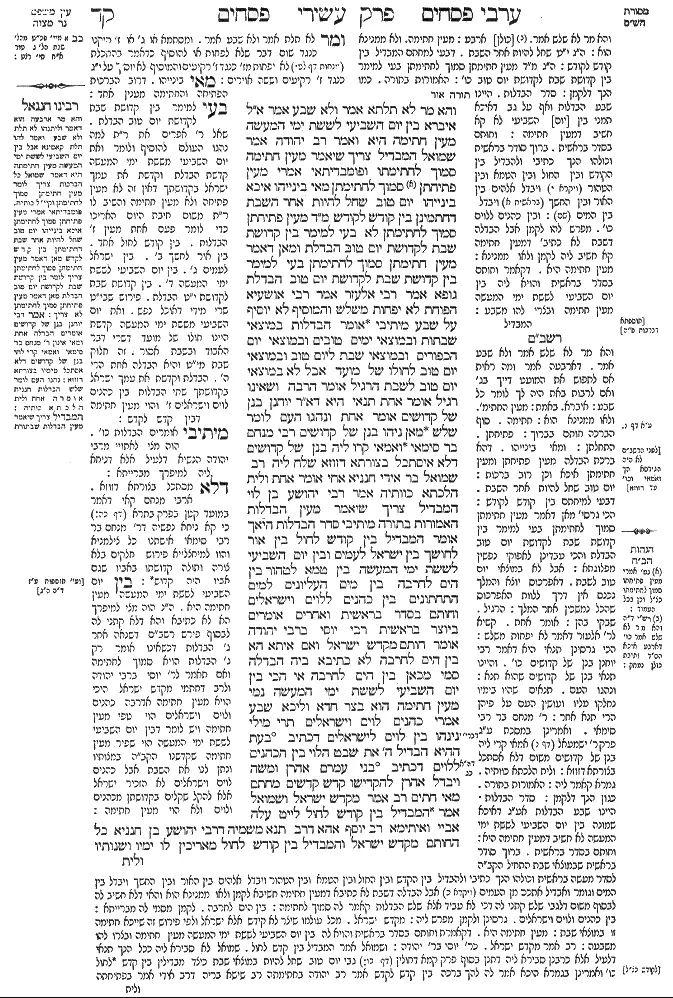
Pesahim 104a - Guemara
והא מר לא תלתא אמר ולא שבע אמר א"ל איברא בין יום השביעי לששת ימי המעשה מעין חתימה היא ואמר רב יהודה אמר שמואל המבדיל צריך שיאמר מעין חתימה סמוך לחתימתו ופומבדיתאי אמרי מעין פתיחתן סמוך לחתימתן מאי בינייהו איכא בינייהו יום טוב שחל להיות אחר השבת דחתמינן בין קודש לקודש מ"ד מעין פתיחתן סמוך לחתימתן לא בעי למימר בין קדושת שבת לקדושת יום טוב הבדלת ומאן דאמר מעין חתימתן סמוך לחתימתן בעי למימר בין קדושת שבת לקדושת יום טוב הבדלת גופא אמר רבי אלעזר אמר רבי אושעיא הפוחת לא יפחות משלש והמוסיף לא יוסיף על שבע מיתיבי אומר הבדלות במוצאי שבתות ובמוצאי ימים טובים ובמוצאי יום הכפורים ובמוצאי שבת ליום טוב ובמוצאי יום טוב לחולו של מועד אבל לא במוצאי יום טוב לשבת הרגיל אומר הרבה ושאינו רגיל אומר אחת תנאי היא דא"ר יוחנן בנן של קדושים אומר אחת ונהגו העם לומר שלש מאן ניהו בנן של קדושים רבי מנחם בר סימאי ואמאי קרו ליה בנן של קדושים דלא איסתכל בצורתא דזוזא שלח ליה רב שמואל בר אידי חנניא אחי אומר אחת ולית הלכתא כוותיה אמר רבי יהושע בן לוי המבדיל צריך שיאמר מעין הבדלות האמורות בתורה מיתיבי סדר הבדלות היאך אומר המבדיל בין קודש לחול בין אור לחושך בין ישראל לעמים ובין יום השביעי לששת ימי המעשה בין טמא לטהור בין הים לחרבה בין מים העליונים למים התחתונים בין כהנים ללוים וישראלים וחותם בסדר בראשית ואחרים אומרים ביוצר בראשית רבי יוסי ברבי יהודה אומר חותם מקדש ישראל ואם איתא הא בין הים לחרבה לא כתיבא ביה הבדלה סמי מכאן בין הים לחרבה אי הכי בין יום השביעי לששת ימי המעשה נמי מעין חתימה הוא בצר חדא וליכא שבע אמרי כהנים לוים וישראלים תרי מילי נינהו בין לוים לישראלים דכתיב (דברים י, ח) בעת ההיא הבדיל ה' את שבט הלוי בין הכהנים ללוים דכתיב (דברי הימים א כג, יג) בני עמרם אהרן ומשה ויבדל אהרן להקדישו קדש קדשים מחתם מאי חתים רב אמר מקדש ישראל ושמואל אמר המבדיל בין קודש לחול לייט עלה אביי ואיתימא רב יוסף אהא דרב תנא משמיה דרבי יהושע בן חנניא כל החותם מקדש ישראל והמבדיל בין קודש לחול מאריכין לו ימיו ושנותיו
Comments from Rashi on Masechet Pesahim Page 104a
והא מר לא שלש אמר . [כולן] ארבע: מעין חתימה . ולא ממנינא הוא: ה"ג י"ט שחל להיות אחר השבת . דבעי למחתם המבדיל בין קודש לקודש: ה"ג מ"ד מעין חתימתן סמוך לחתימתן בעי למימר בין קדושת שבת לקדושת יום טוב כו': האמורות בתורה . כמו הנך דלקמן: סדר הבדלות . היינו שבע הבדלות ואף על גב דאיכא תמני בין [יום] השביעי לא קא חשיב דמעין חתימה: ובין כהנים ללוים כו' . מפרש להו לקמן אבל הבדלה דשבת לא כתיבא דמעין חתימה קא חשיב ליה לקמן ולאו ממנינא: וחותם בסדר בראשית . ברוך סודר בראשית וכולהו הנך כתיבי ולהבדיל בין הקודש ובין החול ובין הטמא ובין הטהור (ויקרא י) ויבדל אלהים בין האור ובין החשך (בראשית א) ויבדל בין המים (שם): מעין חתימה היא . דקאמר וחותם בסדר בראשית והויא ליה בין יום השביעי לששת ימי המעשה מעין חתימה ובצרי להו משבע:
Comments from Rashbam - Pesahim 104a
על שבע . מפרשינן לקמיה: והא מר לא שלש אמר ולא שבע אמר . דארבעה אמר ומה ראית אם לתפוש את המועט דייך בג' ואם לרבות באת היה לך לומר כל שבע: איברא . באמת: מעין החתימ' . ולא ממנינא הוא: מעין חתימה היא . דקאמרת וחותם בסדר בראשית והויא לה בין יום השביעי לששת ימי המעשה מעין חתימה ובצרו להו משבעה: פתיחתן . התחלתן ומאי בינייהו . דהא ברכת הבדלה מעין פתיחתן ומעין חתימתן איכא וכן רוב ברכות: יום טוב שחל להיות אחר השבת . דבעי למיחתם בין קודש לקודש: הכי גרסי' מאן דאמר מעין חתימתן סמוך לחתימתן בעי למימר בין קדושת שבת לקדושת יום טוב הבדלת והכי עבדינן לאפוקי נפשין מפלוגתא: אבל לא במוצאי יום טוב לשבת . דאפרכוס יוצא והמלך נכנס אין דרך ללוות האפרכוס שהכל נמשכין אחר המלך: הרגיל . שבקי בהן: אומר אחת . קשיא לר' אלעזר דאמר לא יפחות משלש: הכי גרסינן תנאי היא דאמר רבי יוחנן בנן של קדושים כו' . והיינו תנאי בנן של קדושים שהוא תנא: ונהגו העם . תנאים שהיו בימיו נחלקו עליו ועושין העם על פיהן הרי תנא אחר: ר' מנחם בר רבי סימאי . ואמרינן במסכת ע''ג פרק ר' ישמעאל (דף נ) אמאי קרי ליה בנן של קדושים משום דלא אסתכל בצורתא דזוזא: ולית הלכתא כוותיה . גמרא קאמר ליה: האמורות בתורה . כגון הנך דלקמן: סדר הבדלות . היינו שבע הבדלות אע''ג דאיכא שמונה בין יום השביעי לששת ימי המעשה לא חשיב דמעין חתימה היא: בין הים לחרבה . לקמן מסמי לה מברייתא: בין כהנים ולוים וישראלים . גרסינן ולקמן מפרש ליה: וחותם בסדר בראשית . ברוך סודר בראשית שבמוצאי שבת התחיל הקב''ה לסדר מעשה בראשית וכולהו הנך כתיבי ולהבדיל בין הקדש ובין החול ובין הטמא ובין הטהור ויבדל אלהים בין האור ובין החשך ויבדל בין המים וגומר ואבדיל אתכם מן העמים (ויקרא כ) אבל הבדלה דשבת לא כתיבא דמעין חתימה חשיבא לקמן ולאו ממנינא הוא והאי דלא חשיב לה לבסוף משום דלגבי שלש קתני לה דכי לא עביד אלא שלש הבדלות קאמר לה סמוך לחתימה: מקדש ישראל . מכל עולמו שיצר לא קידש אלא ישראל ולפי פירוש זה שייכא חתימה זו במוצאי שבת: רב אמר מקדש ישראל . כר' יוסי בר' יהודה ושמואל אמר המבדיל בין קדש לחול . שמואל לא סבירא ליה ככל הנך תנאי דלעיל אלא כרבנן סבירא ליה דתנן בסוף פרק קמא דחולין (דף כו:) גבי יום טוב שחל להיות במוצאי שבת כיצד מבדילין בין קדש לחול כו' ואמרינן בגמרא היכא אמר לה להך ברכה בין קדש לקדש אמר רב יהודה בחתימתה רב שישא בריה דרב אידי אמר בפתיחתה
Comments from Tosafot - Pesahim 104a
ומר לא תלת אמר ולא שבע אמר . ומסתמא או ג' או ז' תיקנו כנגד שום דבר שלא לפחות או להוסיף כדאמר בהתכלת (מנחות דף לט.) לא יפחות מז' כנגד ז' רקיעים והמוסיף לא יוסיף על י"ג כנגד ז' רקיעים וששה אוירים: מאי בינייהו . דרוב הברכות הפתיחה והחתימה מענין אחד: בעי למימר בין קדושת שבת לקדושת יום טוב הבדלת . שאל ר' אפרים את ר"ת למה נהגו העולם להוסיף ולומר ואת יום השביעי מששת ימי המעשה קדשת הבדלת וקדשת את עמך ישראל בקדושתך דאין זה לא מעין פתיחה ולא מעין חתימה והשיב לו ר"ת משום חיבת היום האריכו כדי לומר פעם אחת מעין ז' הבדלות. בין קודש לחול אחד. בין אור לחשך ב'. בין ישראל לעמים ג'. בין יום השביעי לששת ימי המעשה ד'. בין קדושת שבת לקדושת י"ט הבדלת. פירוש שבי"ט שרי מידי דאוכל נפש. ואת יום השביעי מששת ימי המעשה קדשת היינו חולו של מועד דשרי דבר האבוד ובשבת אסור. זה חלוק שבת מי"ט והיא הבדלה אחת הרי ה'. הבדלת וקדשת. את עמך ישראל בקדושתך שתי הבדלות בין כהנים לוים וישראלים ז' והוי מעין חתימה דבין קדש לקדש: מיתיבי אומרים הבדלות כו' . הוה מצי לאתויי מרבי יהודה הנשיא דלעיל אלא דניחא ליה למיפרך מברייתא: דלא מסתכל בצורתא דזוזא . ארבי מנחם קאי דאמר במועד קטן בפרק בתרא (דף כה:) כי קא ניחא נפשיה דר' מנחם בר רבי סימאי אישתנו כל צילמניא והוו למיחצלייא פירוש חלקים בלא צורה ותולה קדושתו באביו שגם אביו היה קדוש: בין יום השביעי לששת ימי המעשה מעין חתימה היא . ה"נ הוה מצי למיפרך הא לא כתיבא והא דלא קתני לה לבסוף פירש רשב"ם דשנאה אחר ג' הבדלות דכשאינו אומר רק ג' הבדלות הויא סמוך לחתימה ואם תאמר לר' יוסי ברבי יהודה ולרב דחתמי מקדש ישראל היכי הויא מעין חתימה אדרבה כהנים ולוים וישראלים הוי טפי מעין חתימה ויש לומר דבין יום השביעי לששת ימי המעשה הוי שפיר מעין חתימה שקדשנו הקב"ה במצותיו ונתן לנו את השבת אבל כהנים לוים וישראלים לא הזכיר ישראל אלא להקל שקלים בקדושתן מכהנים ולוים ולא הוי מעין חתימה:
Pesahim 104a - Mishnah translated into english
But the Master did not say three distinctions, nor did he say seven, as he actually mentioned four distinctions. He said to him: In truth, that is inaccurate, as the distinction between the seventh day and the six days of work is not considered a separate statement of distinction. Rather, this distinction is mentioned because it is similar to the conclusion of the blessing, and Rav Yehuda said that Shmuel said: One who recites havdala must say an expression that is similar to the conclusion near the conclusion of the blessing, to emphasize the connection between the blessing and its conclusion. And the scholars of Pumbedita say that one must say a phrase similar to the beginnings of blessings near their conclusions.
With regard to the previously cited dispute, the Gemara asks: What is the practical difference between them? Since the beginning and end of a blessing generally address the same topic, what is the difference between these two opinions? The Gemara responds: The practical difference between them is in the case of a Festival that occurs after Shabbat, as one concludes this havdala with the phrase: Who separates between sacred and sacred.
The one who said that one must mention an expression similar to the beginnings of blessings near their conclusions would say that one is not required to say: Between the sanctity of Shabbat and the sanctity of the Festival You have distinguished, before concluding the blessing, as the beginning of the blessing refers simply to the sacred and the profane. And according to the one who said that one must say a phrase similar to the conclusions of blessings near their conclusions, one is required to say: Between the sanctity of Shabbat and the sanctity of the Festival You have distinguished.
The Gemara returns to the aforementioned matter itself. Rabbi Elazar said that Rabbi Oshaya said: One who decreases the number of distinctions mentioned in havdala should not decrease their number to less than three, and one who increases their number should not increase them to more than seven.
The Gemara raises an objection from the Tosefta: One says statements of distinctions at the conclusion of Shabbat, and at the conclusion of Festivals, and at the conclusion of Yom Kippur, and at the conclusion of Shabbat that leads into a Festival, and at the conclusion of a Festival that leads into the intermediate days of a Festival. However, one does not mention distinctions at the conclusion of a Festival that leads into Shabbat, as the sanctity of Shabbat is greater than that of a Festival. One who is accustomed to reciting distinctions may recite many distinctions, and one who is not accustomed to doing so recites only one distinction. This ruling implies that there is no absolute requirement to mention more than one distinction.
The Gemara answers: It is a dispute between tanna’im, as Rabbi Yoḥanan said: The son of sacred ones recites only one distinction, but the people were accustomed to recite three distinctions. The Gemara asks: Who is this person called the son of sacred ones? The Gemara answers: Rabbi Menaḥem bar Simai. And why did they call him the son of sacred ones? Because he would not look at the forms on coins, which were occasionally idolatrous symbols or some other prohibited image. The Gemara relates that Rav Shmuel bar Idi sent Rabbi Menaḥem bar Simai the following message: My brother Ḥananya says that one should mention only one distinction. However, the Gemara concludes: And the halakha is not in accordance with that opinion.
Rabbi Yehoshua ben Levi said: One who recites havdala must say distinctions similar to the distinctions stated explicitly in the Torah. One should not add other distinctions. The Gemara raises an objection from a baraita: How should one say the order of the distinctions in havdala? One recites: Who distinguishes between sacred and profane: Between light and darkness; between Israel and the nations; and between the seventh day and the six days of work; between the ritually impure and the ritually pure; between the sea and the dry land; between the upper waters above the firmament and the lower waters below the firmament; and between priests, Levites, and Israelites. This is an extended version of havdala, which includes references to seven distinctions.
The baraita continues: And one concludes the blessing with the order of Creation: Blessed is He Who arranges the order of Creation, or: Who orders Creation. And others say that one concludes with: Who fashions Creation. Rabbi Yosei, son of Rabbi Yehuda, says that one concludes with the phrase: Who sanctifies Israel. The Gemara explains its objection: And if what Rabbi Yehoshua ben Levi said is so, the distinction between the sea and the dry land should not be mentioned, as the term distinction is not written with regard to this issue. The Gemara answers: Remove from here the distinction between the sea and the dry land.
The Gemara asks: If so, the distinction between the seventh day and the six days of work should also not be counted in the tally of the distinctions, as it is mentioned only to repeat something similar to the conclusion. Consequently, this text of havdala lacks one more distinction, and this means that there are not seven distinctions in total.
They say in answer to this question: The distinction between priests, Levites, and Israelites is two matters, i.e., it counts as two separate distinctions. One distinction is between Levites and Israelites, as it is written: “At that time the Lord separated the tribe of Levi to bear the Ark of the covenant of the Lord” (Deuteronomy 10:8). A further distinction is that between the priests and the Levites, as it is written: “The sons of Amram: Aaron and Moses; and Aaron was separated, that he should be sanctified as most holy, he and his sons forever” (I Chronicles 23:13).
The Gemara asks: What formula should be used to conclude the blessing of havdala? Rav said the blessing should conclude with the phrase: Who sanctifies Israel. And Shmuel said the concluding phrase is: Who distinguishes between sacred and profane. The Gemara adds that Abaye, and some say it was Rav Yosef, cursed it, i.e., he would become angry at one who concluded the blessing in accordance with that opinion of Rav.
It was taught in the name of Rabbi Yehoshua ben Ḥananya: Anyone who concludes the havdala blessing with the combined formula: Who sanctifies Israel and distinguishes between sacred and profane, God will lengthen his days and years.
Traduction : The William Davidson digital edition of the Koren Noé Talmud, with commentary by Rabbi Adin Even-Israel Steinsaltz.