 Talmud Bavli
Pesahim 72a : Youtube
Daf TubeYoutube
3 video classes :
Pesahim Page 72a
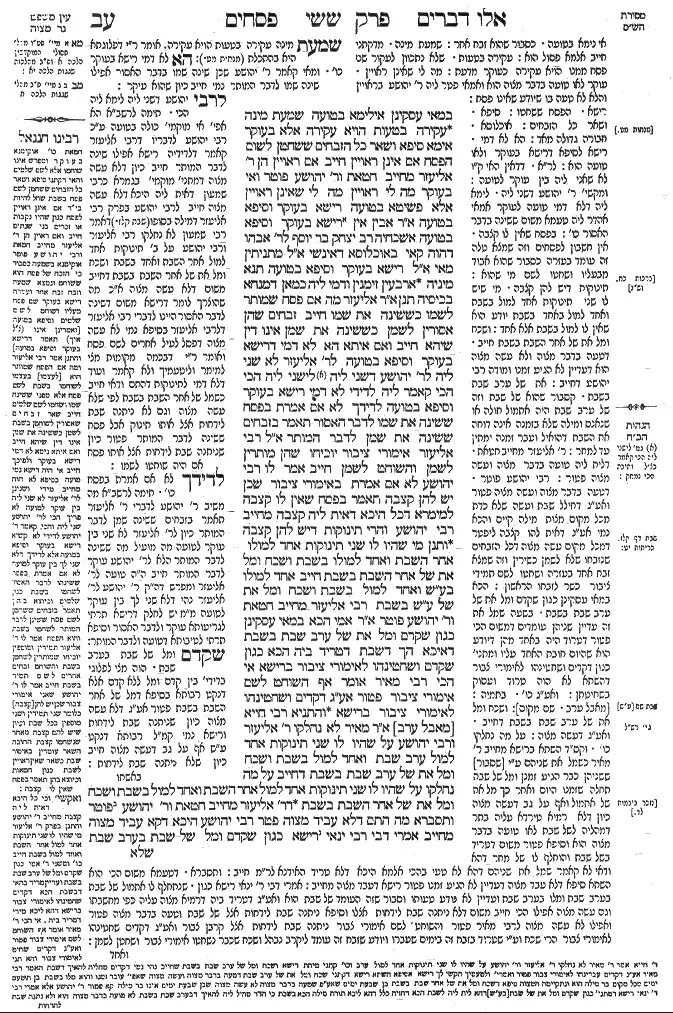
Pesahim 72a - Guemara
במאי עסקינן אילימא בטועה שמעת מינה עקירה בטעות הויא עקירה אלא בעוקר אימא סיפא ושאר כל הזבחים ששחטן לשום הפסח אם אינן ראויין חייב אם ראויין הן ר' אליעזר מחייב חטאת ור' יהושע פוטר ואי בעוקר מה לי ראויין מה לי שאינן ראויין אלא פשיטא בטועה רישא בעוקר וסיפא בטועה א"ר אבין אין רישא בעוקר וסיפא בטועה אשכחיה רב יצחק בר יוסף לר' אבהו דהוה קאי באוכלוסא דאינשי א"ל מתניתין מאי א"ל רישא בעוקר וסיפא בטועה תנא מיניה ארבעין זימנין ודמי ליה כמאן דמנחא בכיסיה תנן א"ר אליעזר מה אם פסח שמותר לשמו כששינה את שמו חייב זבחים שהן אסורין לשמן כששינה את שמן אינו דין שיהא חייב ואם איתא הא לא דמי דרישא בעוקר וסיפא בטועה לר' אליעזר לא שני ליה לר' יהושע דשני ליה לישני ליה הכי הכי קאמר ליה לדידי לא דמי רישא בעוקר וסיפא בטועה לדידך לא אם אמרת בפסח ששינה את שמו לדבר האסור תאמר בזבחים ששינה את שמן לדבר המותר א"ל רבי אליעזר אימורי ציבור יוכיחו שהן מותרין לשמן והשוחט לשמן חייב אמר לו רבי יהושע לא אם אמרת באימורי ציבור שכן יש להן קצבה תאמר בפסח שאין לו קצבה למימרא דכל היכא דאית ליה קצבה מחייב רבי יהושע והרי תינוקות דיש להן קצבה ותנן מי שהיו לו שני תינוקות אחד למולו אחר השבת ואחד למולו בשבת ושכח ומל את של אחר השבת בשבת חייב אחד למולו בע"ש ואחד למול בשבת ושכח ומל את של ע"ש בשבת רבי אליעזר מחייב חטאת ור' יהושע פוטר א"ר אמי הכא במאי עסקינן כגון שקדם ומל את של ערב שבת בשבת דאיכא הך דשבת דטריד ביה הכא כגון שקדם ושחטינהו לאימורי ציבור ברישא אי הכי רבי מאיר אומר אף השוחט לשם אימורי ציבור פטור אע"ג דקדים ושחטינהו לאימורי ציבור ברישא והתניא רבי חייא [מאבל ערב] א"ר מאיר לא נחלקו ר' אליעזר ורבי יהושע על שהיו לו שני תינוקות אחד למול ערב שבת ואחד למול בשבת ושכח ומל את של ערב שבת בשבת דחייב על מה נחלקו על שהיו לו שני תינוקות אחד למול אחר השבת ואחד למול בשבת ושכח ומל את של אחר השבת בשבת דר' אליעזר מחייב חטאת ור' יהושע פוטר ותסברא מה התם דלא עביד מצוה פטר רבי יהושע היכא דקא עביד מצוה מחייב אמרי דבי רבי ינאי רישא כגון שקדם ומל של שבת בערב שבת
Comments from Rashi on Masechet Pesahim Page 72a
אי נימא בטועה . כסבור שהוא זבח אחר: שמעת מינה . מדקתני חייב אלמא פסול הוא: עקירה בטעות . שלא נתכוון לעקור שם פסח ממנו הויא עקירה כעוקר מדעת: מה לי שאינן ראויין . עוקר לאו טועה בדבר מצוה הוא ואמאי פטר ליה ר' יהושע בראויין והלא לא טעה בו שיודע שאינו פסח: רישא . הפסח ששחטו: סיפא . ושאר כל הזבחים: אוכלוסא . חבורה גדולה מאד: הא לא דמי . רישא לסיפא דרישא בעוקר ולאו טועה הוא: לר"א . דדאין האי ק"ו לא שאני ליה בין עוקר לטועה: ומקשי' ר' יהושע דשני ליה . לימא ליה דלא דמי טועה לעוקר אמאי אהדר ליה טעמא משום ששינה בדבר האסור כו': בפסח שאין לו קצבה . אין חשבון לפסחים וזה שמצא טלה זה עומד בעזרה כסבור שהוא אבוד מבעליו ושחטו לשם מי שהוא: תינוקות דיש להן קצבה . מי שיש לו שני תינוקות אחד למול בשבת ואחד למול באחד בשבת יודע הוא שאין לו למול בשבת אלא אחד: ושכח ומל את של אחר השבת בשבת חייב . דטעה בדבר מצוה ולא עשה מצוה הוא דעדיין לא הגיע זמנו ומודה רבי יהושע דחייב: את של ערב שבת בשבת . קסבור שהוא של שבת וזה של ערב שבת היה אתמול חולה או שנאנס ומילה שלא בזמנה אינה דוחה את השבת דהואיל ועבר זמנה ימתין עד למחר: ר' אליעזר מחייב חטאת . דלית ליה טועה בדבר מצוה ועשה מצוה פטור: ר' יהושע פוטר . דטעה בדבר מצוה ועשה מצוה פטור ואע"ג דחילל שבת ועשה שלא כדת מכל מקום מצות מילה קיים והכא נמי אע"ג דאית להו קצבה ליפטר דמכל מקום עשה מצוה דכל הזבחים שנזבחו שלא לשמן כשירין וזה שמצא זבח אחד בעזרה ושחטו לשם תמידי ציבור כשר לזבחו הראשון: הכא במאי עסקינן כגון שקדם ומל את של ערב שבת בשבת . בשעה שמל את זה עדיין שניהן עומדים דמשום הכי פטור דטרוד היה באחד מהן דיודע הוא שהיום חובת האחד עליו ומתני' כגון דקדים ושחטינהו לאימורי צבור דהשתא לא הוה טרוד ועסוק בשחיטתן: ואע"ג כו' . בתמיה: [מאבל ערב . שם מקום]: ושכח ומל את של ערב שבת בשבת דחייב . ואע"ג דעשה מצוה: על מה נחלקו כו' . וקס"ד השתא ברישא מחייב ר' מאיר כשמל את שניהם ע"י [שסבור] ששניהן כבר הגיע זמנן ומל של שבת תחלה שזמנו היום ואחר כך מל את של אתמול ואף על גב דעשה מצוה כיון דלא רמיא טירדא עליה בתר דמהליה לשל שבת לאו טועה בדבר מצוה הוא וסיפא פטור משום דטריד בשל שבת והוחלף לו של מחר דהא ודאי לא קאמר שמל את שניהם דהא לא טעי בהכי אלמא היכא דלא טריד האידנא לר"מ חייב: ותסברא . דטעמא משום הכי הוא השתא סיפא דלא עבד מצוה דעדיין לא הגיע זמנו פטור רישא דעבד מצוה מחייב: אמרי דבי ר' ינאי רישא כגון . שנתחלף לו אתמול של שבת בערב שבת ומלו בערב שבת ועדיין לא נודע טעותו וסבור שזה העומד של שבת הוא ואע"ג דטריד ביה דרמיא מצוה עליה כפי מחשבתו וגם עשה מצוה אפילו הכי חייב משום דלא ניתנה שבת לידחות אצלו וסיפא ניתנה שבת לידחות אצל של שבת וטעה בדבר מצוה פטור ואפילו לא עשה מצוה לרבי מאיר פטור והשוחט לשם אימורי צבור ניתנה שבת לידחות אצל קרבן צבור ואע"ג דקדים שחטינהו לאימורי צבור הרי שכח וע"י שטרוד בזבח זה בימים שעברו ויודע שזבח זה עומד ליקרב נבהל ושכח שכבר נשחטו אימורי צבור ושחטן לשמן:
Comments from Tosafot - Pesahim 72a
שמעת מינה עקירה בטעות הויא עקירה . אומר ר"י דפלוגתא היא בהתכלת (מנחות מט.): הא לא דמי רישא בעוקר כו' . ומאי קאמר ר' יהושע שכן שינה שמו בדבר האסור אפילו שינה שמו לדבר המותר נמי חייב כיון שהוא עיקר: לרבי יהושע דשני ליה לימא ליה הכי . תימה לרשב"א הא אפי' אי מוקמי' כולה בטועה ע"כ רבי יהושע לדבריו דרבי אליעזר קאמר דלדידיה רישא אפילו שינה לדבר המותר חייב כיון דלא עשה מצוה דמתני' מוקמי' בגמרא כרבי שמעון דאית ליה היכא דלא עשה מצוה חייב לרבי יהושע בפרק רבי אליעזר דמילה בסופו (שבת קלז.) דאמר רבי שמעון לא נחלקו רבי אליעזר ורבי יהושע על ב' תינוקות אחד למול אחר השבת ואחד בשבת ושכח ומל את של אחר השבת בשבת דחייב משום דלא עשה מצוה א"כ מה שהוצרך לומר דרישא משום דשינה לדבר האסור היינו לדברי רבי אליעזר דלרבי אליעזר בסיפא נמי לא עשה מצוה דפסל לעיל אחרים לשם פסח ואומר ר"י דבכמה מקומות מצי למימר וליטעמיך ולא קאמר ועוד דלא דמי לתינוקות דהתם ודאי חייב כשמל של אחר השבת בשבת לפי שלא עשה מצוה וגם לא ניתנה שבת לידחות אצל אותו תינוק אבל פסח ששינה לדבר המותר פטור כיון שניתנה שבת לידחות אצל אותו פסח אם היה שוחטו לשמו: לדידך לא אם אמרת בפסח כו' . תימה לרשב"א מה משיב ר' יהושע לדברי ר' אליעזר תאמר בזבחים ששינה שמן לדבר המותר כיון לר' אליעזר לא שני בין עוקר לטועה מה מועיל מה ששינה לדבר המותר הלא לר' יהושע עוקר לדבר המותר חייב ה"ה טועה לר' אליעזר ומפרש דה"ק ר' יהושע לר' אליעזר נהי דלא שני לך בין עוקר לטועה מ"מ יש לחלק דרישא תרתי לגריעותא עוקר ולדבר האסור וסיפא תרתי לטיבותא דטועה ולדבר המותר: שקדם ומל של שבת בערב שבת . הוה מצי לפלוגי בדידי' בין קדם ומל ללא קדם אלא דנקט רבותא בסיפא דמל של אחר השבת בשבת פטור אע"ג דלא עשה מצוה כיון שניתנה שבת לידחות ורישא נמי קמ"ל רבותא דנקט ע"ש אף על גב דעשה מצוה חייב כיון שלא ניתנה שבת לידחות:
Pesahim 72a - Mishnah translated into english
GEMARA: When the mishna speaks of one who slaughtered a Paschal lamb on Shabbat for a different purpose, with what precisely are we dealing? If you say we are dealing with one who erred in that he actually thought this was a different offering and not a Paschal offering, learn from it, i.e., from the fact that the offering is disqualified and he is therefore liable to bring a sin-offering, that the erroneous uprooting of the status of an offering constitutes uprooting, even though he had no intention to do so. It would, however, be surprising to find the mishna taking a stand on this issue, as we find elsewhere that it is the subject of an amoraic dispute (Tosafot). Rather, the mishna must certainly be referring to one who intentionally uprooted the animal’s designation as a Paschal lamb and offered it as a different offering.
If so, say the latter clause of the mishna: As for all other offerings that one unwittingly slaughtered on Shabbat for the purpose of a Paschal offering, if they were not fit for the Paschal offering, he is liable to bring a sin-offering. And if they are fit, Rabbi Eliezer deems him liable to bring a sin-offering, whereas Rabbi Yehoshua exempts him. Now if the mishna is referring to one who intentionally uprooted the original designation of the animal, which he knew was not a Paschal offering, what does it matter to me whether the animal was fit or unfit? He certainly does not think that he is performing a mitzva; why then does Rabbi Yehoshua exempt him from bringing a sin-offering?
Rather, it is obvious that we must be dealing with one who erred. But if so, we have a contradiction in the mishna, as the first clause is referring to one who intentionally uprooted the animal’s designation, whereas the latter clause is referring to one who erred about it. Rabbi Avin said: Yes, we must accept this conclusion even though it is unusual: The first clause deals with one who uprooted the animal’s designation, whereas the latter clause deals with one who erred about it.
The Gemara relates that Rav Yitzḥak bar Yosef once found Rabbi Abbahu standing among a multitude [okhlosa] of people, and he said to him: What is the meaning of our mishna? Rabbi Abbahu said to him: The first clause is referring to one who intentionally uprooted the animal’s status, whereas the latter clause is referring to one who erred about it. Rav Yitzḥak bar Yosef learned this statement from him forty times, and it seemed to him as though it were resting in his pouch; i.e., he repeated it many times until the mishna became crystal clear to him and etched in his memory.
The Gemara raises a difficulty with this understanding of the mishna: We learned in the continuation of the mishna that Rabbi Eliezer said to Rabbi Yehoshua: If with regard to the Paschal lamb, which is permitted to be slaughtered on Shabbat for its own purpose, when one changed its purpose he is nevertheless liable, then with regard to other offerings that are forbidden to be slaughtered on Shabbat even for their own purpose, when he changed their purpose is it not right that he should be liable? And if it is so that the two parts of the mishna are not talking about the same case, surely they are not similar and cannot be compared; as the first clause is referring to one who intentionally uprooted the animal’s status, whereas the latter clause is referring to one who erred about it.
The Gemara answers: According to Rabbi Eliezer, who put forward this a fortiori argument, there is no difference, for in his opinion someone who erred while intending to perform a mitzva is liable to bring a sin-offering, even if he made a reasonable mistake. Thus, he does not differentiate between the deliberate uprooting of the animal’s status and the erroneous sacrificing of the offering for a different purpose. The Gemara asks: But according to Rabbi Yehoshua, for whom there is a difference between the two cases, let him answer Rabbi Eliezer in this way, that the first clause of the mishna is referring to one who intentionally uprooted the status of an offering, while the latter clause is referring to one who erred about it. Why does he introduce another factor, that in the first clause he changed the animal’s purpose for something forbidden, whereas in the latter clause he changed it for something permitted?
The Gemara explains that this is what Rabbi Yehoshua said to Rabbi Eliezer: According to me, these cases are not comparable, because the first clause deals with one who intentionally uprooted the animal’s designation, whereas the latter clause deals with one who erred about it. However, even according to you, who do not differentiate in this manner, I can still answer as follows: No, if you say that one is liable if he slaughtered a Paschal lamb for a different purpose, it is because he changed its purpose for something prohibited. But can you say the same thing about other offerings that he slaughtered for the purpose of a Paschal offering and thus changed their purpose for something permitted?
The mishna continues with what Rabbi Eliezer said to Rabbi Yehoshua: Let the communal offerings prove the matter, for they are permitted for slaughter on Shabbat for their own purpose, and nevertheless, one who unnecessarily slaughters different offerings for their purpose is liable. Rabbi Yehoshua said to him: No, if you said this halakha with regard to communal offerings, it is because they have a limit. But can you necessarily say the same thing with regard to the Paschal lamb, which does not have a limit?
The Gemara asks: Is that to say that wherever there is a limit, Rabbi Yehoshua deems liable one who erred while intending to perform a mitzva? But with regard to the circumcision of babies on Shabbat, which has a limit, we nevertheless learned in a mishna that with regard to one who had two babies to circumcise, one of whom he needed to circumcise after Shabbat and one of whom he needed to circumcise on Shabbat, and he forgot and circumcised the one that should have been circumcised after Shabbat on Shabbat, he is liable to bring a sin-offering. This is because he performed the prohibited labor of causing a wound not in the framework of performing a mitzva, as no obligation yet existed to circumcise the child.
If, however, there were two babies, one of whom he needed to circumcise on Shabbat eve, and one of whom he needed to circumcise on Shabbat, and he forgot and circumcised the one that he should have circumcised on Shabbat eve on Shabbat, Rabbi Eliezer deems him liable to bring a sin-offering. As circumcision after its appointed time does not override Shabbat, he has therefore unwittingly violated Shabbat. And Rabbi Yehoshua exempts him. Since he intended to perform a mitzva, and despite his error in fact performed a mitzva, he is exempt from bringing a sin-offering. Thus, we see that even though there is a limit in the case of the babies, Rabbi Yehoshua nevertheless exempts one who errs while intending to perform a mitzva.
Rabbi Ami said: With what are we dealing here? We are dealing with a case where the circumciser first unwittingly circumcised the baby who should have been circumcised on Shabbat eve on Shabbat, when there is still this other baby who should be circumcised on Shabbat with whom he is preoccupied. Since he was legitimately preoccupied with a mitzva, as he knew that there was a baby that needed to be circumcised, he is exempt from bringing a sin-offering. Here, however, with regard to offerings, we are dealing with a case where he first slaughtered the required communal offerings at the beginning, so that there was no need to slaughter any more offerings, as communal offerings have a limit. Since he had no reason to make a mistake, he is liable to bring a sin-offering for having unnecessarily slaughtered an animal on Shabbat.
The Gemara asks: If so, how do we understand the continuation of the mishna, where Rabbi Meir says that according to Rabbi Yehoshua, even one who unwittingly slaughters other offerings for the purpose of communal offerings beyond their daily limit is exempt? According to our explanation, this must be true even though he first slaughtered the required communal offerings at the beginning. But didn’t Rabbi Ḥiyya from the village of Avel Arav teach in a baraita another version of the dispute, according to which Rabbi Meir said: Rabbi Eliezer and Rabbi Yehoshua did not disagree over one who had two babies to circumcise, one to circumcise on Shabbat eve and one to circumcise on Shabbat, and he forgot and circumcised the one who should have been circumcised on Shabbat eve on Shabbat; in that case, everyone agrees that he is liable to bring a sin-offering.
With regard to what did they disagree? With regard to one who had two babies to circumcise, one to circumcise after Shabbat and one to circumcise on Shabbat, and he forgot and circumcised the baby who should have been circumcised after Shabbat on Shabbat, as Rabbi Eliezer deems him liable to bring a sin-offering, and Rabbi Yehoshua exempts him.
The Gemara expresses surprise: And how can you understand this baraita in its current formulation? If there, in the latter clause, where he circumcised the baby who should have been circumcised after Shabbat on Shabbat, so that he did not perform a mitzva because the baby was not yet eight days old and the mitzva did not yet apply, Rabbi Yehoshua nevertheless exempted him because he erred while intending to perform a mitzva. Then where he did perform a mitzva, i.e., where he circumcised a baby on Shabbat who was already eight days old before Shabbat and to whom the mitzva of circumcision applied, would Rabbi Yehoshua deem him liable?
The Rabbis of the school of Rabbi Yannai said: The first clause of the baraita is referring to a unique situation, where the circumciser first unwittingly circumcised on Shabbat eve the baby who should have been circumcised on Shabbat.
Traduction : The William Davidson digital edition of the Koren Noé Talmud, with commentary by Rabbi Adin Even-Israel Steinsaltz.