 Talmud Bavli
Pesahim 41a : Youtube
Daf TubeYoutube
3 video classes :
Pesahim Page 41a
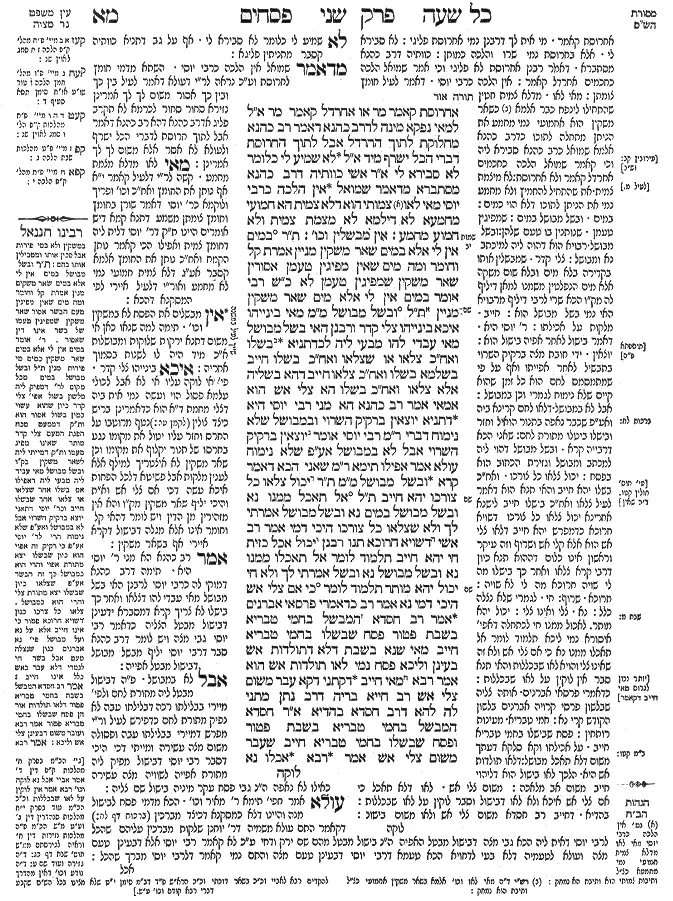
Pesahim 41a - Guemara
אחרוסת קאמר מר או אחרדל קאמר מר א"ל למאי נפקא מינה לדרב כהנא דאמר רב כהנא מחלוקת לתוך החרדל אבל לתוך החרוסת דברי הכל ישרף מיד א"ל לא שמיע לי כלומר לא סבירא לי א"ר אשי כוותיה דרב כהנא מסתברא מדאמר שמואל אין הלכה כרבי יוסי מאי לאו צמותי הוא דלא צמית הא חמועי מחמעא לא דילמא לא מצמת צמית ולא חמוע מחמע:
אין מבשלין וכו':
ת"ר (שמות יב, ט) במים אין לי אלא במים שאר משקין מניין אמרת קל וחומר ומה מים שאין מפיגין טעמן אסורין שאר משקין שמפיגין טעמן לא כ"ש רבי אומר במים אין לי אלא מים שאר משקין מניין ת"ל (שמות יב, ט) ובשל מבושל מ"מ מאי בינייהו איכא בינייהו צלי קדר ורבנן האי בשל מבושל מאי עבדי להו מבעי ליה לכדתניא בשלו ואח"כ צלאו או שצלאו ואח"כ בשלו חייב בשלמא בשלו ואח"כ צלאו חייב דהא בשליה אלא צלאו ואח"כ בשלו הא צלי אש הוא אמאי אמר רב כהנא הא מני רבי יוסי היא דתניא יוצאין ברקיק השרוי ובמבושל שלא נימוח דברי ר"מ רבי יוסי אומר יוצאין ברקיק השרוי אבל לא במבושל אע"פ שלא נימוח עולא אמר אפילו תימא ר"מ שאני הכא דאמר קרא ובשל מבושל מ"מ ת"ר יכול צלאו כל צורכו יהא חייב ת"ל (שמות יב, ט) אל תאכל ממנו נא ובשל מבושל במים נא ובשל מבושל אמרתי לך ולא שצלאו כל צורכו היכי דמי אמר רב אשי דשויא חרוכא תנו רבנן יכול אכל כזית חי יהא חייב תלמוד לומר אל תאכלו ממנו נא ובשל מבושל נא ובשל אמרתי לך ולא חי יכול יהא מותר תלמוד לומר (שמות יב, ט) כי אם צלי אש היכי דמי נא אמר רב כדאמרי פרסאי אברנים אמר רב חסדא המבשל בחמי טבריא בשבת פטור פסח שבשלו בחמי טבריא חייב מאי שנא בשבת דלא דתולדות אש בעינן וליכא פסח נמי לאו תולדות אש הוא אמר רבא מאי חייב דקתני דקא עבר משום צלי אש רב חייא בריה דרב נתן מתני לה להא דרב חסדא בהדיא א"ר חסדא המבשל בחמי טבריא בשבת פטור ופסח שבשלו בחמי טבריא חייב שעבר משום צלי אש אמר רבא אכלו נא
Comments from Rashi on Masechet Pesahim Page 41a
אחרוסת קאמר . מי אית לך דרבנן נמי אחרוסת פליגי: לא סבירא לי . אלא בחרוסת נמי שרו והלכה כמותן: כוותיה דרב כהנא מסתברא . דאמר רבנן אחרוסת לא פליגי וכי אמר שמואל הלכה כחכמים אחרדל קאמר: אין הלכה כרבי יוסי . דאמר לעיל חומץ צומתן: מאי לאו . מדלא צמית חטין שהתחילו לינפח כבר אלמא כשאר משקין הוא אחמועי נמי מחמע את הניתן מתחילה לתוכו כדרב כהנא אלמא שמואל כרב כהנא סבירא ליה וכי קאמר שמואל הלכה כחכמים אחרדל קאמר ולא אחרוסת: לא מיצמת צמית . את שהתחיל להחמיץ ולא מחמע נמי את הניתן לתוכו דלא הוי כמים: במים . ובשל מבושל במים: שמפיגין טעמן . שנותנין בו טעם שלהן: ובשל מבושל . רבויא הוא דהוה ליה למיכתב נא ומבושל: צלי קדר . שמבשלין אותו בקדירה בלא מים ובלא שום משקה אלא מים הנפלטין משמנו למאן דיליף לה מק' (מ"ק: פרג) 'ו הכא שרי לרבי דיליף מרבויא האי נמי בשל מבושל הוא: חייב . מלקות על אכילתו: ר' יוסי היא . דאמר בישול לאחר אפיה בישול הוא: יוצאין . ידי חובת מצה ברקיק השרוי בתבשיל לאחר אפייתו ואף על פי שמתמסמס לחם הוא כל זמן שהוא קיים שלא נימוח לגמרי וכן במבושל: אבל לא במבושל . דלאו לחם קרינא ביה ואע"פ שכבר נאפה בתנור הואיל וחזר ובישלו ביטלו מתורת לחם: שאני הכא דרבייה קרא . ובשל מבושל דהוי ליה למכתב ומבושל וגזירת הכתוב הוא בפסח: יכול צלאו כל צרכו . ואח"כ בשלו יהא חייב והאי תנא הוא דאמר לעיל צלאו ואח"כ בישלו חייב לישנא אחרינא יכול צלאו כל צרכו דשויא חרוכא כדמפרש יהא חייב דלאו צלי אש הוא אלא קלי אש ושרוף וזה עיקר וראשון אינו כלום דההוא תנא כיון דרבי קרא צלאו ואחר כך בישלו מה לי שויה חרוכא מה לי לא שויה: חרוכא . שרוף: חי . לגמרי שלא נצלה כלל: נא . צלי ואינו צלי: יכול יהא מותר . לאכול ממנו חי לכתחלה דאפילו איסורא נמי ליכא תלמוד לומר אל תאכלו ממנו נא כי אם צלי אש ולא זה שאינו צלי והויא לאו שבכללות והאי תנא סבר אין לוקין על לאו שבכללות: כדאמרי פרסאי אברנים . אותה צליה שבלשון פרסי קרויה אברנים בלשון הקודש קרי נא: חמי טבריא . מעינות רותחין: פסח שבישל בחמי טבריא חייב . על אכילתו וקא סלקא דעתך משום דלא תאכל מבושל: דלאו תולדות אש היא . הלכך לאו בישול הוא דליהוי חייב משום אב מלאכה: משום צלי אש . לאו דלא תאכל כי אם צלי אש איכא ולא לאו דבישול וסבר לוקין על לאו שבכללות: בהדיא . דחייב רב חסדא משום צלי אש ולאו משום בישול:
Comments from Tosafot - Pesahim 41a
לא שמיע לי כלומר לא סבירא לי . אף על גב דתניא כוותיה קסבר מתניתין פליגא: מדאמר שמואל אין הלכה כרבי יוסי . השתא מדמי חומץ לחרוסת וע"כ נראה לר"י דעולא דאמר לעיל בין כך ובין כך אסור משום לך לך אמרינן נזירא סחור סחור לכרמא לא תקרב פליג אדרב כהנא דהא רב כהנא דאמר אבל לתוך חרוסת לדברי הכל ישרף ולעולא לא אסר אלא משום לך לך אמרינן: מאי לאו מדלא מצמת מחמע . קשה לר"י דלעיל קאמר י"א אף נותן את החומץ ואח"כ וכו' ופריך ולוקמא כר' יוסי דאמר שורן בחומץ וחומץ צומתן משמע דתנא קמא דיש אומרים היינו ת"ק דר' יוסי דלית ליה דחומץ צמית ואפילו הכי קאמר נותן הקמח ואח"כ נותן את החומץ אלמא קסבר אע"ג דלא צמית חמועי נמי לא מחמע ואור"י דלעיל איירי לפי המסקנא דהכא: אין מבשלים את הפסח לא במשקין וכו' . תימה למה שנאו כאן אי משום דתנא ירקות שלוקות ומבושלות א"כ מיד היה לו לשנות בסמוך אחריה: איכא בינייהו צלי קדר . פי' אי לוקה עליו אי לא אבל לכולי עלמא פסול הוי ועשה נמי אית ביה דצלי מחמת ד"א הוא כדאמרינן בריש כיצד צולין (לקמן פסחים עה:) נטף מרוטבו על החרס וחזר עליו יטול את מקומו נגע בחרסו של תנור יקלוף את מקומו וכן שאר משקין לא איצטריך למילף אלא לענין מלקות אבל פשיטא דלכל הפחות איכא עשה דכי אם צלי אש וא"ת והיכי יליף שאר משקין מק"ו והא אין מזהירין מן הדין ויש לומר דהאי קל וחומר אינו אלא מגלה דבישול דקרא איירי אף בשאר משקין: אמר רב כהנא הא מני ר' יוסי היא . תימה דרב כהנא דמוקי לה כרבי יוסי לרבנן האי בשל מבושל מאי עבדי להו דצלאו ואחר כך בישלו לא צריך קרא דמסברא ידעינן דבישול מבטל הצליה כדאמר רבי יוסי גבי מצה ויש לומר דרב כהנא סבר דרבי יוסי יליף מבשל מבושל דבישול מבטל אפייה: אבל לא במבושל . פ"ה דבישול מבטל ליה מתורת לחם ולפי' מיירי בבלילתו רכה דבלילתו עבה לא נפיק מתורת לחם כדפירש לעיל ור"י מפרש דמיירי בבלילתו עבה ופסולה משום מצה עשירה ומייתי דכי היכי דסבר רבי יוסי דבישול מפיק ליה מתורת אפייה לשוויה מצה עשירה כאילו לא נאפה ה"נ גבי פסח עקר מיניה בישול שם צליה: עולא אמר אפי' תימא ר' מאיר וכו' . הכא מדמי פסח לבישול מצה והיינו דלא כמסקנא דכיצד מברכין (ברכות דף לח:) דקאמר התם עולא משמיה דר' יוחנן שלקות מברכין עליהם שהכל לרבי יוסי דאית ליה הכא גבי מצה דבישול מבטל האפיה ה"נ בישול מבטל מהם שם ירק ודחי ע"כ לא קאמר רבי יוסי אלא דבעינן טעם מצה ועולא לטעמיה דלא בעי לדחויא הכא טעמא דרבי יוסי דבעינן טעם מצה והתם נמי קאמר דלרבי יוסי מברך שהכל:
Pesahim 41a - Mishnah translated into english
Did the Master say this statement with regard to ḥaroset, or did the Master say it with regard to mustard? He said to him: What is the practical difference whether he was referring to ḥaroset or mustard? Both of these are mentioned together, and the same halakha applies to both.
He said to him: There is a difference with regard to that which was stated by Rav Kahana, as Rav Kahana said: The dispute between Rabbi Meir and the Rabbis concerns a case in which flour was added to mustard. However, if flour was added to ḥaroset, everyone agrees that it must be burned immediately. Rav Naḥman bar Yitzḥak was asking Rav Huna, son of Rav Yehuda, whether he disagrees with Rav Kahana and maintains that the Rabbis dispute the halakha in the case of ḥaroset as well.
He said to him: I did not hear about this statement; that is to say, I do not hold in accordance with it. I do not distinguish between these two cases, as in my opinion the Rabbis permit one to eat even this ḥaroset.
Rav Ashi said: It is reasonable to rule in accordance with the opinion of Rav Kahana, from the fact that Shmuel said that the halakha is not in accordance with the opinion of Rabbi Yosei, who maintains that vinegar will prevent grain from becoming leavened. What, isn’t it correct to infer from here that vinegar added to flour does not shrink the grain and will even leaven it? According to this explanation, food that contains vinegar, e.g., ḥaroset, is likely to be leavened immediately, as claimed by Rav Kahana.
The Gemara rejects this interpretation: No, this is no proof, as perhaps Shmuel meant that, according to the opinion of the Rabbis, vinegar will neither cause the wheat to shrink nor leaven it. Consequently, this statement cannot serve as a proof of the opinion of the Rabbis with regard to ḥaroset.
The mishna taught that one may not boil the Paschal lamb in liquid. To explain this issue, the Gemara cites a baraita that interprets the verse: “You shall not eat it partially roasted, nor boiled in any way in water, but roasted with fire; its head with its legs, and with the innards in it” (Exodus 12:9). The Sages taught: “In water”; I have derived nothing other than the prohibition against boiling the Paschal lamb in water. From where do I know that it is likewise prohibited to boil it in other liquids?
You said that this can be derived by means of an a fortiori inference: And just as water, which does not temper the taste of the food boiled in it, is prohibited for boiling the Paschal lamb, with regard to other liquids, which do temper the taste of the food boiled in them, is it not all the more so that it is prohibited to boil the Paschal lamb in them?
Rabbi Yehuda HaNasi provides a different derivation and says: From the phrase “In water,” I have derived nothing other than the prohibition against boiling the Paschal lamb in water. From where do I learn that it is likewise prohibited to boil it in other liquids? The verse states: “Nor boiled in any way,” which means: In any case, i.e., boiling the Paschal lamb in any type of liquid is prohibited.
The Gemara asks: What is the practical difference between these two derivations? The Gemara answers: The practical difference between them is with regard to meat that is roasted in a pot without the addition of any liquid, but is cooked in its own juices. According to Rabbi Yehuda HaNasi, it is prohibited to prepare the Paschal lamb in this manner, as this is considered boiling, whereas the Rabbis maintain that an action is classified as boiling only if one adds liquid to the meat.
The Gemara asks: And the Rabbis, with regard to that phrase, “boiled in any way,” what do they do with it? The Gemara answers: It is required for that which was taught in a baraita: If one boiled the Paschal lamb and afterward roasted it, or roasted it and afterward boiled it, he is liable to receive lashes for boiling the Paschal lamb.
The Gemara asks: Granted, if one boiled the Paschal lamb and afterward roasted it, he is liable, as he boiled it first and is punished for this act. However, if he roasted it and afterward boiled it, and it is a food that has been roasted by fire, why is he liable?
Rav Kahana said: In accordance with whose opinion is this baraita? It is in accordance with the opinion of Rabbi Yosei, who maintains that boiling after roasting nullifies the previous act of roasting. As it was taught in a baraita: One can fulfill his obligation to eat matza with a wafer that has been soaked in water or with a boiled wafer that has not yet dissolved; this is the statement of Rabbi Meir. Rabbi Yosei says: One can fulfill his obligation with a wafer that has been soaked in a cooked dish but not with a boiled wafer, even if it has not dissolved. Evidently, Rabbi Yosei maintains that food that was initially baked and subsequently boiled is no longer categorized as baked, and the same presumably applies to meat that was roasted and then boiled.
Ulla said: Even if you say that the halakha with regard to boiled matza is in accordance with the opinion of Rabbi Meir, there is no difficulty, as the cases of matza and the Paschal lamb are dissimilar in this regard. Here, with regard to the Paschal lamb, it is different, as the verse states: “Nor boiled in any way,” which indicates that it is prohibited to boil it in any case. No restriction of this kind is stated with regard to matza.
The Sages taught: I might have thought that if one roasted the Paschal lamb fully, he should be liable. Therefore, the verse states: “You shall not eat it partially roasted, nor boiled in any way in water” (Exodus 12:9). This verse teaches that I, God, said to you that the Paschal lamb is prohibited if it is partially roasted or boiled in any way, but not if it is fully roasted. One who roasts the Paschal lamb fully has not violated a prohibition.
The Gemara asks: What are the circumstances of this case that render it necessary for a verse to teach that roasting the Paschal lamb fully is not a violation of a prohibition? Rav Ashi said: This is referring to a situation where one burned it. The verse indicates that even one who entirely burns the Paschal lamb does not violate this prohibition.
The Sages taught: I might have thought that one who ate an olive-bulk portion of the Paschal sacrifice raw should be liable for violating a prohibition. Therefore, the verse states: “You shall not eat it partially roasted [na], nor boiled in any way in water.” This verse teaches that I, God, said to you that it is prohibited to eat the Paschal lamb partially roasted or boiled, but there is no prohibition against eating it raw.
I might have thought that it is permitted to eat it raw ab initio. Therefore, the verse states: “But roasted with fire” (Exodus 12:9). This teaches that the mitzva is to roast the Paschal lamb with fire, ab initio. The Gemara asks: What are the circumstances of cooking that are defined as na, partially roasted? Rav said: As the Persians say: Avarnim, half roasted.
Rav Ḥisda said: One who cooks food in the hot springs of Tiberias on Shabbat is exempt. One violates the Shabbat prohibition of cooking only if he uses a fire. In the case of a Paschal lamb that was cooked, i.e., boiled, in the hot springs of Tiberias, one is liable for boiling the offering.
The Gemara asks: What is different with regard to Shabbat, that one is not punished for cooking in this manner? The reason is that a fire, or a fire derivative, is required for an act to be defined as cooking on Shabbat, but there is no fire here, as the hot springs are not generated by fire. If so, with regard to the Paschal lamb as well, it is not a fire derivative, and it should not be considered boiling with regard to this prohibition either.
Rava said: What is the meaning of the word liable that Rav Ḥisda taught? It means that in doing so one violated the positive mitzva, due to that which is written: “Roasted with fire.” In other words, one who boils the Paschal lamb in the hot springs of Tiberias did not in fact violate the prohibition of boiling the Paschal lamb, but he has also not fulfilled the positive mitzva to roast the offering.
Rav Ḥiyya, son of Rav Natan, teaches this interpretation of Rav Ḥisda’s statement explicitly, i.e., that Rav Ḥisda himself said: One who cooks in the hot springs of Tiberias on Shabbat is exempt, and with regard to a Paschal lamb that was cooked in the hot springs of Tiberias, one is liable to receive punishment for this act. In doing so, he violated a positive mitzva, due to that which is written: “Roasted with fire.”
Rava said: One who ate the Paschal lamb partially roasted,
Traduction : The William Davidson digital edition of the Koren Noé Talmud, with commentary by Rabbi Adin Even-Israel Steinsaltz.