 Talmud Bavli
Pesahim 44a : Youtube
Daf TubeYoutube
3 video classes :
Pesahim Page 44a
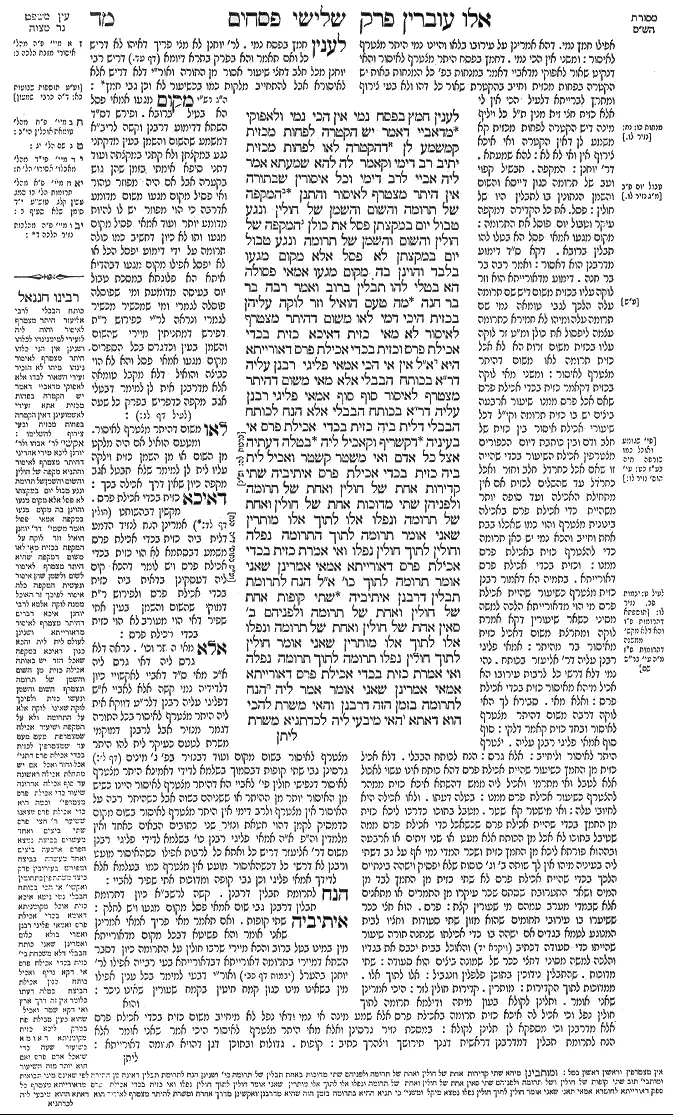
Pesahim 44a - Guemara
לענין חמץ בפסח נמי אין הכי נמי ולאפוקי מדאביי דאמר יש הקטרה לפחות מכזית קמשמע לן דהקטרה לאו לפחות מכזית יתיב רב דימי וקאמר לה להא שמעתא אמר ליה אביי לרב דימי וכל איסורין שבתורה אין היתר מצטרף לאיסור והתנן המקפה של תרומה והשום והשמן של חולין ונגע טבול יום במקצתן פסל את כולן המקפה של חולין והשום והשמן של תרומה ונגע טבול יום במקצתן לא פסל אלא מקום מגעו בלבד והוינן בה מקום מגעו אמאי פסולה הא בטלי להו תבלין ברוב ואמר רבה בר בר חנה מה טעם הואיל וזר לוקה עליהן בכזית היכי דמי לאו משום דהיתר מצטרף לאיסור לא מאי כזית דאיכא כזית בכדי אכילת פרס וכזית בכדי אכילת פרס דאורייתא היא א"ל אין אי הכי אמאי פליגי רבנן עליה דר"א בכותח הבבלי אלא מאי משום דהיתר מצטרף לאיסור סוף סוף אמאי פליגי רבנן עליה דר"א בכותח הבבלי אלא הנח לכותח הבבלי דלית ביה כזית בכדי אכילת פרס אי בעיניה דקשריף וקאכיל ליה בטלה דעתיה אצל כל אדם ואי משטר קשטר ואכיל לית ביה כזית בכדי אכילת פרס איתיביה שתי קדירות אחת של חולין ואחת של תרומה ולפניהן שתי מדוכות אחת של חולין ואחת של תרומה ונפלו אלו לתוך אלו מותרין שאני אומר תרומה לתוך התרומה נפלה וחולין לתוך חולין נפלו ואי אמרת כזית בכדי אכילת פרס דאורייתא אמאי אמרינן שאני אומר תרומה לתוך כו' א"ל הנח לתרומת תבלין דרבנן איתיביה שתי קופות אחת של חולין ואחת של תרומה ולפניהם ב' סאין אחת של חולין ואחת של תרומה ונפלו אלו לתוך אלו מותרין שאני אומר חולין לתוך חולין נפלו תרומה לתוך תרומה נפלה ואי אמרת כזית בכדי אכילת פרס דאורייתא אמאי אמרינן שאני אומר אמר ליה הנח לתרומה בזמן הזה דרבנן והאי משרת להכי הוא דאתא האי מיבעי ליה לכדתניא משרת
Comments from Rashi on Masechet Pesahim Page 44a
אפילו חמץ נמי . דהא אמרינן על עירובו בלאו והיינו נמי היתר מצטרף לאיסור: ומשני אין הכי נמי . דחמץ בפסח היתר מצטרף לאיסור והאי דנקיט שאור לאפוקי מדאביי דאמר במנחות בפ' כל המנחות באות יש הקטרה בפחות מכזית וחייב בהקטרת שאור כל דהו ולא בעי צירוף ומתרץ לברייתא דלעיל הכי אין לי אלא כזית חצי זית מנין ת"ל כל ויליף מינה דיש הקטרה לפחות מכזית קא משמע לן דאין הקטרה ואי איכא צירוף אין ואי לא לא: להא שמעתא . דר' יוחנן: המקפה . תבשיל קפוי ועב של תרומה כגון דייסא והשום והשמן הנתונין בו לתבלין היו של חולין: פסל . את כל הקדירה דמקפה עיקר וטבול יום פוסל את התרומה: מקום מגעו אמאי פסל הא בטלו להו תבלין ברובא . דקא ס"ד דימוע מדרבנן הוא דאסור: ואמר רבה בר בר חנה . דימוע מדאורייתא הוא וזר לוקה עליו בכזית משום דיש שם תרומה עלה הלכך לגבי טומאה נמי שם תרומה עלה ומיהו לא חמירא כתרומה עצמה ליפסול את כולן ומ"ט זר לוקה עליו בכזית משום זרות הא לא אכל כזית תרומה לאו משום דהיתר מצטרף לאיסור: ומשני מאי לוקה בכזית דקאמר כזית בכדי אכילת פרס שאם אכל פרס ממנו שיעור ארבעה ביצים יש בו כזית תרומה וקי"ל דכל שיעורי אכילת איסור בין כזית של חלב ודם ובין כותבת דיום הכפורים מצטרפין אכילת השיעור בכדי שהייה זו שאם אכל כחרדל חלב וחזר ואכל כחרדל עד שהשלים לכזית אם אין מתחילת האכילה ועד סופה יותר משהיית כדי אכילת פרס באכילה בינונית מצטרף והוי כמו שאכלו בבת אחת וחייב והכא נמי יש כאן תרומה כדי להצטרף כזית באכילת פרס ממנו: וכזית בכדי אכילת פרס דאורייתא . בתמיה הא דאמור רבנן כזית מצטרף כשיעור שהיית אכילת פרס מי הוי מדאורייתא הלכה למשה מסיני כשאר שיעורין דקא אמרת לוקה ומתרצת משום דאכיל כזית מאיסור בר מהיתר: אמאי פליגי רבנן עליה דר' אליעזר בכותח . נהי נמי דלא דרשי כל לרבות עירובו הא אכיל מיהא מאיסור כזית בכדי אכילת פרס: ואלא מאי . סבירא לך האי לוקה דרבה משום דהיתר מצטרף לאיסור ובחד כזית קאמר דלקי: סוף סוף אמאי פליגי רבנן עליה . יצטרף היתר לאיסור וליחייב: אלא . גרס: הנח לכותח הבבלי . דלא אכיל כזית מן החמץ כשיעור שהיית אכילת פרס דהא כותח אינו עשוי לאכול אלא לטבל ואי מתרמי ואכיל ליה ממש דהשתא איכא כזית ממהר להצטרף כשיעור אכילת פרס ממנו: בטלה דעתו . ולאו אכילה היא לחיובי עלה: ואי מישטר קא שטר . מטבל בתוכו כדרכו ליכא כזית מן החמץ בכדי שהיית אכילת פרס שכשאכל כדי אכילת פרס ממה שטיבל בתוכו לא אכל מן הכותח אלא מעט או שני זיתים או ארבעה ובההוא פורתא ליכא מן החמץ כזית ושכר המדי נמי אף על גב דשתי ליה בעיניה מיהו אין לך שותה ב' וג' כוסות שלא יפסיק וישהה בינתיים הלכך בכדי שהיית אכילת פרס לא שתי כזית מן החמץ לבד מן המים ושאר התערובת שסתם שכר עיקרו מן התמרים או מתאנים אלא שבמדי מערב עמהם מי שעורין קצת: פרס . הוא חצי ככר ששיערו בו עירובי תחומים שהוא מזון שתי סעודות וחציו לבית המנוגע לטמא בגדים אם ישהה בו כדי אכילתו שנתנה תורה שיעור שהייתו כדי סעודה דכתיב (ויקרא יד) והאוכל בבית יכבס את בגדיו והלכה למשה מסיני דחצי ככר של שמונה ביצים הוא סעודה: שתי מדוכות . שהתבלין נידוכין בתוכן פלפלין וזנגביל: אלו לתוך אלו . ממדוכות לתוך הקדירות: מותרין . קדירות חולין לזר: היכי אמרינן שאני אומר . ותלינן לקולא בעון מיתה ודילמא תרומה לתוך חולין נפל וכי אכיל לה איכא כזית תרומה באכילת פרס אלא שמע מינה אי נמי ודאי נפל לא מיחייב משום כזית בכדי אכילת פרס אלא מדרבנן וכי מספקא לן תלינן לקולא: במסכת נזיר גרסינן ואלא מאי היתר מצטרף לאיסור היכי אמר שאני אומר אלא הנח לתרומת תבלין דמדרבנן . דראשית דגנך תירושך ויצהרך כתיב: קופות . גדולות ובתוכן דגן דהויא תרומה דאורייתא:
Comments from Tosafot - Pesahim 44a
לענין חמץ בפסח נמי . לר' יוחנן לא מצי פריך דאיהו לא דריש כל ואם תאמר והא בפרק בתרא דיומא (דף עד.) דריש רבי יוחנן מכל חלב דחצי שיעור אסור מן התורה ואור"י דלא דריש אלא לאיסורא אבל להתחייב מלקות כמו בכשיעור לא וכן גבי חמץ: (ה"ג רש"י) מקום מגעו אמאי פסל הא בטיל ברובא . ופירש דס"ד השתא דדימוע דרבנן וקשה לריב"א דמשמע שהשום והשמן בעין מדקתני נגע במקצתן ולא קתני במקצתה ועוד דתני סיפא אימתי בזמן שהן גוש בקערה אבל אם היה מפוזר טהור ואי פסיל מקום מגעו משום מדומע אדרבה כי הוי מפוזר יש לו להיות מדומע יותר ועוד אמאי פסיל מקום מגעו ותו לא כיון דחשיב כמו כולה תרומה על ידי דימוע יפסל הכל או לא יפסל אפילו מקום מגעו דבהדיא איתא הא פלוגתא במסכת טבול יום בעיסה מדומעת ומי שפוסלה פוסלה לגמרי ומי שמכשיר מכשיר לגמרי ונראה לר"י כפירוש ר"ת דפירש דמתניתין מיירי שהשום והשמן בעין וכדגרס בכל הספרים מקום מגעו אמאי פסל והא לא הוי כביצה והואיל דלא מקבל טומאה אלא מדרבנן אית לן למימר דבטלי אגב מקפה כדפריש בפרק כל שעה (לעיל פסחים דף לג:): לאו משום דהיתר מצטרף לאיסור . ומטעם הואיל אם היה מלקט מן השום או מן השמן כזית וילקה עליו לית לן למימר שלא תבטל אגב מקפה כיון שאין דרך אכילה בכך: דאיכא כזית בכדי אכילת פרס . מקשין דבהשוחט (חולין דף לד:) אמרינן הנח לנזיד הדמע דלית ביה כזית בכדי אכילת פרס משמע דבסתמא לא הוי כזית בכדי אכילת פרס ויש לומר דהכא קים ליה דעסקינן בדאית ביה כזית בכדי אכילת פרס ולפירוש ר"ת דמוקי שהשום והשמן בעין אתי שפיר דאי הוי מעורב לא הוי כזית בכדי אכילת פרס: אלא מאי היתר וכו' . נראה דלא גרס ליה דאי גרס ליה א"כ מאי ס"ד דאביי לאקשויי כיון דלדידיה נמי קשה אלא לאביי א"ש דפליגי עליה רבנן דלר"ע דווקא אית ליה היתר מצטרף לאיסור בכל התורה דגמר מנזיר אבל לרבנן דמוקמי משרת לטעם כעיקר לית להו היתר מצטרף לאיסור בשום מקום ועוד דבנזיר בפ' ג' מינים (דף לז:) גרסינן גבי שתי קופות דבסמוך בשלמא לדידי דאמינא היתר מצטרף לאיסור דנפישי חולין פי' לאביי הא דהיתר מצטרף לאיסור היינו כשיש מן האיסור יותר מן ההיתר או ששניהם בשוה אבל כשהיתר רבה על האיסור אין מצטרף ולרב דימי אין היתר מצטרף לאיסור בשום מקום כדמסיק לקמן דהוי חטאת ונזיר שני כתובים הבאים כאחד ואין מלמדין וה"פ א"ה אמאי פליגי רבנן כו' בשלמא לדידי פליגי רבנן משום דר' אליעזר דריש כל ואתא כל לרבות אפילו כשהאיסור מועט ורבנן לא דרשי כל דכשהאיסור מועט אין מצטרף כמו בעלמא אלא לדידך אמאי פליגי וכן גבי קופה ומדוכות אתי שפיר לאביי: הנח לתרומת תבלין דרבנן . קשה לרשב"א כיון דתרומת תבלין דרבנן גבי שום אמאי פסל מקום מגעו ויש לחלק: איתיביה שתי קופות . ואם תאמר מאי פריך אמאי אמרינן שאני אומר והא פשיטא דבכל מקום מדאורייתא מין במינו בטל ברוב והכא מיירי שרבו חולין על התרומה כיון דסבר השתא דמיירי בתרומה דאורייתא דבאורייתא בעי רבייה אפילו לר' יוחנן בהערל (יבמות דף פב.) ואור"י דבעי למימר בכל ענין אפילו מין בשאינו מינו כגון קמח חיטין בקמח שעורין שאינו ניכר:
Pesahim 44a - Mishnah translated into english
with regard to the matter of leavened bread on Passover one should also be liable for eating a prohibited substance joined together with a permitted substance.
The Gemara answers: Yes, indeed it is so, and the prohibition mentioned by Ze’eiri against sacrificing leaven in offerings was only to exclude the statement of Abaye, who said: There is significance to offering less than an olive-bulk of leaven on the altar, and one is flogged for sacrificing an offering of that kind. By noting that one is liable because permitted substances combine with prohibited substances, the baraita teaches us that an offering of less than an olive-bulk is not considered an offering, and therefore sacrificing it is not punishable by lashes.
Rav Dimi sat and stated this halakha that a permitted substance does not join together with a prohibited substance to constitute the requisite measure, except in the case of a nazirite. Abaye said to Rav Dimi: And is it true that with regard to all other prohibitions in the Torah, a permitted substance does not join together with a prohibited substance?
But didn’t we learn in a mishna: With regard to thick soup prepared with teruma produce whose garlic and oil are of non-sacred produce, and one who immersed himself during that day touched some of the ingredients, he disqualified all the contents of the pot, as they are subsumed within the teruma soup. However, if the thick soup was prepared with non-sacred produce and the garlic and the oil were of teruma, and one who immersed himself during that day touched some of them, he disqualifies only the ingredients in the place that he touched.
Abaye continues. And we discussed this issue: Why are the ingredients in the place that he touched disqualified? The spices, i.e., the garlic or oil, are nullified by the majority. Since the major portion of the dish is composed of non-sacred produce, it should not be disqualified by contact with one who immersed himself during that day. And Rabba bar bar Ḥana said in reply: What is the reason that it becomes disqualified? It is since a non-priest is flogged for eating an olive-bulk of the soup, as anything into which teruma is mixed is considered teruma by Torah law. What are the circumstances of this ruling that a non-priest is flogged? Is it not due to the fact that the permitted substance joins together with the prohibited substance?
Rav Dimi rejects this contention: No; what is the meaning of an olive-bulk in this mishna? It means that there is sufficient teruma in the mixture that when one eats from the mixture he will consume an olive-bulk of teruma in the time it takes to eat a half-loaf of bread. In that case one is liable for punishment for eating this olive-bulk, as if he ate the teruma alone.
Abaye asked him: Is eating an olive-bulk in the time it takes to eat a half-loaf of bread prohibited by Torah law, and one is punished for it? He said to him: Yes.
Abaye asked in response: If so, why do the Rabbis disagree with Rabbi Eliezer with regard to eating Babylonian kutaḥ, a dip that contains flour, on Passover? The Rabbis maintain that one is not punished by Torah law for eating a mixture containing leaven. Although the Rabbis do not derive from the word: Anything [kol], that leaven in a mixture is prohibited, they should nonetheless hold one liable for eating an olive-bulk of a prohibited substance in the time it takes to eat a half-loaf of bread.
Rav Dimi said: Rather, what conclusion must be drawn; the reason that a non-priest is flogged for eating the teruma soup is due to the fact that a permitted substance joins together with a prohibited substance? If so, ultimately, why do the Rabbis disagree with Rabbi Eliezer with regard to eating Babylonian kutaḥ? Rather, leave Babylonian kutaḥ, as in eating that mixture there is no possibility that one will consume an olive-bulk of the leaven in the time it takes to eat a half-loaf of bread. If he eats kutaḥ in its pure, unadulterated form, by swallowing it as food, not as a dip, his intention is rendered irrelevant by the opinions of all other people. It is unusual for a person to eat a pungent dip by itself, all the more so, for him to eat it so quickly. One receives no punishment for conduct that anomalous. And if he dips other food into the kutaḥ and eats it, he will not consume an olive-bulk in the time it takes to eat a half-loaf of bread. Due to the pungency of the dip, one needs to add only a small portion to his food.
Abaye raised an objection to Rav Dimi from a baraita: With regard to two pots, one of non-sacred produce and the other one of teruma, before which were two mortars, one in which non-sacred produce was pounded, and one in which teruma produce was pounded, and the contents of these mortars fell into these pots, but it is unknown which produce fell into which pot, it is all permitted. The reason for this ruling is as I say, since there is no definitive proof to the contrary, that the teruma fell into the teruma and the non-sacred produce fell into the non-sacred produce.
Abaye explains his objection: And if you say that eating an olive-bulk of a prohibited substance in the time it takes to eat a half-loaf of bread is prohibited by Torah law, why do we say this principle: As I say that the teruma fell into the teruma, etc.? If the teruma produce fell into the pot containing non-sacred produce, one who eats from the mixture will consume an olive-bulk of teruma within the time it takes to eat a half-loaf of bread, and he will thereby violate a Torah prohibition. Rav Dimi said to him: Leave teruma separated from spices, which is teruma by rabbinic law. By Torah law one is required to separate teruma only from grain, wine and oil. The Sages are lenient with regard to teruma by rabbinic law.
Abaye raised another objection from a similar baraita: In a case where there are two baskets, one filled with non-sacred produce and the other filled with teruma, and before them were two vessels each containing a se’a of produce, one filled with non-sacred produce and the other one filled with teruma, and these, the contents of each of the baskets, fell into those, each of the se’a vessels. It is possible that the teruma fell into the non-sacred produce, and it is prohibited for non-priests to eat a mixture of teruma and non-sacred produce. Nevertheless, the contents of the se’a vessel containing the non-sacred produce are permitted, as I say that the non-sacred produce fell into the non-sacred produce and the teruma fell into the teruma. The obligation to separate teruma from grain is by Torah law, and if you say that eating an olive-bulk of forbidden food in the time it takes to eat a half-loaf of bread is prohibited by Torah law, why do we say the principle: As I say the non-sacred grain fell into the non-sacred grain? Why aren’t the Sages concerned that one might eat an olive-bulk of teruma in the time it takes to eat a half-loaf, which is prohibited by Torah law?
He said to him: Leave teruma in modern times, as it is in effect by rabbinic law. Once the Jewish people were exiled from their land, the halakhot of teruma and tithes apply by rabbinic law, not Torah law. This is the basis for the lenient ruling in the case of this mixture.
The Gemara returns to its discussion of Rabbi Abbahu’s statement with regard to the meaning of the word soaked in the verse: “He shall abstain from wine and strong drink; he shall drink no vinegar of wine, or vinegar of strong drink, nor shall he drink anything soaked in grapes,” and whether or not a permitted substance combines with a prohibited one. The Gemara asks: And does this word: Soaked, come to teach that mixtures are prohibited in this case? That verse is required to derive that which was taught in a baraita elsewhere: Soaked,
Traduction : The William Davidson digital edition of the Koren Noé Talmud, with commentary by Rabbi Adin Even-Israel Steinsaltz.