 Talmud Bavli
The learning on the whole site is dedicated : L'ilui Nishmat Nissim ben Barukh Malka
The learning on the whole site is dedicated : L'ilui Nishmat Reuven ben Rivka SEBBAG
The learning on the whole site is dedicated : L'ilui Nishmat Jamila bat Chlomo Abensour
Pesahim 95a : Youtube
Daf TubeYoutube
3 video classes :
Pesahim Page 95a
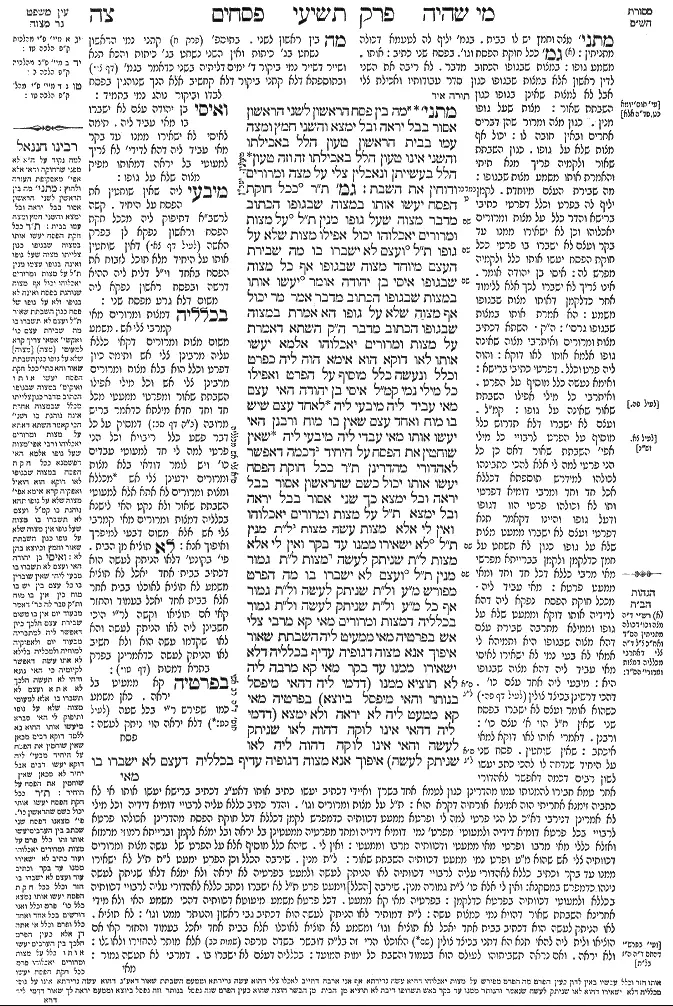
Pesahim 95a - Guemara
מתני׳ מה בין פסח הראשון לשני הראשון אסור בבל יראה ובל ימצא והשני חמץ ומצה עמו בבית הראשון טעון הלל באכילתו והשני אינו טעון הלל באכילתו זה וזה טעון הלל בעשייתן ונאכלין צלי על מצה ומרורים ודוחין את השבת:
גמ׳ ת"ר (במדבר ט, יב) ככל חוקת הפסח יעשו אותו במצוה שבגופו הכתוב מדבר מצוה שעל גופו מנין ת"ל (במדבר ט, יא) על מצות ומרורים יאכלוהו יכול אפילו מצות שלא על גופו ת"ל (במדבר ט, יב) ועצם לא ישברו בו מה שבירת העצם מיוחד מצוה שבגופו אף כל מצוה שבגופו איסי בן יהודה אומר (במדבר ט, יב) יעשו אותו במצות שבגופו הכתוב מדבר אמר מר יכול אף מצוה שלא על גופו הא אמרת במצוה שבגופו הכתוב מדבר ה"ק השתא דאמרת על מצות ומרורים יאכלוהו אלמא יעשו אותו לאו דוקא הוא אימא הוה ליה כפרט וכלל ונעשה כלל מוסיף על הפרט ואפילו כל מילי נמי קמ"ל איסי בן יהודה האי עצם מאי עביד ליה מיבעי ליה לאחד עצם שיש בו מוח ואחד עצם שאין בו מוח ורבנן האי יעשו אותו מאי עבדי ליה מיבעי ליה שאין שוחטין את הפסח על היחיד דכמה דאפשר לאהדורי מהדרינן ת"ר ככל חוקת הפסח יעשו אותו יכול כשם שהראשון אסור בבל יראה ובל ימצא כך שני אסור בבל יראה ובל ימצא ת"ל על מצות ומרורים יאכלוהו ואין לי אלא מצות עשה מצות ל"ת מנין ת"ל (במדבר ט, יב) לא ישאירו ממנו עד בקר ואין לי אלא מצות ל"ת שניתק לעשה מצות ל"ת גמור מנין ת"ל (במדבר ט, יב) ועצם לא ישברו בו מה הפרט מפורש מ"ע ול"ת שניתק לעשה ול"ת גמור אף כל מ"ע ול"ת שניתק לעשה ול"ת גמור בכלליה דמצות ומרורים מאי קא מרבי צלי אש בפרטיה מאי ממעיט ליה השבתת שאור איפוך אנא מצוה דגופיה עדיף בכלליה דלא ישאירו ממנו עד בקר מאי קא מרבה ליה לא תוציא ממנו (דדמי ליה דהאי מיפסל בנותר והאי מיפסל ביוצא) בפרטיה מאי קא ממעט ליה לא יראה ולא ימצא (דדמי ליה דהאי אינו לוקה דהוה לאו שניתק לעשה והאי אינו לוקה דהוה ליה לאו שניתק לעשה) איפוך אנא מצוה דגופיה עדיף בכלליה דעצם לא ישברו בו
Comments from Rashi on Masechet Pesahim Page 95a
מתני' מצה וחמץ יש לו בבית . בגמ' יליף לה לטעמא דכולה מתניתין: גמ' ככל חוקת הפסח וגו' . בפסח שני כתיב: אותו . משמע גופו: במצות שבגופו הכתוב מדבר . לא ריבה את השני לדין ראשון אלא במצות שבגופו כגון סדר עבודותיו ואכילת צלי אבל לא למצות שאינן בגופו כגון השבתת שאור: מצות שעל גופו מנין . כגון מצה ומרור שהן דברים אחרים ובאין חובה לו: יכול אף מצות שלא על גופו . כגון השבתת שאור ולקמיה פריך מנא תיתי והאמרת אותו משמע מצות שבגופו: מה שבירת העצם מיוחדת . לקמן יליף לה בפרט וכלל דפרטי כתיבי ברישא והדר כלל על מצות ומרורים יאכלוהו וכן לא ישאירו ממנו עד בקר ועצם לא ישברו בו פרטי ככל חוקת הפסח יעשו אותו כלל ולקמיה מפרש לה: איסי בן יהודה אומר . אינו צריך לא ישברו לכך אלא ללימוד אחר כדלקמן דאותו מצות שבגופו משמע: הא אמרת אותו במצות שבגופו גרסינן: ה"ק . השתא דכתיב מצות ומרורים ואיתרבי מצוה שאינה גופו אלמא אותו לאו דוקא: והוה ליה פרט וכלל . דפרטי כתיבי ברישא: ואימא נעשה כלל מוסיף על הפרט . ואיתרבי כל מילי אפילו השבתת שאור שאינה על גופו: קמ"ל . ועצם לא ישברו דלא תדרוש כלל מוסיף על הפרט לרבויי כל מילי אפי' השבתת שאור דאם כן כל הני פרטי למה לי אלא להכי כתבינהו לכולהו למידרש תוספתא דכללא אכל חד וחד ומרבי דומיא דפרטי ותו לא וכולהו פרטי הוו דגופו ודעל גופו והיינו דקאמר תנא דפרטי ועצם לא ישברו ממעט מצות שלא על גופו כגון לא תשחט על חמץ כדלקמן ולקמן בברייתא מפרשי מאי מרבי כללא דכל חד וחד ומאי ממעט פרטא: מאי עביד ליה . מככל חוקת הפסח נפקא ליה דהא לדידיה אותו דוקא וממעט שלא על גופו וממילא מתרבה שבירת עצם דהא מצוה שבגופו היא ותמיהא לי אמאי לא בעי נמי לא ישאירו לאיסי מאי עביד ליה דהא מצוה שבגופו היא: מיבעי ליה אחד עצם כו' . דהכי דרשינן בכיצד צולין (לעיל פסחים דף פה.) כשהוא אומר ועצם לא ישברו בפסח שני שאין ת"ל הוי אחד עצם כו': ורבנן . דאמרי אותו לאו דוקא למאי איכתב: שאין שוחטין . פסח שני על היחיד שנדחה לו להכי כתב יעשו לשון רבים דכמה דאפשר לאהדורי אחר טמא חבירו להמנותו עמו מהדרינן כגון לטמא אחד בשרץ ואיידי דכתיב יעשו כתיב אותו דאע"ג דכתיב ברישא יעשו אותו אי לא כתביה זימנא אחריתי הוה אמינא אורחיה דקרא הוא: ת"ל על מצות ומרורים וגו' . והדר כתיב כללא עליה לרבויי דומיא דידיה וכל מילי לא אמרינן דנירבי דא"כ כל הני פרטי למה לי ופרטא ממעט דכוותיה כדמפרש לקמן דכללא דכל חוקת הפסח מהדרינן אכולהו פרטא לרבויי בכל פרטא דומיא דידיה ולמעוטי מפרט' נמי דומיא דידיה ומחד מפרטיה ממעטינן בל יראה ובל ימצא לקמן וברייתא רמוזי מרמזא ואזלא כללי מאי מרבו ופרטי מאי ממעטי ודכוותיה מרבו וממעטי: ואין לי . שיהא כלל מוסיף אלא על הפרט של עשה מצות ומרורים דכוותיה צלי אש שהוא מ"ע ופרט נמי ממעט דכוותיה השבתת שאור: ל"ת מנין . שירבה הכלל וכן הפרט ימעט ל"ת ת"ל לא ישאירו ממנו עד בקר וכתיב כללא לאהדורי עליה לרבויי דכוותיה לאו הניתק לעשה ולמעט בפרטיה לא יראה ולא ימצא דלאו שניתק לעשה נינהו כדמפרש במסקנא: ואין לי אלא כו' ל"ת גמורה מנין . שירבה [הכלל] וימעט פרט ת"ל לא ישברו וכתב כללא לאהדורי עליה לרבויי דכוותיה בכללא ולמעוטי דכוותיה בפרטא כדלקמן: בפרטיה מאי קא ממעט . דכל פרטא משמע מיעוטא דכוותיה דהכי משמע האי ולא מידי אחרינא השבתת שאור דהויא נמי כמצות עשה: ל"ת דמותיר לאו הניתק לעשה הוא דכתיב גבי ראשון והנותר ממנו וגו': לא תוציא . לאו הניתק לעשה הוא דכתיב בבית אחד יאכל לא תוציא וגו' ומשמע לא תוציא לאוכלו אלא בבית אחד יאכל בעמוד והחזר קאי אם הוציאו ולית ליה להאי תנא הא דתני בכיצד צולין (שם) האוכלו הרי זה בל"ת דובשר בשדה טרפה (שמות כב) אלא מותר להחזירו ולאוכלו: ולא יראה . ואם נראה תשביתוהו לעולם הוא בעמוד והשבת כל ימות המועד: בכלליה דעצם לא ישברו בו . דמרבי לא תעשה גמור:
Comments from Tosafot - Pesahim 95a
מה בין ראשון לשני . בתוספ' (פרק ח) קתני נמי הראשון נשחט בג' כיתות ואין השני נשחט בג' כיתות והכא תנא ושייר דשייר נמי ביקור ד' ימים דליתיה בשני כדאמר בגמ' (דף צו.) ובתוספתא דלא קתני ביקור דלא קחשיב אלא הנך שנוהגין בפסח לבדו וביקור נוהג נמי בתמיד: ואיסי בן יהודה עצם לא ישברו בו מאי עביד ליה . תימה לאיסי לא ישאירו ממנו עד בקר מאי עביד ליה דהא לדידי' לא צריך למעוטי בל יראה דמאותו מפיק מצוה שלא על גופו: מיבעי ליה שאין שוחטין את הפסח על היחיד . קשה לרשב"א דתיפוק ליה מככל חקת הפסח וראשון נפקא לן בפרק האשה (לעיל פסחים דף צא.) דאין שוחטין אותו על היחיד מלא תוכל לזבוח את הפסח באחד וי"ל דלית ליה ההיא דרשה ובפסח ראשון נפקא ליה משום דלא גרע מפסח שני: בכלליה דמצות ומרורים מאי קמרבי צלי אש . משמע משום מצות ומרורים דקאי כללא עליה מרבינן צלי אש ותימה כיון דפרט וכלל הוא בלא מצות ומרורים מרבינן צלי אש וכל מילי אפילו השבתת שאור ומפרטי ממעטי מכל חד וחד חדא מילתא כדאמר בריש מרובה (ב"ק דף סב:) דמסיק על כל דבר פשע כלל ריבויא וכל הני פרטי למה לי חד למעוטי עבדים כו' ויש לומר דודאי בלא מצות ומרורים ידעינן צלי אש מכללא ומצות ומרורים לא אתא אלא למעוטי השבתת שאור ולא נקט האי לישנא בכלליה דמצות ומרורים מאי קמרבי צלי אש אלא משום דבעי למיפרך ואיפוך אנא: לא תוציא מן הבית . פי' בקונט' דלאו הניתק לעשה הוא דכתיב בבית אחד יאכל לא תוציא משמע לא תוציא לאוכלו בבית אחר אלא בבית אחד יאכל בעמוד והחזר קאי אם תוציאו וקשה לר"י היכי חשבינן ליה לאו הניתק לעשה והא לאו שקדמו עשה הוא ולא חשיב לאו הניתק לעשה כדאמרינן בפרק בתרא דמכות (דף טו.): בפרטיה קא ממעיט בל יראה . כאן משמע כמו שפירש ר"י בכל שעה (לעיל . כט:) דלא יראה הוי ניתק לעשה:
Pesahim 95a - Mishnah translated into english
MISHNA: What is the difference between the Paschal lamb offered on the first Pesaḥ and the Paschal lamb offered on the second Pesaḥ? On the first Pesaḥ, at the time of slaughtering the Paschal lamb, it is prohibited to own leavened bread due to the prohibitions: It shall not be seen, and: It shall not be found. And on the second Pesaḥ it is permissible for one to have both leavened bread and matza with him in the house. Another difference is that the Paschal lamb offered on the first Pesaḥ requires the recitation of hallel as it is eaten and the second does not require the recitation of hallel as it is eaten. However, they are the same in that the Paschal lambs sacrificed on both the first and second Pesaḥ require the recitation of hallel as they are prepared, i.e., as they are slaughtered, and they are both eaten roasted with matza and bitter herbs, and they override Shabbat in that they may be slaughtered and their blood sprinkled even on Shabbat.
GEMARA: The Sages taught a halakhic midrash pertaining to the Paschal lamb offered on the second Pesaḥ. The verse states with regard to the second Pesaḥ: “They shall leave none of it to the morning, nor break a bone in it; according to all the entire statute of the Paschal lamb they shall offer it” (Numbers 9:12). The fact that the verse says “it” indicates that the verse is speaking of a mitzva applicable to the body of the Paschal lamb, meaning that halakhot pertaining to the actual Paschal lamb on the first Pesaḥ apply equally to the Paschal lamb on the second Pesaḥ.
The midrash continues: With regard to a mitzva related to the body of the Paschal lamb but not actually performed on the body of the offering, from where is it derived that it applies to the second Pesaḥ as well? The verse states: “They shall eat it with matzot and bitter herbs” (Numbers 9:11). One might have thought that one must fulfill all mitzvot related to the first Pesaḥ on the second Pesaḥ, even mitzvot not at all related to the body of the Paschal lamb, such as the requirement to destroy all one’s leaven. Therefore, the Torah states: “And they shall not break a bone in it” (Numbers 9:12), which teaches that just as the prohibition of breaking a bone is notable among the mitzvot related to the Paschal lamb in that it is a mitzva applicable to the Paschal lamb itself, so too, any mitzva applicable to the Paschal lamb itself must be fulfilled on the second Pesaḥ. However, other mitzvot pertaining to the first Pesaḥ need not be fulfilled on the second Pesaḥ.
Isi ben Yehuda says: It is unnecessary to derive that halakha from the end of the verse quoted, as the phrase in the first half of the verse: “They shall perform it,” indicates that the verse is speaking only of mitzvot applicable to the body of the Paschal lamb itself.
The Gemara clarifies the details of the baraita. The Master said: One might have thought that one must fulfill even a mitzva not at all related to the body of the Paschal lamb on the second Pesaḥ. The Gemara expresses surprise: But you said that the verse is speaking only of a mitzva applicable to the body of the Paschal lamb, so why would one think that unrelated mitzvot are also included?
The Gemara explains that this is what the baraita is saying: Now that you said the additional halakha that they shall eat it with unleavened bread and bitter herbs, apparently the phrase: “They shall perform it,” is not specific and does not limit the halakhot of the second Pesaḥ to those applicable to the Paschal lamb itself, say that this verse is expounded according to the principle of a detail and a generalization, as it first said: “They shall eat it with unleavened bread and bitter herbs” and “They shall leave none of it to the morning,” and then it stated a generalization: “According to all the statute of the Paschal lamb they shall perform it.” The principles of halakhic midrash state that in that case, the generalization adds to the detail and even includes everything, such that all the mitzvot of the first Pesaḥ would apply equally to the second, including the removal of leaven. Therefore, the verse “They shall not break a bone in it” teaches us that mitzvot unrelated to the Paschal lamb do not apply to the second Pesaḥ.
The Gemara asks: What does Isi ben Yehuda do with the end of the verse: “And they shall not break a bone in it”? The Gemara answers: He needs it to teach that the prohibition of breaking a bone applies both to a bone that has marrow and to a bone that does not have marrow.
The Gemara asks: And the Rabbis, who expound differently than Isi ben Yehuda, what do they do with this phrase: “They shall perform it”? The Gemara answers: They need it to teach that one does not slaughter the Paschal lamb on the second Pesaḥ on behalf of a single individual. Since the verse speaks of people performing the second Pesaḥ in the plural, it is derived that as much as it is possible to search for more people to join this individual in his Paschal lamb, we search for them, even if it means causing another individual to become ritually impure to prevent him from performing the first Pesaḥ.
The Sages taught in a different baraita: The verse states: “According to the entire statute of the Paschal lamb they shall offer it” (Numbers 9:12). One might have thought that just as at the time of the sacrifice of the Paschal lamb on the first Pesaḥ it is prohibited to own leaven due to the prohibitions of: It shall not be seen, and: It shall not be found, so too, at the time of the sacrifice of the Paschal lamb on the second Pesaḥ it is prohibited to own leaven due to the prohibitions of: It shall not be seen, and: It shall not be found. Therefore, the Torah states: “They shall eat it with matzot and bitter herbs” (Numbers 9:11), which indicates that the other mitzvot pertaining to the first Pesaḥ do not apply on the second.
The baraita continues: And from here I have derived only that positive mitzvot related to the first Pesaḥ apply on the second Pesaḥ; from where do I derive that the same is true of negative mitzvot? The verse states: “They shall leave none of it to the morning, nor break a bone in it” (Numbers 9:12).
The baraita continues: And from this verse I have derived only that a negative mitzva whose violation can be rectified by the fulfillment of a positive mitzva applies on the second Pesaḥ, e.g., the prohibition of leaving over meat from the Paschal lamb until morning, which can be rectified by the positive mitzva of burning the leftovers; from where is it derived that the same is true of a full-fledged negative mitzva? The verse states: “They shall not break a bone in it.” It may be concluded from these examples that just as the detail, i.e., the specific mitzvot mentioned in these verses, is explicit and includes a positive mitzva, a prohibition whose violation can be rectified by the fulfillment of a positive mitzva, and a full-fledged negative mitzva; so too, every positive mitzva, every prohibition whose violation can be rectified by the fulfillment of a positive mitzva, and every full-fledged negative mitzva is included.
Now that the generalization has been interpreted as referring to the specific examples mentioned earlier, what is included through the generalization of unleavened bread and bitter herbs? The Gemara answers: It comes to teach that the mitzva of roasting in fire applies to the Paschal lamb on the second Pesaḥ as well as to the first. Given that unleavened bread and bitter herbs is also a qualifying detail, what does it exclude through its detail? It teaches that the mitzva of removal of leaven does not apply on the second Pesaḥ. The Gemara asks: Perhaps I can reverse it and say that on the second Pesaḥ one is not obligated to roast the offering by fire, but one is obligated to remove all leaven? The Gemara answers: A mitzva relating to the Paschal lamb itself is preferable, as it is more reasonable to assume that the first and second Pesaḥ are comparable with regard to halakhot pertaining to the offering itself.
The Gemara asks further: What is included through the generalization of: They shall leave none of it to the morning? The Gemara answers that it includes the prohibition of: You shall not remove any of its meat from one group to another, which is similar to it, as through this prohibition mentioned in the verse it is disqualified as leftovers, and through this prohibition of removing the meat of the offering it is disqualified as sacrificial meat that has left its permitted boundary.
The Gemara asks further: What does it exclude through its detail? It excludes the prohibitions: It shall not be seen, and: It shall not be found, which are similar to it, as one who violates this prohibition of leaving over the meat of the offering until morning is not flogged because it is a prohibition whose violation can be rectified by fulfilling a positive mitzva by burning the leftovers; and one who violates this prohibition of owning leaven is not flogged because it is a prohibition whose violation can be rectified by fulfilling a positive mitzva of burning the leaven. The Gemara asks: Perhaps I can reverse it and say that the generalization is meant to include removal of leaven and the detail excludes the prohibition of leaving over the meat of the offering? The Gemara answers: In a comparison of the first Pesaḥ and the second, including a mitzva related to the Paschal lamb itself is preferable to including one that does not relate to the Paschal lamb.
The Gemara continues to ask: Through the generalization: They shall not break a bone in it,
Traduction : The William Davidson digital edition of the Koren Noé Talmud, with commentary by Rabbi Adin Even-Israel Steinsaltz.