 Talmud Bavli
Pesahim 66a : Youtube
Daf TubeYoutube
3 video classes :
Pesahim Page 66a
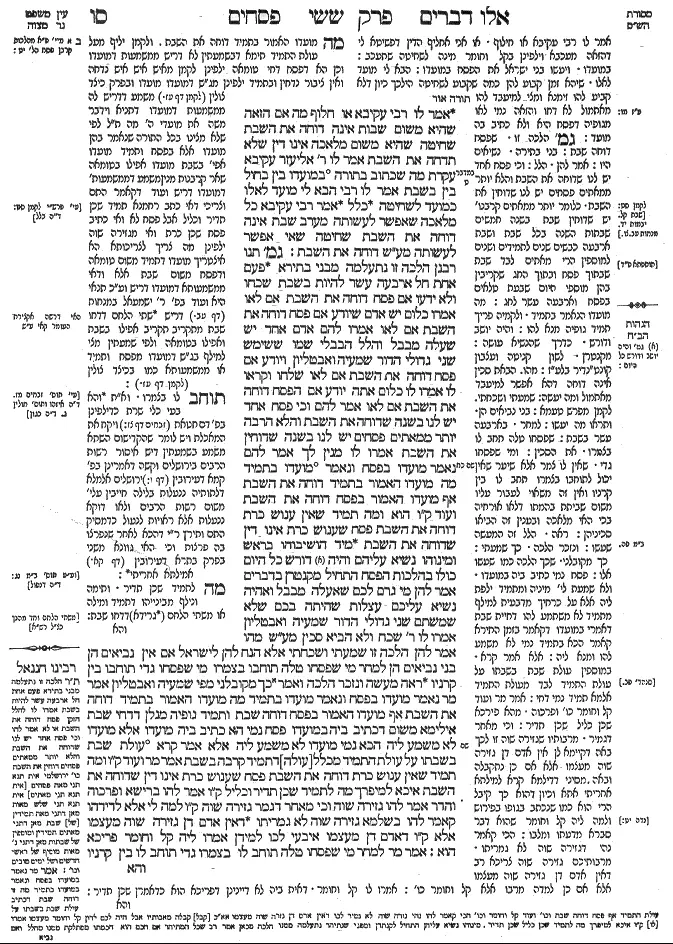
Pesahim 66a - Guemara
אמר לו רבי עקיבא או חלוף מה אם הזאה שהיא משום שבות אינה דוחה את השבת שחיטה שהיא משום מלאכה אינו דין שלא תדחה את השבת אמר לו ר' אליעזר עקיבא עקרת מה שכתוב בתורה (במדבר ט, ב) במועדו בין בחול בין בשבת אמר לו רבי הבא לי מועד לאלו כמועד לשחיטה כלל אמר רבי עקיבא כל מלאכה שאפשר לעשותה מערב שבת אינה דוחה את השבת שחיטה שאי אפשר לעשותה מע"ש דוחה את השבת:
גמ׳ תנו רבנן הלכה זו נתעלמה מבני בתירא פעם אחת חל ארבעה עשר להיות בשבת שכחו ולא ידעו אם פסח דוחה את השבת אם לאו אמרו כלום יש אדם שיודע אם פסח דוחה את השבת אם לאו אמרו להם אדם אחד יש שעלה מבבל והלל הבבלי שמו ששימש שני גדולי הדור שמעיה ואבטליון ויודע אם פסח דוחה את השבת אם לאו שלחו וקראו לו אמרו לו כלום אתה יודע אם הפסח דוחה את השבת אם לאו אמר להם וכי פסח אחד יש לנו בשנה שדוחה את השבת והלא הרבה יותר ממאתים פסחים יש לנו בשנה שדוחין את השבת אמרו לו מנין לך אמר להם נאמר מועדו בפסח ונאמר (במדבר כח, ב) מועדו בתמיד מה מועדו האמור בתמיד דוחה את השבת אף מועדו האמור בפסח דוחה את השבת ועוד ק"ו הוא ומה תמיד שאין ענוש כרת דוחה את השבת פסח שענוש כרת אינו דין שדוחה את השבת מיד הושיבוהו בראש ומינוהו נשיא עליהם והיה דורש כל היום כולו בהלכות הפסח התחיל מקנטרן בדברים אמר להן מי גרם לכם שאעלה מבבל ואהיה נשיא עליכם עצלות שהיתה בכם שלא שמשתם שני גדולי הדור שמעיה ואבטליון אמרו לו ר' שכח ולא הביא סכין מע"ש מהו אמר להן הלכה זו שמעתי ושכחתי אלא הנח להן לישראל אם אין נביאים הן בני נביאים הן למחר מי שפסחו טלה תוחבו בצמרו מי שפסחו גדי תוחבו בין קרניו ראה מעשה ונזכר הלכה ואמר כך מקובלני מפי שמעיה ואבטליון אמר מר נאמר מועדו בפסח ונאמר מועדו בתמיד מה מועדו האמור בתמיד דוחה את השבת אף מועדו האמור בפסח דוחה שבת ותמיד גופיה מנלן דדחי שבת אילימא משום דכתיב ביה במועדו פסח נמי הא כתיב ביה מועדו אלא מועדו לא משמע ליה הכא נמי מועדו לא משמע ליה אלא אמר קרא (במדבר כח, י) עולת שבת בשבתו על עולת התמיד מכלל [עולה] דתמיד קרבה בשבת אמר מר ועוד ק"ו ומה תמיד שאין ענוש כרת דוחה את השבת פסח שענוש כרת אינו דין שדוחה את השבת איכא למיפרך מה לתמיד שכן תדיר וכליל ק"ו אמר להו ברישא ופרכוה והדר אמר להו גזירה שוה וכי מאחר דגמר גזירה שוה ק"ו למה לי אלא לדידהו קאמר להו בשלמא גזירה שוה לא גמריתו דאין אדם דן גזירה שוה מעצמו אלא ק"ו דאדם דן מעצמו איבעי לכו למידן אמרו ליה קל וחומר פריכא הוא:
אמר מר למחר מי שפסחו טלה תוחב לו בצמרו גדי תוחב לו בין קרניו
Comments from Rashi on Masechet Pesahim Page 66a
אמר לו רבי עקיבא או חילוף . או אני אחליף הדין דפשיטא לי דהזאה מעכבא וילפינן בקל וחומר מינה לשחיטה שתעכב: במועדו . ויעשו בני ישראל את הפסח במועדו: הבא לי מועד לאלו . שיהא זמן קבוע להן כמה שקבוע לשחיטה הילכך כיון דלא קביע להו זימנא ומצי למיעבד להו מאתמול לא דחו והזאה נמי לאו מגופיה דפסח היא ולא כתיב בה מועד: גמ' הלכה זו . שפסח דוחה שבת: בני בתירה . נשיאים היו: הכי קאמר נהי דגזירה שוה לא גמריתו . מרבותיכם גזירה שוה צריכא רב דאין אדם דן גזירה שוה מעצמו אלא אם כן למדה מרבו אלא קל וחומר כו': אמרו לו קל וחומר . דאית ביה לא דיינינן דפריכא הוא כדאמרן שכן תדיר: אמר להן . הלל: וכי פסח אחד יש לנו שדוחה את השבת והלא יותר ממאתים פסחים יש לנו שדוחין את השבת . כלומר יותר ממאתים קרבנו' יש שדוחין שבת בשנה חמשים שבתות השנה בכל שבת ושבת ארבעה כבשים שנים לתמידים ושנים למוספין הרי מאתים לבד שבת שבתוך פסח ובתוך החג שקריבין בהן מוספי היום שבעת טלאים בפסח וארבעה עשר לחג: וכי פסח אחד יש לנו שדוחה את השבת והלא יותר ממאתים פסחים יש לנו שדוחין את השבת . כלומר יותר ממאתים קרבנו' יש שדוחין שבת בשנה חמשים שבתות השנה בכל שבת ושבת ארבעה כבשים שנים לתמידים ושנים למוספין הרי מאתים לבד שבת שבתוך פסח ובתוך החג שקריבין בהן מוספי היום שבעת טלאים בפסח וארבעה עשר לחג: מה מועדו הנאמר בתמיד . ולקמיה פריך תמיד גופיה מנא להו: והיה יושב ודורש . כדרך שהנשיא עושה: מקנטרן . לשון קניטה ועצבון קונטנדי"ר (קונטרריי"ר: להעליב) בלע"ז: מהו . הבאת סכין אינה דוחה דהא אפשר למיעבד מאתמול ומה יעשה: שמעתי ושכחתי . לקמן מפרש טעמא: בני נביאים הן . ותראו מה יעשו: למחר . בארבעה עשר בשבת: שפסחו טלה תחב לו בצמרו . את הסכין: ומי שפסחו גדי . שאין לו צמר אלא שיער שאין יכול לתוחבו בצמרו תחב לו בין קרניו ואין זה משאוי לעבור עליו משום שביתת בהמתו דלאו אורחיה בכי האי מלאכה ובענין זה הביאו סכיניהן: ראה . הלל זה המעשה שעשו: ונזכר הלכה . כך שמעתי: כך מקובלני . שכך הלכה כמו שעשו אלו: פסח נמי כתיב ביה במועדו . ולא שמעת לי' מיניה ומתמיד ילפת ליה אלא על כרחיך מדבעית למילף מתמיד לא משתמע להו דחיית שבת דאמרי במועדו דקאמר בזמן התירא קאמר הכא בתמיד נמי לא משמע להו ומנא ליה: אלא אמר קרא . במוספין עולת שבת בשבתו על עולת התמיד לבד מעולת התמיד אלמא תמיד נמי דחי: אמר מר ועוד קל וחומר כו' ופרכוה . מהא פירכא שכן כליל שכן תדיר: וכי מאחר דגמיר . מרבותיו שגזירה שוה זו לכך באה דקיימא לן אין אדם דן גזירה שוה מעצמו אלא אם כן נתקבלה ובאה מסיני דדילמא קרא למילתא אחריתי אתא וכיון דהוא כך קיבל הרי הוא כמו שנכתב בגופו בפירוש ולמה ליה קל וחומר שהוא דבר סברא מדעתו ומלבו: הכי קאמר נהי דגזירה שוה לא גמריתו . מרבותיכם גזירה שוה צריכא רב דאין אדם דן גזירה שוה מעצמו אלא אם כן למדה מרבו אלא קל וחומר כו': אמרו לו קל וחומר . דאית ביה לא דיינינן דפריכא הוא כדאמרן שכן תדיר:
Comments from Tosafot - Pesahim 66a
מה מועדו האמור בתמיד דוחה את השבת . ולקמן יליף מעל עולת התמיד תימא דבשמעתין לא דריש ממשמעות דמועדו וכן הא דפסח דחי טומאה ילפינן לקמן מאיש איש איש נדחה ואין ציבור נדחין ובתמיד ילפינן מג"ש דמועדו מועדו ובפרק כיצד צולין (לקמן פסחים דף עז.) משמע דדריש לה ממשמעות דמועדו דתניא וידבר משה את מועדי ה' מה ת"ל לפי שלא מצינו בכל התורה שנאמר בהן מועדו אלא בפסח ותמיד מועדו אפי' בשבת מועדו אפילו בטומאה שאר קרבנות מנין משמע דממשמעות' דמועדו דריש ועוד דקאמר התם וצריכי דאי כתב רחמנא תמיד שכן תדיר וכליל אבל פסח לא ואי כתיב פסח שכן כרת ואי מגזירה שוה ילפינן מה צריך לצריכותא הא איצטריך מועדו דתמיד משום טומאה ודפסח משום שבת אלא ודאי ממשמעותא דמועדו דריש וע"כ תנאי היא ועוד בפ' ר' ישמעאל במנחות (דף עב.) דריש שתי הלחם דדחו שבת מתקריב תקריב אפילו בשבת ואפילו בטומאה ולפי שמעתין מצי למילף בג"ש דמועדו מפסח ותמיד או ממשמעותא כמו בכיצד צולין (לקמן פסחים דף עז.): מה לתמיד שכן תדיר . ותימה ונילף מבינייהו דתמיד ומילה או משתי הלחם (גרידא) דדחו שבת: תוחב לו בצמרו . וא"ת והא בעי כלי שרת כדילפינן בפ' דם חטאת (זבחים דף צז:) ויקח את המאכלת ויש לומר שהקדישום השתא משמע בשמעתין דיש איסור רשות הרבים בירושלים וקשה דאמרינן בפ' קמא דעירובין (דף ו:) ירושלים אלמלא דלתותיה ננעלות בלילה חייבין עלי' משום רשות הרבים ולאו דוקא ננעלות אלא ראויות לנעול כדמסיק התם ותירץ ר"י דהכא לאחר שנפרצו בה פרצות וכי האי גוונא משני בפרק בתרא דעירובין (דף קא) אמילתא אחריתי:
Pesahim 66a - Mishnah translated into english
Rabbi Akiva said to Rabbi Eliezer: Or perhaps we can reverse the order of your argument and say the opposite: If, as we know by accepted tradition, sprinkling the purifying water on Shabbat, which is prohibited only due to rabbinic decree, does not override Shabbat, then with regard to slaughter, which is prohibited as a biblically prohibited labor, is it not right that it should not override Shabbat? Therefore, it should be prohibited to slaughter the Paschal lamb when the eve of Passover occurs on Shabbat. Rabbi Eliezer said to him: Akiva, how can you say this? You have thus uprooted what is written in the Torah: “Let the children of Israel offer the Paschal lamb in its appointed time” (Numbers 9:2); the phrase “at its appointed time” indicates that the offering must be brought on that day, whether it is a weekday or Shabbat.
Rabbi Akiva said to Rabbi Eliezer: My teacher, bring me an appointed time stated in the Torah for these tasks, namely, carrying the animal or bringing it from outside the Shabbat limits, like the appointed time stated with respect to slaughter. The Paschal lamb must be slaughtered on the fourteenth of Nisan, but there is no fixed time when the animal must be brought to the Temple, and it is therefore possible to transport it before Shabbat. Rabbi Akiva stated a principle: Any prohibited labor required for the offering of the sacrifice that can be performed on the eve of Shabbat does not override Shabbat; slaughter, which cannot be performed on the eve of Shabbat, overrides Shabbat.
GEMARA: The Sages taught a baraita with regard to the basic halakha governing the eve of Passover that occurs on Shabbat: This law was forgotten by the sons of Beteira, who were the leaders of their generation. The fourteenth of Nisan once occurred on Shabbat, and they forgot and did not know whether the Paschal lamb overrides Shabbat or not. They said: Is there any person who knows whether the Paschal lamb overrides Shabbat or not? They said to them: There is a certain man in Jerusalem who came up from Babylonia, and Hillel the Babylonian is his name. At one point, he served the two most eminent scholars of the generation, Shemaya and Avtalyon, and he certainly knows whether the Paschal lamb overrides Shabbat or not. The sons of Beteira sent messengers and called for him. They said to him: Do you know whether the Paschal lamb overrides Shabbat or not? He said to them: Have we but one Paschal lamb during the year that overrides Shabbat? Do we not have many more than two hundred Paschal lambs, i.e., sacrifices, during the year that override Shabbat?
They said to him: From where do you know this? He said to them: “Its appointed time” is stated with regard to the Paschal lamb and “its appointed time” is also stated with regard to the daily offering, for the verse says: “Command the children of Israel and say to them, My offering, the provision of My sacrifice made with fire, for a sweet savor to Me, shall you observe to offer Me at its appointed time” (Numbers 28:2). From here we learn that the daily offering is brought even on Shabbat. Thus, the daily morning and afternoon offerings are brought on more than fifty Shabbatot over the course of the year, and two sheep are offered every Shabbat as additional offerings, for a total of more than two hundred sacrifices a year that override Shabbat. Just as the expression “its appointed time,” which is stated with regard to the daily offering, indicates that it overrides Shabbat, so too “its appointed time,” which is stated with regard to the Paschal lamb, indicates that it overrides Shabbat.
And furthermore, it is an a fortiori inference: If the daily offering, the neglect of which is not punishable by karet, overrides Shabbat, is it not right that the Paschal lamb, the neglect of which is punishable by karet, should override Shabbat?
After Hillel brought these proofs, they immediately seated him at the head and appointed him Nasi over them, and he expounded the laws of Passover that entire day. In the course of his teaching, he began rebuking them [mekanteran] them with words. He said to them: What caused this to happen to you, that I should come up from Babylonia and become Nasi over you? It was the laziness in you that you did not serve the two most eminent scholars of the generation living in Eretz Yisrael, Shemaya and Avtalyon.
They said to Hillel: Our teacher, if one forgot and did not bring a knife on the eve of Shabbat and cannot slaughter his Paschal lamb, what is the law? Since he could have brought the knife before Shabbat, he cannot bring it on Shabbat; but what should he do in this situation? He said to them: I once heard this halakha from my teachers but I have forgotten it. But leave it to the Jewish people; if they are not prophets to whom God has revealed His secrets, they are the sons of prophets, and will certainly do the right thing on their own.
The next day, on Shabbat that was the eve of Passover, one whose Paschal offering was a lamb took the knife and stuck it in its wool; and one whose Paschal offering was a goat, which does not have wool, stuck it between its horns. Hillel saw the incident and remembered the halakha that he had once learned and said: This is the tradition I received from the mouths of Shemaya and Avtalyon, meaning that this is in fact the proper course of action. This concludes the text of the baraita and the Gemara will begin to elucidate it.
The Master said above: “Its appointed time” is stated with regard to the Paschal lamb and “its appointed time” is stated with regard to the daily offering. Just as “its appointed time,” which is stated with regard to the daily offering, indicates that it overrides Shabbat, so too “its appointed time,” which is stated with regard to the Paschal lamb, indicates that it overrides Shabbat. And from where do we derive that the daily offering itself overrides Shabbat? If we say because “in its appointed time” is written in its regard, “in its appointed time” is also written with regard to the Paschal lamb. Were it possible to derive from this expression that the sacrifice is offered even on Shabbat, it would not be necessary to derive the law governing the Paschal lamb from a verbal analogy between the daily offering and the Paschal lamb.
Rather, you must conclude that the expression “its appointed time,” which is stated with regard to the Paschal lamb, does not indicate to Hillel that the Torah was so particular about the timing of the Paschal lamb that its slaughter overrides Shabbat. Here too, with regard to the daily offering, you must say that “its appointed time” does not indicate to him that it is brought on Shabbat, and so this expression is not the source of this law. Rather, the law is derived from the verse that states: “The burnt-offering of Shabbat on its Shabbat, beside the continual burnt-offering and its libation” (Numbers 28:10), from which it may be inferred that the daily burnt-offering is brought even on Shabbat.
The Gemara raises another question: The Master said in that same baraita: And furthermore, it is an a fortiori inference: If the daily offering, the neglect of which is not punishable by karet, overrides Shabbat, is it not right that the Paschal lamb, the neglect of which is punishable by karet, should override Shabbat? The Gemara points out that there is room to refute the logic of this argument: What is unique about the daily offering that enables it to override Shabbat? That it is frequent, and something that is frequent always takes precedence; and also that it is totally consumed on the altar, unlike the Paschal lamb, most of which is eaten by human beings. The Gemara explains that this is what happened: Hillel first told them the a fortiori inference, but they refuted it and proved that it was not reliable, as explained above; and then he told them the verbal analogy, and a verbal analogy is based on an oral tradition originating from Moses at Sinai and must be accepted.
The Gemara asks: But since Hillel learned this verbal analogy from his teachers, why do I need an a fortiori inference? Why did he add a logical argument of his own if he had an explicit verbal tradition that this was the halakha? The Gemara answers: Rather, he said it for them, to show that they had not sufficiently exerted themselves in clarifying this halakha: Granted, you did not learn the verbal analogy on your own, because you acted according to the principle that one may not expound a verbal analogy on one’s own. Since there is no limit to the laws that one can extract using this method of derivation, such a derivation is only legitimate if it has been transmitted as part of the oral tradition, and apparently they did not learn this verbal analogy from their teachers. But an a fortiori inference, which one can derive on one’s own, you should have derived and you would then have known how to resolve this question. They said to him: It is a faulty a fortiori inference, as we have shown that it can be easily refuted.
The Master said further in the baraita: The next day, one whose Paschal offering was a lamb stuck the knife in its wool, and one whose Paschal offering was a goat stuck it between its horns so as to avoid carrying the knife on Shabbat.
Traduction : The William Davidson digital edition of the Koren Noé Talmud, with commentary by Rabbi Adin Even-Israel Steinsaltz.