 Talmud Bavli
Pesahim 112a : Youtube
Daf TubeYoutube
3 video classes :
Pesahim Page 112a
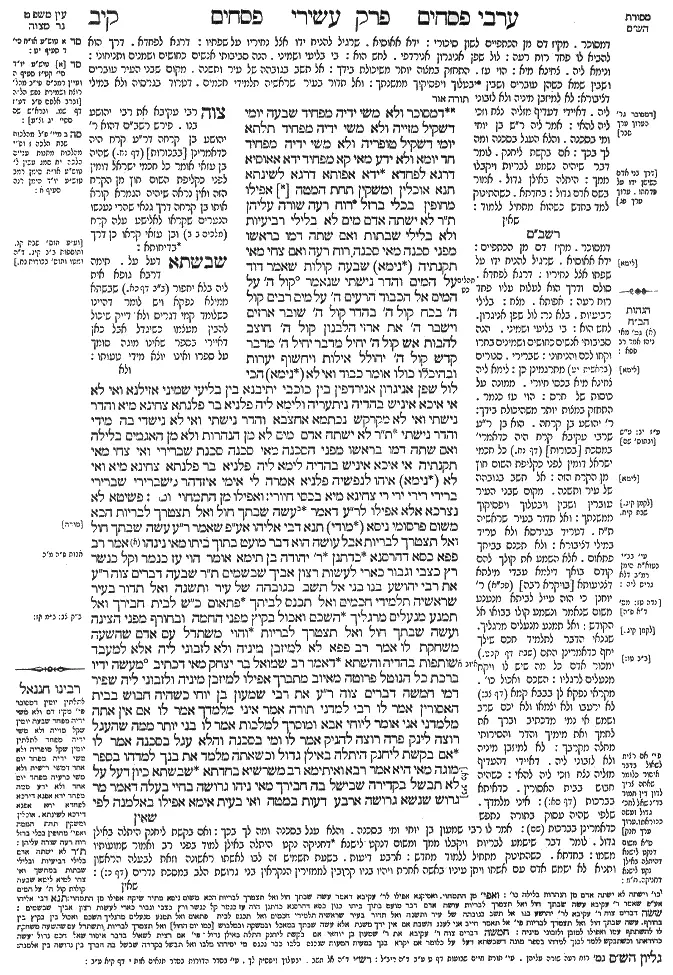
Pesahim 112a - Guemara
דמסוכר ולא משי ידיה מפחיד שבעה יומי דשקיל מזייה ולא משי ידיה מפחיד תלתא יומי דשקיל טופריה ולא משי ידיה מפחיד חד יומא ולא ידע מאי קא מפחיד ידא אאוסיא דרגא לפחדא ידא אפותא דרגא לשינתא תנא אוכלין ומשקין תחת המטה אפילו מחופין בכלי ברזל רוח רעה שורה עליהן ת"ר לא ישתה אדם מים לא בלילי רביעיות ולא בלילי שבתות ואם שתה דמו בראשו מפני סכנה מאי סכנה רוח רעה ואם צחי מאי תקנתיה (נימא) שבעה קולות שאמר דוד על המים והדר נישתי שנאמר (תהלים כט, ג) קול ה' על המים אל הכבוד הרעים ה' על מים רבים קול ה' בכח קול ה' בהדר קול ה' שובר ארזים וישבר ה' את ארזי הלבנון קול ה' חוצב להבות אש קול ה' יחיל מדבר יחיל ה' מדבר קדש קול ה' יחולל אילות ויחשוף יערות ובהיכלו כולו אומר כבוד ואי לא (נימא) הכי לול שפן אניגרון אנירדפין בין כוכבי יתיבנא בין בליעי שמיני אזילנא ואי לא אי איכא איניש בהדיה ניתעריה ולימא ליה פלניא בר פלנתא צחינא מיא והדר נישתי ואי לא מקרקש נכתמא אחצבא והדר נישתי ואי לא נישדי בה מידי והדר נישתי ת"ר לא ישתה אדם מים לא מן הנהרות ולא מן האגמים בלילה ואם שתה דמו בראשו מפני הסכנה מאי סכנה סכנת שברירי ואי צחי מאי תקנתיה אי איכא איניש בהדיה לימא ליה פלניא בר פלנתא צחינא מיא ואי לא (נימא) איהו לנפשיה פלניא אמרה לי אימי איזדהר משברירי שברירי ברירי רירי ירי רי צחינא מיא בכסי חיורי:
ואפילו מן התמחוי וכו':
פשיטא לא נצרכא אלא אפילו לר"ע דאמר עשה שבתך חול ואל תצטרך לבריות הכא משום פרסומי ניסא (מודי) תנא דבי אליהו אע"פ שאמר ר"ע עשה שבתך חול ואל תצטרך לבריות אבל עושה הוא דבר מועט בתוך ביתו מאי נינהו אמר רב פפא כסא דהרסנא כדתנן ר' יהודה בן תימא אומר הוי עז כנמר וקל כנשר רץ כצבי וגבור כארי לעשות רצון אביך שבשמים ת"ר שבעה דברים צוה ר"ע את רבי יהושע בנו בני אל תשב בגובהה של עיר ותשנה ואל תדור בעיר שראשיה תלמידי חכמים ואל תכנס לביתך פתאום כ"ש לבית חבירך ואל תמנע מנעלים מרגליך השכם ואכול בקיץ מפני החמה ובחורף מפני הצינה ועשה שבתך חול ואל תצטרך לבריות והוי משתדל עם אדם שהשעה משחקת לו אמר רב פפא לא למיזבן מיניה ולא לזבוני ליה אלא למעבד שותפות בהדיה והשתא דאמר רב שמואל בר יצחק מאי דכתיב (איוב א, י) מעשה ידיו ברכת כל הנוטל פרוטה מאיוב מתברך אפילו למיזבן מיניה ולזבוני ליה שפיר דמי חמשה דברים צוה ר"ע את רבי שמעון בן יוחי כשהיה חבוש בבית האסורין אמר לו רבי למדני תורה אמר איני מלמדך אמר לו אם אין אתה מלמדני אני אומר ליוחי אבא ומוסרך למלכות אמר לו בני יותר ממה שהעגל רוצה לינק פרה רוצה להניק אמר לו ומי בסכנה והלא עגל בסכנה אמר לו אם בקשת ליחנק היתלה באילן גדול וכשאתה מלמד את בנך למדהו בספר מוגה מאי היא אמר רבא ואיתימא רב משרשיא בחדתא שבשתא כיון דעל על לא תבשל בקדירה שבישל בה חבירך מאי ניהו גרושה בחיי בעלה דאמר מר גרוש שנשא גרושה ארבע דעות במטה ואי בעית אימא אפילו באלמנה לפי
Comments from Rashi on Masechet Pesahim Page 112a
דמסוכר . מקיז דם מן הכתפיים לשון סיכורי: ידא אאוסיא . שרגיל להניח ידו אצל נחיריו על שפתיו: דרגא לפחדא . דרך הוא להביא לו פחד רוח רעה: לול שפן אניגרון אנירדפי . לחש הוא: בי בליעי ושמיני . הנה סביבותי אנשים כחושים ושמנים ותניחוני: ונימא ליה . צחינא מיא: הוי עז . התחזק במצוה יותר משיכולת בידך: אל תשב בגובהה של עיר ותשנה . מקום שבני העיר עוברים ושבין שמא כשהן עוברין ושבין יבטלוך ויפסיקוך ממשנתך: ואל תדור בעיר שראשיה תלמידי חכמים . דטרוד בגרסיה ולא במילי דציבורא: לא למיזבן מיניה ולא לזבוני ליה . דאיידי דעדיף מזליה נצח וזכי ליה להאי: אמר ליה ר"ש בן יוחי ומי בסכנה . והלא העגל בסכנה ומה לך בכך: אם בקשת ליחנק . לומר דבר שיהיה נשמע לבריות ויקבלו ממך: היתלה באילן גדול . אמור בשם אדם גדול: בחדתא . כשהתינוק למד בחדש כשהוא מתחיל ללמוד:
Comments from Rashbam - Pesahim 112a
דמסוכר . מקיז דם מן הכתפיים: ידא אאוסיא . שרגיל להניח ידו על שפתו אצל נחיריו: דרגא לפחדא . סולם ודרך הוא לעלות עליו פחד רוח רעה: אפותא . מצח: בלילי רביעיות . בלא נר: לול שפן אניגרון . לחש הוא: בי בליעי ושמיני . הנה סביבותי אנשים כחושים ושמינים בחרו וקחו לכם והניחוני: לימא ליה צחינא מיא בכסי חיורי . ממונה על כוסות של חרס: שברירי . סנורים (בראשית יט) מתרגמינן כן: ר' יהושע בן קרחה . הוא בן ר''ע שרבי עקיבא קרח היה כדאמרי' במסכת [בכורות] (דף נח.) כל חכמי ישראל דומין לפני כקליפת השום חוץ מן הקרח הזה: הוי עז כנמר . התחזק במצות יותר משהיכולת בידך: אל תשב בגובהה של עיר ותשנה . מקום שבני העיר עוברין ושבין ויבטלוך ויפסיקוך ממשנתך: ואל תדור בעיר שראשיה ת''ח . דטריד בגירסא ולא טריד במילי דציבורא: ולא תכנס בביתך פתאום . אלא השמע את קולך להם קודם בואך דילמא עבדי מילתא דצניעותא [בויקרא רבה] (פכ''א) ר' יוחנן כי הוה עייל לביתא מנענע משום שנאמר ונשמע קולו בבואו אל הקודש: ואל תמנע מנעלים מרגליך . שגנאי הדבר לתלמיד חכם שילך יחף כדאמרינן התם (שבת דף קכט.) ימכור אדם כל מה שיש לו ויקח מנעלים לרגליו: השכם ואכול כו' . מקראי נפקא לן בבא קמא (דף צב:) לא ירעבו ולא יצמאו ולא יכם שרב ושמש אי נמי מדכתיב וברך את לחמך ואת מימיך והדר והסירותי מחלה מקרבך: לא למיזבן מיניה ולא לזבוני ליה . דאיידי דהעדיף מזליה נצח וזכי ליה להאי: כשהיה חבוש בבית האסורין . כדאיתא בברכות (דף סא:): איני מלמדך . שלפי שהיה עסוק בתורה נתפש כדאמרינן בברכות (שם): אמר לו רבי שמעון בן יוחי ומי בסכנה . והלא עגל בסכנה ומה לך בכך ואם בקשת ליחנק היתלה באילן גדול . לומר דבר שישמע לבריות ויקבלו ממך ומשום דנקט לישנא דחניקה נקט היתלה באילן למוד בפני רב ואמור שמועותיו משמו: בחדתא . כשהתינוק מתחיל ללמוד מחדש: ארבע דיעות . בשעת תשמיש זה לבו לאשתו ראשונה וזאת לבעלה הראשון ותניא לא ישמש אדם עם אשתו ויתן עיניו באשה אחרת ויהיו בניו קרובין לממזירין הנקראין בני גרושת הלב במסכת נדרים (דף כ:):
Comments from Tosafot - Pesahim 112a
צוה רבי עקיבא את רבי יהושע בנו . פירש רשב"ם דהוא ר' יהושע בן קרחה דר"ע קרח היה כדאמרינן [בבכורות] (דף נח.) שהיה בן עזאי אומר כל חכמי ישראל דומין לפני כקליפת השום חוץ מן הקרח הזה ואין נראה שיהיה הגמרא קורא אותו בן קרחה דרך גנאי שהרי נענשו הנערים שקראו לאלישע עלה קרח (מלכים ב ב) ובן עזאי קראו כן דרך בדיחותא: שבשתא דעל על . תימה דרבא גופא אית ליה בלא יחפור (ב"ב דף כא.) שבשתא ממילא נפקא ויש לומר דהיינו כשלומד קמי דגריס ולא דייק שיכול להבין מעצמו כשיגדל אבל כאן דאיירי בספר שאינו מוגה סומך על ספרו ואינו יוצא מידי טעותו:
Pesahim 112a - Mishnah translated into english
One who lets blood and does not wash his hands will be afraid for seven days. One who cuts his hair and does not wash his hands will be afraid for three days. One who cuts his nails and does not wash his hands will be afraid for one day, and he will not know what is frightening him. Placing one’s hand on his nostrils is a way to become afraid. Placing one’s hand on his forehead is a way to fall asleep.
A Sage taught: If food and drink are under one’s bed, even if they are covered with iron vessels, an evil spirit rests upon them. The Sages taught: A person should not drink water on Tuesday nights or on Shabbat nights, i.e., Friday nights. And if he drinks water, his blood is upon his own head, due to the danger. The Gemara asks: What is this danger? The Gemara answers: The danger of the evil spirit that rules on these days.
The Gemara asks: And if he is thirsty, what is his remedy? What should he drink? The Gemara answers: He should say the seven voices that David said over the water, and afterward he may drink. As it is stated: “The voice of the Lord is upon the waters; God of glory thunders, even the Lord upon many waters. The voice of the Lord is powerful; the voice of the Lord is full of majesty. The voice of the Lord breaks the cedars; the Lord breaks in pieces the cedars of Lebanon. He makes them also skip like a calf; Lebanon and Sirion like a young wild ox. The voice of the Lord hews out flames of fire. The voice of the Lord shakes the wilderness; the Lord shakes the wilderness of Kadesh. The voice of the Lord makes the hinds to calve, and strips the forests bare; and in His temple all say: Glory” (Psalms 29:3–9).
And if he does not remember that verse, he should say as follows: Lul, Shafan, Anigron, Anirdafin, which are names of demons, I sit between the stars, I walk between thin and fat people, take any of them if you wish but leave me alone. And if he does not recall this incantation, if there is another person with him, he should wake him and say to him: So-and-so, son of so-and-so, I thirst for water; and then he may drink. And if there is no other person with him, he should knock the cover on the cup and then drink. And if he is not able to do this, he should throw some object in it and then drink.
The Sages taught: A person should not drink water from rivers or from ponds at night. And if he drank, his blood is upon his own head due to the danger. The Gemara explains: What is this danger? The danger of blindness. The Gemara asks: And if he is thirsty, what is his remedy? If there is another person with him, he should say to him: So-and-so, son of so-and-so, I thirst for water. And if there is no one else with him, he should say to himself: So-and-so, my mother said to me to beware of shavrirei, the demon of blindness. He should continue to say the following incantation, in the first part of which the demon’s name gradually disappears: Shavrirei berirei rirei yiri ri; I thirst for water in white earthenware cups. This is an incantation against those demons.
The Gemara returns to the statement of the mishna that on Passover one must drink no less than four cups of wine: And this halakha applies even if the poor person accepts funds from the charity plate. The Gemara asks: It is obvious that this is the case. If there is a mitzva to drink these four cups, they must be provided for him.
The Gemara answers: The mishna is necessary only to teach that this halakha applies even according to the opinion of Rabbi Akiva, who said: Make your Shabbat like an ordinary weekday and do not be beholden to other beings. If one is unable to honor Shabbat without financial help from others, it is better for him to save money and eat his Shabbat meals as he would on a weekday rather than rely on other people. Here, in the case of the four cups, Rabbi Akiva concedes that it is appropriate for a poor person to request assistance from the community, due to the obligation to publicize the miracle.
With regard to this issue, the school of Eliyahu taught that although Rabbi Akiva said: Make your Shabbat like a weekday and do not be beholden to other beings; however, one should nevertheless perform some small alteration in his house to distinguish Shabbat from a weekday. The Gemara asks: What is this alteration? Rav Pappa said: For example, one should serve small, fried fish. As we learned in a mishna: Rabbi Yehuda ben Teima says: Be bold like a leopard, light like an eagle, run like a deer, and be strong like a lion to perform the will of your Father in Heaven. This statement teaches that one should exert every effort to perform a mitzva.
The Gemara cites the full source of Rabbi’s Akiva statement with regard to Shabbat preparations. The Sages taught: Rabbi Akiva commanded Rabbi Yehoshua, his son, about seven matters: My son, do not sit at the high point of a city, where many people pass, and study there, as the passersby will interrupt you. And do not live in a city whose leaders are Torah scholars, as they are too busy studying to govern properly.
Rabbi Akiva continued: And do not enter your house suddenly, without knocking first; all the more so do not enter the house of another, as he might not be ready to receive you. And do not withhold shoes from your feet, as it is disgraceful to go barefoot. Wake up and eat, in the summer due to the heat, as it is best to eat before it grows hot, and in the winter due to the strength you will need to tolerate the cold. And make your Shabbat like a weekday and do not be beholden to other beings. And exert yourself to join together with a person upon whom the hour smiles, i.e., a successful person.
Rav Pappa said in explanation of this last statement: Do not buy from him and do not sell to him. If he is the beneficiary of good fortune, he will profit from any business transaction and you will suffer from it. Rather, form a partnership with him. And now we have heard that Rav Shmuel bar Yitzḥak said: What is the meaning of that which is written: “You have blessed the work of his hands” (Job 1:10)? This means that anyone who took a peruta from Job would be blessed, even if he received it via a business transaction. This shows that one should engage in business with a person who is blessed, for even if he wishes to buy from him or to sell to him it is well, i.e., he will share in the good fortune of the other.
The Gemara continues to cite similar advice dispensed by Rabbi Akiva. Rabbi Akiva commanded Rabbi Shimon ben Yoḥai to do five matters when Rabbi Akiva was imprisoned. Beforehand, Rabbi Shimon said to him: Rabbi, teach me Torah. Rabbi Akiva said to him: I will not teach you, as it is dangerous to do so at the present time. Rabbi Shimon said to him in jest: If you will not teach me, I will tell Yoḥai my father, and he will turn you over to the government. In other words, I have no means of persuading you; you are already in prison. Rabbi Akiva said: My son, know that more than the calf wishes to suck, the cow wants to suckle, but I am afraid of the danger. Rabbi Shimon said to him: And who is in danger? Isn’t the calf in danger, as you are in jail and I am the one at risk?
Rabbi Akiva said to him: If so, I will tell you a few matters. First of all, if you wish to strangle yourself, hang yourself on a tall tree. This proverb means that if one wants others to accept what he has to say, he should attribute his statement to a great man. And when you teach your son, teach him from a corrected text. The Gemara asks: What is the meaning of that statement? Rava said, and some say Rav Mesharshiya said: Rabbi Akiva was referring to learning a new topic, for once a mistake enters one’s mind, it has entered there and is difficult to put right.
Rabbi Akiva further told Rabbi Shimon ben Yoḥai: Do not cook in a pot in which your colleague cooked his food. The Gemara asks: What is the meaning of this statement? The Gemara explains: Rabbi Akiva is referring to marrying a divorced woman in the lifetime of her former husband. As the Master said: If a divorced man marries a divorced woman, there are four minds in the bed during intimacy. Each person thinks about his current and former spouse, which verges on illegitimacy. And if you wish, say instead that this advice holds true even with regard to marrying a widow, as
Traduction : The William Davidson digital edition of the Koren Noé Talmud, with commentary by Rabbi Adin Even-Israel Steinsaltz.