 Talmud Bavli
Pesahim 120a : Youtube
Daf TubeYoutube
3 video classes :
Pesahim Page 120a
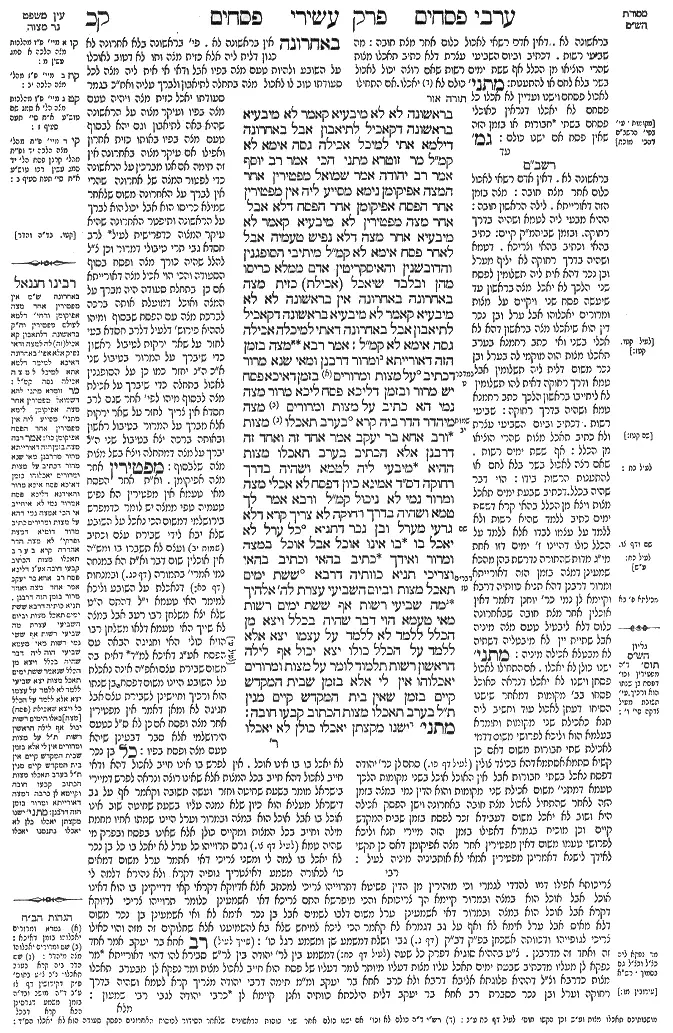
Pesahim 120a - Guemara
בראשונה לא לא מיבעיא קאמר לא מיבעיא בראשונה דקאכיל לתיאבון אבל באחרונה דילמא אתי למיכל אכילה גסה אימא לא קמ"ל מר זוטרא מתני הכי אמר רב יוסף אמר רב יהודה אמר שמואל מפטירין אחר המצה אפיקומן נימא מסייע ליה אין מפטירין אחר הפסח אפיקומן אחר הפסח דלא אבל אחר מצה מפטירין לא מיבעיא קאמר לא מיבעיא אחר מצה דלא נפיש טעמיה אבל לאחר פסח אימא לא קמ"ל מיתיבי הסופגנין והדובשנין והאיסקריטין אדם ממלא כריסו מהן ובלבד שיאכל (אכילת) כזית מצה באחרונה באחרונה אין בראשונה לא לא מיבעיא קאמר לא מיבעיא בראשונה דקאכיל לתיאבון אבל באחרונה דאתי למיכלה אכילה גסה אימא לא קמ"ל:
אמר רבא מצה בזמן הזה דאורייתא ומרור דרבנן ומאי שנא מרור דכתיב (במדבר ט, יא) על מצות ומרורים בזמן דאיכא פסח יש מרור ובזמן דליכא פסח ליכא מרור מצה נמי הא כתיב על מצות ומרורים מצה מיהדר הדר ביה קרא (שמות יב, יח) בערב תאכלו מצות ורב אחא בר יעקב אמר אחד זה ואחד זה דרבנן אלא הכתיב בערב תאכלו מצות ההיא מיבעי ליה לטמא ושהיה בדרך רחוקה דס"ד אמינא כיון דפסח לא אכלי מצה ומרור נמי לא ניכול קמ"ל ורבא אמר לך טמא ושהיה בדרך רחוקה לא צריך קרא דלא גרעי מערל ובן נכר דתניא (שמות יב, מח) כל ערל לא יאכל בו בו אינו אוכל אבל אוכל במצה ומרור ואידך כתיב בהאי וכתיב בהאי וצריכי תניא כוותיה דרבא (דברים טז, ח) ששת ימים תאכל מצות וביום השביעי עצרת לה' אלהיך מה שביעי רשות אף ששת ימים רשות מאי טעמא הוי דבר שהיה בכלל ויצא מן הכלל ללמד לא ללמד על עצמו יצא אלא ללמד על הכלל כולו יצא יכול אף לילה הראשון רשות תלמוד לומר על מצות ומרורים יאכלוהו אין לי אלא בזמן שבית המקדש קיים בזמן שאין בית המקדש קיים מנין ת"ל בערב תאכלו מצות הכתוב קבעו חובה:
מתני׳ ישנו מקצתן יאכלו כולן לא יאכלו
Comments from Rashi on Masechet Pesahim Page 120a
בראשונה לא . דאין אדם רשאי לאכול כלום אחר מצת חובה: מה שביעי רשות . דכתיב וביום השביעי עצרת דלא כתיב תאכלו מצות שהרי הוציאו מן הכלל אף ששת ימים רשות שאם רוצה יכול לאכול בשר בלא לחם או להתענות: מתני' כולם לא יאכלו . אם התחילו לאכול פסחם וישנו ועדיין לא אכלו כל פסחם לא יאכלו דנראין כאוכלי פסחם בשתי חבורות או בזמן הזה שאין פסח אם ישנו כולם:
Comments from Rashbam - Pesahim 120a
בראשונה לא . דאין אדם רשאי לאכול כלום אחר מצת חובה: מצה בזמן הזה דאורייתא . לילה הראשון חובה: ההיא מבעי ליה לטמא ושהיה בדרך רחוקה . ובזמן שביהמ''ק קיים: כתיב בהאי וכתיב בהאי וצריכא . דטמא ושהיה בדרך רחוקה לא יליף מערל ובן נכר דהא אית ליה תשלומין לפסח שני הלכך לא יאכל מצה בראשון עד שיעשה פסח שני ויקיים על מצות ומרורים יאכלוהו אבל ערל ובן נכר דין הוא שיאכלו מצה בראשון דהא לא אכלי בשני ואי כתב רחמנא בערב תאכלו מצות הוה מוקמי לה בערל ובן נכר משום דלית ליה תשלומין אבל טמא ודרך רחוקה דאית להו תשלומין לא ליחייבו בראשון הלכך כתב רחמנא טמא ושהיה בדרך רחוקה: שביעי רשות . דכתיב וביום. השביעי עצרת ולא כתיב תאכל מצות שהרי הוציאו מן הכלל: אף ששת ימים רשות . שאם רצה לאכול בשר בלא לחם או להתענות הרשות בידו: הדי דבר שהיה בכלל . דכתיב שבעת ימים תאכל מצות ויצא מן הכלל בהאי קרא דששת ימים כתיב ללמד שהיא רשות ולא ללמד על עצמו לבדו אלא ללמד על הכלל כולו דהיינו ז' ימים דזו אחת מי''ג מדות שהתורה נדרשת בהן מהכא שמעינן דמצה בזמן הזה דאורייתא ומרור דרבנן דהא תניא כוותיה דרבא וקיימא לן נמי כר' יוחנן דאמר דאין אוכלין אחר מצת חובה שבאחרונה כלום דלא ליבטיל טעם מצה מיניה אבל שתיית יין לא מיבטליה דשתיה לא מבטלא אכילה מיניה: מתני' ישנו כולן לא יאכלו . אם התחילו לאכול פסחן וישנו לא יאכלו דנראה כאוכל פסחו בב' מקומות דמאחר שישנו הסיחו דעתן לאכול עוד וחשיב ליה תנא כאכילת שני מקומות וחומרא בעלמא הוא וליכא לפרושי משום דדמי לאכילת שתי חבורות משום דאם כן קשיא סתמא אסתמא דהא בכיצד צולין (לעיל פסחים דף פו.) סתם לן כר' יהודה דפסח נאכל בשתי חבורות אבל אין האוכל אוכל בשני מקומות הלכך טעמא דמתני' משום אכילת שני מקומות והוא הדין נמי במצה בזמן הזה לאחר שהתחיל לאכול מצת חובה באחרונה וישן הפסק אכילה היא ושוב לא יאכל משום דעבידא זכר לפסח בזמן שבית המקדש קיים וכן מוכיח בגמרא דאפילו בזמן הזה מיירי תנא וליכא לפרושי טעמו משום דאין מפטירין אחר מצה אפיקומן דאם כן תקשי לאידך לישנא דאמרינן מפטירין אמאי לא אותביניה מיניה לעיל:
Comments from Tosafot - Pesahim 120a
באחרונה אין בראשונה לא . פי' בראשונה בלא אחרונה לא כגון דלית ליה אלא כזית מצה ותו לא דטוב לאוכלו על השובע ולהיות טעם מצה בפיו אבל ודאי אי אית ליה מצה לכל סעודתו טוב לו לאכול מצה בתחלה לתיאבון ולברך עליה ואח"כ בגמר סעודתו יאכל כזית מצה ויהיה טעם מצה בפיו ועיקר מצוה על הראשונה שהיא באה לתיאבון וגם יהא לבסוף טעם מצה בפיו באותו כזית אחרון ואפילו אם עיקר מצוה באחרונה אין זה תימה אם אנו מברכין על הראשונה כדי לפטור המצה של אחרונה שהרי אין לברך על האחרונה משום שלאחר שמילא כריסו הוא אבל יכול הוא לברך על הראשונה ותיפטר האחרונה שהיא עיקר המצוה כדפרישית לעיל לרב חסדא גבי תרי טיבולי דמרור וכן צ"ל להלל שהיה כורך מצה ופסח בסוף הסעודה והכי הוי אכיל מצה דאורייתא אם כן בתחלת סעודה היה מברך על המצה ואוכל דמועלת אותה ברכה לברכת מצה עם הפסח שבסוף ומיהו לההיא פירוש' דלעיל דלרב חסדא בעי לחזר על שאר ירקות לטיבול ראשון כדי שיברך על המרור בטיבול שני א"כ ה"נ יחזר כמו כן על הסופגנין לאכול בתחלה כדי שיברך על אכילת מצה לבסוף מיהו לפי' אחר שגם לרב חסדא אין צריך לחזר על שאר ירקות אלא מברך על המרור בטיבול ראשון ובאותה ברכה יצא בטיבול שני ה"נ יברך על מצה דמתחלה ויצא בשל מצות מצה שלבסוף: מפטירין אחר מצה אפיקומן . וא"ת אחר הפסח מאי טעמא אין מפטירין הא נפיש טעמיה טפי ממצה יש לומר כדמפרש בירושלמי דמשום הכי נאכל על השובע שלא יבא לידי שבירת עצם וכתיב (שמות יב) ועצם לא תשברו בו ומש"ה אין אוכלין שום דבר וא"ת הא במנחה נמי אמרי' בתמורה (דף כג.) ובמנחות (דף כא:) דנאכלת על השובע וליכא למימר האי טעמא י"ל דהתם ה"ט שלא יצא משלחן רבו רעב אבל במצה לא שייך האי טעמא דלאו משלחן רבו הויא כולי האי וחגיגה הבאה עם הפסח אע"ג דאיכא למ"ד דאית בה משום שבירת עצם ואפ"ה אינה נאכלת על השובע היינו משום דפסח בן שנתו הוא ורכיך וחיישינן לשבירת עצם אבל חגיגה לא ומאן דאמר אין מפטירין אחר מצה ופסח אם כן לא ס"ל כטעם הירושלמי אלא סבר דבעינן שיהא טעם מצה ופסח בפיו: רב אחא בר יעקב אמר אחד זה ואחד זה מדרבנן . צ"ע בההיא סוגיא דפרק כל שעה (לעיל פסחים דף כח:) דמשמע בין לר' יהודה בין לר"ש סבירא להו דהוי דאורייתא מר נפקא לן מעליו מדכתיב שבעת ימים תאכל עליו מצות דעליו מיותר לומר דעליו של פסח הוא חייב לאכול מצות ומר נפקא לן מבערב תאכלו מצות כדרבא וצ"ל דההיא פלוגתא אליבא דרבא ולא כרב אחא בר יעקב ומ"מ תימה דרבי יהודה מצריך קרא לטמא ושהיה בדרך רחוקה וערל ובן נכר כסברת רב אחא בר יעקב דלית הילכתא כוותיה ואנן קיימא לן כרבי יהודה לגבי רבי שמעון: כל בן נכר לא יאכל בו בו אינו אוכל . אין לפרש בו אינו חייב לאכול דהא ודאי חייב לאכול דהא חייב בכל המצות אלא שאינו רוצה ונראה לפרש דמיירי בישראל מומר בשעת שחיטה וחזר ועשה תשובה וקאמר אף על גב דישראל מעליא הוא כיון שלא נמנה עליו בשעת שחיטה שוב אינו אוכל בו אבל אוכל הוא במצה ובמרור וערל היינו שמתו אחיו מחמת מילה וחייב בכל המצות ומקיים כולן אלא שאינו בפסח ובפרק מי שהיה טמא (לעיל פסחים דף צו.) גרס תרוייהו כל ערל לא יאכל בו כל בן נכר לא יאכל בו למה לי ומשני צריכי דאי אתמר ערל משום דמאיס כו' לכאורה משמע דאיצטריך גופיה דקרא ולא נהירא דלמה לי צריכותא אפילו דמו להדדי לגמרי וכי מזהירין מן הדין פשיטא דתרוייהו צריכי למכתב אלא אדיוקא דקראי קאי דדייקינן בו הוא דאינו אוכל אבל אוכל הוא במצה ובמרור קיימא הך צריכותא והכי מיפרשא התם צריכא דאי אשמעינן כלומר תרוייהו צריכי לדיוקא דקרא אבל אוכל הוא במצה ובמרור דאי אשמעינן ערל משום דלבו לשמים אבל בן נכר אימא לא ואי אשמעינן בן נכר משום דלא מאיס אבל ערל אימא לא ואף על גב דגמרא לא קאמר הכי ליכא למיחש שלא בא להשמיענו אלא שחלוקים זה מזה והוי כאילו צריכי לגופייהו ודכוותה אשכחן בפ"ק דב"ק (דף ג.) גבי ושלח דמשמע שן ומשמע רגל כו':
Pesahim 120a - Mishnah translated into english
However, if one eats matza before these other foods, no, one may not start eating other foods after matza. The mishna apparently supports Rav Yehuda’s opinion. The Gemara rejects this proof: The Tosefta is stated in the style of: Needless to say. Needless to say, one fulfills his obligation if he eats matza before other foods, as he eats it with an appetite. However, if one eats matza after eating other foods, perhaps he will come to eat it in the manner of excessive eating, as he is compelled to eat when he is not hungry. Consequently, you might say that one does not fulfill his obligation if he eats matza after all those other foods. Therefore, the Tosefta teaches us that one may eat matza even after consuming those foods.
This is how Mar Zutra taught this discussion: Rav Yosef said that Rav Yehuda said that Shmuel said: One may conclude after the matza with an afikoman. The Gemara suggests: Let us say that the mishna supports his opinion: One does not conclude after the Paschal lamb with an afikoman. The Gemara infers: It is after the Paschal lamb that one may not conclude with an afikoman; however, after matza one may conclude with an afikoman.
The Gemara rejects this contention: The mishna is stated in the style of: Needless to say. Needless to say, one may not conclude with an afikoman after eating matza, as the taste of matza is slight; however, after the Paschal lamb, one might say that this prohibition does not apply. Therefore, the mishna teaches us that it is prohibited to conclude with an afikoman after the Paschal lamb as well.
The Gemara raises an objection: With regard to unleavened sponge cakes, cakes fried in oil and honey, and honey cakes, a person may fill his stomach with them on Passover night, provided that he eats an olive-bulk of matza after consuming them. The Gemara infers from here that if he eats matza after those cakes, yes, this is permitted; however, if one eats matza before these other foods, no, this is not an acceptable practice.
The Gemara answers: As explained above, the Tosefta is stated in the style of: Needless to say. Needless to say, one fulfills his obligation if he eats matza before other foods, as he eats it with an appetite. However, if he eats matza after eating other foods, when he might come to eat it in the manner of an excessive eating, you might say that one does not fulfill his obligation if he eats matza after all those other foods. Therefore, the Tosefta teaches us that one may eat matza even after consuming those foods.
Rava said: The mitzva of matza nowadays, even after the destruction of the Temple, applies by Torah law; but the mitzva to eat bitter herbs applies by rabbinic law. The Gemara asks: And in what way is the mitzva of bitter herbs different from matza? As it is written, with regard to the Paschal lamb: “They shall eat it with matzot and bitter herbs” (Numbers 9:11), from which it is derived: When there is an obligation to eat the Paschal lamb, there is likewise a mitzva to eat bitter herbs; and when there is no obligation to eat the Paschal lamb, there is also no mitzva to eat bitter herbs.
The Gemara asks: But if so, the same reasoning should apply to matza as well, as it is written: “With matzot and bitter herbs.” The mitzva of matza should also depend on the obligation of the Paschal lamb. The Gemara rejects this contention: The verse repeats the obligation to eat matza, as it states: “In the first month, on the fourteenth day of the month in the evening, you shall eat matzot” (Exodus 12:18). This verse establishes a separate obligation to eat matza, unrelated to the Paschal lamb. And Rav Aḥa bar Ya’akov said: Nowadays, both this, the mitzva to eat matza, and that, the mitzva to eat bitter herbs, apply by rabbinic law, as the Torah obligation to eat these foods is in effect only when the Paschal lamb is sacrificed.
The Gemara challenges: But isn’t it written: “In the evening, you shall eat matzot”? The Gemara answers: Rav Aḥa bar Ya’akov needs that verse for the following halakha: When the Temple was standing, one who was ritually impure or one who was on a distant road was nonetheless obligated to eat matza. As it could enter your mind to say that since these two categories of people do not eat the Paschal lamb on the first Pesaḥ, they also do not eat matza and bitter herbs. According to Rav Aḥa bar Ya’akov, this verse teaches us that even one who was ritually impure and one who was on a distant road are obligated to eat matza and bitter herbs, as these mitzvot do not depend on one’s eligibility to sacrifice the Paschal lamb on the first Pesaḥ.
The Gemara asks: And Rava, who maintains that it is a mitzva from the Torah to eat matza nowadays, how could he respond to that interpretation of the verse? Rava could have said to you: I do not require a special verse to teach that a ritually impure person and a person who was on a distant road are obligated to eat matza. These people are obligated because they are no worse than an uncircumcised man or an alien, i.e., one who does not observe the mitzvot, who are obligated to eat matza despite the fact that they do not sacrifice the Paschal lamb. As it was taught in a baraita: “But no uncircumcised man shall eat from it” (Exodus 12:48). “From it” indicates that he may not eat from the Paschal lamb; however, he does eat matza and bitter herbs. The same is true for anyone else who is prevented from eating the Paschal lamb.
The Gemara asks: And the other, Rav Aḥa bar Ya’akov, how does he respond to this argument? The Gemara answers: According to Rav Aḥa bar Ya’akov, the halakha that one must eat matza and bitter herbs despite being unable to partake of the Paschal lamb was written with regard to this person, an uncircumcised man, and it was written also with regard to that one, a ritually impure person, and both verses are necessary. We cannot learn the halakha of a ritually impure person from that of an uncircumcised man, or vice versa, as is explained in several places.
The Gemara comments: It was taught in a baraita in accordance with the opinion of Rava: “Six days you shall eat matzot, and on the seventh day shall be a solemn assembly to the Lord your God” (Deuteronomy 16:8). Just as eating matza on the seventh day is merely optional, i.e., there is no obligation to eat matza on the last day of Passover, but only to avoid eating leavened bread, as the verse states: “Six days you shall eat matzot,” so too, eating matza during the first six days is optional.
What is the reason that it is optional to eat matza on the first six days of Passover as well as the seventh? The seventh day of Passover is something that was included in a generalization but was explicitly singled out to teach. According to the rules of exegesis, it was intended to teach not just about itself but about the entire generalization. In other words, the seventh day of Passover was initially included in the verse: “You shall eat matzot for seven days” (Exodus 12:15), but was excluded from this generalization by the verse: “Six days you shall eat matzot.” In accordance with the above principle, the halakha of the seventh day applies to all the other days of Passover as well. That means there is no obligation to eat matza for all seven days of the Festival, but only on the first day.
The baraita continues: I might have thought that even the mitzva to eat matza on the first night of Passover is included by the above principle, and it too is merely optional; therefore, the verse states: “They shall eat it with matzot and bitter herbs” (Numbers 9:11).
I have derived nothing other than that one is obligated to eat matza when the Temple is standing. From where is it derived that one is obligated to eat matza on the first night of Passover even when the Temple is not standing? The verse states: “In the evening you shall eat matzot.” The verse here establishes the mitzva of matza as obligatory, in accordance with the opinion of Rava.
MISHNA: If some of the participants at the seder fell asleep, thereby interrupting their meal, they may eat from the Paschal lamb when they awake. If the entire company fell asleep, they may not eat any more. If they all fall asleep, this is considered a complete interruption, and if they were to resume their meal it would be akin to eating the offering in two different places.
Traduction : The William Davidson digital edition of the Koren Noé Talmud, with commentary by Rabbi Adin Even-Israel Steinsaltz.