 Talmud Bavli
Pesahim 55a : Youtube
Daf TubeYoutube
3 video classes :
Pesahim Page 55a
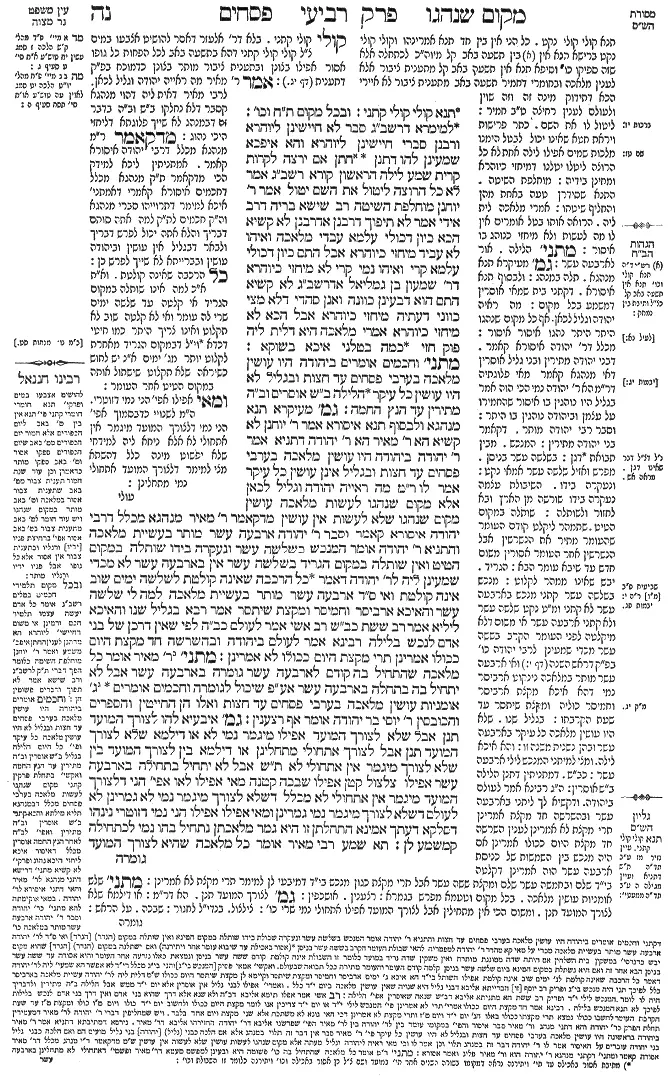
Pesahim 55a - Guemara
תנא קולי קולי קתני:
ובכל מקום ת"ח וכו':
למימרא דרשב"ג סבר לא חיישינן ליוהרא ורבנן סברי חיישינן ליוהרא והא איפכא שמעינן להו דתנן חתן אם ירצה לקרות קרית שמע לילה הראשון קורא רשב"ג אמר לא כל הרוצה ליטול את השם יטול אמר ר' יוחנן מוחלפת השיטה רב שישא בריה דרב אידי אמר לא תיפוך דרבנן אדרבנן לא קשיא הכא כיון דכולי עלמא עבדי מלאכה ואיהו לא עביד מיחזי כיוהרא אבל התם כיון דכולי עלמא קרי ואיהו נמי קרי לא מיחזי כיוהרא דר' שמעון בן גמליאל אדרשב"ג לא קשיא התם הוא דבעינן כוונה ואנן סהדי דלא מצי כווני דעתיה מיחזי כיוהרא אבל הכא לא מיחזי כיוהרא אמרי מלאכה היא דלית ליה פוק חזי כמה בטלני איכא בשוקא:
מתני׳ וחכמים אומרים ביהודה היו עושין מלאכה בערבי פסחים עד חצות ובגליל לא היו עושין כל עיקר הלילה ב"ש אוסרים וב"ה מתירין עד הנץ החמה:
גמ׳ מעיקרא תנא מנהגא ולבסוף תנא איסורא אמר ר' יוחנן לא קשיא הא ר' מאיר הא ר' יהודה דתניא אמר ר' יהודה ביהודה היו עושין מלאכה בערבי פסחים עד חצות ובגליל אינן עושין כל עיקר אמר לו ר"מ מה ראייה יהודה וגליל לכאן אלא מקום שנהגו לעשות מלאכה עושין מקום שנהגו שלא לעשות אין עושין מדקאמר ר' מאיר מנהגא מכלל דרבי יהודה איסורא קאמר וסבר ר' יהודה ארבעה עשר מותר בעשיית מלאכה והתניא ר' יהודה אומר המנכש בשלשה עשר ונעקרה בידו שותלה במקום הטיט ואין שותלה במקום הגריד בשלשה עשר אין בארבעה עשר לא מכדי שמעינן ליה לר' יהודה דאמר כל הרכבה שאינה קולטת לשלשה ימים שוב אינה קולטת ואי ס"ד ארבעה עשר מותר בעשיית מלאכה למה לי שלשה עשר והאיכא ארביסר וחמיסר ומקצת שיתסר אמר רבא בגליל שנו והאיכא ליליא אמר רב ששת כב"ש רב אשי אמר לעולם כב"ה לפי שאין דרכן של בני אדם לנכש בלילה רבינא אמר לעולם ביהודה ובהשרשה חד מקצת היום ככולו אמרינן תרי מקצת היום ככולו לא אמרינן:
מתני׳ ר' מאיר אומר כל מלאכה שהתחיל בה קודם לארבעה עשר גומרה בארבעה עשר אבל לא יתחיל בה בתחלה בארבעה עשר אע"פ שיכול לגומרה וחכמים אומרים ג' אומניות עושין מלאכה בערבי פסחים עד חצות ואלו הן החייטין והספרים והכובסין ר' יוסי בר יהודה אומר אף רצענין:
גמ׳ איבעיא להו לצורך המועד תנן אבל שלא לצורך המועד אפילו מיגמר נמי לא או דילמא שלא לצורך המועד תנן אבל לצורך אתחולי מתחלינן או דילמא בין לצורך המועד בין שלא לצורך מיגמר אין אתחולי לא ת"ש אבל לא יתחיל בתחילה בארבעה עשר אפילו צלצול קטן אפילו שבכה קטנה מאי אפילו לאו אפי' הני דלצורך המועד מיגמר אין אתחולי לא מכלל דשלא לצורך מיגמר נמי לא גמרינן לא לעולם דשלא לצורך מיגמר נמי גמרינן ומאי אפילו אפילו הני נמי דזוטרי נינהו דסלקא דעתך אמינא התחלתן זו היא גמר מלאכתן נתחיל בהו נמי לכתחילה קמשמע לן:
תא שמע רבי מאיר אומר כל מלאכה שהיא לצורך המועד
Comments from Rashi on Masechet Pesahim Page 55a
תנא קולי קולי נקט . כל הני אין בין חד תנא אמרינהו וקולי קולי נקט ברישא תנא אין בין תשעה באב קל מיוה"כ לכתחלה אלא שזה ספיקו כו' וסיפא תנא אין תשעה באב קל מתענית ציבור אלא לענין מלאכה ובחומרי דחמיר תשעה באב מתענית ציבור לא איירי הכא דתידוק מינה זה וזה שוין ולעולם לענין רחיצה ט"ב חמיר: ליטול לו את השם . כתר פרישות ויראת חטא שאינו יכול לבטל הימנו מלכות שמים אפילו לילה אחת לא כל הרוצה ליטלו יטלנו דמיחזי כיוהרא ומחינן בידיה: מוחלפת השיטה . התנא שסידרן טעה באחת מהן והחליף שיטתו: אמרי מלאכה לית ליה . הרואה אותו בטל אומרים אין לו מה לעשות ולא מיחזי כנוהג בו איסור: מתני' הלילה . אור לארבעה עשר: גמ' מעיקרא תנא מנהגא . תלה במנהג: ולבסוף תנא איסורא . דקתני בית שמאי אוסרין דמשמע בכל מקום: מה ראיה יהודה וגליל לכאן . אף כל מקום שנהגו היתר היתר נהגו איסור איסור: מכלל דר' יהודה איסורא קאמר . דבני יהודה מתירין ובני גליל אוסרין דאי מנהגא קאמר מאי פלוגתיה דר"מ הא ר' יהודה נמי הכי הוה אמר בגליל היו נוהגין בו איסור שהחמירו על עצמן וביהודה נוהגין בו היתר: וסבר רבי יהודה מותר . דקאמר בני יהודה מתירין: המנכש . מבין תבואת דגן: בשלשה עשר בניסן . מפרש ואזיל שלשה עשר אמאי נקט: ונעקרה בידו . השיבולת עצמה נעקרה בידו שורשה מן הארץ ובא לחזור ולשותלה: שותלה במקום הטיט . שתמהר ליקלט קודם העומר שהעומר מתיר את הנשרשין אבל הנשרשין אחר העומר אסורין משום חדש עד שיבא עומר הבא: הגריד . יבש שאינו ממהר לקלוט: מנכש בשלשה עשר . קתני מנכש בארבעה עשר לא קתני ומ"ט נקט שלשה עשר ולא קתני ארבעה עשר אי משום דלא מיקלטה לפני העומר הקרב בששה עשר מכדי שמעינן לרבי יהודה כו' בפ"ק דראש השנה (דף י:) ואי ארבעה עשר מותר במלאכה נינקוט ארביסר נמי דהא איכא מקצת ארביסר וחמיסר כוליה ומקצת שיתסר עד שעת הקרבתו: בגליל שנו . שלא היו עושין מלאכה כל עיקר בארבעה עשר ובהן נשנית משנה זו: והא איכא לילה . ומצי למיתני המנכש לילי ארבעה עשר: כב"ש . דמתניתין דתנן הלילה ב"ש אוסרין: ה"ג רבינא אמר לעולם ביהודה . ודקשיא לך ליתני בארבעה עשר ובהשרשה חד מקצת אמרינן תרי מקצת לא אמרינן לענין השרשה חד מקצת היום ככולו אמרינן אם היה מנכש בין השמשות של כניסת ארבעה עשר הוה אמרינן דקלטה בי"ד שלם ובחמשה עשר שלם ומקצת ששה עשר אבל תרי מקצת כגון מנכש בי"ד דמיבעי לן למימר תרי מקצת לא אמרינן: מתני' שלש אומניות עושין מלאכה . בכל מקום וטעמא מפרש בגמרא: רצענין . אושכפין: גמ' לצורך המועד תנן . הא דר"מ: או דילמא שלא לצורך המועד תנן . ומשום הכי אין מתחילין אבל לצורך המועד אפילו אתחולי נמי שרי כו': צילצול . בנדי"ל לחגור: שבכה . על הראש:
Comments from Tosafot - Pesahim 55a
קולי קולי קתני . בלא דר' אלעזר דאסר להושיט אצבעו במים צ"ל קולי קולי קתני דהא בתשעה באב לכל הפחות כל גופו אסור אפילו בצונן ובתענית ציבור מותר בצונן כדמוכח בפ"ק דתענית (דף יג.): אמר ר' מאיר מה ראייה יהודה וגליל לכאן . לרבי מאיר דאית ליה דהוי מנהגא קסבר דלא נחלקו ב"ש וב"ה בדבר זה דבמנהג לא שייך פלוגתא דליחזי היכי נהוג: מדקאמר ר"מ מנהגא מכלל דרבי יהודה איסורא קאמר . אמתניתין ליכא למידק הכי מדקאמר ת"ק מנהגא מכלל דחכמים איסורא קאמרי דאמתני' איכא למימר דתרוייהו סברי מנהגא וה"ק חכמים לת"ק למה אתה סותם דבריך והלא אתה יכול לפרש דבריך ולבאר דבגליל אין עושין וביהודה עושין ובברייתא לא שייך לפרש כן: כל הרכבה שאינה קולטת . וא"ת א"כ למה אינו שותלה במקום הגריד אי קלטה עד שלשה ימים שרי לה עומר ואי לא קלטה שוב לא תקלוט ואינו צריך היתר כמו חיטי דכדא וי"ל דבמקום הגריד מאחרת לקלוט יותר מג' ימים א"נ יש לחוש כשיראה שלא תקלוט שישתול אותה במקום הטיט אחר העומר: ומאי אפילו אפי' הני נמי דזוטרי . ה"מ לשנויי כדבסמוך אפי' הני נמי דלצורך המועד מיגמר אין אתחולי לא אלא ניחא ליה למידחי שלא יפשוט מינה כלל דהשתא מצי למימר דלצורך המועד אתחולי נמי מתחלינן:
Pesahim 55a - Mishnah translated into english
The tanna is teaching a series of leniencies. He taught only those aspects in which the Ninth of Av is more lenient than a communal fast. He did not teach those aspects in which it is more stringent. There was no attempt made to enumerate all the differences.
It was stated in the mishna: And in all places Torah scholars are idle and do not perform labor on the Ninth of Av, and according to Rabban Shimon ben Gamliel one should always conduct himself like a Torah scholar in this regard and refrain from performing labor. The Gemara asks: Is that to say that Rabban Shimon ben Gamliel holds that we are not concerned about presumptuousness when a person conducts himself like a Torah scholar? And conversely, do the Rabbis hold that we are concerned about presumptuousness? Didn’t we hear them say the opposite? As we learned in a mishna: With regard to the recitation of Shema on one’s wedding night, the Rabbis said that if a groom wishes to recite Shema on the first night despite his exemption, he may do so. Rabban Shimon ben Gamliel says: Not everyone who wishes to assume the reputation of a God-fearing person may assume it, and consequently not everyone who wishes to recite Shema on his wedding night may do so. Their opinions in that mishna appear contrary to their opinions in the current mishna.
Rabbi Yoḥanan said: The attribution of the opinions is reversed in one of the sources. Rav Sheisha, son of Rav Idi, said: Do not reverse either text, as it is possible to resolve the difficulty in another manner. The contradiction between the statement of the Rabbis here and the statement of the Rabbis there is not difficult. Here, on the Ninth of Av, since everyone is performing labor and he is not performing labor, his idleness is conspicuous and appears like presumptuousness. However, there, in the case of reciting Shema on one’s wedding night, it does not appear like presumptuousness, as everyone is reciting Shema and he is also reciting it with them.
Similarly, the contradiction between the statement of Rabban Shimon ben Gamliel here and the statement of Rabban Shimon ben Gamliel there is not difficult. There, in the case of reciting Shema on one’s wedding night, it is that we require concentration, and it is clear to all that he is unable to concentrate because of his preoccupation with the mitzva that he must perform. Therefore, if he recites Shema it appears like presumptuousness. It is as though he is announcing: I am able to concentrate although others in my situation are not. However, here, by not performing labor on the Ninth of Av it does not appear like presumptuousness, as people say: It is because he has no labor to perform. Go out and see how many idle people there are in the marketplace, even on days when it is permitted to perform labor.
MISHNA: Apropos the discussion of performing labor on Passover eve, differences in other customs were cited. And the Rabbis say: In Judea, people would perform labor on Passover eves until midday, and in the Galilee people would not perform labor on Passover eve at all. With regard to performing labor on the night before Passover eve, the night between the thirteenth and fourteenth of Nisan, Beit Shammai prohibit performing labor, and Beit Hillel permit doing so until sunrise.
GEMARA: The Gemara asks with regard to the mishna: Initially, at the beginning of the chapter, the tanna taught that in certain places there is merely a custom not to perform labor, and yet ultimately, in this latest mishna, he taught that according to the opinion of Beit Shammai, it is prohibited to perform labor. Apparently, performance of labor is not dependent on custom but is actually prohibited.
Rabbi Yoḥanan said: This is not difficult, since that first mishna is in accordance with the opinion of Rabbi Meir, and this current mishna is in accordance with the opinion of Rabbi Yehuda. As it was taught in a baraita that Rabbi Yehuda said: In Judea they would perform labor on Passover eves until midday, and in the Galilee they would not perform labor at all. Rabbi Meir said to him: What proof do you cite from Judea and the Galilee to the discussion here? Rather, in a place where people were accustomed to perform labor, one performs labor, and in a place where people were accustomed not to perform labor, one does not perform labor. The Gemara analyzes this baraita: From the fact that Rabbi Meir is speaking about custom, by inference, Rabbi Yehuda is speaking about a prohibition against performing labor in the Galilee.
The Gemara asks: And does Rabbi Yehuda hold that performance of labor on the fourteenth is permitted everywhere other than the Galilee? Wasn’t it taught in a baraita that Rabbi Yehuda says: With regard to one who is weeding a field on the thirteenth of Nisan and a stalk of grain was uprooted in his hand, he plants it in a muddy place so that it will take root before the omer offering is brought on the sixteenth of Nisan? It will then be permitted to eat the grain after the omer offering is brought. However, one should not plant it in a dry place, as it will not take root there immediately. If it begins to sprout only after the omer offering is brought, that grain will remain prohibited until after the following year’s omer offering is brought.
From Rabbi Yehuda’s statement it can be inferred that if a person was weeding on the thirteenth of Nisan, yes, this is the halakha; however, on the fourteenth of Nisan, no, one may not replant the stalk of grain. Now, we learned that Rabbi Yehuda said: Any graft that does not take hold within three days will no longer take hold. If it could enter your mind that performing labor on the fourteenth is permitted, why do I need this halakha to be taught specifically with regard to the thirteenth? It would have been a greater novelty had he taught the halakha with regard to a case that occurs on the fourteenth. Aren’t there three days remaining for grain planted on the fourteenth to take root before the omer offering, i.e., the fourteenth of Nisan, the fifteenth of Nisan, and part of the sixteenth of Nisan? Rava said: They taught this halakha of replanting a stalk of wheat with regard to the Galilee; as mentioned in the baraita, Rabbi Yehuda says that in the Galilee they do not perform labor at all.
The Gemara further asks: Isn’t there the night between the thirteenth and the fourteenth of Nisan, during which according to the opinion of Beit Hillel, labor is permitted even in the Galilee, which is the halakha? Rabbi Yehuda could have taught the halakha with regard to weeding on the night before the fourteenth. Rav Sheshet said: Rabbi Yehuda said this in accordance with the opinion of Beit Shammai, who prohibit performing labor that night. Rav Ashi said: There is no reason to suggest implausibly that Rabbi Yehuda holds in accordance with the opinion of Beit Shammai, contrary to the accepted halakha. Actually, Rabbi Yehuda holds in accordance with the opinion of Beit Hillel. However, he did not teach the case about the night before the fourteenth of Nisan because it is not the typical manner of people to weed at night. It is virtually impossible to identify weeds in the dark.
Ravina said: Actually, it can be explained that Rabbi Yehuda is referring to Judea. With regard to a plant taking root, we state only once the principle: The legal status of part of the day is like that of the entire day, but we do not state twice the principle: The legal status of part of the day is like that of the entire day. When discussing a plant that was replanted on the fourteenth, in the tally of three days, the legal status of part of both the fourteenth and the sixteenth cannot be like that of entire days. A plant takes root after a fixed amount of time, and this is not affected by formalistic halakhic principles like: The legal status of part of the day is like that of the entire day.
MISHNA: Rabbi Meir says: With regard to any labor that one began before the fourteenth of Nisan, he may complete it on the fourteenth before midday. However, one may not begin to perform that labor from the outset on the fourteenth, even if he is able to complete it before midday. And the Rabbis say: The practitioners of only three crafts are permitted to perform labor until midday on Passover eve, and they are: Tailors, barbers, and launderers, whose work is needed for the Festival. Rabbi Yosei bar Yehuda says: Even shoemakers are permitted to work on the fourteenth.
GEMARA: A dilemma was raised before the Sages: Was it with regard to labor for the purpose of the Festival that we learned in the mishna that Rabbi Meir permits completing labor on the fourteenth, but labor that is not for the purpose of the Festival may not even be completed? Or perhaps it was with regard to labor that is not for the purpose of the Festival that we learned that Rabbi Meir permits completing labor on the fourteenth, but with regard to labor that is for the purpose of the Festival, we may even initiate it. Or perhaps, with regard to both labor that is for the purpose of the Festival and labor that is not for the purpose of the Festival, completing, yes, it is permitted, but initiating, no, it is prohibited.
Come and hear a resolution to the dilemma from that which we learned: However, one may not begin work from the outset on the fourteenth, even if it is a small belt, or even a small hairnet. What is the meaning of the term even in this context? Isn’t it that even with regard to those items that are for the purpose of the Festival, completing, yes, it is permitted, but initiating, no, it is prohibited? And by inference, with regard to labor that is not for the purpose of the Festival, we may not even complete labor that was begun previously. This supports the first possibility cited above.
The Gemara rejects this answer: No; actually this means that even labor that is not for the purpose of the Festival we may also complete, in accordance with the third possibility above. And what is the meaning of the term even? It is that this halakha applies even to these items, a belt and a hairnet, which are small; as it could enter your mind to say: Since they are small and their initiation is their completion, let us even initiate their manufacture on the fourteenth ab initio. Therefore, it teaches us that even with regard to this type of labor, initiating is prohibited. This baraita does not provide an unequivocal resolution to the dilemma.
Come and hear the resolution to the dilemma from another source from another source. Rabbi Meir says: With regard to any labor that is for the purpose of the Festival,
Traduction : The William Davidson digital edition of the Koren Noé Talmud, with commentary by Rabbi Adin Even-Israel Steinsaltz.