 Talmud Bavli
Pesahim 107a : Youtube
Daf TubeYoutube
3 video classes :
Pesahim Page 107a
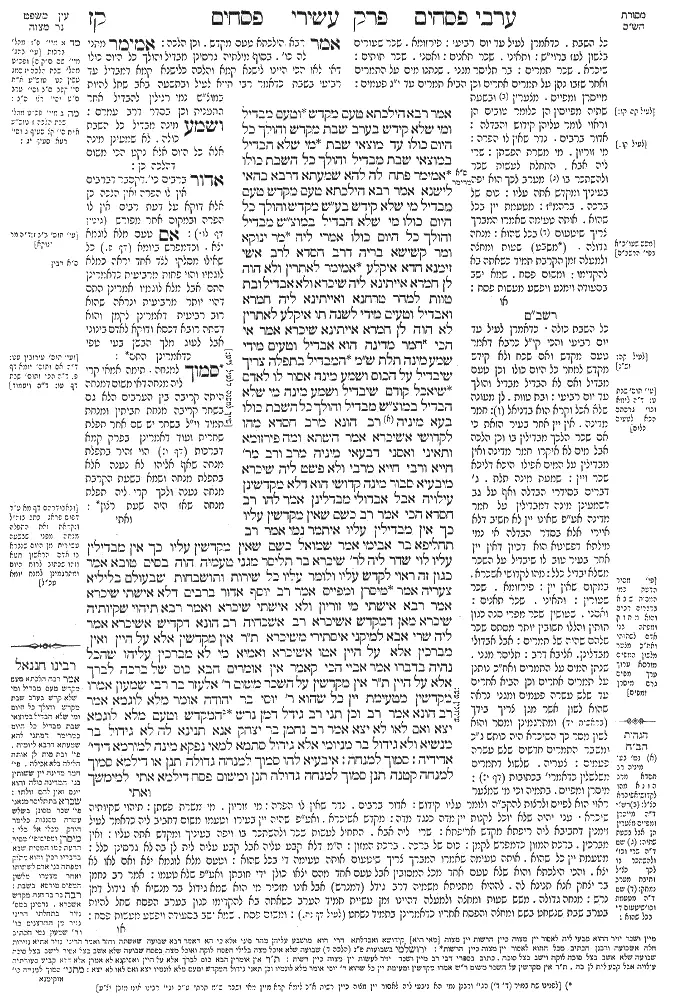
Pesahim 107a - Guemara
אמר רבא הילכתא טעם מקדש וטעם מבדיל ומי שלא קידש בערב שבת מקדש והולך כל היום כולו עד מוצאי שבת מי שלא הבדיל במוצאי שבת מבדיל והולך כל השבת כולו אמימר פתח לה להא שמעתא דרבא בהאי לישנא אמר רבא הילכתא טעם מקדש טעם מבדיל מי שלא קידש בע"ש מקדש והולך כל היום כולו מי שלא הבדיל במוצ"ש מבדיל והולך כל היום כולו אמרי ליה מר ינוקא ומר קשישא בריה דרב חסדא לרב אשי זימנא חדא איקלע אמימר לאתרין ולא הוה לן חמרא אייתינא ליה שיכרא ולא אבדיל ובת טוות למחר טרחנא ואייתינא ליה חמרא ואבדיל וטעים מידי לשנה תו איקלע לאתרין לא הוה לן חמרא אייתינא שיכרא אמר אי הכי חמר מדינה הוא אבדיל וטעים מידי שמע מינה תלת ש"מ המבדיל בתפלה צריך שיבדיל על הכוס ושמע מינה אסור לו לאדם שיאכל קודם שיבדיל ושמע מינה מי שלא הבדיל במוצ"ש מבדיל והולך כל השבת כולו בעא מיניה רב הונא מרב חסדא מהו לקדושי אשיכרא אמר השתא ומה פירזומא ותאיני ואסני דבעאי מיניה מרב ורב מר' חייא ורבי חייא מרבי ולא פשט ליה שיכרא מיבעיא סבור מינה קדושי הוא דלא מקדשינן עילויה אבל אבדולי מבדלינן אמר להו רב חסדא הכי אמר רב כשם שאין מקדשין עליו כך אין מבדילין עליו איתמר נמי אמר רב תחליפא בר אבימי אמר שמואל כשם שאין מקדשין עליו כך אין מבדילין עליו לוי שדר ליה לר' שיכרא בר תליסר מגני טעמיה הוה בסים טובא אמר כגון זה ראוי לקדש עליו ולומר עליו כל שירות ותושבחות שבעולם בליליא צעריה אמר מיסרן ומפייס אמר רב יוסף אדור ברבים דלא אישתי שיכרא אמר רבא אישתי מי זוריון ולא אישתי שיכרא ואמר רבא תיהוי שקיותיה שיכרא מאן דמקדש אשיכרא רב אשכחיה רב הונא דקדיש אשיכרא אמר ליה שרי אבא למיקני איסתירי משיכרא ת"ר אין מקדשין אלא על היין ואין מברכין אלא על היין אטו אשיכרא ואמיא מי לא מברכין עליהו שהכל נהיה בדברו אמר אביי הכי קאמר אין אומרים הבא כוס של ברכה לברך אלא על היין ת"ר אין מקדשין על השכר משום ר' אלעזר בר רבי שמעון אמרו מקדשין מטעימת יין כל שהוא ר' יוסי בר יהודה אומר מלא לוגמא אמר רב הונא אמר רב וכן תני רב גידל דמן נרש המקדש וטעם מלא לוגמא יצא ואם לאו לא יצא אמר רב נחמן בר יצחק אנא תנינא לה לא גידול בר מנשיא ולא גידול בר מניומי אלא גידול סתמא למאי נפקא מינה למירמא דידי' אדידיה:
סמוך למנחה:
איבעיא להו סמוך למנחה גדולה תנן או דילמא סמוך למנחה קטנה תנן סמוך למנחה גדולה תנן ומשום פסח דילמא אתי למימשך
Comments from Rashi on Masechet Pesahim Page 107a
כל השבת . כדאמרן לעיל עד יום רביעי: פירזומא . שכר שעורים בלשון לעז ברוי"ש (בריי"ש: שְׁכַר שְׂעוֹרִים (מין בירה)) : ותאיני . שכר תאנים: ואסני . שכר תותים: שיכרא . שכר תמרים: בר תליסר מגני . שנתנו מים על התמרים ואחר שזבו נתן על תמרים אחרים וכן הביא תמרים עד י"ג פעמים: מייסרן ומפייס . מצערין ובשעת שתיה מפייסין הן כלומר טובים הן וראוי לומר עליהן קידוש והבדלה: אדור ברבים . נדר שאין לו הפרה: מי זוריון . מי משרת הפשתן: שרי ליה אבא . התחלת לעשות שכר ולהשתכר בו מערב לכך הוא יפה בעיניך ומקדש אתה עליו: כוס של ברכה . ברהמ"ז: מטעמת יין בכל הוא . אותה טעימה שאמרו המברך צריך שיטעום בכל שהוא: מנחה גדולה . (משבע) שעות ומחצה ולמעלה זמן הקרבת תמיד כשאתה בא להקדימו: ומשום פסח . שמא ישב בסעודה וימנע ויפשע מעשות פסח:
Comments from Rashbam - Pesahim 107a
כל השבת כולה . כדאמרן לעיל עד יום רביעי והכי קי''ל כרבא דאמר טעם מקדש ואם שכח ולא קידש מקדש למחר כל היום כולו וכן טעם מבדיל ואם לא הבדיל מבדיל והולך עד יום רביעי: שרי ליה אבא . התחיל לעשות שכר ולהשתכר בו ויפה בעיניך ומקדש אתה עליו: ובת טוות . לן מעונה שלא אכל וקרא הוא בדניאל: חמר מדינה . אין יין אחר בעיר הזאת כי אם שכר הלכך מבדילין בו וכן הלכה אבל מים לא איקרו חמר מדינה ואין מבדילין על המים אפילו היכא דליכא שכר ויין: שמעת מינה תלת . ג' דברים בסידרי הבדלה ואף על גב דשמעינן מינה דמבדילין על חמר מדינה אע''פ שאינו יין לא חשיב דלא איירי אלא בסדר הבדלה אי נמי מילתא דפשיטא הוא דכיון דאין יין אחר בעיר טוב לו שיבדיל על השכר משלא יבדיל כלל: מהו לקדושי אשכרא . במקום שאין יין: מקדש אשיכרא . ואע''פ שהיה יין בעירו וטעמו משום דחביב ליה כדאמר לעיל זימנין דחביבא ליה ריפתא מקדש אריפתא: פירזומא . שכר שעורין: ותאיני . שכר תאנים: ואסני . שעושין שכר מפרי סנה כגון תותין והללו חשובים יותר מסתם שכר שלהם שהיה של תמרים: אבל אבדולי מבדלינן . אליבא דרב: תליסר מגני . שנתן המים על התמרים ואח''כ נותנן על תמרים אחרים וכן הביא אחרים עד שלש עשרה פעמים ומגני נראה שהוא לשון אשר מגן צריך בידך (בראשית יד) ומתרגמינן ומסר והוא לשון מסר כך השיכרא היה כותש ג''כ ומשבר התמרים חדשים שלש עשרה פעמים: צעריה . שלשול דתמרים משלשלין כדאמרי' בכתובות (דף י:): מיסרן ומפייס . בתמיה וכי מי שמצער ראוי הוא לפייס ולרצות להקב''ה ולומר עליו קידוש: אדור ברבים . נדר שאין לו הפרה: מי זוריון . מי משרת פשתן: תיהוי שקיותיה שיכרא . עני יהיה שלא יוכל לקנות יין מדה כנגד מדה: ואין מברכין . ברכת המזון כדמפרש לקמן: כוס של ברבה . ברכת המזון: ה''מ דלא קבע עליה אבל קבע עליה לית לן בה לא גרסינן כלל: מטעמת יין כל שהוא . אותה טעימה שאמרו המברך צריך שיטעום אותה טעימה די בכל שהוא: וטעם מלא לוגמא יצא ואם לאו לא יצא . והכי הילכתא והוא שלא טעם אחד מכל המסובין אבל טעם אחד מהם יצאו כולן ידי חובתן ואע''פ שלא טעמו: אמר רב נחמן בר יצחק אנא תנינא לה . לההיא מתניתא משמיה דרב גידל (דמנרש) אבל אינו מזכיר מי הוא שמא גידול בר מנשיא או גידול דמן נרש: מנחה גדולה . משש שעות ומחצה ולמעלה דהיינו זמן עשיית תמיד הערב כשאתה בא להקדימו כגון בערב הפסח שחל להיות בערב שבת שנשחט בשש ומחצה והפסח אחריו כדאמרינן בתמיד נשחט (לעיל פסחים דף נח.) ומשום פסח. שמא ישב בסעודה ויפשע מעשות פסח
Comments from Tosafot - Pesahim 107a
אמר רבא הילכתא טעם מקדש . וכן הלכה: אמימר מתני לה כו' . בסוף מילתיה גרסינן מבדיל והולך כל היום כולו דאי לאו הכי היינו לישנא קמא והלכה כלישנא קמא דמבדיל עד רביעי בשבת כדאמר רבי חייא לעיל ובתשעה באב שחל להיות במוצ"ש נמי רגילין להבדיל אחר התענית וכן בסדר דרב עמרם: ושמע מינה מבדיל כל השבת כולה . לא שמעינן מינה אלא כל היום אלא נקט הכי משום דהלכה כן: אדור ברבים כו' . דקסבר דברבים אין לו הפרה ואין הלכה כן אלא דוקא על דעת רבים אין לו הפרה ובמקום אחר מפורש (גיטין דף לו.): אם טעם מלא לוגמא יצא . וכדמפרש ביומא (דף פ.) כל שאילו מסלקו לצד אחד יראה כמלא לוגמיו והוי פחות מרביעית כדאמרינן התם אבל מלא לוגמיו אמרינן התם דהוי יותר מרביעית ונראה שהוא רוב רביעית דאמרינן לקמן והוא דשתה רובא דכסא ודוקא לאדם בינוני אבל לעוג מלך הבשן בעי טפי כדאמרינן התם: סמוך למנחה . תימה אמאי קרי ליה מנחה דאי משום דמנחה היתה קריבה בין הערבים הלא גם בשחר קריבה מנחת חביתין ומנחת תמיד וי"ל בשחר יש שם אחר תפלת שחרית ועוד דאמרינן בפרק קמא דברכות (דף ו:) הוי זהיר בתפלת מנחה שאף אליהו לא נענה אלא בתפלת מנחה ושמא בשעת הקרבת מנחה נענה ולכך קרי ליה תפלת מנחה שאז היה שעת רצון:
Pesahim 107a - Mishnah translated into english
Rava said: The halakha is that one who tasted food before kiddush may recite kiddush; and one who tasted food before havdala may recite havdala; and one who did not recite kiddush on Shabbat eve, at night, may recite kiddush any time during the entire day until the conclusion of Shabbat. Likewise, one who did not recite havdala at the conclusion of Shabbat may recite havdala any time during the entire week, i.e., during the first three days of the week, the time period called: After Shabbat.
Ameimar began this teaching of Rava in this emended formulation: Rava said: The halakha is that one who tasted food before kiddush may recite kiddush; and one who tasted food before havdala may recite havdala; and one who did not recite kiddush on Shabbat eve, at night, may recite kiddush any time during the entire day. One who did not recite havdala at the conclusion of Shabbat may recite havdala any time during the entire day of Sunday, but no later.
The Gemara relates that the Mar Yanuka, the younger Mar, and Mar Kashisha, the elder Mar, both sons of Rav Ḥisda, said to Rav Ashi: Once Ameimar happened to come to our place and we did not have wine for havdala. We brought him beer and he did not recite havdala, and he passed the night fasting, as it is prohibited to eat before havdala. The next day we exerted ourselves and brought him wine, and he recited havdala and tasted some food. The next year he again happened to come to our place. Once again we did not have wine and we brought him beer. He said: If so, if it is so difficult to obtain wine in your place, beer is the wine of the province. He recited havdala over the beer and tasted some food.
The Gemara notes that one may learn from Ameimar’s conduct three halakhot: Learn from it that one who recites havdala in the prayer service must recite havdala again over a cup, as Ameimar had presumably recited the paragraph of havdala in his Amida prayer. And learn from it that it is prohibited for a person to eat before he recites havdala. And learn from it that one who did not recite havdala at the conclusion of Shabbat may recite havdala anytime during the entire week, i.e., during the first three days of the week.
In the above story, Ameimar refused to recite havdala over beer. The Gemara addresses this issue at greater length. Rav Huna raised a dilemma before Rav Ḥisda: What is the halakha with regard to whether it is permitted to recite kiddush over date beer? He said: Now, if with regard to barley beer, fig beer, and beer produced from berries, I raised a dilemma before Rav as to whether or not they may be used for kiddush, and Rav had previously raised this dilemma before Rabbi Ḥiyya, and Rabbi Ḥiyya had inquired of Rabbi Yehuda HaNasi, and he did not resolve it for him, as he could not find a source that clearly permits it, is it necessary to say that date beer, which is inferior to those other types of beer, may not be used for kiddush?
Those who heard this response understood from it that it is kiddush that one may not recite over it, but one may recite havdala over date beer. Rav Ḥisda said to them that Rav said as follows: Just as one may not recite kiddush over date beer, so one may not recite havdala over it. It was also stated that Rav Taḥalifa bar Avimi said that Shmuel said: Just as one may not recite kiddush over date beer, so one may not recite havdala over it.
The Gemara relates that Levi sent Rabbi Yehuda HaNasi a beer of thirteen soakings, i.e., thirteen batches of dates had been soaked in water until it had thoroughly absorbed the taste of the dates. This was considered a high-quality beer. Rabbi Yehuda HaNasi tasted it and it was especially pleasant. He said: A beer like this is fit to recite kiddush over and to say upon it all the songs and praises in the world, as it is as good as wine. At night, it disrupted his digestion and caused him pain. He said: It pains on the one hand and soothes on the other.
With regard to the discomfort caused by beer, the Gemara cites related statements of amora’im. Rav Yosef said: I will take a vow in public, which cannot be nullified, that I will not drink beer due to its negative effects, despite the fact that beer was a popular beverage in Babylonia. Rava said: I would rather drink water used for soaking flax, and I will not drink beer.
And Rava said: One who recites kiddush over beer, his regular drink should be beer. In other words, the fitting punishment for one who recites kiddush over beer, the poor man’s drink in Babylonia, is for him to become poor himself and have to drink beer on a regular basis. The Gemara relates that Rav was found by Rav Huna reciting kiddush over beer. He said to him: Abba, Rav’s first name, has started to acquire coins with beer. As Rav recently began selling beer, it has become his favorite beverage, to the extent that he uses it for kiddush.
The Sages taught: One may recite kiddush only over wine, and one may recite blessings only over wine. The Gemara expresses surprise: Is that to say that one does not say the blessing: By Whose word all things [shehakol] came to be, over beer and water? Abaye said: This is what the baraita is saying: One only says: Bring a cup of blessing to recite the blessing of Grace after Meals, over wine. The Rabbis taught in a baraita: One may not recite kiddush over beer. In the name of Rabbi Elazar, son of Rabbi Shimon, they said that one may recite kiddush over beer.
With regard to the halakha that one who recites kiddush must drink from the cup, the Gemara states that one fulfills the mitzva of kiddush by tasting any amount of wine. Rabbi Yosei, son of Yehuda, says that one must drink at least a cheekful. Rav Huna said that Rav said, and Rav Giddel from the city of Neresh likewise teaches: One who recites kiddush and tastes a cheekful has fulfilled his obligation, and if not, he has not fulfilled his obligation.
Rav Naḥman bar Yitzḥak said: I teach this baraita in a precise manner, and I do not mention Giddul bar Menashya, nor Giddul bar Minyumei, but rather the plain name Giddul, without any identifying moniker. The Gemara asks: What is the practical difference in Rav Giddel’s name? The Gemara answers: To raise a contradiction between one of his rulings and another one of his rulings. Since it is not clear exactly which Sage issued this ruling, it is impossible to prove that he reversed or contradicted his opinion in a later statement.
The Gemara returns to the mishna, which stated that it is prohibited to eat adjacent to minḥa time on Passover eve. A dilemma was raised before the Sages in the study hall: Did we learn in the mishna that it is prohibited to eat adjacent to the time of the greater minḥa [minḥa gedola], which is half an hour after midday, or perhaps we learned in the mishna that it is prohibited to eat adjacent to the time of the lesser minḥa [minḥa ketana], two and a half hours before sunset?
The Gemara elaborates: Did we learn in the mishna that it is prohibited to eat adjacent to the time of the greater minḥa, and this is because of the Paschal lamb, lest one come to be drawn after the meal and spend a long time eating, as was typical for large meals,
Traduction : The William Davidson digital edition of the Koren Noé Talmud, with commentary by Rabbi Adin Even-Israel Steinsaltz.