 Talmud Bavli
Pesahim 24a : Youtube
Daf TubeYoutube
3 video classes :
Pesahim Page 24a
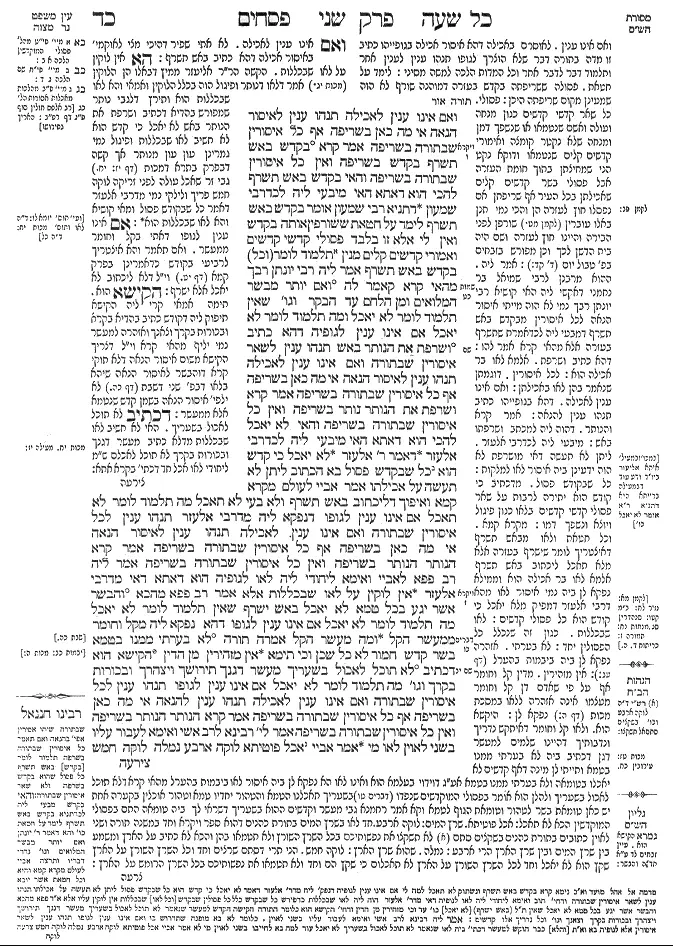
Pesahim 24a - Guemara
ואם אינו ענין לאכילה תנהו ענין לאיסור הנאה אי מה כאן בשריפה אף כל איסורין שבתורה בשריפה אמר קרא (ויקרא ו, כג) בקדש באש תשרף בקדש בשריפה ואין כל איסורין שבתורה בשריפה והאי בקדש באש תשרף להכי הוא דאתא האי מיבעי ליה לכדרבי שמעון דתניא רבי שמעון אומר בקדש באש תשרף לימד על חטאת ששורפין אותה בקדש ואין לי אלא זו בלבד פסולי קדשי קדשים ואמורי קדשים קלים מנין תלמוד לומר (וכל) בקדש באש תשרף אמר ליה רבי יונתן רבך מהאי קרא קאמר לה (שמות כט, לד) ואם יותר מבשר המלואים ומן הלחם עד הבקר וגו' שאין תלמוד לומר לא יאכל ומה תלמוד לומר לא יאכל אם אינו ענין לגופיה דהא כתיב (שמות כט, לד) ושרפת את הנותר באש תנהו ענין לשאר איסורין שבתורה ואם אינו ענין לאכילה תנהו ענין לאיסור הנאה אי מה כאן בשריפה אף כל איסורין שבתורה בשריפה אמר קרא ושרפת את הנותר נותר בשריפה ואין כל איסורין שבתורה בשריפה והאי לא יאכל להכי הוא דאתא האי מיבעי ליה לכדרבי אלעזר דאמר ר' אלעזר לא יאכל כי קדש הוא כל שבקדש פסול בא הכתוב ליתן לא תעשה על אכילתו אמר אביי לעולם מקרא קמא ואיפוך דליכתוב באש תשרף ולא בעי לא תאכל מה תלמוד לומר לא תאכל אם אינו ענין לגופו דנפקא ליה מדרבי אלעזר תנהו ענין לכל איסורין שבתורה ואם אינו ענין לאכילה תנהו ענין לאיסור הנאה אי מה כאן בשריפה אף כל איסורין שבתורה בשריפה אמר קרא הנותר הנותר בשריפה ואין כל איסורין שבתורה בשריפה אמר ליה רב פפא לאביי ואימא ליחודי ליה לאו לגופיה הוא דאתא דאי מדרבי אלעזר אין לוקין על לאו שבכללות אלא אמר רב פפא מהכא (ויקרא ז, יט) והבשר אשר יגע בכל טמא לא יאכל באש ישרף שאין תלמוד לומר לא יאכל מה תלמוד לומר לא יאכל אם אינו ענין לגופו דהא נפקא ליה מקל וחומר ממעשר הקל ומה מעשר הקל אמרה תורה (דברים כו, יד) לא בערתי ממנו בטמא בשר קדש חמור לא כל שכן וכי תימא אין מזהירין מן הדין הקישא הוא דכתיב (דברים יב, יז) לא תוכל לאכול בשעריך מעשר דגנך תירושך ויצהרך ובכורות בקרך וגו' מה תלמוד לומר לא יאכל אם אינו ענין לגופו תנהו ענין לכל איסורין שבתורה ואם אינו ענין לאכילה תנהו ענין להנאה אי מה כאן בשריפה אף כל איסורין שבתורה בשריפה אמר קרא הנותר הנותר בשריפה ואין כל איסורין שבתורה בשריפה אמר לי' רבינא לרב אשי ואימא לעבור עליו בשני לאוין לאו מי אמר אביי אכל פוטיתא לוקה ארבע נמלה לוקה חמש
Comments from Rashi on Masechet Pesahim Page 24a
ואם אינו ענין . לאוסרם באכילה דהא איסור אכילה בגופייהו כתיב זו מדה בתורה דבר שלא הוצרך לגופו תנהו ענין לענין אחר ותלמוד דבר לדבר אחר וכל המדות הלכה למשה מסיני: לימד על חטאת . פסולה ששריפתה בקדש בעזרה דמוהנה שורף לא הוה שמעינן מקום שריפתה היכן: פסולי . כל שאר קדשי קדשים כגון מנחה ועולה ואשם שנטמאו או שנשפך דמן ומנחה שלא נקטר קומצה ואימורי קדשים קלים שנטמאו ודוקא נקט הני שמחיצתן בתוך חומת העזרה אבל פסולי בשר קדשים קלים שאכילתן בכל העיר אף שריפתן אם נפסלו חוץ לעזרה הן והכי נמי תנן באלו עוברין (לקמן פסחים מט.) שורפין לפני הבירה והיינו חוץ לעזרה ושם היה בית הדשן לכך וכן מפורש בזבחים בפר' טבול יום (ד' קד:): אמר ליה . ההוא מרבנן לר' שמואל בר נחמני דאקשי ליה האי קושיא ר' יונתן רבך נמי לא הוה מייתי איסור הנאה לכל איסורין מבקדש באש תשרף דמבעי ליה לכדאמרת שתשרף בעזרה אלא מהאי קרא אמר להו: דהא כתיב ושרפת . אלמא לאו בר אכילה הוא: לכל איסורין . דוגמתן שנאמר בהן לאו באכילתן: מיבעי ליה לכדר' אלעזר . ליתן לא תעשה דאי מושרפת לא הוה ידעינן ביה איסור לאו למלקות: כל שבקודש פסול . מדכתיב כי קודש הוא יתירה לרבות על שאר פסולי קדשי קדשים בלאו כגון פיגול ויוצא ונשפך דמו: מקרא קמא . וכל חטאת ולאו מבאש תשרף דאיצטריך לומר שישרף בעזרה אלא מלא תאכל ליכתוב באש תשרף אלמא לאו בר אכילה הוא וממילא נפקא לן ביה נמי איסור לאו מהא דרבי אלעזר דמפיק מלא יאכל כי קודש הוא כל פסולי קדשים: לכל איסורין . דוגמתן שנאמר בהן לאו באכילתן: ואם אינו ענין לאכילה . דהא בגופייהו כתיב תנהו ענין להנאה: אמר קרא והנותר . דהוה ליה למכתב ושרפתו באש: לאו שבכללות . כגון זה שנכלל כל הפסולין יחד: לא בערתי . אזהרה נפקא לן ביה ביבמות בהערל (דף עג:): אין מזהירין . מדין קל וחומר אף על פי שאדם דן קל וחומר מעצמו אינה אזהרה ללאו במסכת מכות (דף ה:) נפקא לן: היקשא הוא . ולאו קל וחומר דאיתקש נדריך ונדבותיך דהיינו שלמים למעשר דגן דכתיב ביה לא בערתי ממנו בטמא ותייתי לן מינה דאף קדשים לא יאכלו בטומאה ולא בערתי ממנו בטמא אע"ג דוידוי בעלמא הוא ואינו לאו הא נפקא לן ביה איסור לאו ביבמות בהערל מהאי קרא דלא תוכל לאכול בשעריך ולהלן הוא אומר בפסולי המוקדשים שנפדו (דברים טו) בשעריך תאכלנו הטמא והטהור יחדיו טמא וטהור אוכלין בקערה אחת יש כאן טומאת בשר לטהור וטומאת הגוף לטמא וקא אמר רחמנא גבי מעשר וקדשים ההוא בשעריך דשראי לך ביה טומאה התם בפסולי המוקדשין הכא לא תאכל: אכל פוטיתא . שרץ המים: לוקה ארבע . חד לאו בשרץ המים בתורת כהנים דהוא ספר ויקרא וחד במשנה תורה ושני לאוין כתובים בתורת כהנים בשקצים סתם לא תשקצו את נפשותיכם בכל השרץ השורץ ולא תטמאו בהן והכא לא כתיב על הארץ ומשמע בין שרץ המים ובין שרץ הארץ הרי ארבע: נמלה . שהוא שרץ הארץ: לוקה חמש . הני תרי דסתם שרצים וחד וכל השרץ השורץ על הארץ שקץ הוא לא יאכל וחד לכל השרץ השורץ על הארץ לא תאכלום כי שקץ הם וחד ולא תטמאו את נפשותיכם בכל השרץ הרומש על הארץ:
Comments from Tosafot - Pesahim 24a
ואם אינו ענין לאכילה . לא אתי שפיר דהיכי מצי לאוקמי' באיסור אכילה דהא כתיב באש תשרף: הא אין לוקין על לאו שבכללות . הקשה הר"ר אליעזר ממיץ דבאלו הן הלוקין (מכות יג.) אמר דלאו דנותר ופיגול הוה בכלל הלוקין ואמאי והא לאו שבכללות הוא ותירץ דלגבי נותר שמפורש בהדיא דכתיב ושרפת את הנותר באש לא יאכל כי קדש הוא לא חשיב לאו שבכללות ופיגול נמי גמרינן עון עון מנותר אך קשה דבפרק בתרא דמכות (דף יז: יח.) גבי זר שאכל עולה לפני זריקה לוקה חמש פריך ולילקי נמי מדרבי אלעזר דאמר כל שבקודש פסול ומאי קושיא והא לאו שבכללות הוא: אם אינו ענין לגופו דאתי בקל וחומר ממעשר . ואם תאמר והא איצטריך לרביעי בקודש כדאמרינן בפרק קמא (דף יט.) וי"ל דלא ליכתוב לא יאכל אלא ישרף: הקישא הוא . תימה אמאי קרי ליה הקישא תיפוק ליה דקודש כתיב בהדיא בקרא ובכורות בקרך וצאנך ואזהרה למעשר נמי יליף מהאי קרא וי"ל דצריך הקישא משום איסור הנאה דלא תוקי קרא דוהבשר לאיסור הנאה שיהא בלאו דבפ' שני דשבת (דף כה.) לא ילפי' איסור הנאה בשמן קדש שנטמא אלא ממעשר: דכתיב לא תוכל לאכול בשעריך . האי לא חשיב לאו שבכללות מדלא כתיב מעשר דגנך ובכורות בקרך לא תוכל לאכלם ש"מ ליחודי לאו אכל חד דכתי' בקרא אתא:
Pesahim 24a - Mishnah translated into english
And if it does not apply to the matter of the prohibition against eating, as the prohibition against eating these items has already been mentioned, apply it to the matter of the prohibition of deriving benefit.
The Gemara continues: Lest one say that the verse indicates that just as here, the sin-offering is disposed of with burning, so too, all the prohibited items in the Torah must be disposed of with burning, therefore the verse said: “In the sacred place…shall be burnt with fire” (Leviticus 6:23). This indicates that only that which is disqualified in the sacred place is disposed of with burning, but all other prohibited items in the Torah need not be disposed of with burning.
Rabbi Shmuel bar Naḥmani asked: And did this verse: “In the sacred place…shall be burnt with fire,” come to teach this halakha? It is needed to teach in accordance with the opinion of Rabbi Shimon, as it was taught in a baraita that Rabbi Shimon says: “In the sacred place…shall be burnt with fire”; this taught that one must burn a disqualified sin-offering in the sacred place, and not outside the Temple. And I have only derived this, meaning the sin-offering. From where do I derive that disqualified offerings of the most sacred order and portions consumed on the altar, such as the fats of offerings of minor sanctity that become impure, are burned in the Temple courtyard? The verse states: “In the sacred place…shall be burnt with fire.” This indicates that any disqualified offering must be burned in the sacred place.
The Sage who taught this halakha to Rabbi Shmuel bar Naḥmani said to him: Rabbi Yonatan, your teacher, said that same halakha from this verse: “And if the flesh of the consecration offering, or of the bread, remains until the morning, then you shall burn the leftover with fire; it shall not be eaten, because it is sacred” (Exodus 29:34). As there is no need for the verse to state: “It shall not be eaten,” what is the meaning when the verse states: “It shall not be eaten”? If it does not refer to the subject matter itself, as it is already written explicitly: “Then you shall burn the leftover with fire,” which indicates that one may not eat it, refer it to the matter of the other prohibitions in the Torah. And if it does not refer to the matter of the prohibition against eating, as eating these items is explicitly prohibited, refer it to the matter of the prohibition of deriving benefit. This indicates that it is prohibited for one to derive benefit from any item that it is prohibited for him to eat.
The Gemara continues: Lest one say that the verse indicates that just as here, the sin-offering is disposed of with burning, so too, all the prohibited items in the Torah, from which one may not benefit, must be disposed of with burning, therefore the verse said: “You shall burn the leftover,” indicating that the leftover sacrificial meat must be disposed of with burning; however, all other prohibitions in the Torah need not be disposed of with burning, despite the fact that it is prohibited to derive benefit from them.
The Gemara challenges: And did this phrase: “It shall not be eaten,” come to teach this prohibition against deriving benefit? This phrase is needed to teach in accordance with the opinion of Rabbi Elazar, as Rabbi Elazar said with regard to the statement in the verse: “It shall not be eaten, because it is sacred,” that the verse comes to place a negative mitzva of eating on whatever has been rendered disqualified in the sacred place. In other words, this verse teaches a general halakha that one who eats from offerings that have been disqualified in the Temple transgresses a negative mitzva and is liable to be flogged. It teaches nothing with regard to a prohibition against deriving benefit.
Abaye said: Actually, derive this halakha from the first verse cited by Rabbi Yehoshua ben Levi: “And any sin-offering, of which any of the blood is brought into the tent of meeting to make atonement in the sacred place, shall not be eaten; it shall be burnt with fire” (Leviticus 6:23). And reverse the construct of his exposition. Let the verse write: “It shall be burnt with fire,” and it will not need to write: “Shall not be eaten.” For what purpose then does the verse state: “It shall not be eaten”? If it does not apply to the subject matter itself, as that was already derived from the statement of Rabbi Elazar that whatever has been rendered disqualified in the sacred place may not be eaten, apply it to all other prohibitions in the Torah, including leavened bread on Passover and a stoned ox. And if it does not apply to the prohibition against eating, which is written explicitly, then apply it to the prohibition of deriving benefit.
The Gemara asks: Lest one say that the verse indicates that just as here, the leftover sacrificial meat is disposed of with burning, so too, all the prohibited items in the Torah, from which one may not benefit, must be disposed of with burning, therefore the verse said: “You shall burn the leftover,” indicating that the leftover sacrificial meat must be disposed of with burning; however, all other prohibited items in the Torah need not be disposed of with burning.
Rav Pappa said to Abaye: And why do you hold that the phrase: “You shall not eat,” describing the sin-offering that was sacrificed inside the Sanctuary, is not needed for other purposes? Say that this expression comes in order to designate a negative mitzva for this prohibition itself. As, if this prohibition were derived only from the source quoted by Rabbi Elazar, there will be a prohibition to eat the meat of the sin-offering whose blood was brought into the sanctuary; however, one would not be liable to be flogged for violating it, because one is not flogged for violating a negative mitzva stated in general terms. One is not flogged for violating a negative mitzva that contains several different prohibitions, such as this one, which refers to all disqualified offerings. This is because the negative mitzva is formulated too broadly. Therefore, it is possible to say that when the Torah states: “You shall not eat” with regard to this issue, it is teaching that there is a particular prohibition here and that one is flogged for violating it. If so, the verse cannot indicate a general prohibition against deriving benefit.
Rather, this suggestion should be rejected, and Rav Pappa said that one derives this halakha from here: “And the flesh that touches any impure thing shall not be eaten; it shall be burnt with fire. And as for the flesh, every one that is pure may eat of it” (Leviticus 7:19). As there is no need for the verse to state: “It shall not be eaten,” what does it mean when the verse states: “It shall not be eaten”?
If it does not refer to the subject matter itself, as that can be derived by means of an a fortiori inference from the second tithe, the halakhot of which are more lenient than those of offerings, then it must refer to something else. As it is possible to say: If with regard to the second tithe, which is more lenient because it does not have the status of an offering, the Torah said that when one recites the confession over the tithes, when destroying the tithes remaining in one’s possession that had not yet been given to the appropriate recipient, he says: “I have not eaten from it in my mourning, neither have I removed it while impure” (Deuteronomy 26:14), indicating that it is prohibited for one to remove tithes while impure, then with regard to consecrated meat, which is more stringent, all the more so is it not clear that it may not be eaten while a person is impure?
And if you say that there is a general principle that we do not warn, i.e., we may not deduce a prohibition, through logical derivation alone, then one could respond that his issue is not only derived through an a fortiori inference; rather, it is also derived from an analogy based on a juxtaposition. As it is written: “You may not eat within your gates the tithe of your grain, or of your wine, or of your oil, or the firstborn of your herd or of your flock, nor any of your vows which you have vowed, nor your voluntary offerings, nor the offering of your hand” (Deuteronomy 12:17). Since the verse itself juxtaposes tithes to offerings, it indicates that there is a prohibition with regard to offerings just as there is with regard to tithes.
The Gemara continues explaining Rav Pappa’s opinion: For what purpose then does the verse state: “It shall not be eaten” with regard to impure consecrated meat? If it does not apply to the subject matter of this verse itself, as that prohibition is derived from the second tithe, then apply it to the matter of all prohibited items in the Torah. And if it does not apply to the prohibition against eating, since that is clear, apply it to the prohibition of deriving benefit.
And if you say: Lest one say that the verse indicates that just as here, the meat that became impure in the Temple is disposed of with burning, so too, all the prohibited items in the Torah must be disposed of with burning, therefore the verse said: “The leftover,” indicating that the leftover sacrificial meat must be disposed of with burning; however, all other prohibited items in the Torah need not be disposed of with burning.
Ravina said to Rav Ashi: And say that this expression: “It shall not be eaten,” comes to teach not the prohibition against deriving benefit, but rather that one who transgresses this negative mitzva violates two prohibitions. And there is precedent for such an explanation, as didn’t Abaye say with regard to a parallel case: If one ate a small water creature [putita], he is flogged with four sets of lashes because one violates four prohibitions when eating such a creature? Two of these prohibitions are found in the verse that discusses all types of creeping animals: “You shall not make yourselves detestable with any swarming thing that swarms, neither shall you make yourselves impure with them, that you should be defiled by them” (Leviticus 11:43). A third prohibition applies to creeping animals that live in the water, as the verses say: “And all that have neither fins nor scales…They shall be a detestable thing unto you; you shall not eat of their flesh” (Leviticus 11:10–11). A fourth prohibition is cited in the verse: “And whatever does not have fins and scales you shall not eat; it is impure unto you” (Deuteronomy 14:10).
Similarly, if one ate an ant, he is flogged with five sets of lashes, two sets for the previously mentioned prohibitions of eating a creeping animal, a third based on the verse: “And every creeping thing that swarms upon the earth is a detestable thing; it shall not be eaten” (Leviticus 11:41), and a fourth based on the verse: “All creeping things that swarm upon the earth, them you shall not eat; for they are a detestable thing” (Leviticus 11:42). A fifth prohibition is stated in the verse: “You shall not make yourselves impure through every creeping thing that swarms upon the earth” (Leviticus 11:44).
Traduction : The William Davidson digital edition of the Koren Noé Talmud, with commentary by Rabbi Adin Even-Israel Steinsaltz.