 Talmud Bavli
Pesahim 120b : Youtube
Daf TubeYoutube
3 video classes :
Pesahim Page 120b
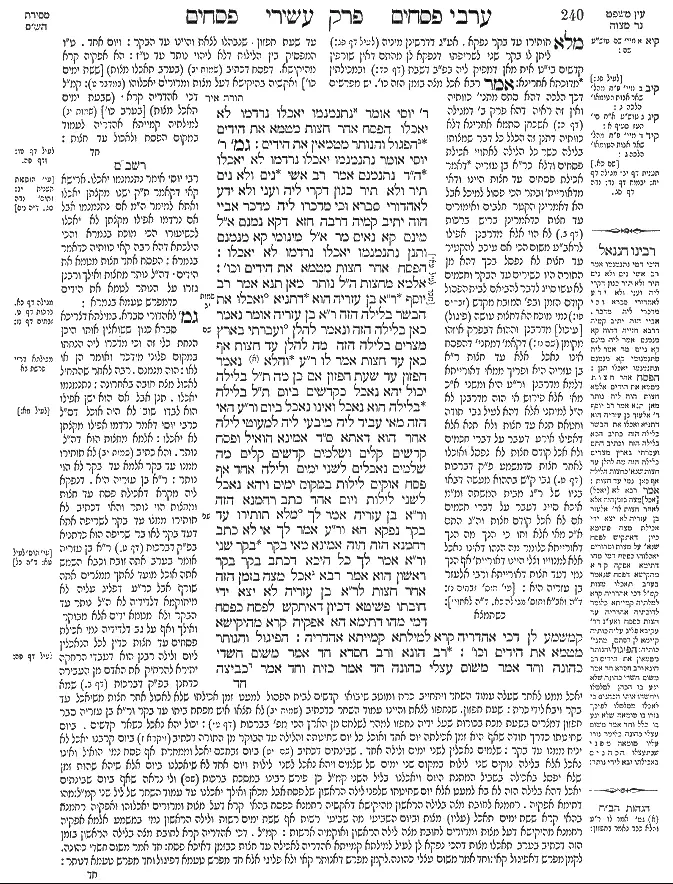
Pesahim 120b - Guemara
ר' יוסי אומר נתנמנמו יאכלו נרדמו לא יאכלו הפסח אחר חצות מטמא את הידים הפגול והנותר מטמאין את הידים:
גמ׳ ר' יוסי אומר נתנמנמו יאכלו נרדמו לא יאכלו ה"ד נתנמנם אמר רב אשי נים ולא נים תיר ולא תיר כגון דקרי ליה ועני ולא ידע לאהדורי סברא וכי מדכרו ליה מדכר אביי הוה יתיב קמיה דרבה חזא דקא נמנם א"ל מינם קא נאים מר א"ל מינומי קא מנמנם ותנן נתנמנמו יאכלו נרדמו לא יאכלו:
הפסח אחר חצות מטמא את הידים וכו':
אלמא מחצות ה"ל נותר מאן תנא אמר רב יוסף ר"א בן עזריה הוא דתניא (שמות יב, ח) ואכלו את הבשר בלילה הזה ר"א בן עזריה אומר נאמר כאן בלילה הזה ונאמר להלן (שמות יב, יב) ועברתי בארץ מצרים בלילה הזה מה להלן עד חצות אף כאן עד חצות אמר לו ר"ע והלא נאמר חפזון עד שעת חפזון אם כן מה ת"ל בלילה יכול יהא נאכל כקדשים ביום ת"ל בלילה בלילה הוא נאכל ואינו נאכל ביום ור"ע האי הזה מאי עביד ליה מיבעי ליה למעוטי לילה אחר הוא דאתא ס"ד אמינא הואיל ופסח קדשים קלים ושלמים קדשים קלים מה שלמים נאכלים לשני ימים ולילה אחד אף פסח אוקים לילות במקום ימים ויהא נאכל לשני לילות ויום אחד כתב רחמנא הזה ור"א בן עזריה אמר לך (שמות יב, י) מלא תותירו עד בקר נפקא הא ור"ע אמר לך אי לא כתב רחמנא הזה הוה אמינא מאי בקר בקר שני ור"א אמר לך כל היכא דכתב בקר בקר ראשון הוא אמר רבא אכל מצה בזמן הזה אחר חצות לר"א בן עזריה לא יצא ידי חובתו פשיטא דכיון דאיתקש לפסח כפסח דמי מהו דתימא הא אפקיה קרא מהיקישא קמשמע לן דכי אהדריה קרא למילתא קמייתא אהדריה:
הפיגול והנותר מטמא את הידים וכו:
רב הונא ורב חסדא חד אמר משום חשדי כהונה וחד אמר משום עצלי כהונה חד אמר כזית וחד אמר כביצה
Comments from Rashi on Masechet Pesahim Page 120b
גמ' עד שעת חפזון . שנבהלו לצאת והיינו עד הבקר: ויום אחד . ט"ו המפסיק בין הלילות דלא ליהוי נותר עד ט"ז: הא אפקיה קרא מהיקישא . דפסח דכתיב (שמות יב) (בערב תאכלו מצות) [ששת ימים כו'] ואקשיה בהיקישא דעל מצות ומרורים יאכלוהו (במדבר ט): קמ"ל דכי אהדריה קרא . (שבעת ימים תאכל מצות) [בערב כו'] (שמות יג) למילתיה קמייתא אהדריה לעמוד במקום הפסח ולאכול עד חצות:
Comments from Rashbam - Pesahim 120b
הפסח אחר חצות מטמא את הידים . דה''ל נותר מחצות ואילך ורבנן גזרו על הנותר לטמא את הידים כדמפרש טעמא בגמרא: רבי יוסי אומר נתנמנמו יאכלו . ארישא קאי דקאמר ת''ק ישנו מקצתן יאכלו ואתא למימר ה''מ אם נתנמנמו אבל אם נרדמו אפילו מקצתן לא יאכלו לכשיעורו הכי מוכח בגמרא והכי הילכתא דהא רבה קאי כוותיה כדאמר בגמרא: נתנמנמו יאכלו . תנן אבל אם הוא ישן אפילו הוא לבדו שוב לא היה אוכל דס''ל כרבי יוסי דאמר נרדמו אפילו מקצתן לא יאכלו: גמ' לאהדורי סברא . במילתא דצריכא סברא כגון ששואלין אותו היכן הנחת כלי זה וכי מדכרו ליה הנחתו במקום פלוני מידכר ואומר הן או לאו: הוה מנמנם . רבה לאחר שהתחיל לאכול מצת חובה באחרונה אלמא מחצות הוא דה''ל נותר . והא כתיב (שמות יב) לא תותירו ממנו עד בקר אלמא עד בקר לא הוי נותר: ר''א בן עזריה היא . דנפקא ליה מקרא דאכילת פסח עד חצות ומחצות הוי נותר והאי דכתיב לא תותירו ממנו עד בקר לשריפה אתא דעד בקר לאו בר שריפה הוא כדתניא בפ''ק דברכות (דף ט.) ר''א בן עזריה אומר בערב אתה זובח וכבא השמש אתה אוכל מועד צאתך ממצרים אתה שורף אבל כר''ע דפליג עליה לא מיתוקמא דלדידיה לא ה''ל נותר עד הבקר ולא מטמא ידים אלא מבוקר ואילך ואף על גב דלדידיה נמי אכילת פסחים עד חצות כדין לכל הנאכלין ליום ולילה רבנן הוא דעבדי הרחקה יתירא להרחיק את האדם מן העבירה כדתנן בפ''ק דברכות (דף ב.) שמא יאכל ממנו לאחר שעלה עמוד השחר ויתחייב כרת ומוטב שיבואו קדשים לבית הפסול למעט זמן אכילתו שלא לאכול אחר חצות משיאכל עד בקר ויבא לידי כרת: שעת חפזון . שנחפזו לצאת והיינו עמוד השחר כדכתיב (שמות יב) לא תצאו איש מפתח ביתו עד בקר ור''א בן עזריה סבר חפזון דמצרים בשעת מכת בכורות שעל ידיה נחפזו למהר לשלחם מן הארץ הכי מפ' בברכות (דף ט.): יכול יהא נאכל כשאר קדשים . ביום . שחיטתו כדרך תודה שאף היא זמן אכילתה יום אחד ואוכל כל יום שחיטתה והלילה עד הבוקר מן התורה דכתיב (ויקרא ז) ביום קרבנו יאכל לא יניח ממנו עד בקר: שלמים נאכלין לשני ימים ולילה אחד . שבינתים דכתיב (שם יט) ביום זבחכם יאכל וממחרת אף פסח נמי הואיל ואינו נאכל אלא בלילה נוקים שני לילות במקום שני ימים של שלמים ויהא נאכל לשני לילות ויום אחד לא שיאכלנו ביום אלא שיהא שהות זמן שלא יפסל באכילה בשביל המתנת היום ויאכלנו בליל השני קמ''ל כן פירש רבינו במסכת ברכות (שם) ולי נראה שאף ביום שבינתים יאכל דהא בלילה הזה לא בא למעט אלא יום שחיטתו שלפני לילה הראשון של פסח אבל מכאן ואילך יאכלנו עד עמוד השחר של ליל שני קמ''ל: מהו דיתימא אסקיה . רחמנא לחובת מצה בלילה הראשון מהיקישא דאקשיה רחמנא כפסח בהאי קרא דעל מצות ומרורים יאכלוהו ואסקיה רחמנא בהאי קרא ששת ימים תאכל (עליו) מצות וביום השביעי מה שביעי רשות אף ששת ימים רשות ולילה הראשון נמי במשמע אלמא אפקיה רחמנא מהיקישא דעל מצות ומרורים לחובת מצה לילה הראשון ואוקמיה ארשות: קמ''ל . דכי אהדריה קרא לחובת מצה בלילה הראשון בזמן הזה דכתיב בערב תאכלו מצות דהכי נפקא לן לעיל למילתא קמייתא אהדריה לאכילה עד חצות כבזמן דאיכא פסח: חד אמר משום חשדי כהונה . לקמן מפרש דאפיגול קאי: וחד אמר משום עצלי כהונה . לקמן מפרש דאנותר קאי ולא פליגי אלא חד מפרש טעמא דפיגול וחד מפרש טעמא דנותר:
Comments from Tosafot - Pesahim 120b
מלא תותירו עד בקר נפקא . אע"ג דדרשינן מיניה (לעיל פסחים דף פג:) ליתן לו בקר שני לשריפתו דנפקא לן מהתם דאין שורפין קדשים בי"ט אית מאן דמפיק ליה בפ"ב דשבת (דף כד:) ובמכילתין מדוכתא אחרינא: אמר רבא אכל מצה בזמן הזה כו' . יש מפרשים דכך הלכה דהא סתם מתני' כוותיה ואין זה ראיה דהא פרק ב' דמגילה (דף כ:) אשכחן סתמא אחרינא דלא כוותיה דתנן זה הכלל כל דבר שמצותו בלילה כשר כל הלילה לאתויי אכילת פסחים ודלא כר"א בן עזריה דאמר אכילת פסחים עד חצות היינו ודאי מדאוריית' ובתר הכי פסול למיכל אבל הא דאמרינן הקטר חלבים ואימורים עד חצות כדאמרינן בריש ברכות (דף ב.) לא הוי אלא מדרבנן אפילו לראב"ע משום הכי אם עיכב להקטיר עד חצות לא נפסל בכך דהא מן התורה היו כשירים עד הבקר וחכמים לא עשו סייג לדבר להביאם לבית הפסול קודם הזמן ובפ' המזבח מקדש (זבחים פו:) נמי מוכח הא דחצות עושה (פיגול) [עיכול] מדרבנן וההוא דבפרק איזהו מקומן (שם נז:) דקאמ' דמתני' דהפסח אינו נאכל אלא עד חצות ר"א בן עזריה היא ופריך ממאי דאורייתא דלמא מדרבנן ור"ע היא ומשני א"כ מאי אלא פירוש אי הוה מדרבנן לא ה"ל למיתני אלא דהא לעיל גבי תודה וחטאת תנא עד חצות ולא תנא אלא דאפילו אירע דעבר על דברי חכמים ולא אכל קודם חצות לא נפסל ואוכלו לאחר חצות כדמשמע פ"ק דברכות (דף ט.) גבי ק"ש בההוא מעשה דבאו בניו של ר"ג מבית המשתה ומ"מ איכא סייג דעבר על דברי חכמים אם לא אכל קודם חצות וה"ג התם א"כ מאי אלא ותו כי הנך מה הנך דאורייתא כלומר מה הנהו דאינו נאכל אלא למנוייו וצלי היינו דאוריית' אף הנך נמי דעד חצות דאורייתא ורבי אלעזר בן עזריה היא [עי' תוס' זבחים נז: ד"ה ואב"א ותוס' מגילה כא. דא לאתויי]:
Pesahim 120b - Mishnah translated into english
Rabbi Yosei says: If they dozed they may eat from the Paschal lamb when they awake, but if they fell fast asleep they may not eat from it. The Sages further said: The Paschal lamb after midnight renders one’s hands ritually impure, as it becomes notar, an offering that remained after the time when they may be eaten has expired; and the Sages ruled that both piggul, offerings that were invalidated due to inappropriate intent while being sacrificed, and notar render one’s hands ritually impure.
GEMARA: We learned in the mishna that Rabbi Yosei says: If they dozed they may eat from the Paschal lamb, but if they fell asleep they may not eat from it. The Gemara asks: What are the circumstances of dozing? Rav Ashi said: One is asleep but not asleep, awake but not awake, when, if they call him, he will answer, but he is unable to provide a reasonable answer. And when they later inform him of what happened, he remembers it.
The Gemara cites a related episode: Abaye was sitting before Rabba, and he saw that Rabba was dozing off after he had begun to eat the final obligatory piece of matza. He said to him: Is the Master sleeping? Rabba said to him: I am dozing, and we learned in the mishna: If they dozed, they may eat from the Paschal lamb, but if they fell fast asleep they may not eat from it.
We learned in the mishna that the Paschal lamb after midnight renders one’s hands ritually impure. The Gemara infers: Apparently, from midnight and onward the Paschal lamb is classified as notar. The Gemara asks: Who is the tanna who maintains this opinion?
Rav Yosef said: It is Rabbi Elazar ben Azarya, as it was taught in a baraita: With regard to the verse “And they shall eat of the meat on that night” (Exodus 12:8), Rabbi Elazar ben Azarya says: Here it is stated “on that night,” from which it cannot be determined when the night ends. And below it is stated: “And I will pass through the land of Egypt on that night and I will strike every firstborn in the land of Egypt” (Exodus 12:12). The Torah states with regard to the death of the firstborns: “Thus said the Lord: At about midnight, I will go out into the midst of Egypt and every firstborn in Egypt shall die” (Exodus 11:4–5).
The baraita continues: Just as in the verse below, the striking of the firstborns took place until midnight, as stated explicitly in the verse, so too, in the verse here, the mitzva to eat the Paschal lamb continues until midnight but not beyond. Evidently, the Paschal lamb may not be eaten after midnight.
Rabbi Akiva said to Rabbi Elazar ben Azarya: But wasn’t it already stated: “Thus you shall eat it, with your loins girded, your shoes on your feet, your staffs in your hands, and you will eat it in haste, for it is the Paschal offering for the Lord” (Exodus 12:11)? This verse indicates that the Paschal lamb may be eaten until the time of haste, i.e., until dawn, as the Jewish people left Egypt the next day.
Rabbi Akiva continues: If that is so, what is the meaning when the verse states: “On that night,” with regard to eating the Paschal lamb? The Gemara explains that this phrase is necessary, as I might have thought that the Paschal lamb is eaten during the day, like all other offerings, which must be slaughtered and eaten during the day. Therefore, the verse states: “On that night,” to underscore that this particular offering is eaten at night, and it is not eaten during the day.
The Gemara asks: And Rabbi Akiva, what does he do with the word “that”? As he doesn’t use it for a verbal analogy, what does Rabbi Akiva learn from this word? The Gemara answers: He needs it to exclude another night. It could enter your mind to say that since the Paschal lamb falls into the category of offerings of lesser sanctity, and peace-offerings are also offerings of lesser sanctity, just as peace-offerings may be eaten for two days and one night, i.e., the day they are sacrificed through the following day, as stated in the Torah, so too, the same halakha should apply to the Paschal lamb.
The Gemara explains the previous statement. How could the Paschal lamb be eaten for two days and one night if one starts eating it at night? The Gemara explains: One may say: I will substitute the nights that the Paschal lamb may be eaten instead of the days that a peace-offering is eaten. And accordingly, the Paschal lamb may be eaten for two nights and one day. Therefore, the Torah wrote the word “that,” to teach that the Paschal lamb may be eaten only on that one night.
And Rabbi Elazar ben Azarya, from where might he derive the halakha that the Paschal lamb may not be eaten for two nights? Rabbi Elazar ben Azarya could have said to you: This halakha is derived from the verse: “You shall let nothing of it remain until the morning; and that of it which remains until the morning you shall burn with fire” (Exodus 12:10). If it is prohibited to leave any part of the Paschal lamb until the morning, it is certainly prohibited to leave any of it until the following night. Therefore, it is unnecessary to cite an additional source to teach that the Paschal lamb may be eaten only on the first night.
And Rabbi Akiva could have said to you, in response to this argument: If the Torah hadn’t written “on that night,” I would have said: What is indicated by the word “morning” in that verse? It means the second morning after the Festival, the day of the sixteenth of Nisan. Therefore, it was necessary for the Torah to write that one may eat the Paschal lamb only on that night and no other. And Rabbi Elazar could have said to you in response: Anywhere that the Torah writes “morning,” it is referring to the first, i.e., the next morning. If that were not the case, no biblical text could have any definitive meaning.
Rava said: Nowadays, if one ate matza after midnight, according to the opinion of Rabbi Elazar ben Azarya, he has not fulfilled his obligation. The Gemara expresses surprise at this statement: It is obvious that this is the case, for since the verse juxtaposes matza to the Paschal lamb, it is considered like the Paschal lamb, and therefore matza may also be eaten only until midnight.
The Gemara answers: Rava’s statement is necessary, lest you say that the verse has removed the halakha of matza from this juxtaposition, as Rava maintains that eating matza is a distinct mitzva that applies even nowadays. One might therefore have thought that the halakhot of eating matza differ entirely from those of the Paschal lamb. Rava therefore teaches us that when the verse repeats the mitzva to eat matza on the first night, it restores this mitzva to its original status, which means that one may eat matza only at a time when he may also eat the Paschal lamb.
The mishna taught that piggul and notar render one’s hands ritually impure. This issue is subject to a dispute between Rav Huna and Rav Ḥisda. One of them said: The reason for this enactment is due to suspected priests, i.e., priests who were suspected of invalidating offerings; and the other one said the reason is due to lazy priests. Rav Huna and Rav Ḥisda also disagree about another matter: One of them said that the ritual impurity of notar and piggul applies even to an olive-bulk of the meat; and one of them said it applies only to an egg-bulk.
Traduction : The William Davidson digital edition of the Koren Noé Talmud, with commentary by Rabbi Adin Even-Israel Steinsaltz.