 Talmud Bavli
The learning on the whole site is dedicated : L'ilui Nishmat יוסף בן מושה
The learning on the whole site is dedicated : L'ilui Nishmat Rav Chlomo Ben Jamilla
The learning on the whole site is dedicated : L'ilui Nishmat Nissim ben Barukh Malka
Sanhedrin 105b : Youtube
Daf TubeYoutube
2 video classes :
Sanhedrin Page 105b
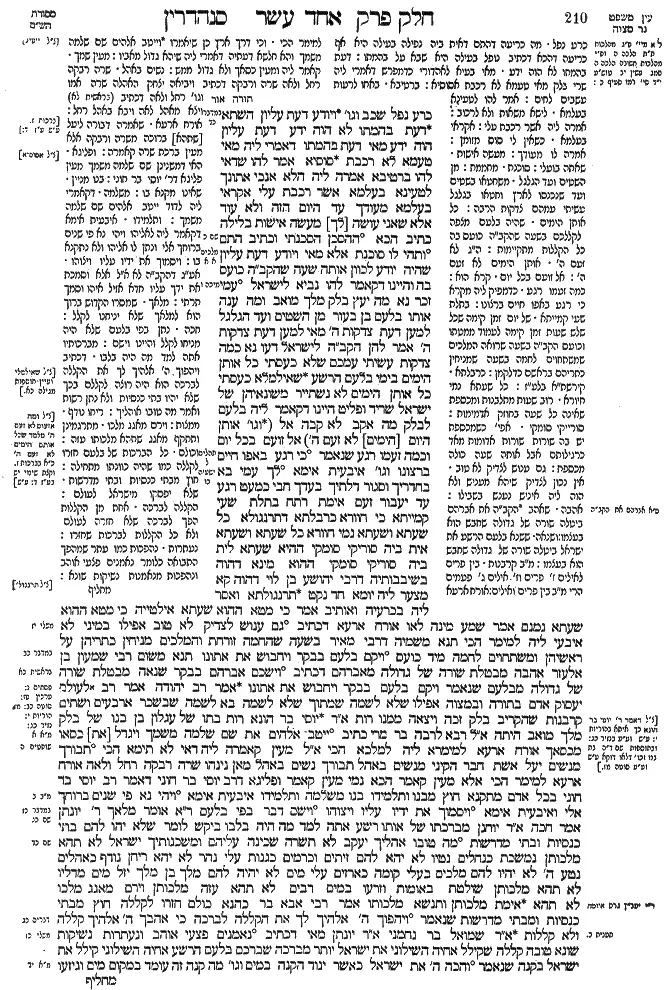
Sanhedrin 105b - Guemara
כרע נפל שכב וגו' (במדבר כד, טז) ויודע דעת עליון השתא דעת בהמתו לא הוה ידע דעת עליון הוה ידע מאי דעת בהמתו דאמרי ליה מאי טעמא לא רכבת סוסיא אמר להו שדאי להו ברטיבא אמרה ליה הלא אנכי אתונך לטעינא בעלמא אשר רכבת עלי אקראי בעלמא מעודך עד היום הזה ולא עוד אלא שאני עושה [לך] מעשה אישות בלילה כתיב הכא (במדבר כב, ל) ההסכן הסכנתי וכתיב התם (מלכים א א, ב) ותהי לו סוכנת אלא מאי ויודע דעת עליון שהיה יודע לכוון אותה שעה שהקב"ה כועס בה והיינו דקאמר להו נביא לישראל (מיכה ו, ה) עמי זכר נא מה יעץ בלק מלך מואב ומה ענה אותו בלעם בן בעור מן השטים ועד הגלגל למען דעת צדקות ה' מאי למען דעת צדקות ה' אמר להן הקב"ה לישראל דעו נא כמה צדקות עשיתי עמכם שלא כעסתי כל אותן הימים בימי בלעם הרשע שאילמלא כעסתי כל אותן הימים לא נשתייר משונאיהן של ישראל שריד ופליט היינו דקאמר ליה בלעם לבלק מה אקב לא קבה אל (וגו' אותן היום [הימים] לא זעם ה') אל זועם בכל יום וכמה זעמו רגע שנאמר (תהלים ל, ו) כי רגע באפו חיים ברצונו וגו' איבעית אימא (ישעיהו כו, כ) לך עמי בא בחדריך וסגור דלתיך בעדך חבי כמעט רגע עד יעבור זעם אימת רתח בתלת שעי קמייתא כי חוורא כרבלתא דתרנגולא כל שעתא ושעתא נמי חוורא כל שעתא ושעתא אית ביה סוריקי סומקי ההיא שעתא לית ביה סוריקי סומקי ההוא מינא דהוה בשיבבותיה דרבי יהושע בן לוי דהוה קא מצער ליה יומא חד נקט תרנגולתא ואסר ליה בכרעיה ואותיב אמר כי מטא ההוא שעתא אילטייה כי מטא ההוא שעתא נמנם אמר שמע מינה לאו אורח ארעא דכתיב (משלי יז, כו) גם ענוש לצדיק לא טוב אפילו במיני לא איבעי ליה למימר הכי תנא משמיה דרבי מאיר בשעה שהחמה זורחת והמלכים מניחין כתריהן על ראשיהן ומשתחוים לחמה מיד כועס (במדבר כב, כא) ויקם בלעם בבקר ויחבוש את אתונו תנא משום רבי שמעון בן אלעזר אהבה מבטלת שורה של גדולה מאברהם דכתיב (בראשית כא, יד) וישכם אברהם בבקר שנאה מבטלת שורה של גדולה מבלעם שנאמר ויקם בלעם בבקר ויחבוש את אתונו אמר רב יהודה אמר רב לעולם יעסוק אדם בתורה ובמצוה אפילו שלא לשמה שמתוך שלא לשמה בא לשמה שבשכר ארבעים ושתים קרבנות שהקריב בלק זכה ויצאה ממנו רות א"ר יוסי בר הונא רות בתו של עגלון בן בנו של בלק מלך מואב היתה א"ל רבא לרבה בר מרי כתיב (מלכים א א, מז) ייטב אלהים את שם שלמה משמך ויגדל [את] כסאו מכסאך אורח ארעא למימרא ליה למלכא הכי א"ל מעין קאמרה ליה דאי לא תימא הכי (שופטים ה, כד) תבורך מנשים יעל אשת חבר הקיני מנשים באהל תבורך נשים באהל מאן נינהו שרה רבקה רחל ולאה אורח ארעא למימר הכי אלא מעין קאמר הכא נמי מעין קאמר ופליגא דרב יוסי בר חוני דאמר רב יוסי בר חוני בכל אדם מתקנא חוץ מבנו ותלמידו בנו משלמה ותלמידו איבעית אימא (מלכים ב ב, ט) ויהי נא פי שנים ברוחך אלי ואיבעית אימא (במדבר כז, כג) ויסמוך את ידיו עליו ויצוהו (במדבר כג, ה) וישם דבר בפי בלעם ר"א אומר מלאך ר' יונתן אמר חכה א"ר יוחנן מברכתו של אותו רשע אתה למד מה היה בלבו ביקש לומר שלא יהו להם בתי כנסיות ובתי מדרשות (במדבר כד, ה) מה טובו אהליך יעקב לא תשרה שכינה עליהם ומשכנותיך ישראל לא תהא מלכותן נמשכת כנחלים נטיו לא יהא להם זיתים וכרמים כגנות עלי נהר לא יהא ריחן נודף כאהלים נטע ה' לא יהיו להם מלכים בעלי קומה כארזים עלי מים לא יהיה להם מלך בן מלך יזל מים מדליו לא תהא מלכותן שולטת באומות וזרעו במים רבים לא תהא עזה מלכותן וירם מאגג מלכו לא תהא אימת מלכותן ותנשא מלכותו אמר רבי אבא בר כהנא כולם חזרו לקללה חוץ מבתי כנסיות ומבתי מדרשות שנאמר (דברים כג, ו) ויהפוך ה' אלהיך לך את הקללה לברכה כי אהבך ה' אלהיך קללה ולא קללות א"ר שמואל בר נחמני א"ר יונתן מאי דכתיב (משלי כז, ו) נאמנים פצעי אוהב ונעתרות נשיקות שונא טובה קללה שקילל אחיה השילוני את ישראל יותר מברכה שברכם בלעם הרשע אחיה השילוני קילל את ישראל בקנה שנאמר (מלכים א יד, טו) והכה ה' את ישראל כאשר ינוד הקנה במים וגו' מה קנה זה עומד במקום מים וגיזעו
Comments from Rashi on Masechet Sanhedrin Page 105b
כרע נפל . מה כריעה דהתם דאית ביה נפילה בעילה היא אף כריעה דהכא דכתיב נופל בעילה היא שבא על בהמתו: דעת בהמתו לא הוה ידע . מאי בעיא לאהדורי כדמפרש דאמרי ליה שרי בלק מאי טעמא לא רכבת אסוסיא: ברטיבא . באחו לרעות עשבים לחים: אמר להו לטעינא בעלמא . לישא משאות ולא לרכוב: אמרה ליה אשר רכבת עלי: אקראי בעלמא . כשאין לי סוס מזומן: אמרה לו מעודך: מעשה אישות . שאתה בועלי: סוכנת . מחממת: מן השטים ועד הגלגל . משחטאו בשטים ועד שנכנסו לארץ וחטאו בגלגל עשיתי עמהם צדקות הרבה: כל אותן הימים . שהיה בלעם מצפה לקללכם בשעה שהקב"ה כועס בה כל הקללות מתקיימות: ה"ג לא זעם ה' . אותן הימים לא זעם ה': אל זועם בכל יום . קרא הוא: כמה זעמו רגע . כדמפיק ליה מקרא כי רגע באפו חיים ברצונו: בתלת שעי קמייתא . של יום זמן קימה שכל שלש שעות זמן קימה לעמוד ממטתו וכועס הקב"ה בשעה שרואה המלכים שמשתחוים לחמה בשעה שמניחין כתריהם בראשם כדלקמן: כרבלתא . קירשת"א בלע"ז: כל שעתא נמי חיורא . רוב שעות מתלבנות ומכספת שאינה כל שעה בחוזק אדמימות: סורייקי סומקי . אפי' כשמכספת יש בה שורות שורות אדומות מאד כרגילותם אבל אותה שעה כולה מכספת: גם ענוש לצדיק לא טוב . אין נכון לצדיק שיהא מעניש ולא הוה ליה איניש נענש בשבילו: אהבה . שאהב הקב"ה את אברהם ביטלה שורה של גדולה שחבש הוא בעצמו: ושנאה . ששנא בלעם הרשע את ישראל ביטלה שורה של גדולה שחבש הוא בעצמו: מ"ב קרבנות . בין פרים לאילים ז' פרים וז' אילים ג' פעמים הרי מ"ב בין פרים ואילים: אורח ארעא למימר הכי . וכי דרך ארץ כן שיאמרו וייטב אלהים שם שלמה משמך והא חלשא דעתיה דאמרי ליה שיהא גדול מאביו: מעין שמך . קאמר ליה ומעין כסאך ולא גדול ממש: נשים באהל . שרה רבקה רחל ולאה שרה ורבקה דכתיב ויביאה יצחק האהלה שרה אמו וגו' רחל ולאה דכתיב (בראפית לא) ויצא מאהל לאה ויבא באהל רחל: אורח ארעא . שאמרה דבורה ליעל [שתהא] ברוכה משרה ורבקה אלא מעין ברכת שרה קאמרה: ופליגא . האי דמשנינן שם שלמה משמך מעין פליגא דר' יוסי בר חוני: בנו מניין . שאינו מקנא בו: משלמה . דקאמרי ליה לדוד ייטב אלהים שם שלמה משמך: ותלמידו . איבעית אימא דקאמר ליה לאליהו ויהי נא פי שנים ברוחך אלי ונתן לו אליהו ולא נתקנא בו: ויסמוך את ידיו עליו ויצוהו . אע"ג דהקב"ה לא א"ל אלא וסמכת את ידך עליו חדא אזיל איהו וסמך תרתי: מלאך . שמסרו הקדוש ברוך הוא למלאך שלא יניחנו לקלל: חכה . נתן בפי בלעם שלא היה מניחו לקלל והיינו וישם: מברכותיו אתה למד מה היה בלבו . דכתיב ויהפוך ה' אלהיך לך את הקללה לברכה הוא היה רוצה לקללם בכך שלא יהיו בתי כנסיות ולא נתן רשות ואמר מה טובו אוהליך: ריחו נודף . ממצות: וירם מאגג מלכו . מתרגמינן ותתקף מאגג שתהא מלכותו עזה: וכולם . כל הברכות של בלעם חזרו לקללה כמו שהיה כוונתו מתחילה: חוץ מבתי כנסיות ובתי מדרשות . שלא יפסקו מישראל לעולם: הקללה לברכה . אחת מן הקללות הפך לברכה שלא חזרה לעולם ולא כל הקללות לברכות שחזרו: נעתרות . נהפכות כמו עתר שמהפך התבואה כלומר נאמנים פצעי אוהב ונהפכות מנאמנות נשיקות שונא:
Sanhedrin 105b - Mishnah translated into english
he sunk, he fell, he lay” (Judges 5:27), which is interpreted as a reference to sexual intercourse between Sisera and Jael.
§ Balaam describes himself: “And he knows the knowledge of the Most High” (Numbers 24:16), and the Gemara asks: Now, if the knowledge of his animal he did not know, is it possible that the knowledge of the Most High he knew? The Gemara explains: What is the meaning of the knowledge of his animal? The princes accompanying him said to him: What is the reason that you did not ride horses? Balaam said to them: I brought the horses to graze in the pasture and rest there.
The donkey said to him: “Am I not your donkey” (Numbers 22:30)? Balaam said to the donkey: Merely for burdens, not for riding. The donkey said to him: “Upon which you have ridden” (Numbers 22:30). Balaam said to the donkey: That was mere happenstance and is not a regular occurrence. The donkey said to him: “Your whole life until this day” (Numbers 22:30).
The donkey continued: Moreover, I perform a conjugal act for you and we engage in bestiality at night. From where is this derived? It is written here: “Was I ever wont [hahasken hiskanti] to do so to you” (Numbers 22:30)? And it is written there with regard to Abishag the Shunammite: “And let her be a companion [sokhenet] to him” (I Kings 1:2). Just as the root samekh, kaf, nun indicates sexual relations in the case of Abishag, the same is true with regard to the donkey. Balaam was unable to best his donkey in a debate.
The Gemara asks: Rather, what, then, is the meaning of the phrase “And he knows knowledge of the Most High”? Is it possible that he knew the knowledge of the Most High? Rather, he would know to determine the moment during which the Holy One, Blessed be He, is angry. He would curse at that moment and the curse was effective.
And that is what the prophet said to Israel: “My nation, remember what Balak, king of Moab, advised, and how Balaam, son of Beor, responded; from Shittim to Gilgal, so that you may know the righteous acts of the Lord” (Micah 6:5). What is the meaning of the phrase “So that you may know the righteous acts of the Lord”? The Holy One, Blessed be He, said to Israel: Know how many acts of kindness I performed on your behalf, that I did not become angry during all the days of Balaam the wicked, as had I become angry during all those days, no remnant or refugee would have remained among the enemies of Israel, a euphemism for Israel itself. Instead, God restrained His anger and Balaam’s curse went unfulfilled.
That is what Balaam said to Balak: “How can I curse, whom God has not cursed? And how can I condemn, whom God has not condemned?” (Numbers 23:8). Since God did not become angry, Balaam was unable to curse the Jewish people. It is written: “And God is angry every day” (Psalms 7:12). And how long is the duration of His wrath? It is one moment, as it is stated: “For His anger endures but a moment; His favor is for a lifetime” (Psalms 30:6).
If you wish, say instead this proof from another source, as it is stated: “Come, my people, enter you into your chambers, and shut your doors about you; hide yourself for a brief moment, until the anger passes” (Isaiah 26:20), meaning that God’s anger passes in a mere moment. And when is the Holy One, Blessed be He, angry? It is during the first three hours of the day, when the crest of the rooster is white from the sun. The Gemara challenges: Each and every hour of the day the rooster’s crest is also white, as it does not always remain red. The Gemara explains: The difference is that during each and every other hour when the rooster stands that way, there are red streaks in his crest. But at that moment when God is angry, there are no red streaks in the rooster’s crest.
The Gemara relates: There was a certain heretic who was in Rabbi Yehoshua ben Levi’s neighborhood who would upset him by incessantly challenging the legitimacy of biblical verses. One day, Rabbi Yehoshua ben Levi took a rooster and tied it by its legs and sat and waited. He said: When that moment of God’s wrath arrives, I will curse him. When that moment of God’s wrath arrived, Rabbi Yehoshua ben Levi dozed off. When he awakened, he said: Conclude from the fact that I dozed off that it is not proper conduct to curse even the wicked, as it is written: “Punishment, even for the righteous, is not good” (Proverbs 17:26). Even with regard to heretics, a righteous person should not state a curse in order to punish them.
Explaining the cause of God’s anger, it was taught in a baraita in the name of Rabbi Meir: When the sun rises and the kings place their crowns on their heads and bow down to the sun, the Holy One, Blessed be He, immediately grows angry. Since this occurs in the early hours of every day, God becomes angry at His world at that time every day.
§ It is stated: “And Balaam rose early in the morning and saddled his donkey” (Numbers 22:21). It was taught in a baraita in the name of Rabbi Shimon ben Elazar: Love negates the standard conduct of those of prominence. This is derived from Abraham, as it is written: “And Abraham rose early in the morning and saddled his donkey” (Genesis 22:3). Atypically, he saddled the donkey himself and he did not wait for his servants. Likewise, hatred negates the standard conduct of those of prominence. This is derived from Balaam, as it is stated: “And Balaam rose early in the morning and saddled his donkey” (Numbers 22:21).
Rav Yehuda says that Rav says: A person should always engage in Torah study and performance of a mitzva even if he does not do so for their own sake, as through engaging in them not for their own sake, he will ultimately come to engage in them for their own sake. Proof for this can be cited from the example of Balak, as in reward for the forty-two offerings that Balak sacrificed, even though he sacrificed them to facilitate the destruction of the Jewish people, he was privileged and Ruth descended from him. Rabbi Yosei bar Huna says: Ruth was the daughter of Eglon, son of the son of Balak, king of Moab.
Apropos Ruth, matriarch of the Davidic line, the Gemara cites that which Rava said to Rabba bar Mari: It is written that the servants of David said to David: “May God make the name of Solomon better than your name and make his throne greater than your throne [mikisekha]” (I Kings 1:47). Rava asks: Is it proper conduct to speak to a king in that manner and say that his son will be greater than he is? Rabba bar Mari said to Rava: She said to him: May the throne of Solomon be of the nature of your throne.
He explains: As if you do not say so and do not explain it in this manner, then the verse: “Blessed above women Jael, wife of Heber the Kenite; blessed is she more than the women [minashim] in the tent” (Judges 5:24), is difficult. “The women in the tent,” who are they? They are Sarah, Rebecca, Rachel, and Leah. Is it proper conduct to speak in that manner about the Matriarchs? Rather, of the nature of the Matriarchs is what the verse says, not greater. So too in the case of David’s servants: Of the nature of his throne, is what the verse says.
The Gemara notes: This explanation disagrees with the opinion of Rav Yosei bar Ḥoni, as Rav Yosei bar Ḥoni says: A person is jealous of everyone except for his son and his student. Since their success reflects well upon him, he celebrates their success. The fact that one is not jealous of his son is derived from King David’s servants telling him: May Solomon be greater than he is. And the fact that one is not jealous of his student; if you wish, say that it is derived from that which Elisha said to Elijah: “I pray you that a double portion of your spirit be upon me” (II Kings 2:9). He asked of his mentor to be greater than him, indicating that it is not an objectionable matter. And if you wish, say instead that it is derived from Moses: “And he laid his hands upon him and commanded him” (Numbers 27:23). God commanded Moses to lay only one hand upon Joshua, and instead he laid both hands upon him with all his strength.
§ With regard to the verse: “And the Lord placed a matter in Balaam’s mouth” (Numbers 23:5), Rabbi Elazar says: It was an angel that spoke from his mouth. Rabbi Yonatan says: It was a hook placed in his mouth to prevent him from saying anything else.
Rabbi Yoḥanan says: From the blessing of that wicked person, Balaam, you can ascertain what was in his heart. God transformed the curses that he planned into blessings. He sought to say that they should not have synagogues and study halls, and he said instead: “How goodly are your tents, Jacob” (Numbers 24:5), a blessing on their synagogues. He sought to say that the Divine Presence [shekhina] will not rest upon them, and he said instead: “And your dwellings [mishkenot] Israel.” He sought to say that the kingdom of Israel would not continue, and he said instead that it would continue: “Like the winding brooks” (Numbers 24:6), which flow continuously. He sought to say that they would have no olive trees and vineyards, and he said instead: “Like gardens by the river’s side” (Numbers 24:6). He sought to say that their fragrance would not diffuse from their fulfillment of mitzvot, and he said instead: “Like aloes that the Lord has planted” (Numbers 24:6).
He sought to say that they would not have kings of stature, and he said instead: “Like cedar trees beside the waters” (Numbers 24:6). He sought to say that they will not have a king the son of a king, and he said instead: “Water shall flow from his branches” (Numbers 24:7). He sought to say that their kingdom would not rule over the nations, and he said instead: “And his seed shall be in many waters” (Numbers 24:7). He sought to say that their kingdom would not be fierce, and he said instead: “And his king shall be higher than Agag.” He sought to say that there will be no fear of their kingdom, and he said instead: “And his kingdom shall be exalted” (Numbers 24:7).
Rabbi Abba bar Kahana says: All of the blessings ultimately reverted to be fulfilled as the curse that he originally intended, as all of those circumstances befell the Jewish people, except for the destruction of synagogues and study halls, as it is stated: “And the Lord your God transformed the curse into a blessing for you, because the Lord your God loved you” (Deuteronomy 23:6). A curse in the singular, not curses in the plural, was transformed permanently.
Rabbi Shmuel bar Naḥmani says that Rabbi Yonatan says: What is the meaning of that which is written: “Faithful are the wounds of a friend; but the kisses of an enemy are importunate” (Proverbs 27:6)? Better is the curse that Ahijah the Shilonite cursed the Jewish people than the blessing that Balaam the wicked blessed them. Ahijah the Shilonite cursed Israel with a reed, as it is stated: “For the Lord shall smite Israel as a reed is shaken in water” (I Kings 14:15). There is an aspect of blessing in that curse, as he was saying they will be just like a reed that stands in a place near water, as the water sustains it, and its stalk
Traduction : The William Davidson digital edition of the Koren Noé Talmud, with commentary by Rabbi Adin Even-Israel Steinsaltz.