 Talmud Bavli
The learning on the whole site is dedicated : L'ilui Nishmat Nissim ben Barukh Malka
The learning on the whole site is dedicated : L'ilui Nishmat Yechayahou ben Moche
The learning on the whole site is dedicated : L'ilui Nishmat Yaakov ben Myriam
Sanhedrin 12a : Youtube
Daf TubeYoutube
2 video classes :
Sanhedrin Page 12a
Sanhedrin 12a - Guemara
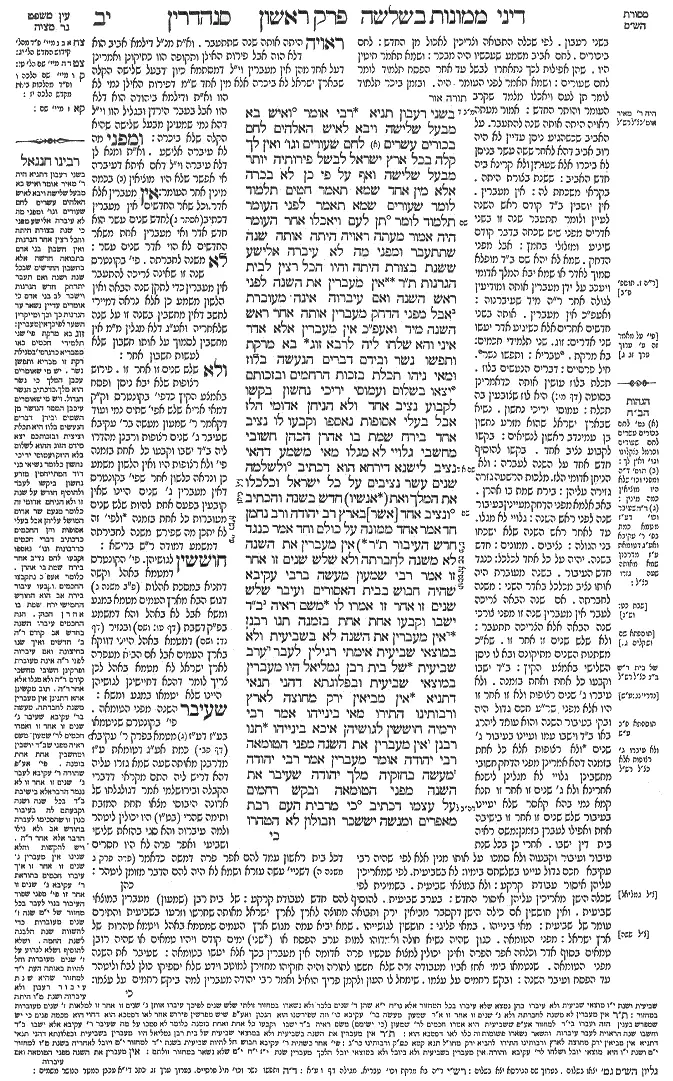
בשני רעבון תניא רבי אומר (מלכים ב ד, מב) ואיש בא מבעל שלישה ויבא לאיש האלהים לחם בכורים עשרים לחם שעורים וגו' ואין לך קלה בכל ארץ ישראל לבשל פירותיה יותר מבעל שלישה ואף על פי כן לא בכרה אלא מין אחד שמא תאמר חטים תלמוד לומר שעורים שמא תאמר לפני העומר תלמוד לומר (מלכים ב ד, מב) תן לעם ויאכלו אחר העומר היה אמור מעתה ראויה היתה אותה שנה שתתעבר ומפני מה לא עיברה אלישע ששנת בצורת היתה והיו הכל רצין לבית הגרנות ת"ר אין מעברין את השנה לפני ראש השנה ואם עיברוה אינה מעוברת אבל מפני הדחק מעברין אותה אחר ראש השנה מיד ואעפ"כ אין מעברין אלא אדר איני והא שלחו ליה לרבא זוג בא מרקת ותפשו נשר ובידם דברים הנעשה בלוז ומאי ניהו תכלת בזכות הרחמים ובזכותם יצאו בשלום ועמוסי יריכי נחשון בקשו לקבוע נציב אחד ולא הניחן אדומי הלז אבל בעלי אסופות נאספו וקבעו לו נציב אחד בירח שמת בו אהרן הכהן חשובי מחשבי גלויי לא מגלו מאי משמע דהאי נציב לישנא דירחא הוא דכתיב (מלכים א ד, ז) ולשלמה שנים עשר נציבים על כל ישראל וכלכלו את המלך ואת (אנשיו) חדש בשנה והכתיב (מלכים א ד, יט) ונציב אחד [אשר] בארץ רב יהודה ורב נחמן חד אמר אחד ממונה על כולם וחד אמר כנגד חדש העיבור ת"ר אין מעברין את השנה לא משנה לחברתה ולא שלש שנים זו אחר זו אמר רבי שמעון מעשה ברבי עקיבא שהיה חבוש בבית האסורים ועיבר שלש שנים זו אחר זו אמרו לו משם ראיה ב"ד ישבו וקבעו אחת אחת בזמנה תנו רבנן אין מעברין את השנה לא בשביעית ולא במוצאי שביעית אימתי רגילין לעבר ערב שביעית של בית רבן גמליאל היו מעברין במוצאי שביעית ובפלוגתא דהני תנאי דתניא אין מביאין ירק מחוצה לארץ ורבותינו התירו מאי בינייהו אמר רבי ירמיה חוששין לגושיהן איכא בינייהו תנו רבנן אין מעברין את השנה מפני הטומאה רבי יהודה אומר מעברין אמר רבי יהודה מעשה בחזקיה מלך יהודה שעיבר את השנה מפני הטומאה ובקש רחמים על עצמו דכתיב (דברי הימים ב ל, יח) כי מרבית העם רבת מאפרים ומנשה יששכר וזבולון לא הטהרו
Comments from Rashi on Masechet Sanhedrin Page 12a
בשני רעבון . לפי שכלה התבואה וצריכין לאכול מן החדש: לחם ביכורים . לחם אביב משמע שעכשיו היה מבכר: ושמא תאמר חיטין היו . שהן אפילות לכך נתאחרו לבשל עד אחר הפסח תלמוד לומר לחם שעורים: ושמא תאמר לפני העומר היה . ובזמן ביכר תלמוד לומר תן לעם ויאכלו מלמד שקרב העומר והותר החדש: אמור מעתה ראויה היתה אותה שנה להתעבר . על האביב שכשהגיע ניסן עדיין לא היה רוב אביב דהא לאחר ששה עשר בניסן לא ביכרו אלא שעורין ולא קרינא ביה חדש האביב: ששנת בצורת היתה . בקראי משכחת לה: אין מעברין . אין יושבין ב"ד קודם ראש השנה לעיין ולומר תתעבר שנה זו בשני אדרים מפני שיש שכחה בדבר קודם שיגיע ומזלזלי בחמץ: אבל מפני הדחק . שמא לא יהא שם ב"ד מופלא סמוך לאדר או שמא יבא המלך אדומי ויעכב על ידן מעברין אותה ומודיעין לגולה אחר ר"ה מיד שעיברנוה: ואעפ"כ אין מעברין . אותה בשני חדשים אחרים אלא כשיגיע אדר יעשו שני אדרים: זוג . שני תלמידי חכמים: בא מרקת . טבריא: ותפשו נשר . חיל פרסיים: דברים הנעשים בלוז . תכלת בלוז עושין אותה כדאמרינן בסוטה (דף מו:) היא לוז שצובעין בה תכלת: עמוסי יריכי נחשון . נשיא שבארץ ישראל שהוא מזרע נחשון בן עמינדב ראשון לנשיאים: בקשו לקבוע נציב אחד . בקשו להוסיף חדש אחד על השנה לעברה: ולא הניחן אדומי הלז . מלכות הרשעה גזרה גזירה עליהן: בירח שמת בו אהרן . באב אלמא מפני הדחק מעיינין בעיבור שנה לפני ראש השנה: גלויי לא מגלו . עד לאחר ראש השנה שלא ישכחו בני הגולה: נציבים . ממונים: חדש בשנה . יהיה על כל אחד לכלכל: כנגד חדש העיבור . בשנה מעוברת היה אותו נציב מכלכל באדר השני: משנה לחברתה . אם שנה הבאה צריכה לעבר אין מעברין שנה זו מפני צורכי שנה הבאה אלא הצריכה תתעבר: ולא שלש שנים זו אחר זו . שא"כ משתנות השנים מתיקונם ובא לו ניסן השלישי באמצע הקיץ: ב"ד ישבו וקבעו כל אחת ואחת בזמנה . ולא עיברו ג' שנים רצופות ולא זו אחר זו היו אלא מפני שר"ע חכם גדול היה ובקי בעיבור השנה והוא עומד ליהרג באו ב"ד וישבו עמו ועיינו בעיבור ג' שנים ולא רצופות אלא כל אחת בזמנה דהא אמרינן מפני הדחק חשובי מחשבינן גלויי לא מגלינן לישנא אחרינא ולא ג' שנים זו אחר זו תנא קמא נמי בהא קאסר שלא יעיינו בעיבור שלש שנים זו אחר זו בישיבה אחת ואפילו לעברן בזמנן: משם ראיה בית דין ישבו . אחרי כן בכל שנת עיבור ועיבור וקבעוה ולא סמכו על אותו מנין אלא לפי שהיה רבי עקיבא חכם גדול עיינו בשלשתם בימיו: לא בשביעית . לפי שמאריכין עליהן איסור עבודת קרקע: ולא במוצאי שביעית . בשמינית לפי שכלה הישן מאריכין עליהן איסור החדש: בערב שביעית . להוסיף להם חדש לעבודת קרקע: של בית רבן (שמעון) מעברין במוצאי שביעית . ואין חוששין אם כילה הישן דקסבר מביאין ירק ותבואה מחוצה לארץ לארץ ישראל מאותה שחרשו וזרעו בשביעית והתירם עומר של שביעית: מאי בינייהו . במאי פליגי: חוששין לגושייהו . שמא יביא עמה מגוש ארץ העמים שמטמא באהל ויטמא טהרות של ארץ ישראל: מפני הטומאה . כגון שהיה נשיא חולה ואמדוהו למות ערב הפסח או (שני) ימים קודם ויהיו טמאים או שהיה רובן טמאים בסוף אדר וכלתה אפר הפרה ואינן יכולין למצוא עכשיו פרה אדומה אין מעברין בכך אלא יעשו בטומאה: שעיבר את השנה מפני הטומאה . שנטמאו בימי אחז אביו מעבודה זרה שלא חששו לתורה והיה חזקיהו מחזירן למוטב וידע שלא יספיקו כולן לבא וליטהר עד הפסח ועיבר השנה: ובקש רחמים על עצמו . שימחל לו העון ולקמן פריך הואיל ואמר רבי יהודה מעברין למה ביקש רחמים על עצמו:
Comments from Tosafot - Sanhedrin 12a
ראויה היתה אותה שנה שתתעבר . וא"ת מנ"ל דילמא אביב הוא דלא הוה אבל פירות האילן ותקופה הוו כתיקונן ואמרינן דעל אחד מהן אין מעברין וי"ל דמסתמא כיון דבעל שלישה הקלה שבארץ ישראל לא ביכרה אלא מין אחד ש"מ דפירות האילן נמי לא הוו וא"ת ודילמא ביהודה הוא דלא הוו אבל בעבר הירדן ובגליל הוו וי"ל דהא נמי שמעינן מבעל שלישה שהיא הקלה שלא ביכרה: ומפני מה לא עיברה אלישע . וא"ת ומנא לן דלא עיברה וי"ל דאם איתא דעיברה אי אפשר שלא היו מוציאין בכמה מינין אחר העומר: אין מעברין אלא אדר . וכל שאר החדשים אין מעברין דכתיב (אסתר ג) לחדש שנים עשר הוא חדש אדר ואי מעברין אחת משאר החדשים לא הוי אדר שנים עשר: לא משנה לחברתה . פי' בקונטרס שנה זו שאינה צריכה להתעבר אין מעברין כדי לתקן שנה הבאה ואין הלשון משמע כן אלא נראה דמיירי לחשב דאין מחשבין בשנה זו על שנה שלאחריה ואע"ג דלא מגלין מ"מ אין מחשבין לסמוך על אותו חשבון שלא לעשות חשבון אחר: ולא שלש שנים זו אחר זו . פירוש רצופות שלא יבא ניסן ופסח באמצע הקיץ כדפי' בקונטרס וק"ק דמאי אריא שלש אפי' שתים נמי ועוד דקאמר ר' שמעון מעשה בר' עקיבא שעיבר ג' שנים רצופות ורבנן מהדרו ליה ב"ד ישבו וקבעו כל אחת בזמנה פי' ולא רצופות היו ואין הלשון משמע כן ונראה כלשון אחר שפי' בקונטרס דאין מעברין ג' שנים היינו שאין קובעין בפעם אחת להיות שלש שנים מעוברות כל אחת בזמנה ולפי' זה לא יתכן מה שפירש משנה לחבירתה דמשמע דמודה ר"ש ברישא: חוששין לגושיהן . פי' הקונטרס דמטמא באהל וקשה דתניא במסכת אהלות (פ"ב משנה ג) דגוש הבא מארץ העמים מטמא במגע ומשא אבל לא באהל והא דמשמע בפ"ק דשבת (דף טו: ושם) ובנזיר (דף נד: ושם) דמטמא באהל היינו דווקא בארץ העמים אבל אם הביא מעפרה לארץ ישראל לא מטמא באהל לכן צריך לומר דהכא דחיישינן לגושיהן היינו שלא יטמאו במגע ומשא: שעיבר השנה מפני הטומאה . פי' בקונטרס שניטמאו בע"ז דע"ז מטמא בפרק ר' עקיבא (דף פב.) כמת אע"ג דטומאת ע"ז מדרבנן מאותה שעה שמא גזרו עליה דהא דריש ליה התם מקראי דדברי הקבלה ובירושלמי אמר דגולגלתו של ארונה היבוסי מצאו תחת המזבח ותימה שהרי (בט"ו) היו יכולין ליטהר ולמה עיברוה והא סגי בהזאת שלישי ושביעי ואפר פרה לא היו חסרים דכל בית ראשון עמד להם אפר פרה דמשה כדאמר (פרה פרק ג משנה ה) דשניי' עשה עזרא ושמא לא היה להם הדבר מזומן ליטהר:
Sanhedrin 12a - Mishnah translated into english
during years of famine. When grain is scarce, intercalating the year would exacerbate the food shortage by delaying the omer offering, which is brought in Nisan, thereby prolonging the period during which the new crop is forbidden.
It is taught in a baraita: Rabbi Yehuda HaNasi says that this principle can be demonstrated based on an incident related in the Bible. The verse states with regard to the prophet Elisha: “And there came a man from Ba’al Shalisha, and he brought to the man of God bread of the first fruits, twenty loaves of barley, and fresh ears of corn in his sack. And he said: Give to the people, that they may eat” (II Kings 4:42).
The incident is analyzed: You do not have in all of Eretz Yisrael an environment in which fruit ripens more swiftly than in Ba’al Shalisha, and even so, only one of the seven species had ripened at that time, as the verse testifies that he brought him “bread of the first fruits.” Lest you say the verse speaks of wheat, which ripens close to the time of the festival of Shavuot, the verse states “barley.” Lest you say that the incident took place before the omer offering was sacrificed, the verse states: “Give to the people, that they may eat.” As they were permitted to eat, it must be that the incident was after the omer offering was brought.
Based on this, say that even in the place in which fruit ripened the fastest in all of Eretz Yisrael, after the omer had been brought, only the barley had ripened. Evidently, the year was fit to be intercalated, because the spring produce was not sufficiently mature in time. And for what reason did the prophet Elisha not intercalate it? Because it was a year of scarcity, as described in the Bible (see II Kings 4:38), and everyone was running to the granary. Intercalating the year would have made it even more difficult to obtain produce.
§ The Sages taught in a baraita (Tosefta 2:3): The court may not intercalate the year before Rosh HaShana. And if the court intercalated it this early, it is not intercalated. But if there was a need to intercalate it early due to exigent circumstances, e.g., religious persecution, they may intercalate it immediately after Rosh HaShana. Even so, they may intercalate it only by adding a second month of Adar.
The Gemara asks: Is that so, that intercalation may be determined only after Rosh HaShana? But the Sages of Eretz Yisrael sent the following encoded message to Rava during the time of Roman persecution: A pair of Torah scholars came from Rakkath, the biblical name for Tiberias (see Joshua 19:35), which was the seat of the Sanhedrin in Rava’s time. They meant to reach the Diaspora community, but the pair was apprehended by the eagle, i.e., Roman soldiers, whose symbol was the eagle; and in their possession were precious items made in Luz. The Gemara interrupts the story to explain: And what are those items from Luz? Sky-blue dye, which is necessary for ritual fringes. The message continued: In the merit of divine mercy and in their merit, they were spared execution and emerged in peace. Nevertheless, they did not reach their destination.
The message continued: And the offspring of Nahshon, meaning the Sages of the court of the Nasi, who was descended from the prince of Judah, Nahshon ben Amminadab (see Numbers 7:12), sought to establish a pillar, i.e., they sought to add a month to the year. But that Edomite, the local Roman governor, did not allow them to intercalate the year. Nevertheless, the members of the assembly gathered, and they established a pillar, in the month in which Aaron the priest died, i.e., the Sages of Eretz Yisrael convened in the month of Av, which is before Rosh HaShana, and determined that the following year should be intercalated. Evidently, then, in exigent circumstances, intercalation may be done even before Rosh HaShana. The Gemara answers: The court may calculate the need for an extra month even before Rosh HaShana, but they may not reveal and publicize the decision until after Rosh HaShana.
The Gemara asks about the language of the coded message. From where may it be inferred that this word pillar [netziv] is a term for the month? As it is written: “And Solomon had twelve officers [netzivim] over all Israel, and they provided for the king and his household for a month in the year” (I Kings 4:7). This indicates that each netziv was responsible for a particular month. Once this verse was quoted, the Gemara inquires: But isn’t it written afterward: “And one officer that was in the land” (I Kings 4:19), indicating that there were more than twelve netzivim? Rav Yehuda and Rav Naḥman offer answers. One says: One officer was appointed over all of the others. And one says: The extra officer corresponded to the intercalated month. If the year had an additional month, he was responsible for the king’s provisions during that month.
§ The Sages taught in a baraita (Tosefta 2:4): The court may not intercalate the year from one year to another, and it does not intercalate three successive years, one directly after the other. Rabbi Shimon says: There was an incident involving Rabbi Akiva at the time when he was incarcerated in prison, and he intercalated three years, one after the other. The Sages said to Rabbi Shimon: Is there any proof from there? Rabbi Akiva merely made the calculations, but a special court sat and established each one at its time.
The Sages taught in a baraita (Tosefta 2:5): The court may not intercalate the year in the Sabbatical Year, so as not to prolong the prohibitions of the Sabbatical Year, nor in the year after the Sabbatical Year, when there is not much produce available, and delaying the consumption of the new crop would also cause hardship. When is the court accustomed to intercalate? On the eve of the Sabbatical Year, which causes no particular challenges. Nevertheless, the courts of the house of Rabban Gamliel would intercalate the year in the year after the Sabbatical Year.
And they disagree with regard to the issue that is the subject of the dispute between these tanna’im, as it is taught in a baraita: One may not import vegetables in the Sabbatical Year from outside Eretz Yisrael, and our Rabbis permitted importing such produce. According to the opinion that permits importing produce from outside Eretz Yisrael, there is no concern that the food supply will be exhausted. Therefore, the year following the Sabbatical Year may be intercalated. The Gemara asks: What is the reason for the difference between these two opinions concerning importing produce from outside Eretz Yisrael? Rabbi Yirmeya says: The difference between them relates to whether one is concerned for their clods of earth. Although all agree that the earth outside Eretz Yisrael conveys ritual impurity, the tanna’im dispute whether it is therefore forbidden to bring vegetables into Eretz Yisrael due to concern that small clods of earth may cling to them.
§ The Sages taught in a baraita (Tosefta 2:10): The court may not intercalate the year due to ritual impurity, i.e., in the event that most of the Jewish people are in a state of impurity, to give them enough time to become ritually pure before Passover.
Rabbi Yehuda says: The court may intercalate the year due to ritual impurity. Rabbi Yehuda said: There was an incident involving Hezekiah, king of Judea, who intercalated the year due to ritual impurity (II Chronicles 30:2). And after doing so, he requested compassion for himself, as it is written: “For a multitude of the people, even many of Ephraim and Manasseh, Issachar and Zebulun, had not cleansed themselves,
Traduction : The William Davidson digital edition of the Koren Noé Talmud, with commentary by Rabbi Adin Even-Israel Steinsaltz.