 Talmud Bavli
The learning on the whole site is dedicated : L'ilui Nishmat Reuven ben Rivka SEBBAG
The learning on the whole site is dedicated : L'ilui Nishmat Nissim ben Barukh Malka
The learning on the whole site is dedicated : L'ilui Nishmat Chemouel Eliezer ben Batcheva
Sanhedrin 76a : Youtube
Daf TubeYoutube
2 video classes :
Sanhedrin Page 76a
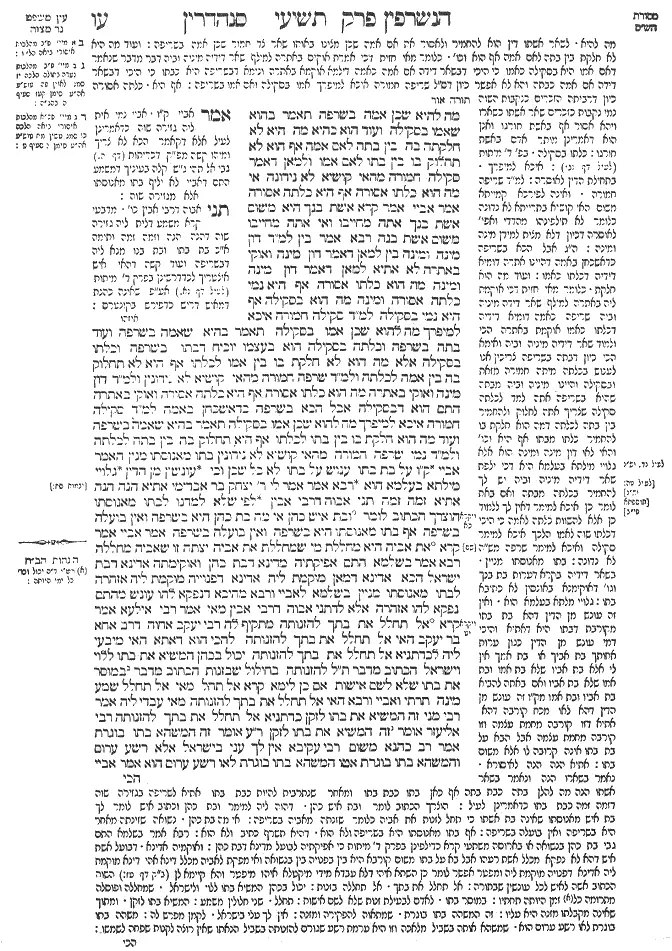
Sanhedrin 76a - Guemara
מה להיא שכן אמה בשרפה תאמר בהוא שאמו בסקילה ועוד הוא כהיא מה היא לא חלקתה בה בין בתה לאם אמה אף הוא לא תחלוק בו בין בתו לאם אמו ולמאן דאמר סקילה חמורה מהאי קושיא לא נידונה אי מה הוא כלתו אסורה אף היא כלתה אסורה אמר אביי אמר קרא אשת בנך היא משום אשת בנך אתה מחייבו ואי אתה מחייבו משום אשת בנה רבא אמר בין למ"ד דון מינה ומינה בין למאן דאמר דון מינה ואוקי באתרה לא אתיא למאן דאמר דון מינה ומינה מה הוא כלתו אסורה אף היא נמי כלתה אסורה ומינה מה הוא בסקילה אף היא נמי בסקילה למ"ד סקילה חמורה איכא למיפרך מה להוא שכן אמו בסקילה תאמר בהיא שאמה בשרפה ועוד בתה בשרפה וכלתה בסקילה הוא בעצמו יוכיח דבתו בשרפה וכלתו בסקילה אלא מה הוא לא חלקת בו בין אמו לכלתו אף היא לא תחלוק בה בין אמה לכלתה ולמ"ד שרפה חמורה מהאי קושיא לא נידונין ולמ"ד דון מינה ואוקי באתרה מה הוא כלתו אסורה אף היא כלתה אסורה ואוקי באתרה התם הוא דבסקילה אבל הכא בשרפה כדאשכחן באמה למ"ד סקילה חמורה איכא למיפרך מה להוא שכן אמו בסקילה תאמר בהיא שאמה בשרפה ועוד מה הוא חלקת בו בין בתו לכלתו אף היא תחלוק בה בין בתה לכלתה ולמ"ד נמי שרפה חמורה מהאי קושיא לא נידונין בתו מאנוסתו מנין האמר אביי ק"ו על בת בתו ענוש על בתו לא כל שכן וכי עונשין מן הדין גלויי מילתא בעלמא הוא רבא אמר אמר לי ר' יצחק בר אבדימי אתיא הנה הנה אתיא זמה זמה תני אבוה דרבי אבין לפי שלא למדנו לבתו מאנוסתו הוצרך הכתוב לומר (ויקרא כא, ט) ובת איש כהן אי מה בת כהן היא בשרפה ואין בועלה בשרפה אף בתו מאנוסתו היא בשרפה ואין בועלה בשרפה אמר אביי אמר קרא (ויקרא כא, ט) את אביה היא מחללת מי שמחללת את אביה יצתה זו שאביה מחללה רבא אמר בשלמא התם אפיקתיה מדינא דבת כהן ואוקימתה אדינא דבת ישראל הכא אדינא דמאן מוקמת ליה אדינא דפנוייה מוקמת ליה אזהרה לבתו מאנוסתו מניין בשלמא לאביי ורבא מהיכא דנפקא להו עונש מהתם נפקא להו אזהרה אלא לדתני אבוה דרבי אבין מאי אמר רבי אילעא אמר קרא (ויקרא יט, כט) אל תחלל את בתך להזנותה מתקיף לה רבי יעקב אחוה דרב אחא בר יעקב האי אל תחלל את בתך להזנותה להכי הוא דאתא האי מיבעי ליה לכדתניא אל תחלל את בתך להזנותה יכול בכהן המשיא את בתו ללוי וישראל הכתוב מדבר ת"ל להזנותה בחילול שבזנות הכתוב מדבר במוסר את בתו שלא לשם אישות אם כן לימא קרא אל תחל מאי אל תחלל שמע מינה תרתי ואביי ורבא האי אל תחלל את בתך להזנותה מאי עבדי ליה אמר רבי מני זה המשיא את בתו לזקן כדתניא אל תחלל את בתך להזנותה רבי אליעזר אומר זה המשיא את בתו לזקן ר"ע אומר זה המשהא בתו בוגרת אמר רב כהנא משום רבי עקיבא אין לך עני בישראל אלא רשע ערום והמשהא בתו בוגרת אטו המשהא בתו בוגרת לאו רשע ערום הוא אמר אביי
Comments from Rashi on Masechet Sanhedrin Page 76a
מה להיא . לשאר אשתו דין הוא להחמיר ולאסור את אם אמה שכן מצינו באותו שאר צד חמור שכן אמה בשריפה: ועוד מה היא לא חלקת בין בתה לאם אמה אף הוא וכו' . כלומר מאי חזית דכי אמרת אוקים באתרה למילף שאר דידיה מיניה וביה דבר מדבר שנאמר דאם אמו היא בסקילה כאמו כי היכי דבשאר דידה אם אמה כאמה דילמא אוקמא באתרה ונימא דבשריפה היא כבתו כי היכי דבשאר דידה אם אמה כבתה והא לא אפשר כיון דס"ל שריפה חמורה איכא למיפרך אמו בסקילה ואם אמו בשריפה: אף היא . כלתה אסורה כיון דרביתה הזכרים כנקבות השוה נמי נקבות כזכרים שאר אשתו כשארו ויהא אסור אף באשת חורגו ואנן הוא דאמרינן מותר אדם באשת חורגו: כלתו בסקילה . בפ' ד' מיתות (לעיל סנהדרין דף נג.): איכא למיפרך . בתחילת הדין לאוסרה: למ"ד שריפה חמורה . ואינה לפירכא קמייתא משום האי קושיא בתרייתא לא נדונה כלומר לא תילפינהו מהדדי ואפי' לאוסרה דכיון דלא מצית למידן מינה ומינה: ה"ג אבל הכא בשריפה כדאשכחן באמה דהיינו אתרה דומיא דידיה דכלתו כאמו: ועוד מה הוא חלקת . כלומר מאי חזית דכי אוקמת ליה באתרה למילף שאר דידה מיניה וביה שריפה כאמה דומיא דידיה דכלתו כאמו אוקמת באתרה הכי ולמוד שאר דידיה מיניה וביה ואימא הכי כיון דבתה בשריפה צריכין אנו לענוש בכלתה מיתה חמורה מזאת ובסקילה והיינו מיניה וביה מבתה שהיא בשריפה אתה למד לכלתה סקילה שצריך אתה לחלוק ולהחמיר בין בתה לכלתה דמה הוא חלקת בו להחמיר כלתו מבתו אף היא וכו' והאי לאו דון מינה ומינה הוא אלא גלויי מילתא בעלמא היא דכי ילפת שאר דידיה מיניה וביה יש לך להחמיר בכלתה מבתה ואם באת לומר כן איכא למימר דאין לך ללמוד כן אלא להשוות כלתה לאמה כי היכי דכלתו שוה לאמו הלכך איכא למימר סקילה ואיכא למימר שרפה מש"ה לא נדונה: בתו מאנוסתו מניין . בשאר דידיה בקרא דערות בת בנך וגו' דאוקימנא באונסין לא כתיבא בתו: גלויי מלתא בעלמא הוא . ואין זה עונש מן הדין דהא בת בתו מקורבה דבתו היא דאתיא והיכי דמי עונש מן הדין כגון ערות אחותך בת אביך או בת אמך אין לי אלא בת אביו שלא בת אמו ובת אמו שלא בת אביו ואם באתה להביא בת אביו ובת אמו מק"ו זה עונש מן הדין דהא לאו מכח קורבה דהא אתיא דזו קורבה מחמת עצמה וזו קורבה מחמת עצמה אבל הבא על בת בתו אינה קרובה לו אלא משום בתו: אתיא הנה הנה לאיסורא . נאמר בשארו הנה ונאמר בשאר אשתו הנה מה להלן בתה כבת בתה אף כאן בתו כבת בתו ומאחר שנתרבית להיות כבת בתו אתיא לשריפה בגזירה שוה דזמה זמה כבת בתו כדאמרינן לעיל: הוצרך הכתוב לומר ובת איש כהן . דהוה ליה למימר ובת כהן וכתוב איש לומר לך בת איש מאנוסתו שאינה בת אשתו כי תחל לזנות את אביה כלומר שזנתה מאביה בשריפה: אי מה בת כהן . נשואה שזינתה מאחר היא בשריפה ואין בועלה בשריפה: אף בתו מאנוסתו היא בשריפה ולא הוא . דהיא תשרף כתיב ולא הוא: רבא אמר בשלמא התם . גבי בת כהן בנשואה או בארוסה משתעי קרא כדילפינן בפרק ד' מיתות כי אפיקתיה לבועל מדינא דבת כהן: ואוקמיה אדינא . דבועל אשת איש דהא לא נפקא מכלל אשת רעהו אבל בא על בתו משום קורבא היא בין בפנויה בין בנשואה ואי מפקת לאביה מכלל דינא אהי דינא מוקמת ליה אדינא דפנויה מוקמת ליה ומפטר אפשר לומר כן השתא איהי דלא עבדא מידי מיקטלא איהו מיפטר והא קיימא לן (ב"ק דף טז:) השוה הכתוב אשה לאיש לכל עונשין שבתורה: אל תחלל את בתך . אל תחללה בזנות: יכול בכהן המשיא בתו ללוי ולישראל . שמחללה ופוסלה מתרומה כל זמן היותה תחתיו: במוסר בתו . לאדם לבעילת זנות שלא לשם אישות: תחלל . שני חלולין משמע: המשיא בתו לזקן . ומתוך שאינה מקבלתו מזנה היא עליו: זה המשהה בתו בוגרת . שמתאוה להפקירה ומזנה: אין לך עני בישראל . לקמן מפרש לה: משהה בתו בוגרת לאו רשע ערום הוא . שמשהא אותה בשביל מלאכה וזו היא ערמת רשע שגורם להזנותה בשביל הנאתו שאין רוצה לקנות שפחה לשמשו:
Comments from Tosafot - Sanhedrin 76a
אמר קרא אשת בנך היא . וא"ת אכתי אי מה הוא דודתו אסורה אף היא דודתה אסורה וי"ל דלא שייך לאקשויי אלא מחייבי מיתות ב"ד דלענין מיתה נאמרה גזרה שוה: אמר אביי ק"ו . אביי נמי אית ליה גזירה שוה כדאמרינן לעיל אלא דקאמר הכא לא צריך ומיהו קשה מפ"ק דכריתות (דף ה.) גבי אל תהי ג"ש קלה בעיניך דמשמע התם דאביי לא יליף בתו מאנוסתו אלא מגזירה שוה: תני אבוה דרבי אבין כו' . מדבעי קרא משמע דלית ליה גזירה שוה דהנה הנה וזמה זמה ותימה א"כ בת בתו ובת בנו מנא ליה דבשריפה ועוד קשה דהאי איש איצטריך לכדדרשינן בפרק ד' מיתות (לעיל סנהדרין דף נא.) אע"פ שאינה כהנת דמאיש דריש כדפירש בקונטרס:
Sanhedrin 76a - Mishnah translated into english
What is notable about her relatives? They are notable in that one who engages in intercourse with the mother of his wife is liable to be executed by the more severe punishment of burning. Will you then say that there is a prohibition with regard to his relatives, where one who engages in intercourse with his mother is liable to be executed by the less severe punishment of stoning?
And furthermore, one must say that the status of his relatives is like the status of her relatives; and just as with regard to her relatives, you did not distinguish between her daughter and the mother of her mother, and one who engages in intercourse with either is executed by burning, so too with regard to his relatives, you should not distinguish between his daughter and the mother of his mother and he should receive the same punishment for engaging in intercourse with either. Since one who engages in intercourse with the mother of his mother is executed by stoning and one who engages in intercourse with his daughter is executed by burning, the parallel between his relatives and her relatives is incomplete, and the prohibition cannot be derived.
The Gemara continues: And according to the one who says that stoning is more severe than burning, due to this third difficulty, the fact that intercourse with the mother of his mother is forbidden, this halakha is not derived, as the parallel between his relatives and her relatives is incomplete.
The Gemara asks: If a parallel is drawn between his relatives and the relatives of his wife with regard to the prohibition, just as with regard to his relatives, his daughter-in-law is forbidden to him, so too with regard to her relatives, her daughter-in-law is prohibited to him?
Abaye says: That is not so, as the verse states: “You shall not expose the nakedness of your daughter-in-law; she is your son’s wife, you shall not expose her nakedness” (Leviticus 18:15). Due to his intercourse with the wife of his son you deem him liable to be executed, but you do not deem him liable to be executed due to his intercourse with the wife of the son of his wife.
Rava says: That derivation is unnecessary, as with regard to the method of derivation by means of a verbal analogy, both according to the one who says: Infer the halakha from it and derive the details from it, and according to the one who says: Infer the halakha from it but interpret the halakha according to its own place, it is not derived that intercourse with one’s wife’s daughter-in-law renders him liable to be executed.
The Gemara elaborates: According to the one who says: Infer the halakha from it and derive the details from it, one might infer: Just as with regard to his relatives, his daughter-in-law is forbidden to him, so too with regard to her relatives, her daughter-in-law is forbidden to him. And derive again from it: Just as with regard to his relatives, he is liable to be executed by stoning due to his intercourse with his daughter-in-law, so too with regard to her relatives, he is also liable to be executed by stoning due to his intercourse with her daughter-in-law.
The Gemara proceeds to explain why this is not a valid derivation. According to the one who says: Execution by stoning is more severe than execution by burning, the inference can be refuted: What is notable about his relatives? They are notable in that one who engages in intercourse with his mother is liable to be executed by the more severe punishment of stoning. Will you then say that the same is true with regard to her relatives, where one who engages in intercourse with her mother is liable to be executed by the less severe punishment of burning?
And furthermore, as one who engages in intercourse with the daughter of his wife, is executed by the less severe punishment of burning, is it possible that one who engages in intercourse with the daughter-in-law of his wife, a more distant relative, is executed by the more severe punishment of stoning? The Gemara rejects that refutation: He himself, with regard to his own relatives, will prove that it is in fact possible, as one who engages in intercourse with his daughter is executed by burning, and one who engages in intercourse with his daughter-in-law is executed by stoning.
Rather, just as with regard to his relatives, you did not distinguish between his mother and his daughter-in-law, and one who engages in intercourse with either is executed by stoning, so too with regard to her relatives, you should not distinguish between her mother and her daughter-in-law. Since one who engages in intercourse with the mother of his wife is executed by burning, apparently, one who engages in intercourse with her daughter-in-law is punished by stoning, not burning. Therefore the parallel between his relatives and her relatives is incomplete, and the prohibition cannot be derived. And according to the one who says that burning is more severe than stoning, although the refutations based on the fact that execution by stoning is more severe are not relevant, due to this difficulty, this halakha is not derived.
And according to the one who says: Infer the halakha from it but interpret the halakha according to its own place, one might infer: Just as with regard to his relatives, his daughter-in-law is forbidden to him, so too with regard to her relatives, her daughter-in-law is forbidden to him. And interpret the halakha according to its own place: It is there, with regard to his relatives, that one who engages in intercourse with his daughter-in-law is executed by stoning; but here, with regard to her relatives, one who engages in intercourse with her daughter-in-law is executed by burning, as we found that this is the punishment with regard to one who engages in intercourse with her mother.
The Gemara proceeds to explain why this is not a valid derivation. According to the one who says: Execution by stoning is more severe than execution by burning, the inference can be refuted: What is notable about his relatives? They are notable in that one who engages in intercourse with his mother is liable to be executed by the more severe punishment of stoning. Will you then say that the same is true with regard to her relatives, where one who engages in intercourse with her mother is liable to be executed by the less severe punishment of burning?
And furthermore, just as with regard to his relatives, you distinguished between his daughter and his daughter-in-law, and one who engages in intercourse with his daughter is executed by burning while one who engages in intercourse with his daughter-in-law is executed by stoning, so too with regard to her relatives, distinguish between her daughter and her daughter-in-law. This is contrary to the parallel drawn between his relatives and her relatives, and the halakha cannot be derived. And according to the one who says that burning is more severe than stoning, although the refutations based on the fact that execution by stoning is more severe are not relevant, due to this latter difficulty, this halakha is not derived.
§ Throughout, it is clear from the Gemara that one who engages in intercourse with his daughter is executed by burning. The Gemara asks: With regard to one’s daughter born from a woman whom he raped, from where is it derived that she is forbidden to him? The Gemara answers: Doesn’t Abaye say that this is inferred a fortiori: If one is punished for engaging in intercourse with the daughter of his daughter, for engaging in intercourse with his daughter is it not all the more so that he is punished?
The Gemara asks: But does the court administer punishment based on an a fortiori inference without an explicit source? The Gemara replies: This is a mere disclosure of the matter, not a derivation by means of an inference. Presumably, the punishment administered to one who engages in intercourse with the daughter of his daughter stems from the kinship with his daughter. When the verse states with regard to the daughter of his daughter: “For theirs is your own nakedness” (Leviticus 18:10), his daughter is included.
Rava says: Rabbi Yitzḥak bar Avdimi said to me that the prohibition of engaging in intercourse with one’s daughter who is not the daughter of his wife is derived by means of a verbal analogy between the word “henna,” written with regard to his descendants: “The nakedness of your son’s daughter, or of your daughter’s daughter, even their nakedness you shall not uncover; for theirs [henna] is your own nakedness” (Leviticus 18:10), and the word “henna” written with regard to the descendants of his wife: “You shall not uncover the nakedness of a woman and her daughter; you shall not take her son’s daughter, or her daughter’s daughter, to uncover her nakedness; they [henna] are near kinswomen; it is lewdness” (Leviticus 18:17). Then, it is derived from a verbal analogy between the word “lewdness” (Leviticus 18:17) and the word “lewdness” in the verse: “And if a man takes a woman and her mother, it is lewdness; they shall be burned with fire both him and them, and there shall be no lewdness among you” (Leviticus 20:14).
The father of Rabbi Avin teaches: Due to the fact that we did not learn a punishment for one who engages in intercourse with his daughter born from a woman whom he raped from an explicit verse in the Torah, it was necessary for the verse to state: “And if the daughter of any priest profanes herself by acting licentiously, it is her father [et aviha] whom she is profaning; she shall be burned with fire” (Leviticus 21:9). The verse can be interpreted: And if the daughter of any priest profanes herself by acting licentiously with her father [et aviha]…she shall be burned with fire.
The Gemara asks: If so, why not say that just as in the case of the daughter of a priest who commits adultery, she is executed by burning but her paramour is executed by strangulation, not by burning, so too in the case of one who engages in intercourse with his daughter born from a woman whom he raped, she is executed by burning but her paramour, i.e., her father, is executed by other means and not by burning?
Abaye says that the verse states: “It is her father whom she is profaning,” from which it is inferred that one who profanes her father by acting licentiously is executed with a court-imposed death penalty different from the death penalty imposed upon her paramour; excluded from that halakha is this case of a daughter whose father engaged in intercourse with her, where it is her father who profanes her.
Rava says: Granted, there, in the case of the daughter of a priest who commits adultery, based on the inference, you excluded the paramour from the punishment of the daughter of a priest, execution by burning, and you established his punishment to correspond with the punishment of an adulterous Israelite woman, who is executed by strangulation. But here, in the case of one who engages in intercourse with his daughter, to correspond with whose punishment do you establish the father’s punishment? The Torah does not state any other form of execution in that case. Will you establish his punishment to correspond with the punishment of an unmarried woman who engages in intercourse, who is not liable to be executed at all? Therefore, there is no alternative to the conclusion that the father, too, is executed by burning.
§ The Gemara asks: From where is the prohibition against engaging in intercourse with his daughter born from a woman whom he raped derived? Granted, according to Abaye and Rava, who, respectively, derive the punishment a fortiori or by means of a verbal analogy, from the same source from which they derive the punishment, from there they derive the prohibition as well, as the source includes a prohibition.
But according to that which Rabbi Avin’s father teaches, that the punishment is derived from the verse written with regard to the daughter of a priest, what is the source for the prohibition? Rabbi Ile’a says that the prohibition is derived from a verse, as the verse states: “Do not profane your daughter by causing her to act licentiously [lehaznotah], lest the land falls into licentiousness, and the land becomes full of lewdness” (Leviticus 19:29), from which it is derived that one may not engage in intercourse with his daughter.
Rabbi Ya’akov, brother of Rav Aḥa bar Ya’akov, objects to this: Does this verse: “Do not profane your daughter by causing her to act licentiously,” come to teach that halakha? This verse is necessary to derive that which is taught in a baraita: With regard to the verse: “Do not profane your daughter by causing her to act licentiously,” one might have thought that it is with regard to a priest who marries his daughter to a Levite or Israelite that the verse is speaking, since marrying an Israelite disqualifies her from partaking of teruma. To counter this, the verse states “by causing her to act licentiously,” indicating that it is with regard to profaning that involves licentiousness that the verse is speaking. The reference is to one who gives his daughter to a man for the purpose of intercourse that is not for the sake of marriage.
The Gemara answers: If so, and that is the sole derivation from the verse, let the verse say: Do not profane [taḥel]. What is the reason that the verse uses the more complex form: Do not profane [teḥalel]? Conclude two derivations from it. The Gemara asks: And according to Abaye and Rava, who derive the prohibition against engaging in intercourse with one’s daughter from a different source, what do they do with this verse: “Do not profane your daughter by causing her to act licentiously”? Rabbi Mani says: This verse is referring to one who marries his daughter to an old man. Since she will not be satisfied with him, it will ultimately lead her to engage in adultery, and her father is responsible for causing that situation.
This derivation is as it is taught in a baraita: “Do not profane your daughter by causing her to act licentiously.” Rabbi Eliezer says: This is referring to one who marries his daughter to an old man. Rabbi Akiva says: This is referring to one who delays the marriage of his daughter who is a grown woman. Since she finds no permissible outlet for her sexual desire, she is apt to engage in licentiousness.
Rav Kahana says in the name of Rabbi Akiva: You do not have a pauper among the Jewish people other than one who is a conniving wicked person, who seeks to conceal his true nature, and one who delays the marriage of his daughter who is a grown woman. The Gemara asks: Is that to say that one who delays the marriage of his daughter who is a grown woman is not a conniving, wicked person? He connives to delay her marriage to ensure that she will stay at home and do the housework, sparing him the cost of domestic help, and thereby causes her to sin.
Abaye says:
Traduction : The William Davidson digital edition of the Koren Noé Talmud, with commentary by Rabbi Adin Even-Israel Steinsaltz.