 Talmud Bavli
Sanhedrin 50a : Youtube
Daf TubeYoutube
2 video classes :
Sanhedrin Page 50a
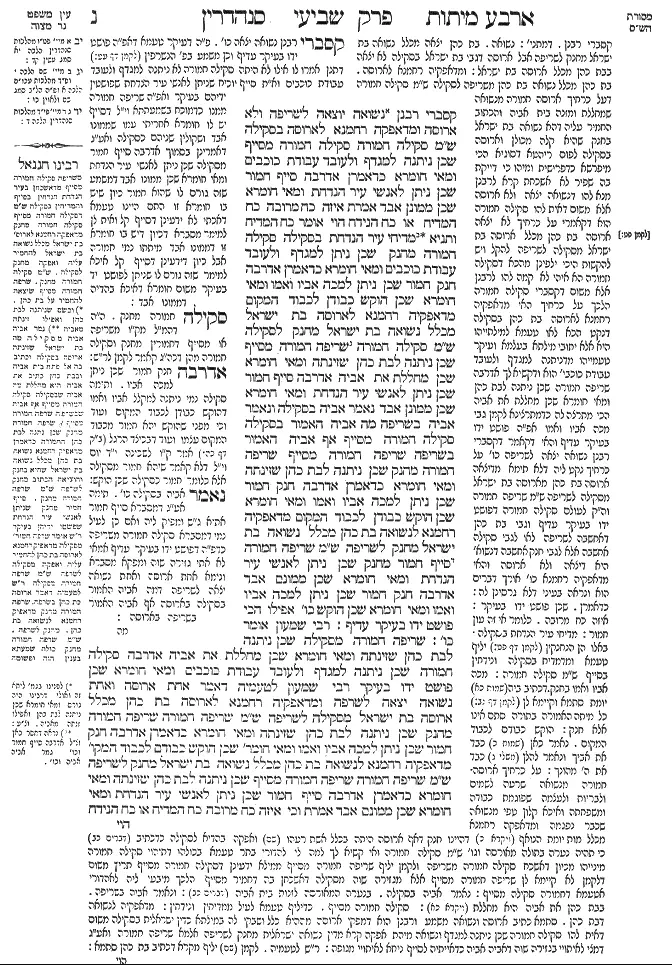
Sanhedrin 50a - Guemara
קסברי רבנן נשואה יוצאה לשריפה ולא ארוסה ומדאפקה רחמנא לארוסה בסקילה ש"מ סקילה חמורה סקילה חמורה מסייף שכן ניתנה למגדף ולעובד עבודת כוכבים ומאי חומרא כדאמרן אדרבה סייף חמור שכן ניתן לאנשי עיר הנדחת ומאי חומרא שכן ממונן אבד אמרת איזה כח מרובה כח המדיח או כח הנידח הוי אומר כח המדיח ותניא מדיחי עיר הנדחת בסקילה סקילה חמורה מחנק שכן ניתן למגדף ולעובד עבודת כוכבים ומאי חומרא כדאמרן אדרבה חנק חמור שכן ניתן למכה אביו ואמו ומאי חומרא שכן הוקש כבודן לכבוד המקום מדאפקיה רחמנא לארוסה בת ישראל מכלל נשואה בת ישראל מחנק לסקילה ש"מ סקילה חמורה שריפה חמורה מסייף שכן ניתנה לבת כהן שזינתה ומאי חומרא שכן מחללת את אביה אדרבה סייף חמור שכן ניתן לאנשי עיר הנדחת ומאי חומרא שכן ממונן אבד נאמר אביה בסקילה ונאמר אביה בשריפה מה אביה האמור בסקילה סקילה חמורה מסייף אף אביה האמור בשריפה שריפה חמורה מסייף שריפה חמורה מחנק שכן ניתנה לבת כהן שזינתה ומאי חומרא כדאמרן אדרבה חנק חמור שכן ניתן למכה אביו ואמו ומאי חומרא שכן הוקש כבודן לכבוד המקום מדאפקיה רחמנא לנשואה בת כהן מכלל נשואה בת ישראל מחנק לשריפה ש"מ שריפה חמורה סייף חמור מחנק שכן ניתן לאנשי עיר הנדחת ומאי חומרא שכן ממונם אבד אדרבה חנק חמור שכן ניתן למכה אביו ואמו ומאי חומרא שכן הוקש כו' אפילו הכי פושט ידו בעיקר עדיף:
רבי שמעון אומר כו':
שריפה חמורה מסקילה שכן ניתנה לבת כהן שזינתה ומאי חומרא שכן מחללת את אביה אדרבה סקילה חמורה שכן ניתנה למגדף ולעובד עבודת כוכבים ומאי חומרא שכן פושט ידו בעיקר רבי שמעון לטעמיה דאמר אחת ארוסה ואחת נשואה יצאה לשרפה ומדאפקיה רחמנא לארוסה בת כהן מכלל ארוסה בת ישראל מסקילה לשריפה ש"מ שריפה חמורה שריפה חמורה מחנק שכן ניתנה לבת כהן שזינתה ומאי חומרא כדאמרן אדרבה חנק חמור שכן ניתן למכה אביו ואמו ומאי חומר' שכן הוקש כבודם לכבוד המקו' מדאפקיה רחמנא לנשואה בת כהן מכלל נשואה בת ישראל מחנק לשריפה ש"מ שריפה חמורה שריפה חמורה מסייף שכן ניתנה לבת כהן שזינתה ומאי חומרא כדאמרן אדרבה סייף חמור שכן ניתן לאנשי עיר הנדחת ומאי חומרא שכן ממונם אבד אמרת וכי איזה כח מרובה כח המדיח או כח הנידח
Comments from Rashi on Masechet Sanhedrin Page 50a
קסברי רבנן . דמתני': נשואה . בת כהן יצאה מכלל נשואה בת ישראל מחנק לשריפה אבל ארוסה דגבי בת ישראל בסקילה לא יצאה בבת כהן מכלל ארוסה בת ישראל: ומדאפקיה רחמנא לארוסה . בת כהן מכלל נשואה בת כהן משריפה לסקילה ש"מ סקילה חמורה דעל כרחיך ארוסה חמורה מנשואה שמחללת ומזנה בית אביה והכתוב החמיר עליה דהא נשואה בת ישראל בחנק שהיא קלה מכולן וארוסה בסקילה. לפום ריהטא דסוגיא הכי מיפרשא כדפרישית ומיהו כי דייקת בה שפיר לא אשכחת קרא לרבנן מנא להו דנשואה יצאה ולא ארוסה אלא משום דאית להו סקילה חמורה הוא דקאמרי על כרחיך לא יצאה ארוסה בת כהן מכלל ארוסה בת ישראל מסקילה לשריפה להקל ויש להקשות היכי ילפינן מהכא דסקילה חמורה הא איהי לא קמה להו לרבנן אלא משום דקסברי סקילה חמורה הלכך על כרחיך האי מדאפקיה רחמנא לארוסה בת כהן בסקילה דנקט הכא לאו טעמא למילתייהו היא אלא יתובי מילתא בעלמא ועיקר טעמייהו מדניתנה למגדף ולעובד עבודת כוכבי' הוא ודקשיא לך אדרבה שריפה חמורה שכן ניתנה לבת כהן ומאי חומרא שכן מחללת את אביה הכי מתרצה לה כדמתרצינא לקמן גבי מכה אביו ואמו אפ"ה פושט ידו בעיקר עדיף והאי דקאמר דקסברי רבנן נשואה יצאה לשריפה כו' על כרחיך נקט ליה דלא תימא מדיצאה ארוסה בת כהן מארוסה בת ישראל מסקילה לשריפה ש"מ שריפה חמורה וה"ק לעולם סקילה חמורה דפושט ידו בעיקר עדיף וגבי בת כהן דאחשבה לשריפה לאו לגבי סקילה אחשבה אלא לגבי חנק אחשבה דנשוא' היא דיצאה ולא ארוסה והאי מדאפקיה רחמנא כו' אורך דברים הוא ונראה בעיני דלא גרסינן לה: כדאמרן . שכן פושט ידו בעיקר: איזה כח מרובה . כלומר אי זה עון חמור: מדיחי עיר הנדחת בסקילה . באלו הן הנחנקין (לקמן סנהדרין דף פט:) יליף טעמא ומדמדיח בסקילה ונידחין בסייף ש"מ סקילה חמורה: מכה אביו ואמו בחנק . דכתיב ביה (שמות כא) יומת סתמא וקיימא לן (לקמן סנהדרין דף נב:) כל מיתה האמורה בתורה סתם אינו אלא חנק: הוקש כבודם לכבוד המקום . נאמר כאן (שמות כ) כבד את אביך ונאמר להלן (משלי ג) כבד את ה' מהונך: על כרחיך ארוסה חמורה מנשואה שרעה לשמים ולבריות ולעצמה שפוגמת כבודה ומשפחתה ואיכא קלון טפי מנשואה שכבר נפגמה ומדאפקה רחמנא מכלל מות יומת הנואף (ויקרא כ) דהיינו חנק דאף ארוסה היתה בכלל אשת רעהו (שם) ואפקה בהדיא לסקילה כדכתיב (דברים כב) כי תהיה נערה בתולה מאורסה וגו' ש"מ סקילה חמורה ואי קשיא לך למה לי להדורי בתר טעמא בכולהו דתיהוי סקילה חמורה מינייהו מכיון דאשכח סקילה חמורה משריפה ולקמן יליף שריפה חמורה מסייף ממילא ידעינן דסקילה חמורה מסייף תריץ משום דלקמן לא קיימא לן שריפה חמורה מסייף אלא מגזירה שוה מסקילה דאשכחן בה דחמיר מסייף הלכך מיבעי ליה לאהדורי אטעמא דחמורה סקילה מסייף: נאמר אביה בסקילה . בנערה המאורסה לזנות בית אביה (דברים כב): ונאמר אביה בשריפה . בבת כהן את אביה היא מחללת (ויקרא כא): סקילה חמורה מסייף . כדיליף טעמא לעיל ממדיחין ונידחין: מדאפקיה לנשואה דבת כהן . סתמא כתיב ארוסה ונשואה משמע ורבנן הוא דמפקי ארוסה מההיא כלל ושבקי לה במילתא כדין ישראלית בסקילה משום דאית להו סקילה חמורה שכן ניתנה למגדף ונשואה מיהת אפקה קרא מדין נשואה ישראלית מחנק לשריפה אלמא שריפה חמורה ואע"ג דמצי לאיתויי בגזירה שוה דאביה אביה כדאייתיה לסייף ניחא לאיתויי מגופה: ר"ש לטעמיה . לקמן (שם) יליף מקרא דכתיב בת כהן סתמא:
Comments from Tosafot - Sanhedrin 50a
קסברי רבנן נשואה יצאה כו' . פ"ה דעיקר טעמא דאפ"ה פושט ידו בעיקר עדיף וכן משמע בפ' הנשרפין (לקמן סנהדרין דף עט:) דתנן אמרו לו אילו לא היתה סקילה חמורה לא ניתנה למגדף ולעובד עבודת כוכבים וא"ת סייף יוכיח שניתן לאנשי עיר הנדחת שפושטין ידיהם בעיקר ואפ"ה שריפה חמורה ממנו כדמוכח בשמעתתא וי"ל דסייף יש לו חומרא אחריתי עמו שממונו אבד ושקולין שניהם כסקילה ואע"ג דאמרינן בסמוך אדרבה סייף חמור מסקילה שכן ניתן לאנשי עיר הנדחת ומאי חומרא שכן ממונו אבד דמשמע שזה גורם לו שהוא חמור כיון שיש בו חומרא זו התם היינו טעמא דאכתי לא ידעינן דסייף קל ואית לן למימר מסברא דכיון דיש בו חומרא זו דממונו אבד מיתתו נמי חמורה אבל כיון דידעינן דסייף קל איכא למימר שזה גורם לו שניתן לפושט יד בעיקר משום חומרא דאיכא בהדיה דממונו אבד: סקילה חמורה מחנק . ה"ה דהמ"ל מק"ו משריפה או מסייף דחמורין מחנק וסקילה חמורה מהן דכה"ג קאמר לקמן לר"ש: אדרבה חנק חמור שכן ניתן למכה אביו . ותימה סקילה נמי ניתנה למקלל אביו ואמו דהוקש כבודן לכבוד המקום ועוד וכי מפני שהוקש יהא חמור מכבוד המקום עצמו ועוד דבכיצד הרגל (ב"ק דף כה.) אמר ק"ו לשכינה י"ד יום וי"ל דלא קאמר שיהא חמור מסקילה אלא כלומר חמור כסקילה שכן הוקש: נאמר אביה בסקילה כו' . תימה אע"ג דמסברא סייף חמור אתיא ג"ש ומפיק ליה ואם כן לעיל נמי דמסברא סקילה חמורה משריפה כדפ"ה דפושט ידו בעיקר עדיף אמאי לא אתי גזירה שוה ומפקא מסברא ונימא אחת ארוסה ואחת נשואה יצאה לשריפה דמה אביה האמור בסקילה בארוסה אף אביה האמור בשריפה בארוסה:
Sanhedrin 50a - Mishnah translated into english
The Gemara answers: The Rabbis hold that only the married daughter of a priest who committed adultery is singled out from all those who commit adultery, for burning, but not one who is betrothed, as a betrothed woman who committed adultery, whether or not she is the daughter of a priest, is executed by stoning. And since the Merciful One singles out a betrothed woman who is not married from all married women who commit adultery, to be executed by stoning, conclude from it that stoning is more severe than burning.
Stoning is considered more severe than decapitation by the sword, as it is meted out to one who blasphemes and to one who worships idols. And for what reason is the severity of these transgressions considered greater than others? As we said, it is because the transgressors undermine the fundamental tenets of Judaism.
The Gemara raises an objection: On the contrary; decapitation by the sword would appear to be more severe than stoning, as it is meted out to the people of an idolatrous city, who also undermine the fundamental tenets of Judaism. And for what reason is the severity of this case of an idolatrous city considered greater than others? Because the transgressors are not only executed, their property is destroyed as well.
The Gemara answers: In response to this objection, you should say: The severity of which transgression is greater: The severity of the transgression of the one who subverts the city, inciting them to sin, or the severity of the transgression of the subverted? You must say that the severity of the transgression of the subverter is greater. And it is taught in a baraita: The subverters of an idolatrous city are executed by stoning. Evidently, stoning is a more severe type of execution than decapitation.
Stoning is considered more severe than strangulation, as it is meted out to one who blasphemes and to one who worships idols. And for what reason is the severity of these transgressions considered greater? As we said, it is because the transgressors undermine the fundamental tenets of Judaism.
The Gemara raises an objection: On the contrary; strangulation is more severe, as it is meted out to one who wounds his father or his mother. And for what reason is the severity of this transgression considered greater? Because the honor of one’s parents is compared to the honor of the Omnipresent (see Kiddushin 30b).
The Gemara answers: Since the Merciful One singles out the case of a betrothed Jewish woman from the category of a married Jewish woman, changing the punishment of a betrothed Jewish woman who committed adultery from strangulation to stoning, conclude from it that stoning is more severe.
Burning is considered more severe than decapitation by the sword, as it is meted out to a priest’s daughter who committed adultery. And for what reason is the severity of this transgression considered greater than others? Because she profanes both herself and her father.
The Gemara raises an objection: On the contrary; decapitation by the sword is more severe, as it is meted out to the people of an idolatrous city. And for what reason is the severity of this case considered greater? Because the transgressors are not only executed, their property is destroyed as well.
The Gemara answers: The severity of burning is derived by means of a verbal analogy. The term “her father” is stated with regard to stoning, in the verse: “And the men of her city shall stone her with stones and she shall die, because she has done a depraved thing in Israel, to play the harlot in the house of her father” (Deuteronomy 22:21), and the term “her father” is stated with regard to burning, in the verse: “And the daughter of a priest, when she profanes herself by playing the harlot, she profanes her father; she shall be burned with fire” (Leviticus 21:9). Therefore, just as concerning the term “her father” that is stated with regard to stoning it is established that stoning is more severe than decapitation by the sword, so too, concerning the term “her father” that is stated with regard to burning, it may be established that burning is more severe than decapitation by the sword.
Burning is considered more severe than strangulation, as it is meted out to a priest’s daughter who committed adultery. And for what reason is the severity of this transgression considered greater? As we said, because she profanes both herself and her father.
The Gemara raises an objection: On the contrary; strangulation is more severe, as it is meted out to one who wounds his father or his mother. And for what reason is the severity of this transgression considered greater? Because the honor of one’s parents is compared to the honor of the Omnipresent.
The Gemara answers: Since the Merciful One singles out the case of the married daughter of a priest from the category of a married Jewish woman, changing the punishment of the married daughter of a priest who committed adultery from strangulation to burning, conclude from it that burning is more severe than strangulation.
Decapitation by the sword is considered more severe than strangulation, as it is meted out to the people of an idolatrous city. And for what reason is the severity of this case considered greater? Because their property is destroyed as well.
The Gemara raises an objection: On the contrary; strangulation is more severe, as it is meted out to one who wounds his father or his mother. And for what reason is the severity of this transgression considered greater? Because the honor of one’s parents is compared to the honor of the Omnipresent.
The Gemara answers: Nevertheless, the transgression of one who undermines the fundamental tenets of Judaism is more severe, as he defiles the honor of the Omnipresent Himself, so his punishment must certainly be the most severe.
§ The mishna teaches that Rabbi Shimon says that the order of severity is burning, stoning, strangulation, and killing. The Gemara explains the basis for his opinion. Burning is considered more severe than stoning, as burning is meted out to a priest’s daughter who committed adultery. And for what reason is the severity of this transgression considered greater than the others? Because she profanes both herself and her father.
The Gemara raises an objection: On the contrary; stoning is more severe, as it is meted out to one who blasphemes and to one who worships idols. And for what reason is the severity of these transgressions greater? Because the transgressor undermines the fundamental tenets of Judaism.
The Gemara answers: Rabbi Shimon conforms to his line of reasoning, as he says that the daughter of a priest, whether she is betrothed or married, is singled out for burning. And since the Merciful One singles out the case of the betrothed daughter of a priest from the category of a betrothed Jewish woman, changing her punishment from execution by stoning to execution by burning, conclude from it that burning is more severe than stoning, as the punishment for a priest’s daughter who committed adultery must certainly be more severe than that of the daughter of a non-priest.
The Gemara continues to explain the order of severity according to Rabbi Shimon. Burning is considered more severe than strangulation, as it is meted out to a priest’s daughter who committed adultery. And for what reason is the severity of this transgression considered greater? As we said, it is because she profanes both herself and her father.
The Gemara raises an objection: On the contrary; strangulation is more severe, as it is meted out to one who wounds his father or his mother. And for what reason is the severity of this transgression considered greater? Because the honor of one’s parents is compared to the honor of the Omnipresent.
The Gemara answers: Since the Merciful One singles out the case of the married daughter of a priest who committed adultery from the category of a married Jewish woman who committed adultery, changing her punishment from execution by strangulation to execution by burning, conclude from it that burning is more severe than strangulation.
Burning is considered more severe than decapitation by the sword, as it is meted out to a priest’s daughter who committed adultery. And for what reason is the severity of this transgression considered greater? As we said, it is because she profanes both herself and her father.
The Gemara raises an objection: On the contrary; decapitation by the sword is more severe, as it is meted out to the people of an idolatrous city. And for what reason is the severity of this case considered greater? Because their property is destroyed as well.
The Gemara answers: In response to this objection, you should say: But the severity of which transgression is greater: The severity of the transgression of the subverter, or the severity of the transgression of the subverted?
Traduction : The William Davidson digital edition of the Koren Noé Talmud, with commentary by Rabbi Adin Even-Israel Steinsaltz.