 Talmud Bavli
The learning on the whole site is dedicated : L'ilui Nishmat רינה בת לדיסיה
The learning on the whole site is dedicated : L'ilui Nishmat Ledicia bat David Banoun
The learning on the whole site is dedicated : L'ilui Nishmat אסתר בת חיים
Sanhedrin 10a : Youtube
Daf TubeYoutube
2 video classes :
Sanhedrin Page 10a
Sanhedrin 10a - Guemara
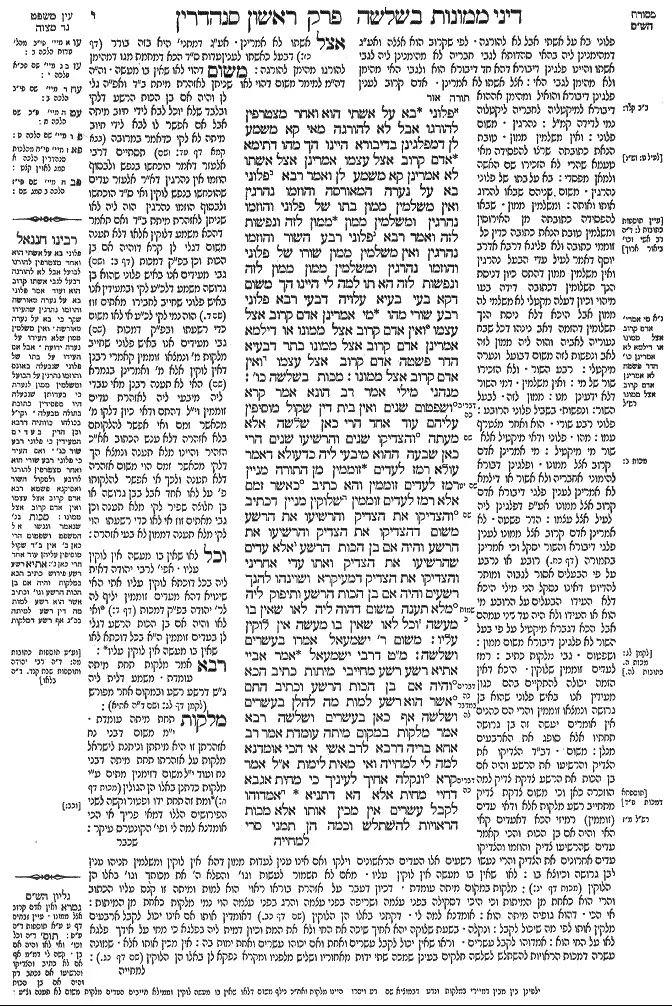
פלוני בא על אשתי הוא ואחר מצטרפין להורגו אבל לא להורגה מאי קא משמע לן דמפלגינן בדיבורא היינו הך מהו דתימא אדם קרוב אצל עצמו אמרינן אצל אשתו לא אמרינן קא משמע לן ואמר רבא פלוני בא על נערה המאורסה והוזמו נהרגין ואין משלמין ממון בתו של פלוני והוזמו נהרגין ומשלמין ממון ממון לזה ונפשות לזה ואמר רבא פלוני רבע השור והוזמו נהרגין ואין משלמין ממון שורו של פלוני והוזמו נהרגין ומשלמין ממון ממון לזה ונפשות לזה הא תו למה לי היינו הך משום דקא בעי בעיא עלויה דבעי רבא פלוני רבע שורי מהו מי אמרינן אדם קרוב אצל עצמו ואין אדם קרוב אצל ממונו או דילמא אמרינן אדם קרוב אצל ממונו בתר דבעיא הדר פשטה אדם קרוב אצל עצמו ואין אדם קרוב אצל ממונו:
מכות בשלשה כו':
מנהני מילי אמר רב הונא אמר קרא (דברים כה, א) ושפטום שנים ואין בית דין שקול מוסיפין עליהם עוד אחד הרי כאן שלשה אלא מעתה (דברים כה, א) והצדיקו שנים והרשיעו שנים הרי כאן שבעה ההוא מיבעי ליה כדעולא דאמר עולא רמז לעדים זוממין מן התורה מניין רמז לעדים זוממין והא כתיב (דברים יט, יט) כאשר זמם אלא רמז לעדים זוממין שלוקין מניין דכתיב (דברים כה, א) והצדיקו את הצדיק והרשיעו את הרשע משום דהצדיקו את הצדיק והרשיעו את הרשע והיה אם בן הכות הרשע אלא עדים שהרשיעו את הצדיק ואתו עדי אחריני והצדיקו את הצדיק דמעיקרא ושוינהו להנך רשעים והיה אם בן הכות הרשע ותיפוק ליה (שמות כ, יב) מלא תענה משום דהוה ליה לאו שאין בו מעשה וכל לאו שאין בו מעשה אין לוקין עליו:
משום ר' ישמעאל אמרו בעשרים ושלשה:
מ"ט דרבי ישמעאל אמר אביי אתיא רשע רשע מחייבי מיתות כתיב הכא (דברים כה, ב) והיה אם בן הכות הרשע וכתיב התם (במדבר לה, לא) אשר הוא רשע למות מה להלן בעשרים ושלשה אף כאן בעשרים ושלשה רבא אמר מלקות במקום מיתה עומדת אמר רב אחא בריה דרבא לרב אשי אי הכי אומדנא למה לי למחייה ואי מאית לימות א"ל אמר קרא (דברים כה, ג) ונקלה אחיך לעיניך כי מחית אגבא דחיי מחית אלא הא דתניא אמדוהו לקבל עשרים אין מכין אותו אלא מכות הראויות להשתלש וכמה הן תמני סרי
Comments from Rashi on Masechet Sanhedrin Page 10a
פלוני בא על אשתי אבל לא להורגה . לפי שקרוב הוא אצלה ואע"ג דמהימנינן ליה בהאי סהדותא לגבי חבריה לא מהימנינן ליה לגבי אשתו והיינו פלגינן דיבורא דהא חד דיבורא הוא ולגבי האי מהימן ולא מהימן לגבי האי: אצל אשתו לא אמרינן . אדם קרוב לענין פלגינן דיבורא והואיל ומהימן אההוא דיבורא למיקטליה לחבריה ליקטלוה נמי לדידה קמ"ל: נהרגין . משום פלוני: ואין משלמין ממון . טובת הנאת כתובתה שרצו להפסידה מאי טעמא שהרי לא הזכירו שם האשה ולמאן מפסדי: בא על בתו של פלוני נהרגין . משום שניהם שבאו להרוג אותו ואותה: ומשלמין ממון . שבאו להפסידה כתובתה מן האירוסין ומשלמין טובת הנאת כתובה כדין כל זוממי כתובה ולא פליגא דרבא אדרב יוסף דאמר לעיל עדי הבעל נהרגין ואין משלמין ממון דהתם כיון דניסת הנך תשלומין דכתובה דידה בעו מיהוי וכיון דעלה מקטלי לא משלמי לה ממון אבל היכא דלא ניסת הנך תשלומין דהזמה דאב נינהו דכל שבח נעוריה לאביה והוה ליה ממון לזה לאב ונפשות לזה משום דבועל ונערה מיקטלי: רבע השור . ולא הזכירו שור של מי: ואין משלמין . דמי השור דלא ידעינן מנו: ממון לזה . לבעל השור: ונפשות . בשביל פלוני הרובע: פלוני רבע שורי . הוא ואחר מצטרף עמו: מהו . פלוני ודאי מיקטיל אלא שור מי מיקטיל: מי אמרינן אדם קרוב אצל ממונו . ופלגינן דבורא להימוני אחבריה ולא אשור או דילמא לא אמרינן לענין פלגי דיבורא אדם קרוב אצל ממונו אע"פ דפלגינן ליה לעיל אצל עצמו: הדר פשטה . לא אמרינן אדם קרוב אצל ממונו לענין פלגי דיבורא והשור יסקל וכי אמרינן בתמורה (דף כח.) רובע או נרבע על פי הבעלים אסור לגבוה ומותר להדיוט דאינו נסקל הני מילי היכא דלא העידו הבעלים על הרובע מי הוא או העידו ולא היה עד שני עמהם אבל הכא דגברא מיקטיל על פי בעל השור לא פלגינן דיבורא משום ממון: ושפטום . גבי מלקות כתיב: רמז לעדים זוממין שלוקין . היכא דאין הזמה יכולה להתקיים בהם כגון מעידין אנו באיש פלוני שהוא בן גרושה ונמצאו זוממין והרי הם כהנים אין אומרים יעשה זה בן גרושה תחתיו אלא סופג את הארבעים מנלן: משום . דב"ד הצדיקו את הצדיק והרשיעו את הרשע והיה אם בן הכות את הרשע צדקת צדיק למה הוזכרה כאן וכי משום צדקת צדיק מתחייב רשע מלקות אלא ודאי עדים (זוממין) רמיזי הכא דאעדים קאי האי והיה אם בן הכות והכי קאמר עדים שהרשיעו צדיק והוזמו והצדיקו עדים אחרונים את הצדיק והרי נעשו רשעים אלו העדים הראשונים וילקו ואם אינו ענין לעדות ממון דהא אין לוקין ומשלמין תניהו ענין לבן גרושה וכיוצא בו: לאו שאין בו מעשה אין לוקין עליו . מאם לא תשמור לעשות וגו' והפלא ה' את מכותך וגו' באלו הן הלוקין (מכות דף יג:): מלקות במקום מיתה עומדת . דכיון דעבר על אזהרת בוראו ראוי הוא למות ומיתה זו קנס עליו הכתוב והרי הוא כאחת מן המיתות וכי היכי דסקילה בפני עצמה ושריפה בפני עצמה והרג בפני עצמה הוי נמי מלקות כאחת מן המיתות: אי הכי . דהוא גופיה מיתה הוא: אומדנא למה לי . דקתני באלו הן הלוקין (שם דף כב.) דאומדין אותו אם אינו יכול לקבל ארבעים מלקין אותו לפי מה שיכול לקבל: ונקלה . בשעת שלוקה יהא אחיך שיכה את החי ולא את המת וכיון דמית ליה בפלגא כי מחי על אידך פלגא לאו על החי הוא: אמדוהו לקבל עשרים . וראו שאין יכול לקבל עשרים ואחת ואם יכוהו עשרים ואחת ימות בה: אין מכין אותו אלא . שמונה עשרה דמכות הראויות להשתלש לשלשה חלקים בעינן שמכה שתי ידות מאחוריו ושליש מלפניו ומקרא נפקא לן באלו הן הלוקין (שם דף כג.):
Comments from Tosafot - Sanhedrin 10a
אצל אשתו לא אמרינן . אע"ג דמתני' היא בזה בורר (דף כז:) דבעל כאשתו לענין עדות ס"ד הכא דמחמת מגו דמהימן להורגו מהימן להורגה: משום דהוי לאו שאין בו מעשה . וה"ה דה"מ למימר משום דהוי לאו שניתן לאזהרת מיתת ב"ד ואפ"ה גלי לן והיה אם בן הכות הרשע דלקי ובלבד שלא יוכל לבא לידי חיוב מיתה אבל אם אפשר לו לבא לידי חיוב מיתה לא לקי כדאמר במרובה (בבא קמא דף עד: ושם) תסתיים דרבי אלעזר דאמר הוכחשו בנפש ולבסוף הוזמו אין נהרגין דא"ר אלעזר עדים שהוכחשו בנפש לוקין ואי ס"ד הוכחשו ולבסוף הוזמו נהרגין הוה ליה לאו שניתן לאזהרת מיתת ב"ד ואם תאמר דהכא משמע דלוקין אלאו דלא תענה משום דגלי לן קרא דוהיה אם בן הכות וכן בפ"ק דמכות (דף ב: ושם) גבי מעידים אנו באיש פלוני שהוא בן גרושה משמע דלכ"ע לקי ובמעידין אנו באיש פלוני שחייב לחבירו מאתים זוז (שם ד.) הוה נמי לקי לכ"ע אי לאו משום כדי רשעתו ובפ"ק דמכות (שם) גבי מעידים אנו באיש פלוני שחייב מלקות מ' ונמצאו זוממין קאמרי רבנן דאין לוקין אלא מ' ואמרינן בגמרא (שם) האי לא תענה רבנן מאי עבדי ליה מיבעי ליה לאזהרת עדים זוממין וי"ל דהתם ודאי כיון דלקו מ' מכאשר זמם ואי אפשר להלקותם בלא אזהרה דלא ענש הכתוב אא"כ הזהיר והיינו מלא תענה ונמצא הך דלקי מכאשר זמם הוי משום אזהרה דלא תענה ולכך אי אפשר להלקותו פ' על לאו אחד אבל בבן גרושה או בן חלוצה שפיר לקי מלא תענה וכן גבי מאתים זוז אי לאו כדי רשעתו הוי לקי מלא תענה דממון לא בעי אזהרה: וכל לאו שאין בו מעשה אין לוקין עליו . אפי' לרבי יהודה דאית ליה בכל דוכתא לוקין עליו אתי האי שינויא דהא מעדים זוממין יליף לה לר' יהודה בפ"ק דמכות (דף ד:) ואי לאו והיה אם בן הכות הרשע דגלי לן בעדים זוממין ה"א בכל דוכתא לאו שאין בו מעשה אין לוקין עליו: רבא אמר מלקות תחת מיתה עומדת . משמע דלית ליה ג"ש דרשע רשע ובמקום אחר מפורש (לקמן סנהדרין דף לג: ושם ד"ה אתיא): מלקות תחת מיתה עומדת . י"מ משום דבני נח אזהרתן זו היא מיתתן וניתנת לישראל מלקות על אזהרתו תחת מיתה דבני נח ועוד י"ל משום דזימנין מתים ע"י מלקות כדתנן באלו הן הגולין (מכות דף ח:) ומת זה תחת ידו ופטור וקשה לשני הפירושים הללו דמאי פריך אי הכי אומדנא למה לי ופי' הקונטרס עיקר:
Sanhedrin 10a - Mishnah translated into english
If someone testifies: So-and-so engaged in intercourse with my wife, he and another may combine to execute him, the accused man, with his testimony, but the woman’s husband is not accepted as a witness to execute her. A person cannot testify concerning his wife or any other close relative.
The Gemara asks: What is this last scenario teaching us? Is it that we divide the statement of the witness in order to accept part of the testimony while rejecting the inadmissible part? This cannot be, as the principle in this case is identical to that case, in which the witness is not accepted to incriminate himself. The Gemara answers: The second case is necessary, lest you say: With regard to his own self, since a person is his own relative, we say that we divide the testimony. But with regard to his wife, one might think we do not say so, and the entire testimony must be either accepted or rejected. Therefore, the second case teaches us that even with regard to one’s wife, the statement is divided, and the testimony concerning his wife is disregarded.
And Rava also says: If witnesses testify: So-and-so engaged in intercourse with a betrothed young woman (see Deuteronomy 22:25), without specifying the young woman in question, and they were rendered conspiring witnesses, they are executed, and they are not liable to pay money. Since they never specified the identity of the young woman, they were never in a position to cause anyone to lose part or all of her marriage contract. But if they specified: The young woman was the daughter of so-and-so, and they are rendered conspiring witnesses, they are executed, and they also pay money. Since in this case, the money is for this victim, i.e., the father of the young woman who stood to lose part or all of her marriage contract, and their lives are for that victim, i.e., the man and woman accused of adultery, they are liable to receive both punishments.
And Rava also says: If they testify: So-and-so engaged in bestiality with an ox (see Leviticus 18:23), which would theoretically result in the execution of both the person and the animal, without specifying which ox, and they were rendered conspiring witnesses, they are executed, as their testimony would have put the accused to death, and yet they are not liable to pay money for the ox, because their testimony did not pertain to any ox in particular. But if they specify: He engaged in bestiality with so-and-so’s ox, and they were rendered conspiring witnesses, they are executed, and they also pay money to the owner of the ox they sought to have killed. Since the money is for this victim, the owner whose ox would have been killed by the court, and their lives are for that victim, the man accused of engaging in bestiality with an animal, they are liable to receive both punishments.
The Gemara asks: It seems that the case of the ox exemplifies the same principle as the case of the betrothed young woman. Why do I also need this case? This is essentially identical to that. The Gemara answers: The second case was necessary to clarify a point, because Rava raised a dilemma about it, as Rava raised a dilemma: If someone testifies: So-and-so engaged in bestiality with my ox, what is the halakha? Do we say: A person is his own relative concerning testimony, but a person does not have the status of a relative with regard to his property, and consequently the ox would also be executed because his testimony about his own animal is admissible? Or perhaps we say: A person has the status of a relative with regard to his property, and therefore his testimony about his ox is inadmissible? The Gemara says: After he raised the dilemma, he then resolved it: A person is his own relative, but a person does not have the status of a relative with regard to his property, so the ox is executed.
§ The mishna teaches: Cases concerning one who is accused of violating a prohibition that would render him liable to receive lashes must be judged by three judges. The Gemara asks: From where is this matter derived? Rav Huna says: The verse states: “If there will be a controversy between men, and they come to judgment, and the judges judge them, and they shall justify the just, and they shall condemn the wicked. Then it shall be, if the wicked man deserves to be beaten, that the judge shall cause him to lie down, and to be beaten before his face” (Deuteronomy 25:1–2). When it states: “And the judges judge them,” in the plural, this indicates a minimum of two judges. And since a court may not be composed of an even number of judges, the court adds to them one more, and there are a total of three judges here.
The Gemara asks: If that is so, that the plural verbs in the verse each indicate two judges, the term: “And they shall justify,” indicates another two, and the term: “And they shall condemn,” indicates another two, so that there are a total of seven here. The Gemara answers: Rav Huna requires that pair of terms in accordance with the opinion of Ulla, as Ulla says: From where in the Torah is there an allusion to the halakha of conspiring witnesses?
The Gemara interrupts with a question: An allusion to the halakha of conspiring witnesses? But it is written explicitly: “Then you shall do to him as he had planned to do to his brother” (Deuteronomy 19:19). Why would there be a need for an allusion? Rather, Ulla meant: From where in the Torah is there an allusion to the halakha that conspiring witnesses are flogged? Ulla answers: As it is written: “And they shall justify the just, and they shall condemn the wicked. Then it shall be, if the wicked man deserves to be beaten, that the judge shall cause him to lie down, and to be beaten before his face.”
The Gemara explains the derivation: Due to the fact that the terms in the verse: “They shall justify the just, and they shall condemn the wicked” indicate a financial dispute in which one party is vindicated and the other is required to pay, does it follow that, as the verse continues: “Then it shall be, if the wicked man deserves to be beaten”? Why would the verdict’s being rendered in the other party’s favor mean that the losing party is flogged? Rather, the verse must be discussing the witnesses and not the litigants. If conspiring witnesses condemned the just one, and other witnesses came and justified the one who was really the just one from the beginning and rendered these conspiring witnesses wicked, then, as the verse continues: “Then it shall be, if the wicked man deserves to be beaten, that the judge shall cause him to lie down, and to be beaten before his face.” This indicates that the witnesses are subject to lashes.
The Gemara asks: Why does this halakha require a specific derivation? But since there is a principle that one is subject to lashes for violating any prohibition, why not derive this punishment from the prohibition: “You shall not testify as a false witness against your neighbor” (Exodus 20:13)? The Gemara answers: That verse is insufficient, because it is a prohibition that does not involve an action, but only speech, and with regard to any prohibition that does not involve an action, one is not flogged for it.
§ The mishna teaches: It was stated in the name of Rabbi Yishmael: Cases concerning lashes must be adjudicated by twenty-three judges. The Gemara asks: What is the reasoning of Rabbi Yishmael? Abaye said: This is derived by means of a verbal analogy between one instance of the term wicked and another instance of the term wicked, from the halakha of those liable to receive death penalties. It is written here, with regard to lashes: “Then it shall be, if the wicked man deserves to be beaten,” and it is written there, with regard to a murderer: “That is a wicked man guilty of death” (Numbers 35:31). Just as there, with regard to the trial of the murderer, the case is tried by twenty-three judges, so too here, the case of lashes must be tried by twenty-three judges.
Rava says: A verbal analogy is unnecessary. Conceptually, lashes stand in place of execution. As corporal punishment is a kind of replacement for capital punishment, it must be judged in the manner of capital punishments, by a court of twenty-three. Rav Aḥa, son of Rava, said to Rav Ashi: If so, that lashes stand in place of execution, why do I need an assessment? Before administering lashes, the court consults with a physician to assess how many lashes the transgressor can withstand and adjusts the number of lashes so that the transgressor’s life will not be threatened. But if Rava is correct, why is this necessary? Let the court strike him, and if the transgressor dies, let him die.
Rav Ashi said to Rav Aḥa, son of Rava: The verse states: “Then your brother will be dishonored before your eyes” (Deuteronomy 25:3). This teaches that when you strike, you strike upon the back of a live person. After he is dead, he is not called: Your brother. Rav Aḥa, son of Rava, continued to ask Rav Ashi: But with regard to that which is taught in a baraita (Tosefta, Makkot 4:6): If they assessed him to be strong enough to absorb twenty lashes, they flog him only with a number of lashes that can be divided into threes, as lashes are administered in sets of three, two behind and one in front. And how many are they? Eighteen.
Traduction : The William Davidson digital edition of the Koren Noé Talmud, with commentary by Rabbi Adin Even-Israel Steinsaltz.