 Talmud Bavli
The learning on the whole site is dedicated : For the success of Elyahou ben H'anna & family
The learning on the whole site is dedicated : L'ilui Nishmat Margalit bat Ledicia
The learning on the whole site is dedicated : L'ilui Nishmat רינה בת לדיסיה
Sanhedrin 83a : Youtube
Daf TubeYoutube
2 video classes :
Sanhedrin Page 83a
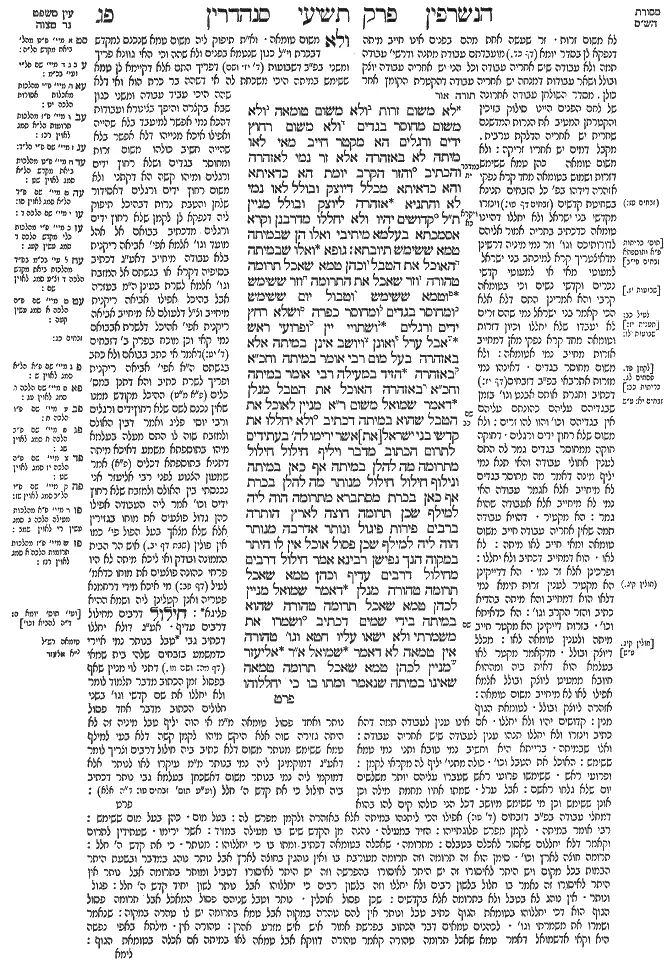
Sanhedrin 83a - Guemara
לא משום זרות ולא משום טומאה ולא משום מחוסר בגדים ולא משום רחוץ ידים ורגלים הא מקטר חייב מאי לאו מיתה לא באזהרה אלא זר נמי לאזהרה והכתיב (במדבר יח, ז) והזר הקרב יומת הא כדאיתא והא כדאיתא מכלל דיוצק ובולל לאו נמי לא והתניא אזהרה ליוצק ובולל מניין ת"ל (ויקרא כא, ו) קדושים יהיו ולא יחללו מדרבנן וקרא אסמכתא בעלמא מיתיבי ואלו הן שבמיתה טמא ששימש תיובתא:
גופא ואלו שבמיתה האוכל את הטבל וכהן טמא שאכל תרומה טהורה וזר שאכל את התרומה וזר ששימש וטמא ששימש וטבול יום ששימש ומחוסר בגדים ומחוסר כפרה ושלא רחץ ידים ורגלים ושתויי יין ופרועי ראש אבל ערל ואונן ויושב אינן במיתה אלא באזהרה בעל מום רבי אומר במיתה וחכ"א באזהרה הזיד במעילה רבי אומר במיתה וחכ"א באזהרה האוכל את הטבל מנלן דאמר שמואל משום ר"א מניין לאוכל את הטבל שהוא במיתה דכתיב (ויקרא כב, טו) ולא יחללו את קדשי בני ישראל [את] אשר ירימו לה' בעתידים לתרום הכתוב מדבר ויליף חילול חילול מתרומה מה להלן במיתה אף כאן במיתה ונילוף חילול חילול מנותר מה להלן בכרת אף כאן בכרת מסתברא מתרומה הוה ליה למילף שכן תרומה חוצה לארץ הותרה ברבים פירות פיגול ונותר אדרבה מנותר הוה ליה למילף שכן פסול אוכל אין לו היתר במקוה הנך נפישן רבינא אמר חילול דרבים מחילול דרבים עדיף וכהן טמא שאכל תרומה טהורה מנלן דאמר שמואל מניין לכהן טמא שאכל תרומה טהורה שהוא במיתה בידי שמים דכתיב (ויקרא כב, ט) ושמרו את משמרתי ולא ישאו עליו חטא וגו' טהורה אין טמאה לא דאמר שמואל א"ר אליעזר מניין לכהן טמא שאכל תרומה טמאה שאינו במיתה שנאמר ומתו בו כי יחללוהו
Comments from Rashi on Masechet Sanhedrin Page 83a
לא משום זרות . זר שעשה אחת מהם בפנים אינו חייב מיתה דנפקא לן בסדר יומא (דף כד.) מועבדתם עבודת מתנה ודרשי' עבודה תמה ולא עבודה שיש אחריה עבודה וכל הני יש אחריה עבודה יוצק ובולל ושאר עבודות דמנחה יש אחריה עבודה דהקטרת הקומץ אחר כולן. מסדר השולחן עבודה אחרונה של לחם הפנים היינו סילוק בזיכין והקטרתן המטיב את הנרות המדשנם שחרית יש אחריה הדלקת ערבית. מקבל דמים יש אחריו זריקה: ולא משום טומאה . כהן טמא ששימש דזרות ושמוש בטומאה מחד קרא נפקי אזהרה דידהו בפ' כל הזבחים תנינא בשחיטת קדשים (זבחים דף טו:) וינזרו מקדשי בני ישראל ולא יחללו דהיינו טומאה כדכתיב בתריה אמור אליהם לדורותיכם וגו' וזר נמי מיניה דרשינן מדאיצטריך קרא למיכתב בני ישראל למעוטי מאי אי למעוטי קדשי נכרים וקדשי נשים וכי בטומאה קרבי והא אמרינן התם דלא אלא הכי קאמר בני ישראל נמי שהם זרים לא יעבדו שלא יחללו וכיון דזרות וטומאה מחד קרא נפקי מאן דמחייב אזרות מחייב נמי אטומאה: ולא משום מחוסר בגדים . דאינהו נמי מזרות אתרבאי בפ"ב דזבחים (דף יז:) דכתיב וחגרת אותם אבנט וגו' בזמן שבגדיהם עליהם כהונתם עליהם אין בגדיהם וכו' והוו להו זרים: ולא משום שלא רחוץ ידים ורגלים . דחוקה חוקה ממחוסר בגדים גמר לה התם לענין אחולי עבודה והאי תנא נמי יליף מינה דאמר מה מחוסר בגדים לא מיחייב אלא אגמר עבודה האי נמי לא מיחייב אלא אעבודה שהוא גמר: הא מקטיר . דהויא עבודה תמה שאין אחריה עבודה חייב משום טומאה ומאי חייב לאו מיתה: לא לאו . הוא דמחייב דכתיב ולא יחללו: ופרכינן אלא זר נמי . הא דדייקינן הא מקטיר לענין זרות תימא נמי דלאו הוא דמחייב והא מיתה בהדיא כתיב והזר הקרב וגו': הא כדאיתא וכו' . בזרות דייקינן הא מקטר חייב מיתה ולענין טומאה לאו: מכלל דיוצק ובולל . מדקאמר מקטר לאו בעלמא הוא דאית ביה ומההוא חיובא ממעיט ליוצק ובולל אלמא אפילו לאו לא מיחייב משום טומאה: אזהרה ליוצק ובולל . לטומאת הגוף מנין: קדושים יהיו ולא יחללו . אם אינו ענין לעבודה תמה דהא כתיב וינזרו ולא יחללו תנהו ענין לעבודה שיש אחריה עבודה: ואלו שבמיתה . ברייתא היא וחשיב נמי טובא ותני נמי טמא ששימש: האוכל את הטבל וכו' . כולה מתני' יליף לה מקראי לקמן: ופרועי ראש . ששימשו פרועי ראש שעברו עליהם יותר משלשים יום שלא גלחו ראשם: אבל ערל . שמתו אחיו מחמת מילה וכן אונן ששימש וכן מי ששימש מיושב דכל הני כולהו קים להו בהוא דמחלי עבודה בפ"ב דזבחים (ד' טו:) אפילו הכי ליתנהו במיתה אלא באזהרה ולקמן מפרש לה: בעל מום . כהן בעל מום ששימש: רבי אומר במיתה . לקמן מפרש פלוגתייהו: הזיד במעילה . נהנה מן הקדש שיש בו מעילה במזיד: אשר ירימו . שעתידין לתרום וקאמר דלא יחללום שאסור לאכלם בטבלם: מתרומה . שאכלה בטומאה דכתיב ומתו בו כי יחללוהו: מנותר . כי את קדש ה' חלל: תרומה חוצה לארץ וכו' . סימן הוא זה תרומה וזה תרומה מעורבת בו ואין נוהגין בחוצה לארץ אבל נותר נוהג במדבר ובשעת היתר הבמות בכל מקום ויש היתר לאיסורו זה יש היתר לאיסורו בהפרשה וזה יש היתר לאיסורו דטביל ומותר בתרומה אבל נותר אין היתר לאיסורו זה נאמר בו חלול בלשון רבים ולא יחללו וזה בלשון רבים כי יחללוהו אבל נותר לשון יחיד קדש ה' חלל: פגול ונותר . אין נוהג לא בטבל ולא בתרומה אלא בקדשים: שכן פסול אוכלין . נותר וטבל שניהם פסול המאכל אבל תרומה פסול הגוף הוא דכי יחללוהו בטומאת הגוף כתיב טבל ונותר אין להם טהרה במקוה אבל טמא בתרומה יש לו טהרה במקוה: שנאמר ושמרו את משמרתי וגו' . לכהנים טמאים דבר הכתוב בפרשת אמור איש איש מזרע אהרן: טהורה אין . מילתא באפי נפשה היא וקאי אדשמואל דאמר טמא שאכל תרומה טהורה קאמר טהורה דווקא אבל טמאה לאו במיתה אם אכלה בטומאת הגוף:
Comments from Tosafot - Sanhedrin 83a
ולא משום טומאה . וא"ת תיפוק ליה משום טמא שנכנס למקדש דבכרת וי"ל כגון שנטמא בפנים ולא שהה וכי האי גוונא פריך ומשני בפ"ב דשבועות (ד' יז. ושם) דפריך התם אלא דקיימא לן טמא ששימש במיתה היכי משכחת לה אי דשהה בר כרת הוא ואי דלא שהה היכי עביד עבודה ומשני כגון שבא בקצרה והיפך בצינורא ועבודות דהכא נמי אפשר למיעבד בלא שהייה ואפילו איכא מנייהו דלא אפשר בלא שהייה חשיב כולהו משום זרות ומחוסר בגדים ושלא רחוץ ידים ורגלים ומיהו קשה הא דקתני ולא משום רחוץ ידים ורגלים דאסידור שלחן והטבת נרות דבהיכל תיפוק ליה דנפקא לן לקמן שלא רחוץ ידים ורגלים מדכתיב בבואם אל אהל מועד וגו' אלמא אפי' אביאה ריקנית בלא עבודה מיחייב דאע"ג דכתיב בסיפיה דקרא או בגשתם אל המזבח וגו' אלמא לשרת בעינן ה"מ בעזרה אבל בהיכל אפילו אביאה ריקנית מיחייב וצ"ל דלעולם לא מיחייב אביאה ריקנית אפי' אהיכל דלשרת אבבואם נמי קאי וכן מוכח בפרק ב' דזבחים (ד' יט:) דאמר אי כתב בבואם ולא כתב בגשתם ה"א אפי' אביאה ריקנית ופריך לשרת כתיב והא דתנן במס' כלים (פ"א מ"ט) ההיכל מקודש ממנו שאין נכנס לשם שלא רחוץ ידים ורגלים ורבי יוסי פליג ואמר דבין האולם ולמזבח שוה לו התם מעלה בעלמא מיהו בתוספתא משמע דאיכא מיתה דתניא בתוספתא דכלים (פ"א) אמר שמעון הצנוע לפני רבי אליעזר אני נכנסתי בין האולם ולמזבח שלא רחוץ ידים וכו' אמר ליה העבודה אפילו כהן גדול פוצעים את מוחו בגזירין אלא שלא מצאך בעל הפול פי' כמו אין פולין (שבת דף יב.) איש הר הבית הממונה ובודק ואי ליכא מיתה לא היו פרחי כהונה פוצעים את מוחו כדאמ' לעיל (סנהדרין דף פב:) מי איכא מידי דרחמנא פטריה ואנן קטלינן ליה ושמא ההיא פליגא: חילול דרבים מחילול דרבים עדיף . אע"ג דולא יחללו דכתיב גבי טבל בנותר נמי איירי כדמשמע בזבחים שלהי בית שמאי (דף מה: ושם מו.) דתני לוי מניין שאף בפסול זמן הכתוב מדבר תלמוד לומר ולא יחללו את שם קדשי וגו' בשני חלולים הכתוב מדבר אחד פסול נותר ואחד פסול טומאה מ"מ אי הוה יליף טבל מיניה זה לא היתה גזירה שוה אלא היקש מיהו לקמן קשה דלא בעי למילף טמא ששימש מנותר משום דלא כתיב ביה חילול דרבים וצריך לומר דאע"ג דמוקמינן ליה נמי בנותר מ"מ עיקרו לאו לנותר אלא דמוקמי ליה נמי בנותר משום דאשכחן בעלמא גבי נותר דכתיב ביה חילול כי את קדש ה' חלל (וע"ע תוס' זבחים טו: ד"ה אלא):
Sanhedrin 83a - Mishnah translated into english
neither due to non-priesthood, if a non-priest performs one of those rites in the Temple, he is not liable to receive the death penalty; nor due to the performance of any of these rites in a state of ritual impurity; nor due to the performance of any of these rites as a priest lacking the requisite priestly vestments; nor due to the performance of any of these services without the washing of his hands and feet. The reason for the lack of liability is that in all these cases, additional rites must be performed in order to complete the service. One is liable for performing the service outside the Temple, or performing the service as a non-priest, in a state of ritual impurity, etc., only when performing a ritual that completes the service.
From the baraita, one may infer: But one who burns the offering on the altar in one of these circumstances, including in a state of ritual impurity, is liable. What, is it not teaching that he is liable to receive death at the hand of Heaven, and there is proof from the baraita to resolve Rav Aḥa bar Huna’s dilemma? The Gemara rejects that proof: No, he is liable for violating a prohibition, without the punishment of death.
The Gemara asks: But according to that understanding, as for the non-priest who is mentioned in the baraita together with the priest who performs the Temple service in a state of impurity, is he too liable for violating a prohibition, and not death, if he burns the offering on the altar? But isn’t it written: “And the non-priest who approaches shall be put to death” (Numbers 18:7)? The Gemara answers: Do not extrapolate the liability of a non-priest from the liability of a ritually impure priest, as this case of ritual impurity is as it is, and that case of a non-priest is as it is; each situation is discussed independently.
The Gemara asks: Is that to say, by inference, that a priest who pours oil onto a meal-offering and one who mixes the oil into the meal-offering, in a state of ritual impurity, does not violate even a prohibition? But isn’t it taught in a baraita: From where is a prohibition against pouring oil and against mixing oil in a state of ritual impurity derived? It is derived from a verse, as the verse states: “They shall be sacred to their God and they shall not profane the name of their God; for the fire offerings of the Lord, the bread of their God, they offer” (Leviticus 21:6). The Gemara answers: No proof may be cited from that verse, as the prohibition against performing Temple rites that do not complete the service in a state of impurity is by rabbinic law, and the verse is a mere support, not a Torah prohibition.
The Gemara raises an objection from a baraita (Tosefta, Zevaḥim 12:17): And these are they who are liable to receive death at the hand of Heaven: Among those enumerated is an impure individual who performed the Temple service. The Gemara concludes: This is a conclusive refutation of the opinion of Rav Sheshet, and proof that an impure individual who performs the Temple service is liable to receive death at the hand of Heaven, and young priests and zealots may kill only one who is liable to receive death at the hand of Heaven.
§ In order to discuss the matter itself, the Gemara cites the Tosefta: And these are they who are liable to receive death at the hand of Heaven: One who partakes of untithed produce, and a ritually impure priest who partook of ritually pure teruma, and a non-priest who partook of teruma, and a non-priest who performed the Temple service, and a ritually impure priest who performed the Temple service, and a priest who was ritually impure who immersed that day and is waiting for nightfall for the purification process to be completed, who performed the Temple service, and a priest lacking the requisite priestly vestments, and a priest who has not yet brought an atonement offering to complete his purification process as a leper or zav, and a priest who did not wash his hands and feet before beginning the Temple service; and priests who performed the Temple service while intoxicated with wine, and priests who performed the Temple service with overgrown hair on their heads.
The baraita continues: But a priest who performs the Temple service while uncircumcised or as an acute mourner on the day that one of his close relatives dies, or a priest who performs the Temple service while seated, are not punished with death at the hand of Heaven; rather, they are liable for violating a prohibition. With regard to a blemished priest who performs the Temple service, Rabbi Yehuda HaNasi says: He is punished with death at the hand of Heaven, and the Rabbis say: He is liable only for violating a prohibition.
As the Torah states the halakha only in the case of one who misuses consecrated property unwittingly, there is a dispute with regard to one who intentionally performed an action of misuse of consecrated property. Rabbi Yehuda HaNasi says: He is punished with death at the hand of Heaven, and the Rabbis say: He is liable only for violating a prohibition.
The Gemara elaborates: It was taught in the baraita that one who partakes of untithed produce is liable to receive death at the hand of Heaven. The Gemara asks: From where do we derive this halakha? The Gemara answers: As Shmuel says in the name of Rabbi Eliezer: From where is it derived that one who partakes of untithed produce is punished with death at the hand of Heaven? It is derived from a verse, as it is written: “They shall not desecrate the sacred items of the children of Israel, which they will set apart unto the Lord” (Leviticus 22:15). From the fact that it is formulated in the future tense: “Which they will set apart,” it is clear that the verse is speaking about items that are destined to be separated in the future, i.e. untithed produce from which teruma and tithes will be separated.
And the tanna derives the punishment by means of a verbal analogy: The term of desecration written with regard to untithed produce is derived from the term of desecration written with regard to an impure priest who partakes of teruma (see Leviticus 22:9). Just as there, with regard to teruma, he is punished with death at the hand of Heaven, so too here, with regard to untithed produce, he is punished with death at the hand of Heaven.
The Gemara challenges: And let us derive the punishment by means of a different verbal analogy: Derive the term of desecration written with regard to untithed produce from the term of desecration written with regard to meat leftover from an offering after the time allotted for its consumption [notar] (see Leviticus 19:6, 8). Just as there, with regard to notar, he is punished with karet, so too here, with regard to untithed produce, he is punished with karet.
The Gemara answers: It is reasonable to say that he should have derived the punishment for partaking of untithed produce from teruma, as there are many elements common to teruma and untithed produce. Unlike notar, they are germane to the halakhot of teruma; they are not in effect outside of Eretz Yisrael; both of them can become permitted, as an impure priest can immerse and partake of teruma, and untithed produce can become permitted by taking teruma and tithes; in both cases, the term of desecration is formulated in the plural, while with regard to notar it is formulated in the singular; both apply to produce; and neither the halakha of an offering that was sacrificed with the intent to consume it after its designated time [piggul], nor the halakha of notar, apply in either case.
The Gemara rejects that conclusion: On the contrary, he should have derived the punishment for the partaking of untithed produce from notar, as there are elements common to notar and untithed produce. Both cases relate to the unfitness of the food, while in the case of an impure individual partaking of teruma, it is the person who is unfit; and in both cases there is no permission granted by means of immersion in the ritual bath, while in the case of an impure individual partaking of teruma, immersion is effective. The Gemara answers: Those elements common to teruma and untithed produce are more numerous, therefore that is the preferred derivation. Ravina says: There is no need for a tally of common elements, as deriving desecration in the plural by means of a verbal analogy from desecration in the plural is preferable.
The Gemara continues to analyze the baraita. From where do we derive that an impure priest who partook of pure teruma is liable to receive death at the hand of Heaven? It is derived as Shmuel says: From where is it derived with regard to an impure priest who partakes of pure teruma that he is punished with death at the hand of Heaven? It is derived from a verse, as it is written with regard to a priest who partakes of teruma: “And they shall keep my charge lest they bear a sin for it and die therein if they desecrate it: I am the Lord” (Leviticus 22:9).
The Gemara asks: From where is it derived that for partaking of ritually pure teruma, yes, the impure priest is liable, but for partaking of impure teruma, no, the priest is not liable? It is derived as Shmuel says that Rabbi Eliezer says: From where is it derived that an impure priest who partakes of impure teruma is not punished with death at the hand of Heaven? It is derived from a verse, as it is stated in that verse: “And die therein if they desecrate it,”
Traduction : The William Davidson digital edition of the Koren Noé Talmud, with commentary by Rabbi Adin Even-Israel Steinsaltz.