 Talmud Bavli
The learning on the whole site is dedicated : L'ilui Nishmat Avraham Ben Simha
The learning on the whole site is dedicated : L'ilui Nishmat Jacques Isaac Ben Amram Loubaton
The learning on the whole site is dedicated : L'ilui Nishmat Reuven ben Rivka SEBBAG
Sanhedrin 104b : Youtube
Daf TubeYoutube
2 video classes :
Sanhedrin Page 104b
Sanhedrin 104b - Guemara
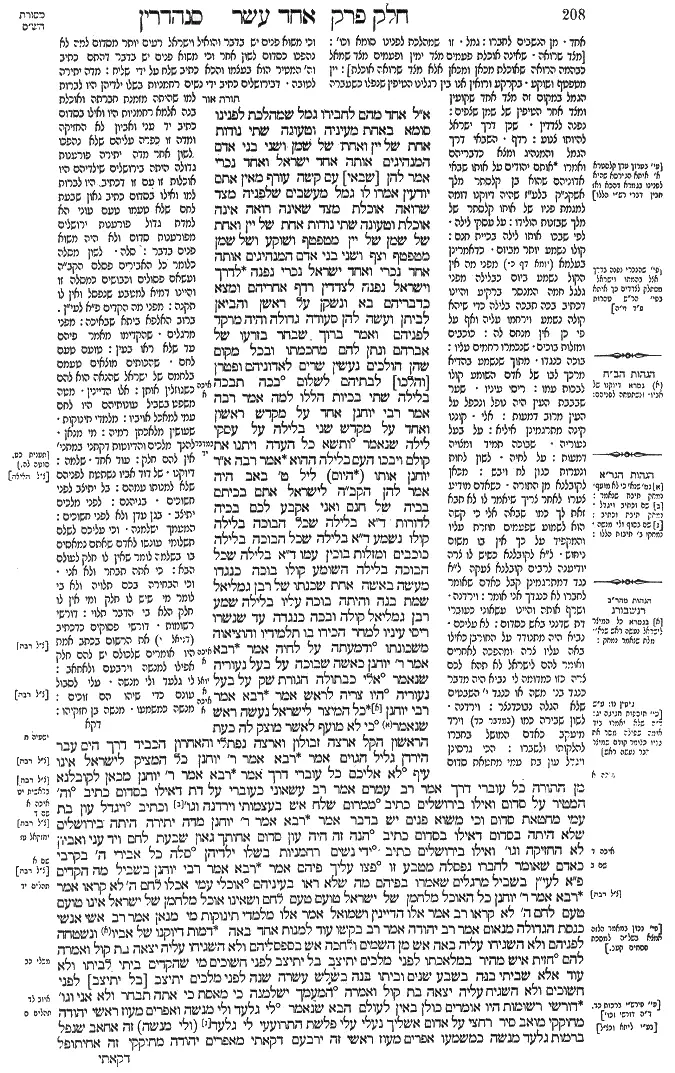
א"ל אחד מהם לחבירו גמל שמהלכת לפנינו סומא באחת מעיניה וטעונה שתי נודות אחת של יין ואחת של שמן ושני בני אדם המנהיגים אותה אחד ישראל ואחד נכרי אמר להן [שבאי] עם קשה עורף מאין אתם יודעין אמרו לו גמל מעשבים שלפניה מצד שרואה אוכלת מצד שאינה רואה אינה אוכלת וטעונה שתי נודות אחת של יין ואחת של שמן של יין מטפטף ושוקע ושל שמן מטפטף וצף ושני בני אדם המנהיגים אותה אחד נכרי ואחד ישראל נכרי נפנה לדרך וישראל נפנה לצדדין רדף אחריהם ומצא כדבריהם בא ונשקן על ראשן והביאן לביתן ועשה להן סעודה גדולה והיה מרקד לפניהם ואמר ברוך שבחר בזרעו של אברהם ונתן להם מחכמתו ובכל מקום שהן הולכים נעשין שרים לאדוניהם ופטרן [והלכו] לבתיהם לשלום (איכה א, ב) בכה תבכה בלילה שתי בכיות הללו למה אמר רבה אמר רבי יוחנן אחד על מקדש ראשון ואחד על מקדש שני בלילה על עסקי לילה שנאמר (במדבר יד, א) ותשא כל העדה ויתנו את קולם ויבכו העם בלילה ההוא אמר רבה א"ר יוחנן אותו (היום) ליל ט' באב היה אמר להן הקב"ה לישראל אתם בכיתם בכיה של חנם ואני אקבע לכם בכיה לדורות ד"א בלילה שכל הבוכה בלילה קולו נשמע ד"א בלילה שכל הבוכה בלילה כוכבים ומזלות בוכין עמו ד"א בלילה שכל הבוכה בלילה השומע קולו בוכה כנגדו מעשה באשה אחת שכנתו של רבן גמליאל שמת בנה והיתה בוכה עליו בלילה שמע רבן גמליאל קולה ובכה כנגדה עד שנשרו ריסי עיניו למחר הכירו בו תלמידיו והוציאוה משכונתו (איכה א, ב) ודמעתה על לחיה אמר רבא אמר ר' יוחנן כאשה שבוכה על בעל נעוריה שנאמר (יואל א, ח) אלי כבתולה חגורת שק על בעל נעוריה (איכה א, ה) היו צריה לראש אמר רבא אמר רבי יוחנן כל המיצר לישראל נעשה ראש שנאמר (ישעיהו ח, כג) כי לא מועף לאשר מוצק לה כעת הראשון הקל ארצה זבולון וארצה נפתלי והאחרון הכביד דרך הים עבר הירדן גליל הגוים אמר רבא אמר ר' יוחנן כל המציק לישראל אינו עיף (איכה א, יב) לא אליכם כל עוברי דרך אמר רבא אמר ר' יוחנן מכאן לקובלנא מן התורה כל עוברי דרך אמר רב עמרם אמר רב עשאוני כעוברי על דת דאילו בסדום כתיב (בראשית יט, כד) וה' המטיר על סדום ואילו בירושלים כתיב (איכה א, יג) ממרום שלח אש בעצמותי וירדנה וגו' וכתיב (איכה ד, ו) ויגדל עון בת עמי מחטאת סדום וכי משוא פנים יש בדבר אמר רבא אמר ר' יוחנן מדה יתירה היתה בירושלים שלא היתה בסדום דאילו בסדום כתיב (יחזקאל טז, מט) הנה זה היה עון סדום אחותך גאון שבעת לחם ויד עני ואביון לא החזיקה וגו' ואילו בירושלים כתיב (איכה ד, י) ידי נשים רחמניות בשלו ילדיהן (איכה א, טו) סלה כל אבירי ה' בקרבי כאדם שאומר לחברו נפסלה מטבע זו (איכה ב, טז) פצו עליך פיהם אמר רבא אמר רבי יוחנן בשביל מה הקדים פ"א לעי"ן בשביל מרגלים שאמרו בפיהם מה שלא ראו בעיניהם (תהלים יד, ד) אוכלי עמי אכלו לחם ה' לא קראו אמר רבא אמר ר' יוחנן כל האוכל מלחמן של ישראל טועם טעם לחם ושאינו אוכל מלחמן של ישראל אינו טועם טעם לחם ה' לא קראו רב אמר אלו הדיינין ושמואל אמר אלו מלמדי תינוקות מי מנאן אמר רב אשי אנשי כנסת הגדולה מנאום אמר רב יהודה אמר רב בקשו עוד למנות אחד באה דמות דיוקנו של אביו ונשטחה לפניהם ולא השגיחו עליה באה אש מן השמים ולחכה אש בספסליהם ולא השגיחו עליה יצאה בת קול ואמרה להם (משלי כב, כט) חזית איש מהיר במלאכתו לפני מלכים יתיצב בל יתיצב לפני חשוכים מי שהקדים ביתי לביתו ולא עוד אלא שביתי בנה בשבע שנים וביתו בנה בשלש עשרה שנה לפני מלכים יתיצב [בל יתיצב] לפני חשוכים ולא השגיח עליה יצאה בת קול ואמרה (איוב לד, לג) המעמך ישלמנה כי מאסת כי אתה תבחר ולא אני וגו' דורשי רשומות היו אומרים כולן באין לעולם הבא שנאמר (תהלים ס, ט) לי גלעד ולי מנשה ואפרים מעוז ראשי יהודה מחוקקי מואב סיר רחצי על אדום אשליך נעלי עלי פלשת התרועעי לי גלעד (ולי מנשה) זה אחאב שנפל ברמות גלעד מנשה כמשמעו אפרים מעוז ראשי זה ירבעם דקאתי מאפרים יהודה מחוקקי זה אחיתופל
Comments from Rashi on Masechet Sanhedrin Page 104b
אחד . מן הנשבים לחברו: גמל . זו שמהלכת לפנינו סומא וכו': [מצד שרואה . שאינה אוכלת פעמים מצד ימין ופעמים מצד שמאל כבהמה הרואה שאוכלת מכאן ומכאן אלא מצד שרואה אוכלת]: יין מטפטף ושוקע . בקרקע ורואין אנו בין רגלינו הטיפין שנפלו כשעברה הגמל במקום זה מצד אחד שקועין ומצד אחר הטיפין של שמן שצפים: נפנה לצדדין . שכן דרך ישראל להיותו צנוע: רדף . השבאי דרך הגמל והמנהיג ומצא כדבריהם ואמרו אותם יהודים על אותו שבאי אדוניהם שהוא בן קלסתר מלך אשקנ"ק בלע"ז שהיה דיוקנו דומה למגמת פניו של אותו קלסתר של מלך שבזנות הולידו: על עסקי לילה . לפי שבכו אותו לילה בכיית חנם: קולו נשמע יותר מביום . כדאמרינן בעלמא (יומא דף כ.) מפני מה אין הקול נשמע ביום כבליל"ה מפני גלגל חמה המנסר ברקיע והיינו דכתיב בכה תבכה בלילה כדי שיהא קולה נשמע וירחמו עליה ואף על פי כן אין מנחם לה: כוכבים ומזלות בוכים . שנכמרו רחמים עליו: בוכה כנגדו . מתוך שנשמע בהדיא מרכך לבו של אדם השומע קולו לבכות עמו: ריסי עיניו . שער שבבבת העין היה נופל ונכפל על העין מרוב דמעות: על לחיה . לשון לחות ונערות כגון לח ויבש: אלי . קוננו קינה מתרגמינן איליא: על בעל נעוריה . שבוכה תמיד ומצויה דמעות: לא אליכם . נביא היה מתנודד על החורבן כאילו באה עליו צרה ומהפכה לאחרים ואומר להם לישראל לא תהא לכם צרה כזו כמדומה לי נביא היה מדבר כנגד בני משה או כנגד י' השבטים שלא הגלה נבוכדנצר: מכאן לקובלנא מן התורה . כשאדם מודיע צערו לאחר צריך שיאמר לו לא תבא זאת לך כמו שבאה אלי כי קשה הוא לשמוע שפעמים חוזרת עליו והמקפיד על כך אין בו משום ניחוש. ל"א לקובלנא כשיש לו צרה יודיענה לרבים קובלנא צעקה ל"א נגד דמתרגמינן קבל כאדם שאומר לחברו לא כנגדך אני אומר: וירדנה . ושרף אותה והיינו עשאוני כעוברי דת שדנני באש כסדום: וירדנה . לשון שבירה כמו (במדבר כד) וירד מיעקב כאדם המושל בחברו להלקותו ולשברו: הכי גרסינן ויגדל עון בת עמי מחטאת סדום וכי משוא פנים יש בדבר והואיל וישראל רעים יותר מסדום למה לא נהפכו כסדום לשון אחר וכי משוא פנים יש בדבר דהתם כתיב וה' המטיר הוא בעצמו והכא כתיב שלח על ידי שליח: מדה יתירה לטובה . דבירושלים כתיב ידי נשים רחמניות בשלו ילדיהן היו לברות למו שהיתה מזמנת חברתה ואוכלת בנה אלמא רחמניות היו ואילו בסדום כתיב יד עני ואביון לא החזיקה ומדה זו כפרה עליהם שלא נהפכו לשון אחר מדה יתירה פורענות גדולה היתה בירושלים שילדיהם היו אוכלות זו עם זו דכתיב היו לברות למו ואילו בסדום כתיב גאון שבעת לחם שלא טעמו טעם עוני הא למדת גדול פורענות ירושלים מפורענות סדום ולא היה משוא פנים בדבר: סלה . לשון מסלה כלומר כל האבירים פסלם הקב"ה ועשאם פסולים וכבושים כמסלה זו והיינו דמיא למטבע שנפסל ואין לו תקנה: מפני מה הקדים פ"א לעי"ן . ברוב האלפא ביתא שבאיכה: מפני מרגלים . שהקדימו מאמר פיהם עד שלא ראו בעין: טועם טעם לחם . שהכותים מוצאים טעמם בלחמם של ישראל שהנאה הוא להם כשגוזלין אותן: אלו הדיינין . מטה משפט בשביל עונותיהם היו לחם עמי למאכל אויביו: מלמדי תינוקות . שעושין מלאכתן רמיה: מי מנאן . להנך מלכים והדיוטות דקתני במתני' אין להם חלק: עוד אחד . שלמה: דיוקנו . של דוד אביו נשתטח לפניהם שלא למנותו עמהם: בל יתיצב לפני חשוכים . בגיהנם: לפני מלכים יתיצב . בגן עדן ולא לפני חשוכים: המעמך ישלמנה . וכי עליכם לשלם תשלומי עונשו לאדם שאתם נמאסים בו בשלמה לומר שאין לו חלק לעולם הבא: כי אתה תבחר ולא אני . וכי הבחירה בכם תלויה ולא בי לומר מי שיש לו חלק ומי אין לו חלק הלא בי הדבר תלוי: דורשי רשומות . דורשי פסוקים כדכתיב (דניאל י) את הרשום בכתב אמת היו אומרים שלכולם יש להם חלק אפילו למנשה וירבעם ולאחאב: לי גלעד ולי מנשה . עלי לסבול עונם כדי שיהו הם זוכים: מנשה כמשמעו . מנשה בן חזקיהו:
Sanhedrin 104b - Mishnah translated into english
One of the captives said to the other: The camel that is walking ahead of us is blind in one of its eyes and laden with two wineskins, one filled with wine and one filled with oil. And two people are driving the camel, one a Jew and one a gentile. The captor said to them: Stiff-necked people, from where do you know these matters that you cannot see?
They said to him: We know that the camel is blind from the grass that is before it, as from the grass on the side that it sees, it eats, and from the grass on the side that it does not see, it does not eat, i.e., it eats grass from only one side. And we know that it is laden with two wineskins, one filled with wine and one filled with oil, as wine drips and sinks into the ground and oil drips and floats on the surface, and we see the difference on the ground. And we know that two people are driving the camel, one a Jew and one a gentile, as the gentile defecates on the road and the Jew, in the interests of modesty, goes to the sides of the road to defecate.
The captor pursued the camel and its drivers to determine whether the statements of the captives were accurate, and found that the reality was in accordance with their statements. He came and respectfully kissed them on their head, and brought them to their house and prepared a great feast for them. And he was dancing before them and said: Blessed is He who chose the descendants of Abraham and granted of His wisdom to them, and in every place that they go they become princes to their lords. And he released them and they went to their houses in peace.
§ The Gemara returns to its interpretation of verses in Lamentations: “She cries [bakho tivke] at night” (Lamentations 1:2). These two cries, indicated by the use of a compound verb, why are they written? Rabba says that Rabbi Yoḥanan says: One is a cry over the destruction of the First Temple, and one is a cry over the destruction of the Second Temple, which was destined to be destroyed. The term “at night” indicates that the crying is over matters of night, as it is stated with regard to the response of the Jewish people to the report of the spies after their return from the land of Canaan: “And all the congregation lifted up their voice, and the people cried that night” (Numbers 14:1).
Rabba says that Rabbi Yoḥanan says: That day that they heard the spies’ report was the evening of the Ninth of Av. The Holy One, Blessed be He, said to the Jewish people: You cried an unwarranted cry, and so I will establish for you a reason to cry for generations.
Alternatively, the term “at night” indicates that with regard to anyone who cries at night, his voice is heard due to the ambient silence. Alternatively, the term “at night” indicates that in the case of anyone who cries at night, the stars and the constellations cry with him. Alternatively, the term “at night” indicates that in the case of anyone who cries at night, one who hears his voice is touched by his suffering and cries with him. There was an incident involving one woman, the neighbor of Rabban Gamliel, whose son died, and she would cry over his death at night. Rabban Gamliel heard her voice and cried with her until his eyelashes fell out. The next day his students noticed that he had been crying, and they removed the woman from his neighborhood so that Rabban Gamliel could sleep.
With regard to the verse: “And her tears are on her cheeks” (Lamentations 1:2), Rava says that Rabbi Yoḥanan says: This is like a woman who cries over the husband of her youth, as it is stated: “Lament like a virgin girded with sackcloth for the husband of her youth” (Joel 1:8). With regard to the verse: “Her adversaries have become the head” (Lamentations 1:5), Rava says that Rabbi Yoḥanan says: This indicates that anyone who torments the Jewish people becomes a leader, as it is stated: “For there is no weariness to him that is set against her; at the first He lightly afflicted the land of Zebulun, and the land of Naphtali and afterward He afflicted her more grievously by the way of the sea, beyond the Jordan and the Galilee of the nations” (Isaiah 8:23). Rava says that Rabbi Yoḥanan says: From this verse one derives that anyone who harasses Israel does not grow weary.
With regard to the verse: “It is nothing to you, all you who pass by” (Lamentations 1:12), Rava says that Rabbi Yoḥanan says: From here there is a source from the Torah for complaint, i.e., it is appropriate for one to make his suffering public so that others will have compassion for him. With regard to the phrase “all you who pass by,” Rav Amram says that Rav says that it is as though Jerusalem said: They have rendered me like a city of those who violate the most fundamental precepts of law and morality, as, with regard to Sodom, it is written: “Then the Lord rained upon Sodom brimstone and fire from the Lord out of Heaven” (Genesis 19:24), while with regard to Jerusalem, it is written: “From above He has sent fire into my bones, and it prevails against them” (Lamentations 1:13). In both cities, fire rained down from Heaven. And it is written: “For the iniquity of the daughter of my people is greater than the sin of Sodom” (Lamentations 4:6).
The Gemara asks: And is there partiality in the matter? Why was Jerusalem not overturned like Sodom? Rava says that Rabbi Yoḥanan says: It is because there was an additional measure of suffering in Jerusalem that was not in Sodom, as with regard to Sodom it is written: “Behold this was the iniquity of your sister Sodom; pride, surfeit of bread and careless ease was in her and in her daughters; and yet she did not strengthen the hand of the poor and needy” (Ezekiel 16:49). The people of Sodom were not subject to the afflictions of hunger and famine. Whereas, with regard to Jerusalem it is written: “The hands of compassionate women cooked their own children” (Lamentations 4:10). The residents of Jerusalem were punished with great severity.
The verse: “The Lord has spurned all my mighty men in the midst of me” (Lamentations 1:15), means that this is like a person who says to another: This coin was invalidated. The prominent residents of Jerusalem were crushed and discredited, and their reputations were irreversibly tainted.
With regard to the verse: “They have opened their mouths against you” (Lamentations 2:16), Rava says that Rabbi Yoḥanan says: For what reason did the prophet precede the verse beginning with the letter peh to the verse beginning with the letter ayin in several chapters of Lamentations? Since peh means mouth and ayin means eye, it is for the spies who said with their mouths [befihem] what they did not see with their eyes [be’eineihem].
With regard to the verse: “The eaters of My people ate bread, and they call not upon the Lord” (Psalms 14:4), Rava says that Rabbi Yoḥanan says: Any gentile thief who eats the bread of the Jewish people tastes the flavor of bread, and one who does not eat from the bread of the Jewish people does not taste the flavor of bread. Apparently they enjoy only what they steal from the Jewish people. With regard to the people referred to in the phrase “And they call not upon the Lord,” Rav says: These are the judges who are not God-fearing, and Shmuel says: These are schoolteachers who do not perform their job in the name of God.
§ The Gemara resumes its discussion of the kings and commoners enumerated in the mishna who have no share in the World-to-Come. The Gemara asks: Who enumerated them? Rav Ashi says: The members of the Great Assembly enumerated them. Rav Yehuda says that Rav says: They sought to enumerate one more, King Solomon, in the list of kings with no share in the World-to-Come. The image of the face of his father, King David, came and prostrated itself before them, pleading to omit Solomon from the list, and they paid it no heed. A fire came from Heaven and the fire scorched their benches [safseleihem], and they paid it no heed.
A Divine Voice emerged and said to the members of the Great Assembly: “Do you see a man diligent in his business? He shall stand before kings; he shall stand not before obscure men” (Proverbs 22:29). See the greatness of Solomon, who preceded construction of My House, the Temple, to the construction of his house. Moreover, My House he built quickly, in just seven years, and his house he constructed in thirteen years. Therefore, “he shall stand before kings; he shall stand not before obscure men,” and it is inappropriate to enumerate him among the wicked. And they paid it no heed. A Divine Voice emerged and said: “Shall His recompense be as you will it? For you loathe it, so that you must choose, and not I? Therefore, speak what you know” (Job 34:33). Only God, and not the people, determines who has a share in the World-to-Come.
The Gemara adds: Those who interpret the Torah metaphorically would say: All of those enumerated who have no share ultimately enter the World-to-Come, as it is stated: “Gilead is Mine, and Manasseh is Mine, and Ephraim also is the strength of My head; Judah is My scepter; Moab is My washing pot; over Edom I will cast My shoe; Philistia, cry aloud because of Me” (Psalms 60:9–10, and see 108:9–10). “Gilead is Mine and Manasseh is Mine”; this is referring to Ahab, who fell in Ramoth Gilead. “Manasseh”, in its plain meaning, is referring to King Manasseh. “Ephraim also is the strength of My head”; this is referring to Jeroboam, who comes from the tribe of Ephraim. “Judah is My scepter”; this is referring to Ahithophel,
Traduction : The William Davidson digital edition of the Koren Noé Talmud, with commentary by Rabbi Adin Even-Israel Steinsaltz.