 Talmud Bavli
The learning on the whole site is dedicated : L'ilui Nishmat יוסף בן מושה
The learning on the whole site is dedicated : For the success of Elyahou ben H'anna & family
The learning on the whole site is dedicated : L'ilui Nishmat Jacques Isaac Ben Amram Loubaton
Sanhedrin 103a : Youtube
Daf TubeYoutube
2 video classes :
Sanhedrin Page 103a
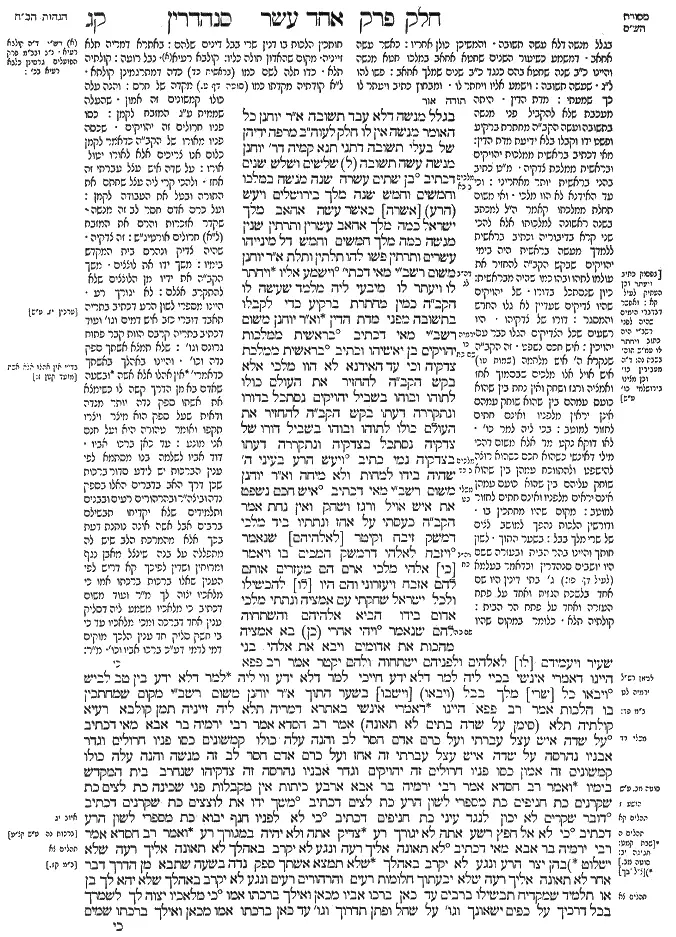
Sanhedrin 103a - Guemara
בגלל מנשה דלא עבד תשובה א"ר יוחנן כל האומר מנשה אין לו חלק לעוה"ב מרפה ידיהן של בעלי תשובה דתני תנא קמיה דר' יוחנן מנשה עשה תשובה (ל) שלשים ושלש שנים דכתיב (מלכים ב כא, א) בן שתים עשרה שנה מנשה במלכו וחמשים וחמש שנה מלך בירושלים ויעש (הרע) [אשרה] כאשר עשה אחאב מלך ישראל כמה מלך אחאב עשרין ותרתין שנין מנשה כמה מלך חמשים וחמש דל מינייהו עשרים ותרתין פשו להו תלתין ותלת א"ר יוחנן משום רשב"י מאי דכתי' (דברי הימים ב לג, יג) וישמע אליו ויחתר לו ויעתר לו מיבעי ליה מלמד שעשה לו הקב"ה כמין מחתרת ברקיע כדי לקבלו בתשובה מפני מדת הדין וא"ר יוחנן משום רשב"י מאי דכתיב (ירמיהו כו, א) בראשית ממלכות יהויקים בן יאשיהו וכתיב (ירמיהו כח, א) בראשית ממלכת צדקיה וכי עד האידנא לא הוו מלכי אלא בקש הקב"ה להחזיר את העולם כולו לתוהו ובוהו בשביל יהויקים נסתכל בדורו ונתקררה דעתו בקש הקב"ה להחזיר את העולם כולו לתוהו ובוהו בשביל דורו של צדקיה נסתכל בצדקיה ונתקררה דעתו בצדקיה נמי כתיב (מלכים ב כד, ט) ויעש הרע בעיני ה' שהיה בידו למחות ולא מיחה וא"ר יוחנן משום רשב"י מאי דכתיב (משלי כט, ט) איש חכם נשפט את איש אויל ורגז ושחק ואין נחת אמר הקב"ה כעסתי על אחז ונתתיו ביד מלכי דמשק זיבח וקיטר [לאלהיהם] שנאמר (דברי הימים ב כח, כג) ויזבח לאלהי דרמשק המכים בו ויאמר [כי] אלהי מלכי ארם הם מעזרים אותם להם אזבח ויעזרוני והם היו [לו] להכשילו ולכל ישראל שחקתי עם אמציה ונתתי מלכי אדום בידו הביא אלהיהם והשתחוה להם שנאמר (דברי הימים ב כה, יד) ויהי אחרי (כן) בא אמציה מהכות את אדומים ויבא את אלהי בני שעיר ויעמידם [לו] לאלהים ולפניהם ישתחוה ולהם יקטר אמר רב פפא היינו דאמרי אינשי בכיי ליה למר דלא ידע חייכי למר דלא ידע ווי ליה למר דלא ידע בין טב לביש (ירמיהו לט, ג) ויבאו כל [שרי] מלך בבל (ויבאו) [וישבו] בשער התוך א"ר יוחנן משום רשב"י מקום שמחתכין בו הלכות אמר רב פפא היינו דאמרי אינשי באתרא דמריה תלא ליה זייניה תמן קולבא רעיא קולתיה תלא (סימן על שדה בתים לא תאונה) אמר רב חסדא אמר רבי ירמיה בר אבא מאי דכתיב (משלי כד, ל) על שדה איש עצל עברתי ועל כרם אדם חסר לב והנה עלה כולו קמשונים כסו פניו חרולים וגדר אבניו נהרסה על שדה איש עצל עברתי זה אחז ועל כרם אדם חסר לב זה מנשה והנה עלה כולו קמשונים זה אמון כסו פניו חרולים זה יהויקים וגדר אבניו נהרסה זה צדקיהו שנחרב בית המקדש בימיו ואמר רב חסדא אמר רבי ירמיה בר אבא ארבע כיתות אין מקבלות פני שכינה כת לצים כת שקרנים כת חניפים כת מספרי לשון הרע כת לצים דכתיב (הושע ז, ה) משך ידו את לוצצים כת שקרנים דכתיב (תהלים קא, ז) דובר שקרים לא יכון לנגד עיני כת חניפים דכתיב (איוב יג, טז) כי לא לפניו חנף יבוא כת מספרי לשון הרע דכתיב (תהלים ה, ה) כי לא אל חפץ רשע אתה לא יגורך רע צדיק אתה ולא יהיה במגורך רע ואמר רב חסדא אמר רבי ירמיה בר אבא מאי דכתיב (תהלים צא, י) לא תאונה אליך רעה ונגע לא יקרב באהלך לא תאונה אליך רעה שלא ישלוט) בהן יצר הרע ונגע לא יקרב באהלך שלא תמצא אשתך ספק נדה בשעה שתבא מן הדרך דבר אחר לא תאונה אליך רעה שלא יבעתוך חלומות רעים והרהורים רעים ונגע לא יקרב באהלך שלא יהא לך בן או תלמיד שמקדיח תבשילו ברבים [כגון ישו הנוצרי] עד כאן ברכו אביו מכאן ואילך ברכתו אמו (תהלים צא, יא) כי מלאכיו יצוה לך לשמרך בכל דרכיך על כפים ישאונך וגו' על שחל ופתן תדרוך וגו' עד כאן ברכתו אמו מכאן ואילך ברכתו שמים
Comments from Rashi on Masechet Sanhedrin Page 103a
בגלל מנשה דלא עשה תשובה . והמשיכן כולן אחריו: כאשר עשה אחאב . דמשמע כשיעור השנים שחטא אחאב במלכו חטא מנשה והיינו כ"ב שנה שחטא בהם כנגד כ"ב שנים שמלך אחאב: פשו להו ל"ג . שעשה תשובה: וישמע אליו ויחתר לו . ומבחוץ כתיב ויעתר לו כך שמעתי: מדת הדין . היתה מעכבת שלא להקביל פני מנשה בתשובה ועשה הקב"ה מחתרת ברקיע ופשט ידו וקבלו בלא ידיעת מדת הדין: מאי דכתיב בראשית ממלכות יהויקים ובראשית ממלכת צדקיה . מ"ט כתיב בהני בראשית יותר מאחריני: וכי עד האידנא לא הוה מלכי . ואי משום תחלת ממלכתו קאמר ה"ל למכתב בשנה ראשונה למלכותו אלא להכי שני קרא בדיבוריה וכתיב בראשית ללמדך מעשה בראשית היה בימי יהויקים שבקש הקב"ה להחזיר את עולמו לתהו ובהו כמו שהיה מבראשית: כיון שנתסכל בדורו . של יהויקים שהיו צדיקים שעדיין לא גלו החרש והמסגר: דורו של צדקיהו . היו רשעים שכל הצדיקים הגלו כבר עם יהויכין: איש חכם נשפט . זה הקב"ה שנקרא ה' איש מלחמה (שמות טו) איש אויל אלו מלכים שבסמוך אחז ואמציה ורגז ושחק ואין נחת בין שהוא כועס עמהם בין שהוא שוחק עמהם אינן יראין מלפניו ואינם חתים לחזור למוטב: בכי ליה למר כו' . לאו דוקא נקט מר אלא משום דהכי מילי דאינשי כשהוא חכם כשהוא רוצה להישפט ולהתווכח עמהן בין שהוא שוחק עליהם בין שהוא כועס עמהן אינם יראים מלפניו ואינם חתים לחזור למוטב: מקום שהיו מחתכין בו . ודורשין הלכות נהפך למושב לצים של שרי מלך בבל: בשער התוך . לשון חותך והיינו בהר הבית ובעזרה ששם היו יושבים סנהדרין וכדאמר בעלמא (לעיל סנהדרין דף פו:) ג' בתי דינין היו שם אחד בלשכת הגזית ואחד על פתח העזרה ואחד על פתח הר הבית: קולתיה תלא . כלומר במקום שהיו חותכין הלכות בו דנין שרי בבל דינים שלהם: באתרא דמריה תלא זייניה . מקום. שהאדון תולה כליו: קולבא רעיא . נבל רועה: קולתיה תלא . כדו תלה לשם כמו (בראשית כד) כדה דמתרגמינן קולתא. ל"א קודתיה מקדתו כמו (סוטה דף ט.) מקדה של חרס: והנה עלה כולו קמשונים זה אמון . שהעלה שממית ע"ג המזבח לקמן: כסו פניו חרולים זה יהויקים . שכסה פניו מאורו של הקב"ה כדאמר לקמן כלום אנו צריכים אלא לאורו יטול אורו: על שדה איש עצל עברתי זה אחז . ולהכי קרי ליה עצל שחתם את התורה ובטל את העבודה לקמן: ועל כרם אדם חסר לב זה מנשה . שקדר אזכרות והרס את המזבח (ל"א) חרולים אורטיג"ש: זה צדקיה . שהיה צדיק ונהרס בית המקדש בימיו: משך ידו את לוצצים . משך הקב"ה את ידיו מן הלוצצים שלא להתקרב אצלם: לא יגורך רע . היינו מספרי לשון הרע דכתיב בתריה תאבד דוברי כזב איש דמים וגו' ועוד דכתיב בתריה קרבם הוות קבר פתוח גרונם וגו': שלא תמצא אשתך ספק נדה וכו' . והיינו באהלך באשתך כדאמרי' אין אהלו אלא אשה ובשעה שאדם בא מן הדרך קשה לו כשימצא את אשתו ספק נדה יותר מנדה ודאית שעל ספק הוא מיצר ויצרו תקפו ואומר טהורה היא ועל חנם אני מונע: עד כאן ברכו אביו . דוד אביו לשלמה בנו מסתמא לפי ענין הברכות יש לידע סדור ברכות שכן דרך האב בדברים האלו בספק נדה וביצה"ר ובהרהורים רעים ובבנים ותלמידים שלא יקדיחו תבשילם ברבים אבל אשה אינה נותנת דעת בכך אלא מהמרכת הלב שיש לה מתפללה על בנה שינצל מאבן נגף ומרוחין ושדין לפיכך קא דריש לפי הענין שאלו ברכות ברכתו אמו כי מלאכיו יצוה לך מ"ר ועוד משום דכתיב כי מלאכיו משמע ליה דסליק ענין אחד דברכה ומכי מלאכיו עד כי בי חשק סליק חד ענין הלכך מוקים דמי לדמי דע"כ ברכו אביו וכו'. מ"ר:
Sanhedrin 103a - Mishnah translated into english
“on account of Manasseh” means because he did not repent, and the people followed in his footsteps.
Rabbi Yoḥanan says: Anyone who says that Manasseh has no share in the World-to-Come discourages penitents, as Manasseh repented and according to them is nevertheless excluded from the World-to-Come. As the tanna taught a baraita before Rabbi Yoḥanan: Manasseh repented for thirty-three years, as it is written: “Manasseh was twelve years old when he began to reign, and he reigned fifty-five years in Jerusalem…And he did that which was evil…And he made an ashera, as did Ahab king of Israel” (II Kings 21:1–3). How many years did Ahab reign? He reigned twenty-two years. How many years did Manasseh reign? He reigned fifty-five years. Deduct from them the twenty-two years during which he performed evil like Ahab, and thirty-three years remain for him to have repented.
Rabbi Yoḥanan says in the name of Rabbi Shimon ben Yoḥai: What is the meaning of that which is written: “And he prayed to Him; and He made an opening for him” (II Chronicles 33:13)? Instead: And He received his entreaty, should have been written. Rather, this teaches that the Holy One, Blessed be He, crafted for him a type of opening in Heaven in order to accept him in repentance. It was necessary for Manasseh to enter the World-to-Come in a clandestine manner, due to the attribute of justice that sought to prevent his entry by claiming that his sentence was irreversible.
§ And Rabbi Yoḥanan says in the name of Rabbi Shimon ben Yoḥai: What is the meaning of that which is written: “In the beginning of the reign of Jehoiakim, son of Josiah” (Jeremiah 26:1), and it is written: “In the beginning of the reign of Zedekiah” (Jeremiah 28:1). But is it so that until now there were no kings? Why did the prophet use the term “in the beginning” exclusively with regard to these two kings, as opposed to: During the first year of his reign, or a similar formulation?
Rather, the reason for the unusual formulation is that the Holy One, Blessed be He, sought to restore the entire world to chaos and void, as it was in the beginning before Creation, on account of Jehoiakim the wicked; but He observed Jehoiakim’s generation, which included the righteous who had not yet been exiled to Babylonia, and His mind was set at ease. The term “in the beginning” is used to signify that it is as though the world had been created anew.
Likewise, the Holy One, Blessed be He, sought to restore the entire world to chaos and void, as it was in the beginning before Creation, on account of the generation of Zedekiah, as only the wicked remained after the exile of the righteous; but He observed Zedekiah and His mind was set at ease. The Gemara asks: With regard to Zedekiah it is also written: “And he did evil in the eyes of the Lord” (II Kings 24:19); why was God’s mind set at ease? The Gemara answers: Zedekiah was not wicked; rather, he had it in his power to rebuke the people of his generation and he did not rebuke them. Therefore, their sins are attributed to him.
And Rabbi Yoḥanan says in the name of Rabbi Shimon ben Yoḥai: What is the meaning of that which is written: “If a wise man contends with a foolish man, whether he is angry or laughs, there is no rest” (Proverbs 29:9)? The Holy One, Blessed be He, said: I was angry with Ahaz and I delivered him into the hand of the kings of Damascus. He then sacrificed offerings and burned incense to their gods, as it is stated: “He sacrificed to the gods of Damascus that smote him; and he said: Because the gods of the kings of Aram help them, I will sacrifice to them, and they will help me. But they were the ruin of him, and of all Israel” (II Chronicles 28:23). When the Holy One, Blessed be He, was angry with Israel and caused them to lose a war to prompt them to repent of their sins, their response was to worship idols.
I smiled upon Amaziah and I delivered the kings of Edom into his hand. In response, he brought their gods and bowed to them, as it is stated: “And it came to pass after Amaziah came from striking the Edomites, that he brought the gods of the children of Seir and set them up to be his gods and prostrated himself before them, and burned incense to them” (II Chronicles 25:14). The response to victory in war was the same, idol worship. They are incorrigible. Rav Pappa says that this is in accordance with the adage that people say: I cried for the master and he did not know, I smiled for the master and he did not know; woe unto the master who does not know the distinction between good and bad. The Jewish people also resorted to idol worship both when God rewarded them and when He afflicted them.
With regard to the verse: “And all the princes of the king of Babylonia came in and sat in the middle gate [sha’ar hattavekh]” (Jeremiah 39:3), Rabbi Yoḥanan said in the name of Rabbi Shimon ben Yoḥai: Sha’ar hattavekh was the place in which they would decide [meḥattekhin] halakhot. Rav Pappa says that this is in accordance with the adage that people say: In the place that the master of the house hangs his weapons, there the despicable shepherd hangs his jug. In the place where the Sanhedrin convened, Nebuchadnezzar the wicked and his princes now assemble.
§ The Gemara cites a mnemonic for the following statements that Rav Ḥisda said that Rabbi Yirmeya bar Abba said: By the field, houses, shall not befall.
Rav Ḥisda says that Rabbi Yirmeya bar Abba says: What is the meaning of that which is written: “I passed by the field of an indolent man, and by the vineyard of a man void of understanding; and behold, it was overgrown with thistles, and its surface was covered with nettles, and its stone wall was broken” (Proverbs 24:30–31)? The verse describes the spiritual and political decline of the kings of Judea. “I passed by the field of an indolent man”; this is a reference to Ahaz. “And by the vineyard of a man void of understanding”; this is a reference to Manasseh. “And behold, it was overgrown with thistles”; this is a reference to Amon. “And its surface was covered with nettles”; this is a reference to Jehoiakim. “And its stone wall was broken”; this is a reference to Zedekiah, in whose days the Temple was destroyed.
Apropos the previous statement, the Gemara cites an additional statement. And Rav Ḥisda says that Rabbi Yirmeya bar Abba says that four groups do not receive the Divine Presence: This pertains to the group of cynics, the group of liars, the group of flatterers, and the group of slanderers. This pertains to the group of cynics, as it is written: “He withdrew His hand with cynics” (Hosea 7:5), indicating that God distanced Himself from them. This pertains to the group of liars, as it is written: “He that speaks falsehoods shall not be established before My eyes” (Psalms 101:7). This pertains to the group of flatterers, as it is written: “That a flatterer shall not come before Him” (Job 13:16). This pertains to the group of slanderers, as it is stated: “For You are not a God who desires wickedness; evil shall not dwell with You” (Psalms 5:5), which means: You are righteous, and there will be no form of evil in Your dwelling.
And Rav Ḥisda says that Rabbi Yirmeya bar Abba says: What is the meaning of that which is written: “No evil shall befall you, nor shall any plague come near your tent” (Psalms 91:10)? “No evil shall befall you” means that the evil inclination shall not dominate them. “Nor shall any plague come near your tent” means that you will never find your wife in a state of uncertainty whether she has the halakhic status of a menstruating woman when you return from a journey. After a period of separation, when a husband desires his wife, her uncertain status may prove more frustrating than a situation where the prohibition is clear-cut.
Alternatively, the phrase “no evil shall befall you” means that you will be frightened neither by bad dreams nor by evil thoughts. “Nor shall any plague come near your tent” means that you will not have a child or student who overcooks his food in public, i.e., sins in public and causes others to sin, such as in the well-known case of Jesus the Nazarene.
Until this point in the psalm, Solomon’s father, David, blessed him, as these are blessings appropriate for a father to bless his son. From this point forward, his mother blessed him, as these are blessings appropriate for a mother to bless her son. “For he shall order His angels to preserve you in all your ways. They shall bear you on their hands, lest they dash your foot against a stone. You shall tread upon the lion and the adder; the young lion and the crocodile shall you trample under foot” (Psalms 91:11–13).
Until this point in the psalm, his mother blessed him. From this point forward, God in Heaven blessed him, as the psalm proceeds to refer to God in the first person, as though speaking in His name:
Traduction : The William Davidson digital edition of the Koren Noé Talmud, with commentary by Rabbi Adin Even-Israel Steinsaltz.