 Talmud Bavli
The learning on the whole site is dedicated : L'ilui Nishmat יוסף בן מושה
The learning on the whole site is dedicated : L'ilui Nishmat Yaakov ben Myriam
The learning on the whole site is dedicated : L'ilui Nishmat רינה בת לדיסיה
Sanhedrin 92a : Youtube
Daf TubeYoutube
2 video classes :
Sanhedrin Page 92a
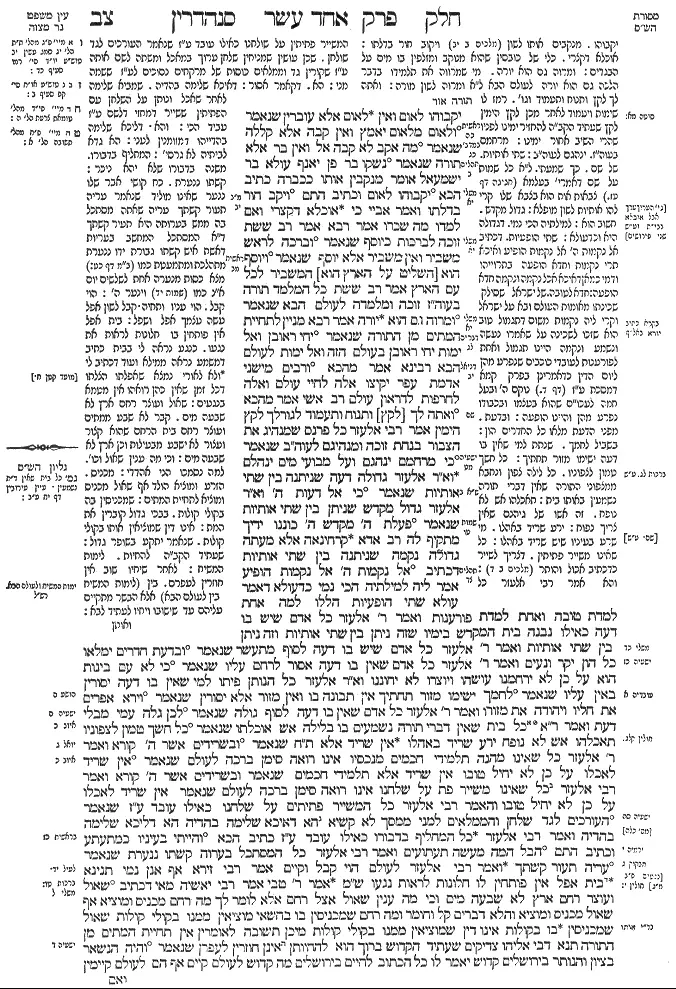
Sanhedrin 92a - Guemara
יקבוהו לאום ואין לאום אלא עוברין שנאמר (בראשית כה, כג) ולאום מלאום יאמץ ואין קבה אלא קללה שנאמר (במדבר כג, ח) מה אקב לא קבה אל ואין בר אלא תורה שנאמר (תהלים ב, יב) נשקו בר פן יאנף עולא בר ישמעאל אומר מנקבין אותו ככברה כתיב הכא (משלי יא, כו) יקבוהו לאום וכתיב התם (מלכים ב יב, י) ויקב חור בדלתו ואמר אביי כי אוכלא דקצרי ואם למדו מה שכרו אמר רבא אמר רב ששת זוכה לברכות כיוסף שנאמר (משלי יא, כו) וברכה לראש משביר ואין משביר אלא יוסף שנאמר (בראשית מב, ו) ויוסף הוא [השליט על הארץ הוא] המשביר לכל עם הארץ אמר רב ששת כל המלמד תורה בעוה"ז זוכה ומלמדה לעולם הבא שנאמר (משלי יא, כה) ומרוה גם הוא יורה אמר רבא מניין לתחיית המתים מן התורה שנאמר (דברים לג, ו) יחי ראובן ואל ימות יחי ראובן בעולם הזה ואל ימות לעולם הבא רבינא אמר מהכא (דניאל יב, ב) ורבים מישני אדמת עפר יקיצו אלה לחיי עולם ואלה לחרפות לדראון עולם רב אשי אמר מהכא (דניאל יב, יג) ואתה לך [לקץ] ותנוח ותעמוד לגורלך לקץ הימין אמר רבי אלעזר כל פרנס שמנהיג את הצבור בנחת זוכה ומנהיגם לעוה"ב שנאמר (ישעיהו מט, י) כי מרחמם ינהגם ועל מבועי מים ינהלם וא"ר אלעזר גדולה דעה שניתנה בין שתי אותיות שנאמר (שמואל א ב, ג) כי אל דעות ה' וא"ר אלעזר גדול מקדש שניתן בין שתי אותיות שנאמר (שמות טו, יז) פעלת ה' מקדש ה' כוננו ידיך מתקיף לה רב אדא קרחינאה אלא מעתה גדולה נקמה שניתנה בין שתי אותיות דכתיב (תהלים צד, א) אל נקמות ה' אל נקמות הופיע אמר ליה למילתיה הכי נמי כדעולא דאמר עולא שתי הופעיות הללו למה אחת למדת טובה ואחת למדת פורענות ואמר ר' אלעזר כל אדם שיש בו דעה כאילו נבנה בית המקדש בימיו שזה ניתן בין שתי אותיות וזה ניתן בין שתי אותיות ואמר ר' אלעזר כל אדם שיש בו דעה לסוף מתעשר שנאמר (משלי כד, ד) ובדעת חדרים ימלאו כל הון יקר ונעים ואמר ר' אלעזר כל אדם שאין בו דעה אסור לרחם עליו שנאמר (ישעיהו כז, יא) כי לא עם בינות הוא על כן לא ירחמנו עושהו ויוצרו לא יחוננו וא"ר אלעזר כל הנותן פיתו למי שאין בו דעה יסורין באין עליו שנאמר (עובדיה א, ז) לחמך ישימו מזור תחתיך אין תבונה בו ואין מזור אלא יסורין שנאמר (הושע ה, יג) וירא אפרים את חליו ויהודה את מזורו ואמר ר' אלעזר כל אדם שאין בו דעה לסוף גולה שנאמר (ישעיהו ה, יג) לכן גלה עמי מבלי דעת ואמר ר"א כל בית שאין דברי תורה נשמעים בו בלילה אש אוכלתו שנאמר (איוב כ, כו) כל חשך טמון לצפוניו תאכלהו אש לא נופח ירע שריד באהלו אין שריד אלא ת"ח שנאמר (יואל ג, ה) ובשרידים אשר ה' קורא ואמר ר' אלעזר כל שאינו מהנה תלמידי חכמים מנכסיו אינו רואה סימן ברכה לעולם שנאמר (איוב כ, כא) אין שריד לאכלו על כן לא יחיל טובו אין שריד אלא תלמידי חכמים שנאמר ובשרידים אשר ה' קורא ואמר רבי אלעזר כל שאינו משייר פת על שלחנו אינו רואה סימן ברכה לעולם שנאמר אין שריד לאכלו על כן לא יחיל טובו והאמר רבי אלעזר כל המשייר פתיתים על שלחנו כאילו עובד ע"ז שנאמר (ישעיהו סה, יא) העורכים לגד שלחן והממלאים למני ממסך לא קשיא הא דאיכא שלימה בהדיה הא דליכה שלימה בהדיה ואמר רבי אלעזר כל המחליף בדבורו כאילו עובד ע"ז כתיב הכא (בראשית כז, יב) והייתי בעיניו כמתעתע וכתיב התם (ירמיהו י, טו) הבל המה מעשה תעתועים ואמר רבי אלעזר כל המסתכל בערוה קשתו ננערת שנאמר (חבקוק ג, ט) עריה תעור קשתך ואמר רבי אלעזר לעולם הוי קבל וקיים אמר רבי זירא אף אנן נמי תנינא בית אפל אין פותחין לו חלונות לראות נגעו ש"מ אמר ר' טבי אמר ר' יאשיה מאי דכתיב (משלי ל, טז) שאול ועוצר רחם ארץ לא שבעה מים וכי מה ענין שאול אצל רחם אלא לומר לך מה רחם מכניס ומוציא אף שאול מכניס ומוציא והלא דברים קל וחומר ומה רחם שמכניסין בו בחשאי מוציאין ממנו בקולי קולות שאול שמכניסין בו בקולות אינו דין שמוציאין ממנו בקולי קולות מיכן תשובה לאומרין אין תחיית המתים מן התורה תנא דבי אליהו צדיקים שעתיד הקדוש ברוך הוא להחיותן אינן חוזרין לעפרן שנאמר (ישעיהו ד, ג) והיה הנשאר בציון והנותר בירושלים קדוש יאמר לו כל הכתוב לחיים בירושלים מה קדוש לעולם קיים אף הם לעולם קיימין
Comments from Rashi on Masechet Sanhedrin Page 92a
יקבוהו . מנקבים אותו לשון (מלכים ב יב) ויקוב חור בדלתו: אוכלא דקצרי . כלי של כובסין שהוא מנוקב ומזלפין בו מים על הבגדים: ומרוה גם הוא יורה . מי שמרווה את תלמידו בדבר הלכה גם הוא יורה לעולם הבא ל"א ומרוה לשון מורה: ואתה לך לקץ ותנוח ותעמוד וגו' . רמז לו שימות ויעמוד לאחר מכן לקץ הימין לקץ שעתיד הקב"ה להחזיר ימינו לפניו שהרי השיב אחור ימינו: מרחמם בעוה"ז ינהגם לעוה"ב: שתי אותיות של שם . כך שמעתי. ל"א כל שמות על שם דאמרי' בעלמא (חגיגה דף טז.) צבאות אות הוא בצבא שלו קרי להו אותיות לשון מופלא: גדול מקדש . חשוב הוא: למילתיה הכי נמי . דגדולה היא וכדעולא: שתי הופעיות . דכתיב אל נקמות ה' אל נקמות הופיע ואיכא תרי נקמות וחדא הופעה בתרוייהו ודמי כמאן דאיכא אכל נקמה ונקמה חדא הופעה: חדא לטובה . של ישראל שסילק שכינתו מאומות העולם ובא על ישראל וקרי ליה נקמות משום דתגמול טוב הוא שזכו לשכינה על שאמרו נעשה ונשמע ונקמה היינו תגמול ואחת לפורענות לעובדי כוכבים שנפרע מהן ליום הדין כדאמרינן בפרק קמא דמסכת ע"ז (דף ד.) נוקם ה' ובעל חמה לעכו"ם שהוא בעצמו ובכבודו נפרע מהן והיינו הופעה: ובדעת . מפני הדעת מלאו כל החדרים הון: בשביל לחמך שנתת למי שאין בו דעה ישימו מזור תחתיך: כל חשך טמון לצפוניו . כל לילה צפון ונחבא ממצפוני התורה שאין דברי תורה נשמעין באותו בית: תאכלהו אש לא נופח . זה אשו של גיהנם שאין צריך נפוח: ירע שריד באהלו . מי שרע בעיניו שיש שריד באהלו: כל שאינו משייר פתיתין . דצריך לשייר כדכתיב אכול והותר (מלכים ב ד): והא אמר רבי אלעזר כל המשייר פתיתין על שולחנו כאילו עובד ע"ז שנאמר העורכים לגד שולחן . שכן עושין שמניחין שלחן ערוך במאכל ומשתה לשם אותה ע"ז שקורין גד וממלאים כוסות של מרקחים נסוכים לע"ז ששמה מני: הא . דקאמר אסור: דאיכא שלימה בהדיה . שמביא שלימה לאחר שאכל ונותן על השלחן עם הפתיתין ששייר דמחזי דלשם ע"ז עביד הכי: והא . דליכא שלימה בהדייהו דמזומנין לעני: הא גדא לביתיה לא גרסי': המחליף בדבורו . משנה בדבורו שלא יהא ניכר: קשתו ננערת . כח קושי אבר שלו ננער שאינו מוליד שנאמר עריה תעור קשתך עריה שאתה מסתכל בה ממש בערותה היא תעיר קשתך ד"א המסתכל המחשב בעריות דאשת איש קשתו גבורת ידו ננערת מתהלכת ומתמעטת כמו (ב"מ דף כט:) מצא כסות מנערה אחת לשלשים יום א"נ כמו (שמות יד) וינער ה': הוי קבל . הוי עניו ותחיה. קבל לשון אפל עשה עצמך אפל ושפל: בית אפל אין פותחין בו חלונות לראות את נגעו . כנגע נראה לי בבית כתיב דמשמע נראה ממילא ועוד דכתיב לי ולא לאורי נמצא שאפלתו הצלתו דכל זמן שאין כהן רואהו אין מטמא בנגעים: שאול ועוצר רחם ארץ לא שבעה מים . קבר לא שבע ממתים ועוצר רחם בית הרחם שהוא קצור ועצור לא ישבע מבעילות וכן ארץ לא שבעה מים: וכי מה ענין שאול וכו' . למה נסמכו הני אהדדי: מכניס . הזרע ומוציא הולד אף שאול מכניס ומוציא לתחיית המתים: שמכניסין בה בקולי קולות . בבכי גדול קוברין את המת: אינו דין שמוציאין אותו בקולי קולות . שנאמר יתקע בשופר גדול: שעתיד הקב"ה להחיות . לימות המשיח: לאחר שיחיו שוב אין חוזרין לעפרם . בין (לימות המשיח בין לעולם הבא) אלא הבשר מתקיים עליהם עד שישובו ויחיו לעתיד לבא:
Sanhedrin 92a - Mishnah translated into english
the people [leom] shall curse him [yikkevuhu], but blessing shall be upon the head of one who provides” (Proverbs 11:26). And the term leom is referring to nothing other than fetuses, as it is stated: “Two nations are in your womb, and two peoples shall be separated from your bowels; and the one leom shall overcome the other leom” (Genesis 25:23). And kabbo is referring to nothing other than curse, as it is stated in the statement of Balaam: “How can I curse one who is not cursed [kabbo] by God?” (Numbers 23:8). And bar is referring to nothing other than Torah, as it is stated: “Pay homage to bar lest He be angry” (Psalms 2:12), i.e., observe the Torah to avoid God’s wrath.
Ulla bar Yishmael says: One perforates like a sieve a person who withholds halakha from a student. It is written here: “He who withholds bar, the people yikkevuhu” (Proverbs 11:26), and it is written there: “And he bored [vayyikkov] a hole in its lid of it” (II Kings 12:10). And Abaye says: One perforates him like a launderers’ utensil used for sprinkling water on garments.
And if one teaches the student halakha rather than withholding it, what is his reward? Rava says that Rav Sheshet says: He is privileged to receive blessings like Joseph, as it is stated at the end of that verse: “But blessing shall be upon the head of one who provides [mashbir]” (Proverbs 11:26). And mashbir is referring to no one other than Joseph, as it is stated: “And Joseph was the governor of the land, and he was the provider [hamashbir] to all the people of the land” (Genesis 42:6).
Rav Sheshet says: Anyone who teaches Torah in this world is privileged and teaches it in the World-to-Come, as it is stated: “And he who satisfies abundantly [umarveh] shall be satisfied himself [yoreh]” (Proverbs 11:25). Rav Sheshet interprets the verse homiletically: By transposing the letters of the word marveh: Mem, reish, vav, heh, one arrives at the word moreh, meaning teaches. The verse means that one who teaches [moreh] will teach [yoreh] in the future as well.
The Gemara returns to the topic of the source for resurrection in the Torah. Rava says: From where is resurrection of the dead derived from the Torah? It is derived from a verse, as it is stated: “Let Reuben live and not die, in that his men become few” (Deuteronomy 33:6). This is interpreted: “Let Reuben live” in this world “and not die” in the World-to-Come. Ravina says that resurrection is derived from here: “And many of those who sleep in the dust of the earth shall awaken, some to everlasting life, and some to reproaches and everlasting disgrace” (Daniel 12:2). Rav Ashi says proof is derived from here: “But go you your way until the end be; and you shall rest, and arise to your lot at the end of days” (Daniel 12:13).
§ Rabbi Elazar says: Any communal leader who leads the community calmly, without anger and honestly, is privileged and leads them in the World-to-Come, as it is stated: “For he that has compassion upon them will lead them, even by the springs of water shall he guide them” (Isaiah 49:10). Just as he led them in this world, so too will he guide them in the World-to-Come.
The Gemara proceeds to cite additional statements of Rabbi Elazar relating to recommended conduct. And Rabbi Elazar says: Great is knowledge, as it was placed between two letters, two names of God, as it is stated: “For a God of knowledge is the Lord” (I Samuel 2:3).
And Rabbi Elazar says: Great is the Holy Temple, as it too was placed between two letters, two names of God, as it is stated: “The place in which to dwell that You have made, Lord, the Temple, Lord, which Your hands have prepared” (Exodus 15:17). Rav Adda Karḥina’a objects to the explanation that being placed between two names of God accords significance. If that is so, the same should hold true for vengeance. Shall one say: Great is vengeance, as it was placed between two letters, as it is written: “God of vengeance, Lord, God of vengeance shine forth” (Psalms 94:1)?
Rabbi Elazar said to him: In its context, indeed, vengeance is great, in accordance with the statement of Ulla. As Ulla says with regard to these two appearances: “O Lord, God to Whom vengeance belongs; God to Whom vengeance belongs, appear” (Psalms 94:1), and: “He appeared from Mount Paran” (Deuteronomy 33:2), why are both necessary? One, the second verse, is necessary for the attribute of divine good, with which God gave the Torah at Sinai, and one, the first verse, is necessary for the attribute of divine punishment, with which God exacts vengeance against the enemies and oppressors of the Jewish people.
And Rabbi Elazar says: With regard to any person in whom there is knowledge, it is as though the Temple was built in his days, as this, knowledge, was placed between two letters and that, the Temple, was placed between two letters.
And Rabbi Elazar says: Any person in whom there is knowledge ultimately becomes wealthy, as it is stated: “And by knowledge are the chambers filled with all precious and pleasant riches” (Proverbs 24:4).
And Rabbi Elazar says: With regard to any person in whom there is no knowledge, it is prohibited to have mercy upon him, as it is stated: “For it is a people of no understanding; therefore its Maker will have no mercy on them, and its Creator will show them no favor” (Isaiah 27:11). If God has no mercy upon them, all the more so should people not show them mercy.
And Rabbi Elazar says: With regard to anyone who gives his bread to one without knowledge, afflictions befall him, as it is stated: “They who eat your bread will place mazor under you, in whom there is no discernment” (Obadiah 1:7). And mazor means nothing other than afflictions, based on the parallel with another verse, as it is stated: “And Ephraim saw his sickness and Judah his wound [mezoro]” (Hosea 5:13). This indicates that one who gives his bread to one without discernment will ultimately fall ill.
And Rabbi Elazar says: Any person in whom there is no knowledge is ultimately exiled, as it is stated: “Therefore my people are exiled, for lack of knowledge” (Isaiah 5:13).
And Rabbi Elazar says: With regard to any house in which there are no matters of Torah heard at night, the fire of Gehenna consumes it, as it is stated: “All darkness is laid up for his treasures, a fire not fanned shall consume him; it shall go ill with a sarid in his tent” (Job 20:26). Sarid is referring to no one but a Torah scholar, as it is stated: “And among the seridim, those whom the Lord shall call” (Joel 3:5). A house that is dark at night and in which no Torah is heard will be consumed by a fire that does not require fanning with a bellows, the fire of Gehenna.
And Rabbi Elazar says: Anyone who does not benefit Torah scholars from his property never sees a sign of blessing, as it is stated: “None of his food shall remain [sarid]; therefore his prosperity shall not endure” (Job 20:21). Sarid is referring to no one but Torah scholars, as it is stated: “And among the seridim, those whom the Lord shall call.” No prosperity will come to one who does not share his food with a Torah scholar.
And Rabbi Elazar says: Anyone who does not leave bread on his table at the end of his meal indicating his gratitude to God for providing him more than enough never sees a sign of blessing, as it is stated: “None of his food shall remain; therefore his prosperity shall not endure.”
The Gemara asks: But doesn’t Rabbi Elazar say: With regard to anyone who leaves pieces of bread on his table, it is as if he worships idols, as it is stated: “Who prepare a table for Fortune [Gad] and offer blended wine for Destiny” (Isaiah 65:11). The people would leave pieces of bread on the table as an offering to the constellation Gad, which they believed influences the fortune of the home. This practice was a form of idol worship. The Gemara answers: This apparent contradiction is not difficult: This case, where leaving pieces of bread is a form of idol worship, applies when there is a whole loaf together with the pieces, as the addition of the pieces is clearly for idol worship; that case, where failure to leave bread on the table is criticized, applies when there is no whole loaf together with the pieces.
And Rabbi Elazar says: With regard to anyone who amends the truth in his speech, it is as though he worships idols. As, it is written here, in the verse where Jacob sought to resist taking his father’s blessing from Esau: “And I shall seem to him a deceiver [metate’a]” (Genesis 27:12), and it is written there with regard to idol worship: “They are vanity, the work of deception [tatuim]” (Jeremiah 10:15).
And Rabbi Elazar says: With regard to anyone who looks at nakedness [erva], his bow is emptied, i.e., he will be robbed of his potency, as it is stated: “Your bow is stripped bare [erya]” (Habakkuk 3:9).
And Rabbi Elazar says: Forever be in the dark, i.e., anonymous, and you will continue to exist. Rabbi Zeira says: We learn a similar idea in a mishna as well (Nega’im 2:3): In a dark house, one does not open windows to illuminate it in order to see whether or not its blemish is leprosy, and the house retains the presumptive status of ritual purity. Those matters that are obscured are allowed to continue. The Gemara affirms: Conclude from that mishna that this is so.
§ The Gemara returns to the topic of the source for resurrection in the Torah. Rabbi Tavi says that Rabbi Yoshiya says: What is the meaning of that which is written: “There are three that are never satisfied…the grave, and the barren womb, and earth that does not receive sufficient water” (Proverbs 30:15–16)? And what does a grave have to do with a womb? Rather, they are juxtaposed to say to you: Just as a womb takes in and gives forth, so too a grave takes in and also gives forth, with the resurrection of the dead.
And are these matters not inferred a fortiori: If with regard to a womb, into which one introduces the embryo in secret, one removes the baby from it accompanied by the loud sounds of the woman crying out during childbirth, then with regard to the grave, into which one introduces the corpse with sounds of wailing and mourning the dead, is it not right that one removes from it the resurrected dead accompanied by the loud sounds of the resurrected multitudes? From here there is a response to those who say: There is no resurrection of the dead derived from the Torah.
The school of Eliyahu taught: The righteous whom the Holy One, Blessed be He, is destined to resurrect do not return to their dust, as it is stated: “And it shall come to pass, that he who remains in Zion and he who remains in Jerusalem shall be called holy, anyone who is written unto life in Jerusalem” (Isaiah 4:3). Just as the Holy One exists forever, so too will they exist forever.
Traduction : The William Davidson digital edition of the Koren Noé Talmud, with commentary by Rabbi Adin Even-Israel Steinsaltz.