 Talmud Bavli
The learning on the whole site is dedicated : L'ilui Nishmat Yaakov ben Myriam
The learning on the whole site is dedicated : L'ilui Nishmat Yechayahou ben Moche
The learning on the whole site is dedicated : L'ilui Nishmat Avraham Ben Simha
Sanhedrin 36a : Youtube
Daf TubeYoutube
2 video classes :
Sanhedrin Page 36a
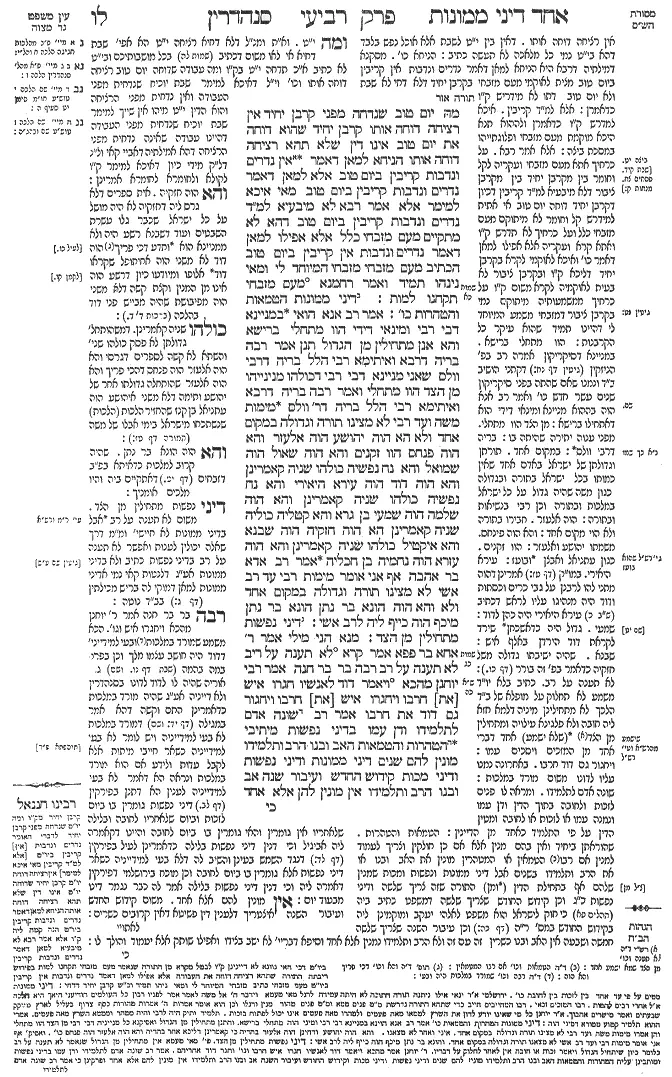
Sanhedrin 36a - Guemara
מה יום טוב שנדחה מפני קרבן יחיד אין רציחה דוחה אותו קרבן יחיד שהוא דוחה את יום טוב אינו דין שלא תהא רציחה דוחה אותו הניחא למאן דאמר אין נדרים ונדבות קריבין ביום טוב אלא למאן דאמר נדרים ונדבות קריבין ביום טוב מאי איכא למימר אלא אמר רבא לא מיבעיא למ"ד נדרים ונדבות קריבין ביום טוב דהא לא מתקיים מעם מזבחי כלל אלא אפילו למאן דאמר נדרים ונדבות אין קריבין ביום טוב הכתיב מעם מזבחי מזבחי המיוחד לי ומאי נינהו תמיד ואמר רחמנא (שמות כא, יד) מעם מזבחי תקחנו למות:
דיני ממונות הטמאות והטהרות כו':
אמר רב אנא הואי במניינא דבי רבי ומינאי דידי הוו מתחלי ברישא והא אנן מתחילין מן הגדול תנן אמר רבה בריה דרבא ואיתימא רבי הלל בריה דרבי וולס שאני מניינא דבי רבי דכולהו מנינייהו מן הצד הוו מתחלי ואמר רבה בריה דרבא ואיתימא רבי הלל בריה דר' וולס מימות משה ועד רבי לא מצינו תורה וגדולה במקום אחד ולא הא הוה יהושע הוה אלעזר והא הוה פנחס הוו זקנים והא הוה שאול הוה שמואל והא נח נפשיה כולהו שניה קאמרינן והא הוה דוד הוה עירא היאירי והא נח נפשיה כולהו שניה קאמרינן והא הוה שלמה הוה שמעי בן גרא והא קטליה כוליה שניה קאמרינן הא הוה חזקיה הוה שבנא והא איקטיל כולהו שניה קאמרינן והא הוה עזרא הוה נחמיה בן חכליה אמר רב אדא בר אהבה אף אני אומר מימות רבי עד רב אשי לא מצינו תורה וגדולה במקום אחד ולא והא הוה הונא בר נתן הונא בר נתן מיכף הוה כייף ליה לרב אשי:
דיני נפשות מתחילין מן הצד:
מנא הני מילי אמר ר' אחא בר פפא אמר קרא (שמות כג, ב) לא תענה על ריב לא תענה על רב רבה בר בר חנה אמר רבי יוחנן מהכא (שמואל א כה, יג) ויאמר דוד לאנשיו חגרו איש [את] חרבו ויחגרו איש [את] חרבו ויחגור גם דוד את חרבו אמר רב שונה אדם לתלמידו ודן עמו בדיני נפשות מיתיבי הטהרות והטמאות האב ובנו הרב ותלמידו מונין להם שנים דיני ממונות ודיני נפשות ודיני מכות קידוש החדש ועיבור שנה אב ובנו הרב ותלמידו אין מונין להן אלא אחד
Comments from Rashi on Masechet Sanhedrin Page 36a
אין רציחה דוחה אותו . דאין בין י"ט לשבת אלא אוכל נפש בלבד דהא בי"ט נמי כל מלאכה לא תעשה כתיב: הניחא כו' . מסקנא דמילתיה דרבא היא הניחא למאן דאמר נדרים ונדבות אין קריבין ביום טוב מצית לאוקמי מעם מזבחי בקרבן יחיד דלא דחי לא שבת ולא יום טוב דתו לא מידריש ק"ו כדאמרן: אלא למ"ד קריבין . איכא למדרש ק"ו כדאמרן ולההוא תנא היכא מוקמת מעם מזבחי ופלוגתייהו במסכת ביצה: אלא אמר רבא . על כרחיך אתא מעם מזבחי ועקריה לקל וחומר בין מקרבן יחיד בין מקרבן ציבור דלא מיבעיא למ"ד קריבין דכיון דקרבן יחיד דוחה יום טוב אי אתית למידרש קל וחומר לא מיתוקם מעם מזבחי כלל ועל כרחיך לא תדרש ק"ו ואתא קרא ועקריה אלא אפילו למאן דאמר כו' ואיכא לאוקמי לקרא בקרבן יחיד דליכא ק"ו ובקרבן ציבור לא בעית לאוקמיה לקרא משום ק"ו על כרחיך ממשמעותיה מיתוקם נמי בקרבן ציבור דמזבחי משמע המיוחד לי דהיינו תמיד שהוא עיקר כל הקרבנות: הוו מתחלי ברישא . במניינא דסיקריקון אמרה רב בפ' הניזקין (גיטין דף נח:) דקתני הושיב ב"ד ונמנו שאם שהתה בפני סיקריקון שנים עשר חדש כו' ואמר רב אנא הוה בההוא מניינא ומינאי דידי הוא דאתחילו ברישא: מן הצד הוו מתחלי . מפני ענוה יתירה שהיתה בו: בריה דרבי וולס: במקום אחד . תורתן וגדולתן של ישראל באדם אחד שאין כמותו בכל ישראל בתורה ובגדולה כגון משה שהיה גדול על כל ישראל במלכות ובתורה וכן רבי בנשיאות ובתורה: הוה אלעזר . חבירו בתורה ולא הוי מקום אחד: והא הוה פינחס . משמתו יהושע ואלעזר: הוו זקנים . כגון עתניאל ואבצן ובועז: עירא היאירי . במו"ק (דף טז:) אמרינן דהוה מתני להו לרבנן על גבי כרים וכסתות ודוד היה מנהיגו עליו לראש דכתיב (ש"ב כ) עירא היאירי היה כהן לדוד: שמעי . גדול היה כדאשכחן שירד לקראת דוד הירדן באלף איש: שבנא . שהיה ישיבתו גדולה משל חזקיה כדאמר בפ' זה בורר (דף כו.): לא תענה על רב . כתיב בלא יו"ד משמע לא תחלוק על מופלא של ב"ד הלכך לא מתחילינן מיניה דלמא חזא ליה חובה ולא פלגינא עילויה ומתחילין מן הצד (שלא ישמע) אחד דברי אחד מן המזכים ויסכים עמו: ויחגור גם דוד חרבו . באחרונה נמנו עליו לדונו משום מורד במלכות: שונה אדם לתלמידו . ומראה לו פנים לזכות ולחובה בתוך הדין ודן עמו ונמנה עמו או לזכות או לחובה ומטין הדין על פי התלמיד כאחד מן הדיינין: הטמאות והטהרות . שהוראתן ביחיד ואין בהם מנין אלא אם כן חולקין וצריך לעמוד למנין אם רבו הטמאין או המטהרין מונין את האב ובנו או את הרב ותלמידו בשנים אבל דיני ממונות ונפשות ומכות שמנין שלהם אף בתחילת הדין (ומן) התורה שזה צריך שלשה ודיני נפשות כ"ג וכן קידוש החודש שצריך שלשה דמשפט כתיב ביה (תהלים פא) כי חוק לישראל הוא משפט לאלהי יעקב ומוקמינן ליה בקידוש החודש במס' ר"ה (דף כה:) וכן עיבור השנה שצריך שלשה חמשה ושבעה אין האב ובנו כשרין זה עם זה ולא הרב ותלמידו נמנין אלא אחד וסיפא דבריי' לא ישב בצידו ואפילו שותק אלא יעמוד והולך לו:
Comments from Tosafot - Sanhedrin 36a
ומה י"ט. וא"ת ומנ"ל דלא דחיא רציחה י"ט הא אפי' שבת דחיא אי לאו משום דכתיב (שמות לה) בכל מושבותיכם ובי"ט לא כתיב א"כ תדחה י"ט בק"ו ומה עבודה שדוחה יום טוב רציחה דוחה אותו וכו' וי"ל דאיכא למימר שבת יוכיח שנדחית מפני העבודה ואין נדחית מפני הרציחה והוא הדין י"ט מיהו אין שייך למימר שבת יוכיח שנדחית מפני העבודה דהיינו עבודה שאינה נדחית מפני הרציחה דהא אמילתיה דאביי קאי ול"נ דל"ק מידי כיון דאיכא למימר ק"ו לקולא ולחומרא לחומרא אמרינן: והא הוה חזקיה . אית ספרים דלא גרס ליה דחזקיה לא היה מושל על כל ישראל שכבר גלו עשרת השבטים ועוד דשבנא רשע היה ולא ממניינא הוא ותדע דכי פריך הוה דוד לא משני הוה אחיתופל שקראו דוד אלופו ומיודעו כיון דרשע הוה אינו מן המנין וקצת קשה דלא משני הוה מפיבושת שהיה מבייש פני דוד בהלכה (ברכות ד' ד.): כולהו שניה קאמרינן . דמשהותחל' גדולתן לא פסק כולהו שני' והשתא לא קשה לספרים דגרסי והא הוה אלעזר הוה פנחס דהכי פריך והא הוה אלעזר שהותחלה גדולתו אחר של יהושע ותימה דלא משני איהושע הוה עתניאל בן קנז שהחזיר הלכות (הלכות) שנשתכחו מישראל בימי אבלו של משה (תמורה דף טז:): והא הוה הונא בר נתן . שהיה קרוב למלכות כדאיתא בפ"ב דזבחים (דף יט.) דאתקיים ביה והיו מלכים אומניך: דיני נפשות מתחילין מן הצד . משום לא תענה על רב אבל בדיני ממונות לא חיישי' ומ"מ דרך שאלה יכולין לענות ואפשר לא תענה על רב בדיני נפשות כתיב ולא בדיני ממונות אע"ג דלנטות קאי נמי אדיני ממונות למאן דמוקי לה בריש מכילתין (דף ג:) בב"ד נוטה: רבה בר בר חנה אמר ר' יוחנן מהכא ויחגרו איש וגו' . הכא משמע שמורד במלכות ובעי למידייני' דדוד היה חושב עצמו מלך וכן בפרק במה בהמה (שבת דף נו. ושם) גבי אוריה שהיה לו לדוד לדונו בסנהדרין ולא דייניה אע"ג שהיה מורד במלכות כדאמרינן התם וקשה דהא אמר במגילה (דף יד: ושם) דמורד במלכות לא בעי למידייניה ויש לומר לא בעי למידייניה כשאר חייבי מיתות אלא לקבל עדות ולידע אם הוא מורד במלכות ונראה הא דאמר לא בעי למידייניה לענין הא דתנן בפירקין (דף לב.) דיני נפשות גומרין בו ביום לזכות וביום שלאחריו לחובה ובלילה שלאחריו אין גומרין והאי גומרין בו ביום לחובה והיינו דקאמרה ליה אביגיל וכי דנין דיני נפשות בלילה כדאמרינן לעיל בפירקין (סנהדרין דף לד:) דנגד השמש בעינן והשיב לה דלא בעי למידייניה כשאר דיני נפשות אלא גומרין בו ביום לחובה וכן מוכח בירושלמי דפירקין דאמרה ליה וכי דנין דיני נפשות בלילה אמר לה כבר נגמר דינו מבעוד יום: אין מונין להם אלא אחד . משום קידוש החדש ועיבור השנה איצטריך דלענין דין פשיטא דאין קרובים כשרים:
Sanhedrin 36a - Mishnah translated into english
Just as with regard to a Festival, which is overridden due to an offering of an individual, as voluntary offerings of individuals are sacrificed on Festivals, and nevertheless murder does not override it, as the court does not execute one liable to receive court-imposed capital punishment on a Festival, with regard to an offering of an individual, which overrides a Festival, is it not logical that murder should not override it? Therefore, unlike the explanation of Abaye, the court should not take a priest to execute him in the event he is liable to receive capital punishment if this will result in the offering of an individual not being sacrificed.
Rava clarifies: This works out well according to the one who says that vow offerings and gift offerings of individuals are not sacrificed on a Festival. Since the offerings of an individual do not override a Festival, there is no place for this a fortiori inference. But according to the one who says that vow offerings and gift offerings of individuals are sacrificed on a Festival, what is there to say? Why would one not make the above a fortiori inference?
Rather, Rava says that Abaye’s explanation of the verse is incorrect according to all opinions. It is not necessary to say that the inference is incorrect according to the one who says that vow offerings and gift offerings of individuals are sacrificed on a Festival, as according to that opinion one cannot justify the verse of “from My altar” at all, as there is no distinction between the offering of an individual and a communal offering, as both override a Festival. Accordingly, court-imposed capital punishment should not override either type of offering.
But even according to the one who says that vow offerings and gift offerings of individuals are not sacrificed on a Festival, in which case Abaye’s explanation is possible, this is difficult. But isn’t it written: “From My altar”? The term “My altar” indicates: My altar, the offering that is designated to Me. And what offering is this? It is the daily offering. And yet, the Merciful One states: “You shall take him from My altar, that he may die.” Accordingly, the verse is not stated specifically with regard to an offering of an individual.
§ The mishna teaches that in cases of monetary law, and likewise in the cases of ritual impurity and purity, the judges commence expressing their opinions from the greatest of the judges. Rav says: I was among the quorum of judges in the school of Rabbi Yehuda HaNasi, and they would commence from me, i.e., I was first when ascertaining the opinions of the judges. The Gemara questions this statement: But we learned in the mishna that the judges commence expressing their opinions from the greatest of the judges, and Rav was one of the junior judges of that court.
Rabba, son of Rava, says, and some say that it was Rabbi Hillel, son of Rabbi Valles, who says: The counting of the vote in the court in the school of Rabbi Yehuda HaNasi is different, as all of their deliberations and the counting of the vote would commence from the side benches, where the least significant judges sit. This was because Rabbi Yehuda HaNasi was held in such high esteem that once he expressed his opinion, no one would be so brazen as to contradict him.
And with regard to the greatness of Rabbi Yehuda HaNasi, Rabba, son of Rava, says, and some say that it was Rabbi Hillel, son of Rabbi Valles, who says: From the days of Moses and until the days of Rabbi Yehuda HaNasi we do not find unparalleled greatness in Torah knowledge and unparalleled greatness in secular matters, including wealth and high political office, combined in one place, i.e., in a single individual.
The Gemara asks: But was there not such a person? Wasn’t there Joshua, who was unparalleled in both domains? The Gemara answers: During his time there was Elazar, who was Joshua’s equal in Torah knowledge. The Gemara asks: But wasn’t there Pinehas, who outlived Elazar? The Gemara answers: There were the Elders, who were equal to Pinehas in Torah knowledge.
The Gemara further objects: But wasn’t there Saul, who was unparalleled in both domains? The Gemara answers: There was Samuel, who was Saul’s equal in Torah knowledge. The Gemara asks: But didn’t Samuel die in Saul’s lifetime, leaving Saul the leading figure in both domains? The Gemara answers: We meant to say that from the days of Moses until the days of Rabbi Yehuda HaNasi there was no other single individual who reigned supreme in Torah and greatness for all the years that he was the leader of the Jewish people.
The Gemara asks: But wasn’t there David, who was both the greatest Torah authority and the most powerful temporal authority of his day? The Gemara answers: There was Ira the Yairite, who was David’s equal in Torah knowledge. The Gemara objects: But didn’t Ira the Yairite die in David’s lifetime? The Gemara answers: We meant to say that there was no other single individual who reigned supreme in Torah and greatness for all the years that he was the leader of the Jewish people.
The Gemara asks: But wasn’t there Solomon, who was unparalleled in both domains? The Gemara answers: During his day there was Shimi ben Gera, who was Solomon’s master in Torah knowledge. The Gemara objects: But didn’t Solomon kill him at the beginning of his reign (see I Kings, chapter 2)? The Gemara answers: We meant to say that there was no other single individual who reigned supreme in Torah and greatness for all the years that he was the leader of the Jewish people.
The Gemara further objects: Wasn’t there Hezekiah, who was both the leading Torah scholar of his age and also the king of his people? The Gemara answers: There was Shebnah in that generation, who was Hezekiah’s equal in Torah knowledge. The Gemara asks: But wasn’t he killed in the war against Sennacherib? The Gemara answers: We meant to say that there was no other single individual who reigned supreme in Torah and greatness for all the years that he was the leader of the Jewish people. The Gemara asks: But wasn’t there Ezra, who was the greatest Torah Sage of his day and the leader of the Jewish people? The Gemara answers: There was Nehemiah, son of Hacaliah, who was his equal.
Rav Adda bar Ahava says: I also say a similar statement, that from the days of Rabbi Yehuda HaNasi and until the days of Rav Ashi we do not find unparalleled greatness in Torah knowledge and unparalleled greatness in secular matters, including wealth and high political office, combined in one place, i.e., in a single individual. The Gemara asks: But was there not such a person? But wasn’t there Huna bar Natan, who lived during the time of Rav Ashi and enjoyed both great Torah scholarship and great wealth? The Gemara answers: Huna bar Natan was subordinate to Rav Ashi, who was his superior in both domains.
§ The mishna teaches that in cases of capital law, the judges commence issuing their opinions from the side benches, where the least significant judges sit. The Gemara asks: From where are these matters derived? Rav Aḥa bar Pappa says: The verse states: “Neither shall you answer in a cause [al riv]” (Exodus 23:2), and the Sages interpret: Neither shall you answer after the Master [al rav], i.e., do not dispute the opinion of the greatest among the judges. Therefore, were the judges to commence issuing their opinions from the greatest of them, and he would say that the accused is liable, no judge would acquit him.
Rabba bar bar Ḥana says that Rabbi Yoḥanan says: The source of this practice is from here: When David decided to punish Nabal the Carmelite, the verse states: “And David said to his men: Every man gird his sword. And every man girded his sword, and David also girded his sword” (I Samuel 25:13). That was a case of capital law, and David, the greatest among them, was last.
Rav says: A person may teach his student the relevant material and then judge cases of capital law with him, and this student can participate in the deliberations and serve as one of the judges. The Gemara raises an objection from a baraita (Tosefta 7:2): In cases of ritual purity and impurity, if two of the judges are a father and his son, or a teacher and his student, the court counts them as two opinions. By inference, in cases of monetary law and cases of capital law, and cases of laws involving the punishment of lashes, as well as court proceedings concerning sanctification of the month and the intercalation of the year, if two of the judges are a father and his son, or a teacher and his student, the court counts them as only one opinion, as it is assumed the son or student will merely echo the opinion of his father or teacher. This contradicts the ruling of Rav.
Traduction : The William Davidson digital edition of the Koren Noé Talmud, with commentary by Rabbi Adin Even-Israel Steinsaltz.