 Talmud Bavli
The learning on the whole site is dedicated : L'ilui Nishmat Yechayahou ben Moche
The learning on the whole site is dedicated : L'ilui Nishmat Amram ben Itshak Loubaton
The learning on the whole site is dedicated : L'ilui Nishmat יוסף בן מושה
Sanhedrin 67a : Youtube
Daf TubeYoutube
2 video classes :
Sanhedrin Page 67a
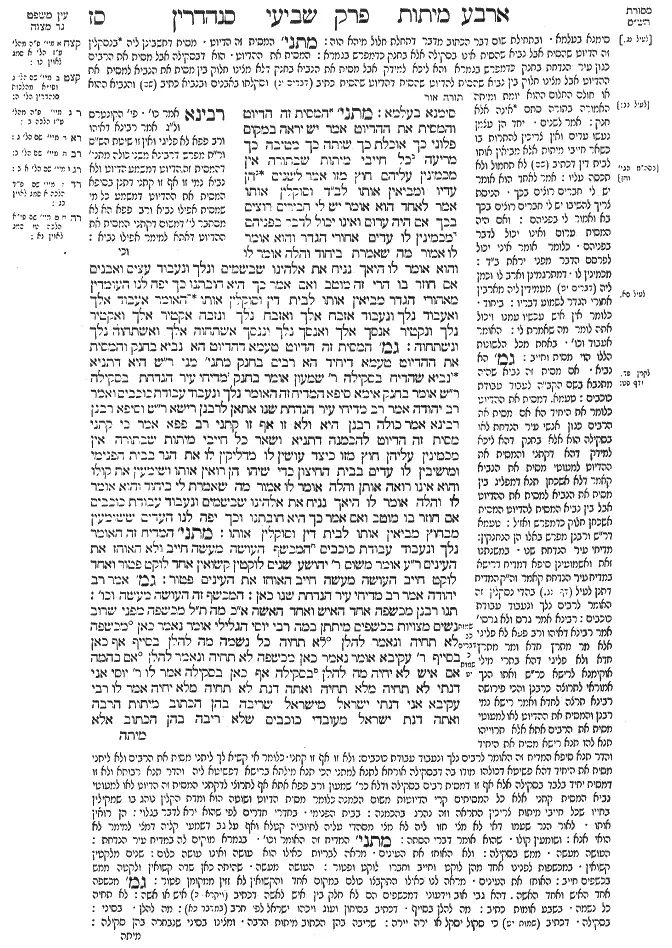
Sanhedrin 67a - Guemara
סימנא בעלמא:
מתני׳ המסית זה הדיוט והמסית את ההדיוט אמר יש יראה במקום פלוני כך אוכלת כך שותה כך מטיבה כך מריעה כל חייבי מיתות שבתורה אין מכמינין עליהם חוץ מזו אמר לשנים הן עדיו ומביאין אותו לב"ד וסוקלין אותו אמר לאחד הוא אומר יש לי חבירים רוצים בכך אם היה ערום ואינו יכול לדבר בפניהם מכמינין לו עדים אחורי הגדר והוא אומר לו אמור מה שאמרת ביחוד והלה אומר לו והוא אומר לו היאך נניח את אלהינו שבשמים ונלך ונעבוד עצים ואבנים אם חוזר בו הרי זה מוטב ואם אמר כך היא חובתנו כך יפה לנו העומדין מאחורי הגדר מביאין אותו לבית דין וסוקלין אותו האומר אעבוד אלך ואעבוד נלך ונעבוד אזבח אלך ואזבח נלך ונזבח אקטיר אלך ואקטיר נלך ונקטיר אנסך אלך ואנסך נלך וננסך אשתחוה אלך ואשתחוה נלך ונשתחוה:
גמ׳ המסית זה הדיוט טעמא דהדיוט הא נביא בחנק והמסית את ההדיוט טעמא דיחיד הא רבים בחנק מתני׳ מני ר"ש היא דתניא נביא שהדיח בסקילה ר' שמעון אומר בחנק מדיחי עיר הנדחת בסקילה ר"ש אומר בחנק אימא סיפא המדיח זה האומר נלך ונעבוד עבודת כוכבים ואמר רב יהודה אמר רב מדיחי עיר הנדחת שנו אתאן לרבנן רישא ר"ש וסיפא רבנן רבינא אמר כולה רבנן היא ולא זו אף זו קתני רב פפא אמר כי קתני מסית זה הדיוט להכמנה דתניא ושאר כל חייבי מיתות שבתורה אין מכמינין עליהן חוץ מזו כיצד עושין לו מדליקין לו את הנר בבית הפנימי ומושיבין לו עדים בבית החיצון כדי שיהו הן רואין אותו ושומעין את קולו והוא אינו רואה אותן והלה אומר לו אמור מה שאמרת לי ביחוד והוא אומר לו והלה אומר לו היאך נניח את אלהינו שבשמים ונעבוד עבודת כוכבים אם חוזר בו מוטב ואם אמר כך היא חובתנו וכך יפה לנו העדים ששומעין מבחוץ מביאין אותו לבית דין וסוקלין אותו:
[הוספה מחסרונות הש"ס:
וכן עשו לבן סטדא בלוד ותלאוהו בערב הפסח בן סטדא בן פנדירא הוא אמר רב חסדא בעל — סטדא בועל — פנדירא בעל פפוס בן יהודה הוא אלא אֵימא אמו סטדא אמו מרים מגדלא נשיא הואי כדאמרי בפומדיתא סטת דא מבעלה:
] מתני׳ המדיח זה האומר נלך ונעבוד עבודת כוכבים המכשף העושה מעשה חייב ולא האוחז את העינים ר"ע אומר משום ר' יהושע שנים לוקטין קשואין אחד לוקט פטור ואחד לוקט חייב העושה מעשה חייב האוחז את העינים פטור:
גמ׳ אמר רב יהודה אמר רב מדיחי עיר הנדחת שנו כאן:
המכשף זה העושה מעשה וכו':
תנו רבנן מכשפה אחד האיש ואחד האשה א"כ מה ת"ל מכשפה מפני שרוב נשים מצויות בכשפים מיתתן במה רבי יוסי הגלילי אומר נאמר כאן (שמות כב, יז) מכשפה לא תחיה ונאמר להלן (דברים כ, טז) לא תחיה כל נשמה מה להלן בסייף אף כאן בסייף ר' עקיבא אומר נאמר כאן מכשפה לא תחיה ונאמר להלן (שמות יט, יג) אם בהמה אם איש לא יחיה מה להלן בסקילה אף כאן בסקילה אמר לו ר' יוסי אני דנתי לא תחיה מלא תחיה ואתה דנת לא תחיה מלא יחיה אמר לו רבי עקיבא אני דנתי ישראל מישראל שריבה בהן הכתוב מיתות הרבה ואתה דנת ישראל מעובדי כוכבים שלא ריבה בהן הכתוב אלא
Comments from Rashi on Masechet Sanhedrin Page 67a
סימנא בעלמא . ובתחילת שום דבר הכתוב מדבר דתחלת חלול מיהא הוה: מתני' המסית זה הדיוט . מסית דחשבינן ליה בנסקלין זה הדיוט שהסית אבל נביא שהסית אינו בסקילה אלא בחנק כדמפרש בגמרא: המסית את ההדיוט . הוא דבסקילה אבל מסית את הרבים כגון עיר הנדחת בחנק כדמפרש בגמרא והא ליכא למידק אבל מסית את הנביא בחנק דלא מצינו חלוק בין מסית את הנביא למסית את ההדיוט אבל מצינו חלוק בין נביא שהסית להדיוט שהסית דהדיוט שהסית כתיב (דברים יג) וסקלתו באבנים ובנביא כתיב (שם) והנביא ההוא או חולם החלום ההוא יומת ומיתה האמורה בתורה סתם אינה אלא חנק: אמר לשנים . יחד הן עצמן נעשו עדים ואין צריכין להתרות בו כשאר חייבי מיתות אלא מביאין אותו לבית דין דכתיב (שם) לא תחמול ולא תכסה עליו: אמר לאחד הוא אומר יש לי חברים רוצים בכך . הניסת צריך להשיבו יש לי חברים רוצים בכך בא ואמור לי בפניהם: ואם היה המסית ערום ואינו יכול לדבר בפניהם . כלומר אומר איני יכול לפרסם הדבר מפני יראת ב"ד: מכמינין לו . דמתרגמינן וארב לו וכמן ליה (דברים יט) מעמידין ליה מארבין אחורי הגדר לשמוע דבריו: ביחוד . כלומר אין איש עכשיו עמנו ויכול אתה לומר מה שאמרת לי: האומר אעבוד וכו' . באחת מכל הלשונות הללו הוי מסית וחייב: גמ' הא נביא . אם מסית זה נביא שהיה מתנבא בשם הקב"ה לעבוד עבודת כוכבים: טעמא . דמסית את ההדיוט כלומר את היחיד הא אם מסית את הרבים כגון אנשי עיר הנדחת לאו בסקילה הוא אלא בחנק דהא ליכא למידק דהא דקתני והמסית את ההדיוט למעוטי מסית את הנביא קאמר דלא אשכחן תנא דמפליג בין מסית את הנביא למסית את ההדיוט אבל בין נביא המסית להדיוט המסית אשכחן חלוק כדמפרש ואזיל: טעמא דר"ש ורבנן מפרש באלו הן הנחנקין: מדיחי עיר הנדחת שנו . במשנתנו זאת ואשמועינן סיפא דמדיח דרישא במדיח עיר הנדחת קאמר וה"ק המדיח דתנן לעיל (סנהדרין דף נג.) בהדי נסקלין זה האומר לרבים נלך ונעבוד עבודת כוכבים: רבינא אמר גרס ולא גרסי' אמר רבינא דאיהו ורב פפא לא פליגי אלא מר מתרץ חדא ומר מתרץ חדא ולא פליגי דהא בתרי מילי אוקימנא לרישא כר"ש ואתו הנך אמוראי לתרוצה כרבנן והכי פירושה רבינא תרצה לחדא ואמר רישא נמי רבנן והמסית את ההדיוט לאו למעוטי מסית את הרבים אתא אלא תרוייהו תנא להו תנא רישא מסית את היחיד והדר תנא סיפא המדיח זה האומר לרבים נלך ונעבוד עבודת כוכבים: ולא זו אף זו קתני . כלומר אי קשיא לך ליתני מסית את הרבים ולא ליתני מסית את היחיד דהא פשיטא דכולהו מודו בה דבסקילה אורחא לתנא למתני הכי תנא מילתא ברישא דפשיטא ליה והדר תנא רבותא ולא זו דמסית יחיד בלבד בסקילה אלא אף זו דמסית רבים בסקילה ודלא כר' שמעון ורב פפא אתא אף לתרוצי לדקתני המסית זה הדיוט לאו למעוטי נביא המסית קתני אלא כל המסיתים קרי הדיוטות משום הכמנה כלומר מסית הדיוט ושוטה הוא ומדת הקלין נוהג בו שמקילין בחייו שכל חייבי מיתות צריכין התראה וזה נהרג בהכמנה: בבית הפנימי . בחדרי חדרים לפי שהוא ירא לדבר בגלוי: הן רואין אותו . לאור הנר שעמו דאי לא מצי חזו ליה לא מצי מסהדי עליה לחיוביה קטלא ואף על גב דשמעי קליה דמצי למימר לא הואי אנא: ושומעין קולו . שהוא אומר דברי הסתה: [הוספה מחסרונות הש"ס: בן סטדא . בעל אמו סטדא שמו: סטת דא . על שם שזינתא קרי לה הכי:] מתני' המדיח זה האומר וכו' . בגמרא מוקים לה במדיח עיר הנדחת: העושה מעשה . ממש בסקילה: ולא האוחז את העינים . מראה לבריות כאילו הוא עושה ואינו עושה כלום: שנים מלקטין קשואין . במכשפות לפנינו אחד מהן לוקט וחייב וחברו לוקט ופטור: העושה מעשה . שהיתה כאן שדה קשואין ולקטה ממש בכשפים חייב: האוחז את העינים . מראה לנו כאילו התקבצו כולם במקום אחד והקשואין לא זזין ממקומן פטור: גמ' מכשפה אחד האיש ואחד האשה . דהא גבי אוב וידעוני דמכשפים הם לא חלק בין איש לאשה דכתיב (ויקרא כ) איש או אשה: לא תחיה כל נשמה . בשבע אומות כתיב: מה להלן בסייף . דכתיב בסיחון ועוג ויכהו ישראל לפי חרב (במדבר כא): מה להלן . בסיני: בסקילה . דכתיב (שמות יט) כי סקול יסקל או ירה יירה: שריבה בהן הכתוב מיתות הרבה . ומצינו בסיני שנבחרה בהן סקילה:
Comments from Tosafot - Sanhedrin 67a
רבינא אמר כו' . פי' הקונטרס ול"ג אמר רבינא דאיהו ורב פפא לא פליגי ואין זו שיטת הש"ס ור"ת מפרש דרבינא משני כולה מתני' דהמסית זה הדיוט דמשמע הדיוט ולא נביא נמי זו אף זו קתני דתנן בסיפא המסית את ההדיוט דמשמע כל מי שמסית אפילו נביא ורב פפא הא לא מסתבר לי' דמשום דקתני המסית את ההדיוט דאתא למימר אפילו נביא:
Sanhedrin 67a - Mishnah translated into english
It is merely a mnemonic. The verse is not relevant to this halakha, and it is cited merely as a sign indicating that just as the halakha of a betrothed young woman pertains to her first act of sexual intercourse, so too, the halakha of the daughter of a priest who committed adultery pertains to a case where it is her first disqualification from the priesthood.
MISHNA: With regard to the case of an inciter, listed among those liable to be executed by stoning, this is an ordinary person, not a prophet. And it is referring to one who incites an ordinary person and not a multitude of people. What does the inciter do? He says: There is an idol in such and such a place, which eats like this, drinks like this, does good for its worshippers like this, and harms those who do not worship it like this.
The mishna states a principle with regard to the halakha of an inciter: With regard to all of those mentioned in the Torah who are liable to receive the death penalty, if there are no witnesses to their transgressions, the court does not hide witnesses in order to ensnare and punish them, except for this case of an inciter.
The mishna elaborates: If the inciter said his words of incitement to two men, they are his witnesses, and he does not need to be warned before the transgression; they bring him to court and stone him. If he said his words of incitement to one man alone, that man’s testimony would not be sufficient to have the inciter executed. Therefore he says to the inciter: I have friends who are interested in this; tell them too. This way there will be more witnesses.
The mishna continues: If the inciter is cunning, and he knows that he cannot speak in front of two men, the court hides witnesses for him behind the fence so that he will not see them, and the man whom the inciter had previously tried to incite says to him: Say what you said to me when we were in seclusion. And the other person, the inciter, says to him again that he should worship the idol. And he says to the inciter: How can we forsake our God in Heaven and go and worship wood and stones? If the inciter retracts his suggestion, that is good. But if he says: This idol worship is our duty; this is what suits us, then those standing behind the fence bring him to court and have him stoned.
The halakha of an inciter includes one who says: I shall worship idols, or one of the following statements: I shall go and worship idols, or: let us go and worship idols, or: I shall sacrifice an idolatrous offering, or: I shall go and sacrifice an idolatrous offering, or: Let us go and sacrifice an idolatrous offering, or: I shall burn incense as an idolatrous offering, or: I shall go and burn incense, or: Let us go and burn incense, or: I shall pour an idolatrous libation, or: I shall go and pour a libation, or: Let us go and pour a libation, or: I shall bow to an idol, or: I shall go and bow, or: Let us go and bow.
GEMARA: The mishna teaches: With regard to the case of an inciter, this is an ordinary person. The Gemara infers: The reason he is executed by stoning is that he is an ordinary person, but if he is a prophet he is executed by strangulation, not by stoning. The mishna states further: And it is referring to one who incites an ordinary person. The Gemara infers: The reason he is executed by stoning is that he incited an individual, but if he subverted a multitude of people, he is executed by strangulation.
Consequently, whose opinion is expressed in the mishna? It is the opinion of Rabbi Shimon, as it is taught in a baraita: A prophet who subverted others to participate in idol worship is executed by stoning. Rabbi Shimon says: He is executed by strangulation. Likewise, the subverters of an idolatrous city are executed by stoning. Rabbi Shimon says: By strangulation.
The Gemara challenges: Say the last clause of the mishna, i.e., say the following mishna: With regard to the case of the subverter listed among those liable to be executed by stoning, this is one who says: Let us go and worship idols. And Rav Yehuda says that Rav says: In this mishna the Sages taught the case of the subverters of an idolatrous city. Here we arrive at the opinion of the Rabbis, who hold that those who incite a multitude of people are also executed by stoning. Is it possible that the first clause of the mishna expresses the opinion of Rabbi Shimon, and the last clause expresses that of the Rabbis?
Ravina says: The entire mishna is in accordance with the opinion of the Rabbis, and the tanna teaches the mishna employing the style of: Not only this but also that. In other words, the mishna should be explained as follows: Not only is one who incites an individual executed by stoning, but even one who subverts an entire city is executed by stoning.
Rav Pappa says: When the mishna teaches with regard to one who incites that this is referring to an ordinary person, it is not indicating that a prophet is not included in this halakha. Rather, it is referring to the hiding of witnesses behind a fence in order to ensnare the inciter, as his life is treated with contempt and derision, as though he were an ordinary person, i.e., a simpleton.
As it is taught in a baraita: And with regard to all the rest of those liable to receive the death penalty by Torah law, the court does not hide witnesses in order to ensnare them and punish them except for this case of an inciter.
How does the court do this to him? The agents of the court light a candle for him in an inner room, and they place witnesses for him in an outer room in the dark, so that they can see him and hear his voice but he cannot see them. And the other person, whom the inciter had previously tried to incite, says to him: Say what you said to me when we were in seclusion. And he says to him again that he should worship the idol. And the other person says to him: How can we forsake our God in Heaven and worship idols? If the inciter retracts his suggestion, that is good. But if he says: This idol worship is our duty, and this is what suits us, the witnesses, who are listening from outside, bring him to court, and they have him stoned.
And the court did the same to an inciter named ben Setada, from the city of Lod, and they hanged him on Passover eve.
The Gemara asks: Why did they call him ben Setada, when he was the son of Pandeira? Rav Ḥisda says: Perhaps his mother’s husband, who acted as his father, was named Setada, but his mother’s paramour, who fathered this mamzer, was named Pandeira. The Gemara challenges: But his mother’s husband was Pappos ben Yehuda, not Setada. Rather, perhaps his mother was named Setada, and he was named ben Setada after her. The Gemara challenges: But his mother was Miriam, who braided women’s hair. The Gemara explains: That is not a contradiction; Setada was merely a nickname, as they say in Pumbedita: This one strayed [setat da] from her husband.
MISHNA: With regard to the case of the subverter listed among those liable to be executed by stoning, this is one who says to a multitude of people: Let us go and worship idols.
The warlock is also liable to be executed by stoning. One who performs a real act of sorcery is liable, but not one who deceives the eyes, making it appear as though he is performing sorcery, as that is not considered sorcery. Rabbi Akiva says in the name of Rabbi Yehoshua: For example, two people can each gather cucumbers by sorcery. One of them gathers cucumbers and he is exempt, and the other one gathers cucumbers and he is liable. How so? The one who performs a real act of sorcery is liable, and the one who deceives the eyes is exempt.
GEMARA: With regard to the case of subverters mentioned in the mishna, Rav Yehuda says that Rav says: The Sages taught here the case of the subverters of an idolatrous city. Accordingly, there is no halakhic difference between one who incites individuals to idolatry and one who subverts an entire city; both are liable to be executed by stoning.
The mishna teaches that the case of the warlock is referring to one who performs a real act of sorcery. The Sages taught in a baraita: The verse: “You shall not allow a witch to live” (Exodus 22:17), does not refer only to a female who practices sorcery; both a man and a woman are included. If so, why does verse state “a witch”? This is because most women are familiar with witchcraft.
In what manner is their death sentence administered? Rabbi Yosei HaGelili says: It is stated here: “You shall not allow a witch to live,” and it is stated there, with regard to the conquest of the Canaanites: “You shall allow nothing that breathes to live” (Deuteronomy 20:16). Just as there, the Canaanites were to be killed by the sword (see Numbers 21:24), so too here, the execution of a witch is administered by the sword.
Rabbi Akiva says: It is stated here: “You shall not allow a witch to live,” and it is stated there, with regard to Mount Sinai: “No hand shall touch it, for he shall be stoned, or thrown down; whether it be animal or man, it shall not live” (Exodus 19:13). Just as there, the verse speaks of stoning, so too here, a witch is executed by stoning.
Rabbi Yosei HaGelili said to him: I derived the meaning of the verse “You shall not allow a witch to live” from the verse “You shall allow nothing that breathes to live” via a verbal analogy between two similar phrases, but you derived the meaning of the verse “You shall not allow a witch to live” from the verse “It shall not live,” which is a less similar phrase.
Rabbi Akiva said to him: I derived a halakha concerning Jews from a halakha concerning Jews, with regard to whom the verse included many types of death penalties. Therefore, the fact that the expression “It shall not live” refers to stoning when stated with regard to Jews is especially significant. But you derived a halakha concerning Jews from a halakha concerning gentiles, with regard to whom the verse included only
Traduction : The William Davidson digital edition of the Koren Noé Talmud, with commentary by Rabbi Adin Even-Israel Steinsaltz.