 Talmud Bavli
The learning on the whole site is dedicated : For the success of Elyahou ben H'anna & family
The learning on the whole site is dedicated : L'ilui Nishmat Yaakov ben Myriam
The learning on the whole site is dedicated : L'ilui Nishmat יוסף בן מושה
Sanhedrin 29a : Youtube
Daf TubeYoutube
2 video classes :
Sanhedrin Page 29a
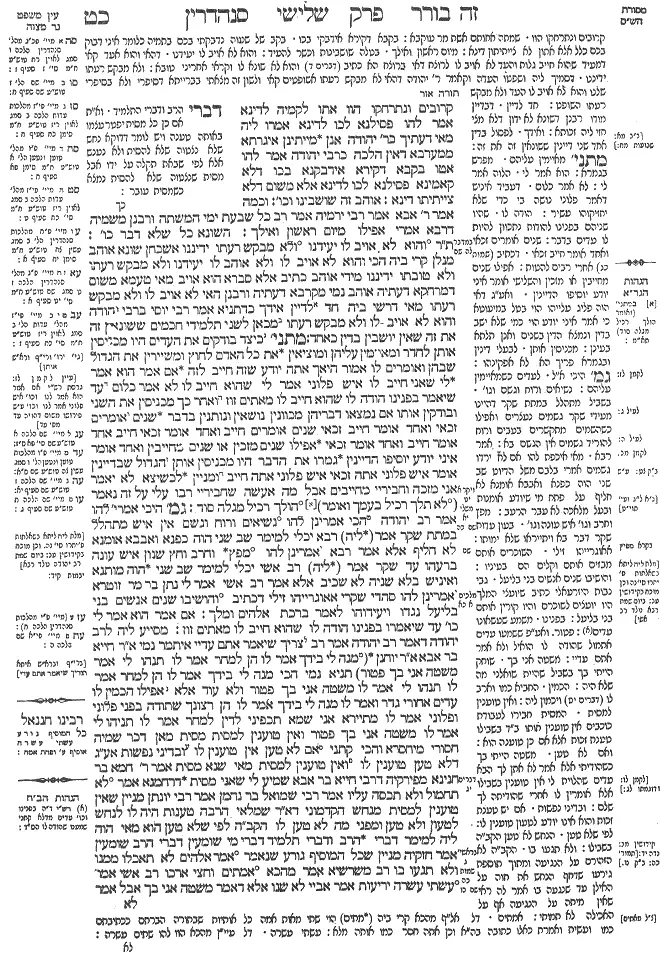
Sanhedrin 29a - Guemara
קרובים ונתרחקו הוו אתו לקמיה לדינא אמר להו פסילנא לכו לדינא אמרו ליה מאי דעתיך כר' יהודה אנן מייתינן איגרתא ממערבא דאין הלכה כרבי יהודה אמר להו אטו בקבא דקירא אידבקנא בכו דלא קאמינא פסילנא לכו לדינא אלא משום דלא צייתיתו דינא:
אוהב זה שושבינו וכו':
וכמה אמר ר' אבא אמר רבי ירמיה אמר רב כל שבעת ימי המשתה ורבנן משמיה דרבא אמרי אפילו מיום ראשון ואילך:
השונא כל שלא דבר כו':
ת"ר (במדבר לה, כג) והוא לא אויב לו יעידנו (במדבר לה, כג) ולא מבקש רעתו ידיננו אשכחן שונא אוהב מנלן קרי ביה הכי והוא לא אויב לו ולא אוהב לו יעידנו ולא מבקש רעתו ולא טובתו ידיננו מידי אוהב כתיב אלא סברא הוא אויב מאי טעמא משום דמרחקא דעתיה אוהב נמי מקרבא דעתיה ורבנן האי לא אויב לו ולא מבקש רעתו מאי דרשי ביה חד לדיין אידך כדתניא אמר רבי יוסי ברבי יהודה והוא לא אויב לו ולא מבקש רעתו מכאן לשני תלמידי חכמים ששונאין זה את זה שאין יושבין בדין כאחד:
מתני׳ כיצד בודקים את העדים היו מכניסין אותן לחדר ומאיימין עליהן ומוציאין את כל האדם לחוץ ומשיירין את הגדול שבהן ואומרים לו אמור היאך אתה יודע שזה חייב לזה אם אמר הוא אמר לי שאני חייב לו איש פלוני אמר לי שהוא חייב לו לא אמר כלום עד שיאמר בפנינו הודה לו שהוא חייב לו מאתים זוז ואחר כך מכניסין את השני ובודקין אותו אם נמצאו דבריהן מכוונין נושאין ונותנין בדבר שנים אומרים זכאי ואחד אומר חייב זכאי שנים אומרים חייב ואחד אומר זכאי חייב אחד אומר חייב ואחד אומר זכאי אפילו שנים מזכין או שנים מחייבין ואחד אומר איני יודע יוסיפו הדיינין גמרו את הדבר היו מכניסין אותן הגדול שבדיינין אומר איש פלוני אתה זכאי איש פלוני אתה חייב ומניין לכשיצא לא יאמר אני מזכה וחביריי מחייבים אבל מה אעשה שחביריי רבו עלי על זה נאמר ((ויקרא יט, טז) לא תלך רכיל בעמך ואומר) (משלי יא, יג) הולך רכיל מגלה סוד:
גמ׳ היכי אמרי' להו אמר רב יהודה הכי אמרינן להו (משלי כה, יד) נשיאים ורוח וגשם אין איש מתהלל במתת שקר אמר (ליה) רבא יכלי למימר שב שני הוה כפנא ואבבא אומנא לא חליף אלא אמר רבא אמרינן להו (משלי כה, יח) מפץ וחרב וחץ שנון איש עונה ברעהו עד שקר אמר (ליה) רב אשי יכלי למימר שב שני הוה מותנא ואיניש בלא שניה לא שכיב אלא אמר רב אשי אמר לי נתן בר מר זוטרא אמרינן להו סהדי שקרי אאוגרייהו זילי דכתיב (מלכים א כא, י) והושיבו שנים אנשים בני בליעל נגדו ויעידוהו לאמר ברכת אלהים ומלך:
אם אמר הוא אמר לי כו' עד שיאמרו בפנינו הודה לו שהוא חייב לו מאתים זוז:
מסייע ליה לרב יהודה דאמר רב יהודה אמר רב צריך שיאמר אתם עדיי איתמר נמי א"ר חייא בר אבא א"ר יוחנן (מנה לי בידך אמר לו הן למחר אמר לו תנהו לי אמר) משטה אני בך פטור תניא נמי הכי מנה לי בידך אמר לו הן למחר אמר לו תנהו לי אמר לו משטה אני בך פטור ולא עוד אלא אפילו הכמין לו עדים אחורי גדר ואמר לו מנה לי בידך אמר לו הן רצונך שתודה בפני פלוני ופלוני אמר לו מתיירא אני שמא תכפיני לדין למחר אמר לו תניהו לי אמר לו משטה אני בך פטור ואין טוענין למסית מסית מאן דכר שמיה חסורי מיחסרא והכי קתני אם לא טען אין טוענין לו ובדיני נפשות אע"ג דלא טען טוענין לו ואין טוענין למסית מאי שנא מסית אמר ר' חמא בר חנינא מפירקיה דרבי חייא בר אבא שמיע לי שאני מסית דרחמנא אמר (דברים יג, ט) לא תחמול ולא תכסה עליו אמר רבי שמואל בר נחמן אמר רבי יונתן מניין שאין טוענין למסית מנחש הקדמוני דא"ר שמלאי הרבה טענות היה לו לנחש לטעון ולא טען ומפני מה לא טען לו הקב"ה לפי שלא טען הוא מאי הוה ליה למימר דברי הרב ודברי תלמיד דברי מי שומעין דברי הרב שומעין אמר חזקיה מניין שכל המוסיף גורע שנאמר (בראשית ג, ג) אמר אלהים לא תאכלו ממנו ולא תגעו בו רב משרשיא אמר מהכא (שמות כה, י) אמתים וחצי ארכו רב אשי אמר (שמות כו, ז) עשתי עשרה יריעות אמר אביי לא שנו אלא דאמר משטה אני בך אבל אמר
Comments from Rashi on Masechet Sanhedrin Page 29a
קרובים ונתרחקו הוו . שמתה אחותם אשת מר עוקבא: בקבא דקירא אידבקי בכו . בקב של שעוה נדבקתי בכם בתמיה כלומר איני דבוק בכם כלל אלא אתון לא צייתיתון דינא: מיום ראשון ואילך . בטלה שושבינות וכשר להעיד: והוא לא אויב לו יעידנו . דהאי והוא אעד קאי דמעיד שהוא חייב גלות והעד לא אויב לו לרוצח דאי ברוצח הא כתיב (דברים ד) והוא לא שונא לו וקראי אחריני טובא: ולא מבקש רעתו ידיננו . דסמיך ליה ושפטו העדה וקאמר ר' יהודה דהאי לא מבקש רעתו אשופטים קאי ולשון זה מצאתי בברייתא דסיפרי ולא בסיפרי שלנו והוא לא אויב לו העד ולא מבקש רעתו השופט: חד לדיין . דבדיין מודו רבנן דשונא לא ידון דלא מצי חזי ליה זכותא: ואידך . לפסול בדין אחד שני דיינין ששונאין זה את זה: מתני' מאיימין עליהם . מפרש בגמרא: הוא אמר לי . הלוה אמר לי: לא אמר כלום . דעביד איניש דאמר פלוני נושה בי כדי שלא יחזיקוהו עשיר: הודה לו . שהיו שניהם בפנינו להודות נתכוון להיות לו עדים בדבר: שנים אומרים זכאי ואחד אומר חייב זכאי . דכתיב (שמות כג) אחרי רבים להטות: אפילו שנים מחייבין או מזכין והשלישי אומר איני יודע יוסיפו הדיינין . ואע"ג דאי הוה פליג עלייהו הוי בטל במיעוטא כי אמר איני יודע הוי כמי שלא ישב בדין ונמצא הדין בשנים ואנן תלתא בעינן: מכניסין אותן . לבעלי דינין ובגמרא פריך הא לא אפקינהו: גמ' היכי א"ל . לעדים כשמאיימין עליהם: נשיאים ורוח וגשם וגו' . בשביל מתהלל במתת שקר דהיינו מעידי שקר גשמים נעצרים ואפילו כשהשמים מתקשרים בעבים ורוח להוריד גשמים אין הגשם בא: אמר רבא . מאי איכפת להו אם לא ירדו גשמים אמרי בלבם משל הדיוט שב שני הוה כפנא ואבבא אומנא לא חליף על פתח מי שיודע אומנות ובעל מלאכה לא עבר הרעב: מפץ וחרב וגו' איש עונה וגו' . בעון עדות שקר דבר בא ויתייראו שלא ימותו: אאוגרייהו זילי . השוכרים אותם מבזים אותם וקלים הם בעיניו: והושיבו שנים אנשים בני בליעל . גבי נבות היזרעאלי כתיב שיועצי המלך היו יועצים לשוכרם והיו קורין אותם בני בליעל: בפנינו . משמע שעשאונו עדים: פטור . ואע"פ ששמעו עדים אתמול שהודה לו הואיל ולא אמר אתם עדיי: משטה אני בך . שוחק הייתי בך בשביל שהיית שואלני מה שלא היה: הכמין . החביא כמו וארב לו (דברים יט) ויכמון ליה: ואין טוענין למסית . המסית חבירו לעבודת כוכבים אין טוענין אותו ב"ד בשבילו טענת זכות אלא אם כן טוענה הוא: ואם לא טען . משטה הייתי בך כשהודיתי אלא אמר לא אתן לך הבא עדים שהלוית לי אין טוענין בשבילו אלא אומרין לו אחרי שהודיתה לך שלם: ובדיני נפשות . אם יש טענת זכות והוא אינו יודע לטעון טוענין לו: לפי שלא טען . הנחש לא טען הקב"ה בשבילו: ולא תגעו בו . הקב"ה לא הזהירם על הנגיעה ומתוך תוספת גירעו שדחף הנחש את חוה על האילן עד שנגעה בו אמר לה ראי שאין מיתה על הנגיעה אף על האכילה לא תמותי: אמתים . דל אל"ף מהכא קרי ביה (מתים) הוי שתי מאות אמה כל אותיות שבתורה הברתם ככתיבתם כמו ועשית ואמרת כאלו כתובה בה"א וכן אתה חסר כמו אותה מלא: עשתי עשרה . דל עיי"ן מהכא הוו להו שתים עשרה:
Comments from Tosafot - Sanhedrin 29a
דברי הרב ודברי התלמיד . וא"ת אם כן כל מסית יפטר עצמו באותה טענה ויש לומר דדוקא נחש שלא נצטוה שלא להסית ולא נענש אלא לפי שבאת תקלה על ידו אבל מסית שנצטוה שלא להסית נמצא כשמסית עובר:
Sanhedrin 29a - Mishnah translated into english
were relatives of his and became not related to him, as Mar Ukva’s wife, who was their sister, died. They came before him for judgment. Mar Ukva said to them: I am disqualified from adjudicating for you.
They said to Mar Ukva: What is your opinion according to which you disqualify yourself? Do you rule in accordance with the opinion of Rabbi Yehuda, that since you have children we are still relatives? We shall bring a letter from the West, Eretz Yisrael, that the halakha is not in accordance with the opinion of Rabbi Yehuda.
Mar Ukva said to them: Is that to say that I am stuck to you with a kav of wax [kira]? I agree that we are not considered relatives; I am saying that I am disqualified from adjudicating for you only because you will not obey the verdict, and I do not wish to participate in such judgment.
§ The mishna teaches that according to Rabbi Yehuda, one who loves or one who hates one of the litigants is disqualified from bearing witness. One who loves one of the litigants; this is referring to his groomsman.
The Gemara asks: And for how long is the groomsman disqualified? Rabbi Abba says that Rabbi Yirmeya says that Rav says: Throughout all of the seven days of feasting. And the Rabbis say in the name of Rava: Even from the first day after the wedding and onward he is no longer disqualified; he is disqualified only on the wedding day itself.
§ The mishna teaches: One who hates the litigant is referring to anyone who, out of enmity, did not speak with the litigant for three days. The Sages taught in a baraita: This halakha is derived from the verse: “And he was not his enemy, neither sought his harm” (Numbers 35:23), that one about whom it can be stated: “And he was not his enemy,” can testify about him. And one who “neither sought his harm” can judge him.
The Gemara asks: We found a source for the disqualification of one who hates; from where do we derive that one who loves is disqualified?
The Gemara answers that one should read into the verse like this: One about whom it can be stated: And he who was not his enemy nor one who loves him, can testify about him; and one who neither sought his harm nor his favor can judge him.
The Gemara asks: Is: One who loves, written in the verse? How can the verse be read in this manner? Rather, the extension of the disqualification to one who loves him as well is based on logical reasoning: What is the reason an enemy is disqualified from bearing witness? It is because he feels a sense of aversion toward that individual and might testify falsely against him. A similar logic can be employed with regard to one who loves, as well: He feels a sense of affinity toward that individual, and might testify falsely on his behalf.
The Gemara asks: And what do the Rabbis, who do not agree with Rabbi Yehuda, derive from this verse: “And he was not his enemy, neither sought his harm”?
The Gemara answers: One part of the verse is necessary for the halakha that a judge who loves or hates one of the litigants is disqualified. The Rabbis agree with this halakha, as such a judge is naturally inclined to favor one of the litigants.
The other part of the verse is interpreted in accordance with that which is taught in a baraita: Rabbi Yosei, son of Rabbi Yehuda, says: With regard to the verse “And he was not his enemy, neither sought his harm,” it is derived from here that two Torah scholars who hate each other cannot sit in judgment together as one. Because of their hatred they will come to contradict each other’s rulings unjustly.
MISHNA: How do the judges examine the witnesses? They bring them into a room in the courthouse and intimidate them so that they will speak only the truth. And they take all the people, other than the judges, outside so that they should not tell the other witnesses the questions the judges ask and the answers the first witness gives, and they leave only the eldest of the witnesses to testify first.
And they say to him: Say how exactly you know that this litigant owes money to that litigant, as the plaintiff claims. If he said: The defendant said to me: It is true that I owe the plaintiff, or if he says: So-and-so said to me that the defendant owes the plaintiff, the witness has said nothing and his testimony is disregarded. It is not valid testimony unless he says: The defendant admitted in our presence to the plaintiff that he owes him, e.g., two hundred dinars. By admitting to the debt in the presence of witnesses he renders himself liable to pay the amount that he mentioned.
And afterward they bring in the second witness and examine him in the same manner. If their statements are found to be congruent the judges then discuss the matter.
If the opinions of the judges are divided, as two judges say that the defendant is exempt from payment and one says he is liable to pay, he is exempt. If two say he is liable and one says he is exempt, he is liable. If one says he is liable and one says he is exempt, or even if two of the judges deem him exempt or two of them deem him liable, and the other one says: I do not know, the court must add more judges and then rule in accordance with the majority opinion. This is because the one who abstains is considered as though he is not a member of the court.
After the judges finish the matter and reach a decision, they bring in the litigants. The greatest of the judges says: So-and-so, you are exempt from paying; or: So-and-so, you are liable to pay.
And from where is it derived that when the judge leaves the courtroom he may not say: I deemed you exempt and my colleagues deemed you liable, but what can I do, as my colleagues outnumbered me and consequently you were deemed liable? About this it is stated: “You shall not go as a talebearer among your people” (Leviticus 19:16), and it says: “One who goes about as a talebearer reveals secrets, but one who is of a faithful spirit conceals a matter” (Proverbs 11:13).
GEMARA: The mishna teaches that the judges intimidate the witnesses. The Gemara asks: What do we say to them? Rav Yehuda says that this is what we say to them: It is stated: “As clouds and wind without rain, so is he who boasts himself of a false gift” (Proverbs 25:14). In other words, there will be no rain and no blessing from your deeds if you lie.
Rava said to him: If so, false witnesses can say to themselves that they do not have to worry about this punishment, according to the folk saying: Seven years there was a famine, but over the craftsman’s door it did not pass. If the witnesses are not farmers, they do not need to worry over lack of rain. Consequently, they will disregard this concern.
Rather, Rava said that we say this verse to them: “As a hammer, and a sword, and a sharp arrow, so is a man who bears false witness against his neighbor” (Proverbs 25:18), meaning that a false witness will die prematurely.
Rav Ashi said to him: Here too, false witnesses can say to themselves a folk saying: Seven years there was a pestilence, but a man who has not reached his years did not die; everyone dies at his predestined time. Therefore, they will disregard this concern as well.
The Gemara presents another suggestion: Rather, Rav Ashi said: Natan bar Mar Zutra said to me that we say to them that false witnesses are belittled even by those who hire them, and all the more so by others; as it is written that Jezebel said when she ordered witnesses to be hired to testify against Naboth: “And set two men, base fellows, before him, and let them bear witness against him, saying: You cursed God and the king” (I Kings 21:10). Even Jezebel, who gave the orders to hire them, called them “base fellows.”
§ The mishna teaches that if the witness said: The defendant said to me: It is true that I owe him, his testimony is disregarded unless he says: The defendant admitted in our presence to the plaintiff that he owes him two hundred dinars.
The Gemara comments: This supports the opinion of Rav Yehuda, as Rav Yehuda says that Rav says: The debtor needs to say to the witnesses to the loan or in his admission that he owes the creditor: You are my witnesses. Otherwise, their testimony is not valid.
It was also stated that Rabbi Ḥiyya bar Abba says that Rabbi Yoḥanan says: If one said to another: I have one hundred dinars in your possession, i.e., you owe me one hundred dinars, and the other said to him: Yes, and the next day the claimant said to him: Give it to me, if the other then said to him: I was teasing you, i.e., I did not mean it seriously when I said that I owed it to you, the respondent is exempt.
This is also taught in a baraita: If one said to another: I have one hundred dinars in your possession, and the other said to him: Yes, and the next day the claimant said to him: Give it to me, if the other then said to him: I was teasing you, the respondent is exempt.
And moreover, the respondent is exempt even in a case where the claimant hid witnesses for the respondent behind a fence so that the respondent would not see them, and said to him: I have one hundred dinars in your possession, and the respondent said to him: Yes, and the claimant then said to him: Do you wish to admit the debt in the presence of so-and-so and so-and-so? And the respondent said to him: I am afraid to do so, lest you compel me to go to judgment, where, based on their testimony, you will be given the right to forcibly take the money from me whenever you want. But between you and me, I admit that I owe you. And the next day the claimant said to him: Give me the one hundred dinars that you admitted to owing me, and the respondent said to him: I was teasing you. The respondent is exempt because he can claim that he stated his admission only to appease the claimant temporarily, and did not mean to actually admit to owing the money, as he did not know that there were witnesses present.
But the judges do not advance a claim on behalf of an inciter, i.e., one who is accused of inciting others to idol worship.
The Gemara asks: An inciter? Who mentioned anything about it? This matter was not discussed in the baraita. The Gemara answers: The baraita is incomplete, and this is what it is teaching: If the defendant did not advance a claim that he was teasing the plaintiff, the judges do not advance this claim for him. Apparently, he stated his admission seriously. But in cases of capital law, even if the defendant did not advance any claim on his own behalf, the judges advance a claim on his behalf. But the judges do not advance claims on behalf of an inciter.
The Gemara asks: What is different about an inciter, that the court does not seek to deem him innocent? Rabbi Ḥama bar Ḥanina says: I heard at the lecture of Rabbi Ḥiyya bar Abba that an inciter is different, as the Merciful One states concerning him: “Neither shall you spare, neither shall you conceal him” (Deuteronomy 13:9). In this unique case, the court is not required to try to deem him innocent.
Rabbi Shmuel bar Naḥman says that Rabbi Yonatan says: From where is it derived that the judges do not advance a claim on behalf of an inciter? It is derived from the incident of the primordial snake who tempted Eve; he was the first inciter. As Rabbi Simlai says: The snake could have advanced many claims on its own behalf, but it did not claim them. And for what reason did the Holy One, Blessed be He, not advance these claims for it, deeming the snake exempt from punishment? Because the snake did not advance these claims itself.
The Gemara asks: What could he have said? The Gemara answers: The snake could have said that it is not to blame, as when there is a contradiction between the statement of the teacher and the statement of the student, whose statement should one listen to? One should listen to the statement of the teacher. Since God instructed Adam and Eve not to eat from the fruit of the Tree of Knowledge, Adam and Eve should have heeded God’s words and not those of the snake.
Ḥizkiyya says: From where is it derived that anyone who adds, subtracts? It is derived from a verse, as it is stated that Eve said: “God has said: You shall not eat of it, neither shall you touch it” (Genesis 3:3), whereas God had actually rendered prohibited only eating from the tree but not touching it, as it is stated: “But of the Tree of Knowledge of good and evil, you shall not eat of it” (Genesis 2:17). Because Eve added that there was a prohibition against touching the tree, the snake showed her that touching it does not cause her to die, and she consequently sinned by eating from it as well.
Rav Mesharshiyya says that the idea that one who adds, subtracts can also be proven from here: “Two cubits [amatayim] and a half shall be its length” (Exodus 25:10). Without the letter alef at the beginning of the word amatayim, it would be read matayim, which would mean two hundred cubits. The addition of the alef therefore reduces this term to only two cubits.
Rav Ashi says another example: In the verse: “Eleven [ashtei esrei] curtains” (Exodus 26:7), without the letter ayin at the beginning of the phrase it would read shtei esrei, twelve. Therefore, the additional letter ayin reduces the amount from twelve to eleven.
Abaye says: With regard to the case of one who denies a debt to which he admitted in the presence of hidden witnesses, the Sages taught that he is exempt only in a case where he says: I was teasing you. But if he says:
Traduction : The William Davidson digital edition of the Koren Noé Talmud, with commentary by Rabbi Adin Even-Israel Steinsaltz.