 Talmud Bavli
The learning on the whole site is dedicated : L'ilui Nishmat Yaakov ben Myriam
The learning on the whole site is dedicated : L'ilui Nishmat Jacques Isaac Ben Amram Loubaton
The learning on the whole site is dedicated : L'ilui Nishmat Yechayahou ben Moche
Sanhedrin 111a : Youtube
Daf TubeYoutube
2 video classes :
Sanhedrin Page 111a
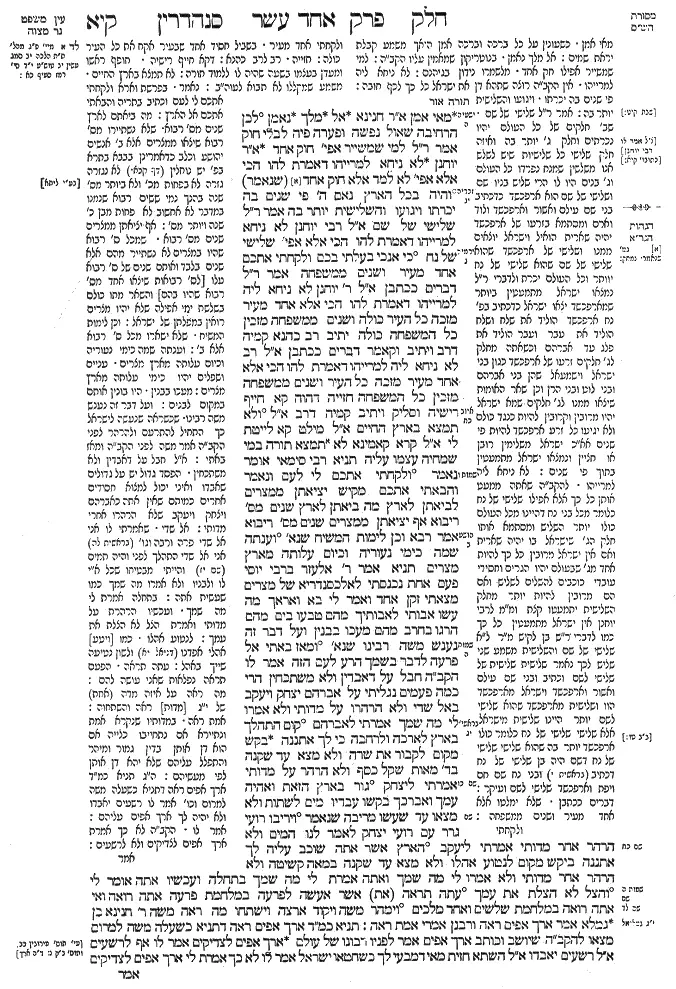
Sanhedrin 111a - Guemara
מאי אמן א"ר חנינא אל מלך נאמן (ישעיהו ה, יד) לכן הרחיבה שאול נפשה ופערה פיה לבלי חוק אמר ר"ל למי שמשייר אפי' חוק אחד א"ר יוחנן לא ניחא למרייהו דאמרת להו הכי אלא אפי' לא למד אלא חוק אחד (שנאמר) (זכריה יג, ח) והיה בכל הארץ נאם ה' פי שנים בה יכרתו ויגועו והשלישית יותר בה אמר ר"ל שלישי של שם א"ל רבי יוחנן לא ניחא למרייהו דאמרת להו הכי אלא אפי' שלישי של נח (ירמיהו ג, יד) כי אנכי בעלתי בכם ולקחתי אתכם אחד מעיר ושנים ממשפחה אמר ר"ל דברים ככתבן א"ל ר' יוחנן לא ניחא ליה למרייהו דאמרת להו הכי אלא אחד מעיר מזכה כל העיר כולה ושנים ממשפחה מזכין כל המשפחה כולה יתיב רב כהנא קמיה דרב ויתיב וקאמר דברים ככתבן א"ל רב לא ניחא ליה למרייהו דאמרת להו הכי אלא אחד מעיר מזכה כל העיר ושנים ממשפחה מזכין כל המשפחה חזייה דהוה קא חייף רישיה וסליק ויתיב קמיה דרב א"ל (איוב כח, יג) ולא תמצא בארץ החיים א"ל מילט קא לייטת לי א"ל קרא קאמינא לא תמצא תורה במי שמחיה עצמו עליה תניא רבי סימאי אומר נאמר (שמות ו, ז) ולקחתי אתכם לי לעם ונאמר והבאתי אתכם מקיש יציאתן ממצרים לביאתן לארץ מה ביאתן לארץ שנים מס' ריבוא אף יציאתן ממצרים שנים מס' ריבוא אמר רבא וכן לימות המשיח שנא' (הושע ב, יז) וענתה שמה כימי נעוריה וכיום עלותה מארץ מצרים תניא אמר ר' אלעזר ברבי יוסי פעם אחת נכנסתי לאלכסנדריא של מצרים מצאתי זקן אחד ואמר לי בא ואראך מה עשו אבותי לאבותיך מהם טבעו בים מהם הרגו בחרב מהם מעכו בבנין ועל דבר זה נענש משה רבינו שנא' (שמות ה, כג) ומאז באתי אל פרעה לדבר בשמך הרע לעם הזה אמר לו הקב"ה חבל על דאבדין ולא משתכחין הרי כמה פעמים נגליתי על אברהם יצחק ויעקב באל שדי ולא הרהרו על מדותי ולא אמרו לי מה שמך אמרתי לאברהם (בראשית יג, יז) קום התהלך בארץ לארכה ולרחבה כי לך אתננה בקש מקום לקבור את שרה ולא מצא עד שקנה בד' מאות שקל כסף ולא הרהר על מדותי אמרתי ליצחק (בראשית כו, ג) גור בארץ הזאת ואהיה עמך ואברכך בקשו עבדיו מים לשתות ולא מצאו עד שעשו מריבה שנאמר (בראשית כו, כ) ויריבו רועי גרר עם רועי יצחק לאמר לנו המים ולא הרהר אחר מדותי אמרתי ליעקב (בראשית כח, יג) הארץ אשר אתה שוכב עליה לך אתננה ביקש מקום לנטוע אהלו ולא מצא עד שקנה במאה קשיטה ולא הרהר אחר מדותי ולא אמרו לי מה שמך ואתה אמרת לי מה שמך בתחלה ועכשיו אתה אומר לי (שמות ה, כג) והצל לא הצלת את עמך (שמות ו, א) עתה תראה (את) אשר אעשה לפרעה במלחמת פרעה אתה רואה ואי אתה רואה במלחמת שלשים ואחד מלכים (שמות לד, ח) וימהר משה ויקוד ארצה וישתחו מה ראה משה ר' חנינא בן גמלא אמר ארך אפים ראה ורבנן אמרי אמת ראה:
תניא כמ"ד ארך אפים ראה דתניא כשעלה משה למרום מצאו להקב"ה שיושב וכותב ארך אפים אמר לפניו רבונו של עולם ארך אפים לצדיקים אמר לו אף לרשעים א"ל רשעים יאבדו א"ל השתא חזית מאי דמבעי לך כשחטאו ישראל אמר לו לא כך אמרת לי ארך אפים לצדיקים
Comments from Rashi on Masechet Sanhedrin Page 111a
מאי אמן . כשעונין על כל ברכה וברכה אמן היאך משמע קבלת יראת שמים: אל מלך נאמן . בנוטריקון שמאמין עליו הקב"ה: למי שמשייר אפילו חק אחד . מלשמרו נידון בגיהנם: לא ניחא ליה למרייהו . אין הקב"ה רוצה שתהא דן את ישראל כל כך לכף חובה: פי שנים בה יכרתו . ויגועו והשלישית יותר בה: אמר ר"ל שלישי של שם . שב' חלקים של כל העולם יהיו נכרתים וחלק ג' יותר בה ואיזה חלק שלישי כל שלישיות שיש לשלש אנו משלשין שמנח נפרדו כל העולם וג' בנים היו לו הרי שליש בניו שם ושלישי של שם הוא ארפכשד כדכתיב בני שם עילם ואשור וארפכשד ולוד וארם ומסתמא בזרעו של ארפכשד יהיה שארית הואיל וישראל יוצאים ממנו ושלישי של ארפכשד שהוא שלישי של שם שהוא שלישי של נח יוותר וכל העולם יכרת ולדברי ר"ל נמצאו ישראל מתמעטין ביותר שמארפכשד יצאו ישראל כדכתיב בפ' נח ארפכשד הוליד את שלח ושלח הוליד את עבר ועבר הוליד את פלג עד אברהם וכשאתה מחלק לג' חלקים זרעו של ארפכשד כגון בני ישראל וישמעאל שהן בני אברהם ובני לוט ובני הרן וכן שאר האומות שיצאו ממנו לג' חלקים שמא ישראל יהיו מרובין וקרובין להיות כנגד כולם ולא יגיעו כל זרע ארפכשד להיות פי שנים אא"כ ישראל משלימין רובן או חציין ונמצאו ישראל מתמעטין בתוך פי שנים: לא ניחא ליה למרייהו . להקב"ה שאתה ממעט אותן כל כך אלא אפילו שלישי של נח כלומר מכל בני נח דהיינו מכל העולם כולו יותר השליש ומסתמא אותו חלק הג' שישראל בו יהיה שארית ואם אין ישראל מרובין כל כך להיות אחד מג' שבעולם יהיו הגרים וחסידי עובדי כוכבים להשלים לשליש ואם הם מרובין להיות יותר מחלק השלישית יתמעטו קצת ומ"מ לרבי יוחנן אין ישראל מתמעטין כל כך כמו לדברי ר"ש בן לקיש מ"ר ל"א שלישי של שם והשלישית משמע שני שליש לכך נאמר שלישית שלישית של שלישי לשם וכתיב ובני שם עילם ואשור וארפכשד וישראל מארפכשד הוו ושלישית מארפכשד שהוא שלישי לשם יותר היינו שלישית מישראל אלא שלישי שלישי של נח כלומר כולו ארפכשד יותר בה שהוא שלישי שלישי של נח דשם היה בן שלישי של נח דכתיב (בראשית י) ובני נח שם חם ויפת וארפכשד שלישי לשם ועיקר: דברים ככתבן . שלא ימלטו אלא אחד מעיר ושנים ממשפחה: ולקחתי אחד מעיר . בשביל חסיד אחד שבעיר אקח את כל העיר כולה: חזייה . רב לרב כהנא: דקא חייף רישיה . חופף ראשו ומעדן בעצמו בשעה שהיה לו ללמוד תורה: לא תמצא בארץ החיים . משמע שמקללו לא תבוא לעוה"ב: נאמר . בפרשת וארא ולקחתי אתכם לי לעם וכתיב בתריה והבאתי אתכם אל הארץ: מה ביאתם לארץ שנים מס' רבוא . שלא נשתיירו מס' רבוא שיצאו ממצרים אלא ב' אנשים יהושע וכלב כדאמרינן בבבא בתרא בפ' יש נוחלין (דף קכא.) לא נגזרה גזרה לא בפחות מכ' ולא ביותר מס' שנה בהנך נמי ששים רבוא שנמנו במדבר לא אחשוב לא פחות מבן כ' שנה ויותר מס': אף יציאתן ממצרים שנים מס' רבוא . שמכל ס' רבוא שהיו במצרים לא נשתייר מהם אלא שנים בלבד ואותם שנים של ס' רבוא עלו [לס' רבואות שיצאו אחד מס' רבוא שהיו בהם] והשאר מתו כולם בשלשת ימי אפילה שלא יהיו מצרים רואין במפלתן של ישראל: וכן לימות המשיח . שלא ישארו מכל ס' רבוא אלא ב': וענתה שמה כימי נעוריה וכיום עלותה מארץ מצרים . עניים ושפלים יהיו כימי עלותה מארץ מצרים: מעכו בבנין . היו בונין אותם במקום לבנים: ועל דבר זה נענש משה רבינו . שכשראה שנעשה לישראל כך התחיל להתרעם ולהרהר לפני הקב"ה אמר משה לפני הקב"ה ומאז באתי: א"ל חבל על דאבדין ולא משתכחין . הפסד גדול יש על גדולים שאבדו ואיני יכול למצוא חסידים אחרים כמותם שאין אתה כאברהם ויצחק ויעקב שלא הרהרו אחרי מדותי: אל שדי . שאמרתי לו אני אל שדי פרה ורבה וגו' (בראשית לה) אני אל שדי התהלך לפני והיה תמים (שם יז) והייתי מבטיחו שכל א"י לו ולבניו ולא אמרו מה שמך כמו שעשית אתה: לנטוע אהלו . כמו [ויטע] אהלי אפדנו (דניאל יא) ולשון נטיעה שייך באהל: בתחלה אמרת לי מה שמך . ועכשיו הרהרת על מדותי ואמרת הצל לא הצלת את עמך: עתה תראה . הפעם תראה נפלאות שאני עושה להם: מה ראה . על איזה מדה (אחת) של י"ג [מדות] ראה והשתחוה: אמת ראה . במדותיו שנקרא אמת ונתיירא אם נתחייבו כלייה אם הוא דן אותן בדין גמור ומיהר והתפלל עליהם שלא יהא דן אותן לפי מעשיהם: ה"ג תניא כמ"ד ארך אפים ראה דתניא כשעלה משה למרום וכו' אמר לו רשעים יאבדו . ולא יהיה לך ארך אפים עליהם: אמר לו . הקב"ה לא כך אמרת ארך אפים לצדיקים ולא לרשעים:
Sanhedrin 111a - Mishnah translated into english
What is the meaning of the term amen? Rabbi Ḥanina says: It is an acronym of the words: God, faithful King [El Melekh ne’eman].
§ With regard to the verse: “Therefore, the netherworld has enlarged itself and opened its mouth without measure [livli ḥok]” (Isaiah 5:14), Reish Lakish says: It is referring to one who leaves even one statute [ḥok] unfulfilled; the netherworld expands for him. Rabbi Yoḥanan says: It is not satisfactory to God, their Master, that you said this about them, as according to Reish Lakish’s opinion most of the Jewish people would be doomed to Gehenna. Rather, even if one learned only one statute, he has a share in the World-to-Come, and “livli ḥok” means one who has learned no statutes at all.
With regard to that which is stated: “And it shall come to pass that in all the land, says the Lord, two parts shall be excised and die, but the third shall remain in it” (Zechariah 13:8), Reish Lakish says: “The third” means that only one-third of the descendants of Shem, son of Noah, will remain, and everyone else will die. Rabbi Yoḥanan said to Reish Lakish: It is not satisfactory to God, their Master, that you said this about them, that the overwhelming majority of the world will be destroyed. Rather, even as many as one-third of the descendants of Noah, one-third of the population of the world, will remain.
With regard to the verse: “For I have taken you to Myself: And I will take out one of a city, and two of a family” (Jeremiah 3:14), Reish Lakish says: The meaning of this statement is as it is written, that only individuals will be spared and the rest will be destroyed. Rabbi Yoḥanan said to him: It is not satisfactory to God, their Master, that you said this about them. Rather, the merit of one from the city causes the entire city to benefit, and the merit of two from a family causes the entire family to benefit and be redeemed. Likewise, the Gemara relates that Rav Kahana sat before Rav, and sat and said: The meaning of this statement is as it is written. Rav said to him: It is not satisfactory to God, their Master, that you said this about them. Rather, the merit of one from the city causes the entire city to benefit, and the merit of two from a family causes the entire family to benefit and be redeemed.
The Gemara relates that Rav saw that Rav Kahana was washing the hair on his head and then arose and sat before Rav. Rav said to Rav Kahana: “Nor shall it be found in the land of the living [haḥayyim]” (Job 28:13). Rav Kahana thought that Rav addressed that verse to him and he said to Rav: Are you cursing me? Rav said to him: It is a verse that I am saying to remind you that Torah will not be found in one who sustains [meḥayye] himself in an indulgent manner in its study; rather, Torah is acquired through suffering and difficulty.
It is taught in a baraita with regard to the few that are destined to be redeemed: Rav Simai says that it is stated: “And I will take you to Me as a people” (Exodus 6:7), and juxtaposed to that verse it is stated: “And I will bring you into the land” (Exodus 6:8). The Torah compares their exodus from Egypt to their entry into the land; just as during their entry into the land only two of six hundred thousand entered the land, as they all died in the wilderness except for Caleb and Joshua, so too, during their exodus from Egypt, in terms of the ratio, only two of six hundred thousand left Egypt and the rest died there. Rava says: And likewise, that will be the situation in the messianic era, as it is stated: “And she shall respond there, as in the days of her youth, and as in the day when she came up out of the land of Egypt” (Hosea 2:17). The ultimate redemption and the exodus from Egypt are juxtaposed, indicating that in the messianic era too, only few will survive.
§ It is taught in a baraita that Rabbi Elazar, son of Rabbi Yosei, says: One time I entered Alexandria of Egypt. I found one old man and he said to me: Come and I will show you what my ancestors, the Egyptians, did to your ancestors, the Jewish people. Some of them they drowned in the sea, some of them they killed with the sword, and some of them they crushed in the buildings. And it is over this matter, Moses’ protest of the afflictions suffered by the Jewish people, that Moses, our teacher, was punished, as it is stated: “For since I came to Pharaoh to speak in Your name, he has done evil to this people, neither have You delivered Your people at all” (Exodus 5:23).
The Holy One, Blessed be He, said to Moses: Woe over those who are gone and are no longer found; as several times I revealed Myself to Abraham, Isaac, and Jacob as God Almighty [El Shaddai] and they did not question My attributes, and did not say to Me: What is Your name? I said to Abraham: “Arise, walk through the land in the length of it and in the breadth of it; for unto you I will give it” (Genesis 13:17). Ultimately, he sought a place to bury Sarah and did not find one until he purchased it for four hundred silver shekels, and he did not question My attributes and did not protest that I failed to fulfill My promise to give him the land.
I said to Isaac: “Sojourn in this land, and I will be with you and will bless you” (Genesis 26:3). His servants sought water to drink and they did not find it until they started a quarrel, as it is stated: “And the herdsmen of Gerar quarreled with Isaac’s herdsmen saying: The water is ours” (Genesis 26:20), and he did not question My attributes.
I said to Jacob: “The land upon which you lie, to you I will give it” (Genesis 28:13). He sought a place to pitch his tent and he did not find one until he purchased it for one hundred coins, and he did not question My attributes, and did not say to Me: What is Your name? And you, Moses, ask Me: What is Your name, initially, after witnessing My greatness more than they ever did. And now you say to Me: “Neither have You delivered Your people” (Exodus 5:23). The verse then states: “Now shall you see what I will do to Pharaoh” (Exodus 6:1). One can infer: The war with Pharaoh and his downfall you shall see, but you will not see the war with the thirty-one kings in Eretz Yisrael, as you will not be privileged to conquer Eretz Yisrael for the Jewish people.
§ With regard to the verse: “And the Lord passed before him and proclaimed: The Lord, the Lord, compassionate and gracious God, slow to anger, abounding in loving-kindness and truth, extending loving-kindness to thousands of generations…and Moses made haste and bowed his head toward the earth and prostrated himself” (Exodus 34:6–8), the Gemara asks: What did Moses see in these attributes that caused him to hastily prostrate himself?
Rabbi Ḥanina ben Gamla says: He saw the attribute of slow to anger; and the Rabbis say: He saw the attribute of truth. It is taught in a baraita in accordance with the opinion of the one who said: He saw the attribute of slow to anger, as it is taught in a baraita: When Moses ascended on high, he discovered the Holy One, Blessed be He, sitting and writing: Slow to anger. Moses said before Him: Master of the Universe, is Your attribute of slow to anger only to be used for the righteous? God said to him: It is an attribute even for the wicked. Moses said to Him: Let the wicked be doomed. God said to him: Now, you will see that you will need this, as ultimately you will reconsider that statement.
When the Jewish people sinned in the sin of the spies and Moses asked God to forgive them, the Holy One, Blessed be He, said to Moses: Didn’t you say to Me that the attribute of slow to anger is for the righteous alone? They are not worthy of atonement.
Traduction : The William Davidson digital edition of the Koren Noé Talmud, with commentary by Rabbi Adin Even-Israel Steinsaltz.