 Talmud Bavli
The learning on the whole site is dedicated : L'ilui Nishmat Jamila bat Chlomo Abensour
The learning on the whole site is dedicated : L'ilui Nishmat Jacques Isaac Ben Amram Loubaton
The learning on the whole site is dedicated : L'ilui Nishmat Margalit bat Ledicia
Sanhedrin 20a : Youtube
Daf TubeYoutube
2 video classes :
Sanhedrin Page 20a
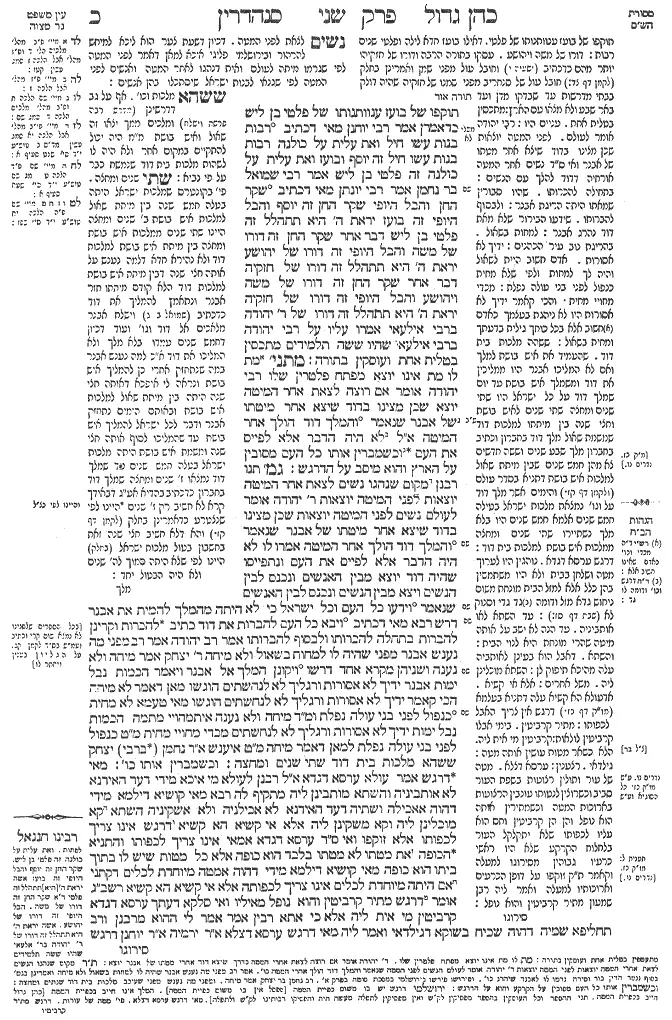
Sanhedrin 20a - Guemara
תוקפו של בועז ענוותנותו של פלטי בן ליש כדאמרן אמר רבי יוחנן מאי דכתיב (משלי לא, כט) רבות בנות עשו חיל ואת עלית על כולנה רבות בנות עשו חיל זה יוסף ובועז ואת עלית על כולנה זה פלטי בן ליש אמר רבי שמואל בר נחמן אמר רבי יונתן מאי דכתיב (משלי לא, ל) שקר החן והבל היופי שקר החן זה יוסף והבל היופי זה בועז יראת ה' היא תתהלל זה פלטי בן ליש דבר אחר שקר החן זה דורו של משה והבל היופי זה דורו של יהושע יראת ה' היא תתהלל זה דורו של חזקיה דבר אחר שקר החן זה דורו של משה ויהושע והבל היופי זה דורו של חזקיה יראת ה' היא תתהלל זה דורו של ר' יהודה ברבי אילעאי אמרו עליו על רבי יהודה ברבי אילעאי שהיו ששה תלמידים מתכסין בטלית אחת ועוסקין בתורה:
מתני׳ מת לו מת אינו יוצא מפתח פלטרין שלו רבי יהודה אומר אם רוצה לצאת אחר המיטה יוצא שכן מצינו בדוד שיצא אחר מיטתו של אבנר שנאמר (שמואל ב ג, לא) והמלך דוד הולך אחר המיטה א"ל לא היה הדבר אלא לפייס את העם וכשמברין אותו כל העם מסובין על הארץ והוא מיסב על הדרגש:
גמ׳ תנו רבנן מקום שנהגו נשים לצאת אחר המיטה יוצאות לפני המיטה יוצאות ר' יהודה אומר לעולם נשים לפני המיטה יוצאות שכן מצינו בדוד שיצא אחר מיטתו של אבנר שנאמר (שמואל ב ג, לא) והמלך דוד הולך אחר המיטה אמרו לו לא היה הדבר אלא לפייס את העם ונתפייסו שהיה דוד יוצא מבין האנשים ונכנס לבין הנשים ויצא מבין הנשים ונכנס לבין האנשים שנאמר (שמואל ב ג, לז) וידעו כל העם וכל ישראל כי לא היתה מהמלך להמית את אבנר דרש רבא מאי דכתיב (שמואל ב ג, לה) ויבא כל העם להברות את דוד כתיב להכרות וקרינן להברות בתחלה להכרותו ולבסוף להברותו אמר רב יהודה אמר רב מפני מה נענש אבנר מפני שהיה לו למחות בשאול ולא מיחה ר' יצחק אמר מיחה ולא נענה ושניהן מקרא אחד דרשו (שמואל ב ג, לג) ויקונן המלך אל אבנר ויאמר הכמות נבל ימות אבנר ידיך לא אסורות ורגליך לא לנחשתים הוגשו מאן דאמר לא מיחה הכי קאמר ידיך לא אסורות ורגליך לא לנחשתים הוגשו מאי טעמא לא מחית (שמואל ב ג, לד) כנפול לפני בני עולה נפלת ומ"ד מיחה ולא נענה איתמהויי מתמה הכמות נבל ימות ידיך לא אסורות ורגליך לא לנחשתים מכדי מחויי מחית מ"ט כנפול לפני בני עולה נפלת למאן דאמר מיחה מ"ט איענש א"ר נחמן (ברבי) יצחק ששהא מלכות בית דוד שתי שנים ומחצה:
וכשמברין אותו כו':
מאי דרגש אמר עולא ערסא דגדא א"ל רבנן לעולא מי איכא מידי דעד האידנא לא אותביניה והשתא מותבינן ליה מתקיף לה רבא מאי קושיא דילמא מידי דהוה אאכילה ושתיה דעד האידנא לא אכילניה ולא אשקיניה השתא קא מוכלינן ליה וקא משקינן ליה אלא אי קשיא הא קשיא דרגש אינו צריך לכפותו אלא זוקפו ואי ס"ד ערסא דגדא אמאי אינו צריך לכפותו והתניא הכופה את מטתו לא מטתו בלבד הוא כופה אלא כל מטות שיש לו בתוך ביתו הוא כופה מאי קושיא דילמא מידי דהוה אמטה מיוחדת לכלים דקתני אם היתה מיוחדת לכלים אינו צריך לכפותה אלא אי קשיא הא קשיא רשב"ג אומר דרגש מתיר קרביטין והוא נופל מאיליו ואי סלקא דעתך ערסא דגדא קרביטין מי אית ליה אלא כי אתא רבין אמר אמר לי ההוא מרבנן ורב תחליפא שמיה דהוה שכיח בשוקא דגילדאי ואמר ליה מאי דרגש ערסא דצלא א"ר ירמיה א"ר יוחנן דרגש
Comments from Rashi on Masechet Sanhedrin Page 20a
תוקפו של בועז ענוותנותו של פלטי . דאילו בועז חדא לילה ופלטי שנים רבות: דורו של משה ויהושע . עסקו בתורה הרבה ודורו של חזקיהו יותר מהם כדכתיב (ישעיהו י) וחובל עול מפני שמן ואמרינן בחלק (לקמן סנהדרין דף צד:) חובל עול של סנחריב מפני שמנו של חזקיה שהיה דולק בבתי מדרשות עד שבדקו מדן ועד באר שבע ולא מצאו עם הארץ: מתכסין בטלית אחת . עניים היו: רבי יהודה אומר לעולם . לפני המטה יוצאות שכן מצינו בדוד שיצא אחר מטתו של אבנר ואי ס"ד נשים אחר המטה אורחיה דדוד להלך עם הנשים: בתחילה להכרותו . שהיו סבורין שמאתו היתה הריגת אבנר: ולבסוף להברותו . שידעו הבירור שלא מאת דוד נהרג אבנר: למחות בשאול . בהריגת נוב עיר הכהנים: ידיך לא אסורות . אדם חשוב היית לשאול והיה לך למחות ולפי שלא מחית כנפול לפני בני עולה נפלת: מכדי מחויי מחית . והכי קאמר ידיך לא אסורות היו לא ניהגת בעצמך כאדם חשוב אלא בכל כוחך גילית בדעתך ומחית בשאול: ששהה מלכות בית דוד . שהעמיד את איש בושת למלך ואם לא המליכו אבנר היו ממליכין את דוד ומשמלך איש בושת עד יום שמלך דוד על כל ישראל היו שתי שנים ומחצה שתי שנים לאיש בושת וחצי שנה בין מיתתו למלכות דוד שמשמת שאול מלך דוד בחברון וכתיב בחברון מלך שבע שנים וששה חדשים צא מהן חמש שנים שבין מיתת שאול למלכות איש בושת דתניא בסדר עולם (ולקמן סנהדרין דף קז.) והימים אשר מלך דוד על וגו' נמצאת מלכות ישראל בטילה חמש שנים אלמא חמש שנים היו בלא מלך נשתיירו שתי שנים ומחצה ממלכות איש בושת למלכות בית דוד: דרגש ערסא דגדא . נוהגין היו לערוך מטה ושלחן בבית ולא היו משתמשין בהן כלל אלא למזל הבית מונחת משום ניחוש גדא מזל ודומה גד גדי וסנוק לא (שבת דף סז:): עד השתא לאו אותביניה . עד הנה לא ישב על אותה מיטה שהרי מונחת היא לנוי הבית: והשתא . דאבל הוא בעינן לאותביה עלה מהיכא תיפוק לן: השתא מוכלינן ליה . משל אחרים: אלא אי קשיא . אדעולא הא קשיא עלה דתניא בעלמא (מו"ק דף כז.) דרגש אין צריך האבל לכפותו: מתיר קרביטין . בימי אבלו קרביטין לולאות: קרביטין מי אית ליה . הלא כשאר מטות עושין אותה מטה: גילדאי . רצענין: ערסא דצלא . מטה של עור ותולין רצועות בשפת העור סביב וכשרוצין לנטותו עונבין הרצועות בארוכות המטה וכשמתירין אותה הוא נופל והן הן קרביטין וחס הוא עליו לכפותו שלא יתקלקל העור בלחלוח הקרקע שלא היו ראשי כרעיו גבוהין מסירוגו למעלה וקאמר ת"ק זוקפו על דופן הכרעים וארוכותיו למעלה ואמר ליה רבן שמעון מתיר קרביטין והוא נופל:
Comments from Tosafot - Sanhedrin 20a
נשים לצאת לפני המטה . דכיון דשעת צער הוא ליכא למיחש להרהור ובירושלמי פליגי איכא למאן דאמר לפני המטה לפי שגרמו מיתה לעולם ואית דנהגו לאחר המטה ואנשים לפני המטה לפי שגנאי לבנות ישראל שיסתכלו בהן אנשים: ששהא מלכות וכו' . אף על גב דדרשינן (מדרש רבה פרשת וישלח) ומלכים ממך יצאו זה שאול ואיש בושת מ"מ היה יכול להתקיים במקום אחר ולא היה לו לשהות מלכות בית דוד שנמשח כבר על פי נביא: שתי שנים ומחצה . פי' בקונטרס שמלכות ישראל היתה בטלה חמש שנה בין מיתת שאול למלכות איש בושת ב' שנים ומחצה היינו שתי שנים ממלכות איש בושת ומחצה בין מיתת איש בושת למלכות דוד ולא נהירא חדא דלמה נענש על אותה חצי שנה דבין מיתת איש בושת למלכות דוד הלא קודם מיתתו חזר אבנר ונתאמץ להמליך את דוד כדכתיב (שמואל ב ג) וישלח אבנר מלאכים אל דוד וגו' ועוד דכיון דחמש שנים עמדו בלא מלך ולא המליכו את דוד א"כ למה נענש אבנר במה שנתחזק אחרי כן להמליך איש בושת ונראה לי איפכא דאותה חצי שנה היתה בין מיתת שאול למלכות איש בושת ובאותם הימים נתחזק אבנר ודבר לכל ישראל להמליך איש בושת עד שהמליכו לסוף אותה חצי שנה ומשמת איש בושת היתה מלכות ישראל בטלה חמש שנים עד שמלך דוד נמצאו ז' שנים ומחצה שמלך דוד בחברון כדכתיב בהדיא אע"ג דבאידך קרא לא חשיב רק ז' שנים היינו לפי שנצטרע כדאמרינן בחלק (לקמן סנהדרין דף קז.) והא דלא חשיב חצי שנה זאת בחשבון בטול מלכות ישראל (בחלק) היינו לפי שלא היתה סמוך לה' שנים ולא היה הבטול יחד:
Sanhedrin 20a - Mishnah translated into english
Boaz’s power is the humility of Palti, son of Laish, as we said, for he conquered his desire not only for one night, as Boaz did, but for many nights
Rabbi Yoḥanan says: What is the meaning of that which is written: “Many daughters have done valiantly, but you excel above them all” (Proverbs 31:29)? “Many daughters have done valiantly”; this is a reference to Joseph and Boaz. “But you excel above them all”; this is a reference to Palti, son of Laish, who exceeded Joseph and Boaz in restraint, as discussed above.
Rabbi Shmuel bar Naḥman says that Rabbi Yonatan says: What is the meaning of that which is written: “Grace is deceitful, and beauty is vain, but a woman who fears the Lord, she shall be praised” (Proverbs 31:30). “Grace is deceitful”; this is a reference to Joseph. “And beauty is vain”; this is a reference to Boaz. “Who fears the Lord, she shall be praised”; this is a reference to Palti, son of Laish, who did not sin with Michal. Although the behavior of Joseph and Boaz is commendable, it is “deceitful” and “vain” relative to that of Palti ben Laish.
Alternatively: “Grace is deceitful”; this is a reference to the generation of Moses. “And beauty is vain”; this is a reference to the generation of Joshua. “Who fears the Lord, she shall be praised”; this is a reference to the generation of Hezekiah. Although the studying of Torah during the generations of Moses and Joshua was commendable, it was “deceitful” and “vain” relative to that of the generation of Hezekiah, during which the people studied Torah assiduously, despite the suffering caused by war and foreign rule.
Alternatively: “Grace is deceitful”; this is a reference to the generation of Moses and Joshua. “And beauty is vain”; this is a reference to the generation of Hezekiah. “Who fears the Lord, she shall be praised”; this is a reference to the generation of Rabbi Yehuda, son of Rabbi Ilai, who lived after the decrees of Hadrian, when the people were impoverished and oppressed. It was said about Rabbi Yehuda, son of Rabbi Ilai, that six of his students would cover themselves with one garment, due to their poverty, and nevertheless they would engage in Torah study. Although the studying of Torah during the generations of Moses, Joshua, and Hezekiah was commendable, it was “deceitful” and “vain” relative to that of the people in the generation of Rabbi Yehuda, son of Rabbi Ilai, who studied Torah despite their hardships.
MISHNA: If a relative of the king dies, he does not emerge from the entrance of his palace [palterin], as it does not befit one of his stature to accompany the deceased. Rabbi Yehuda says: If he wishes to follow the bier, he follows it, as that is what we found with regard to King David, who followed the bier of Abner. As it is stated: “And King David followed the bier” (II Samuel 3:31). The Sages said to Rabbi Yehuda: The matter was only to appease the people, so that they should not suspect David of ordering Abner’s death. And when the people comfort the king with the meal of comfort, all the people recline on the ground, and he reclines on the dargash.
GEMARA: The Sages taught in a baraita: In a place where women were accustomed to follow the bier, they would follow it, and the men would walk in front of the bier, and if the women were accustomed to walk in front of the bier, they would go in front of it. Rabbi Yehuda says: Women always go in front of the bier, as that is what we found with regard to King David, who followed the bier of Abner, as it is stated: “And King David followed the bier,” and presumably David did not go among the women.
The Sages said to him: The matter was only to appease the people, and they were appeased. As David would go out from among the men and go in among the women, and went out from among the women and went in among the men, as it is stated: “So all the people and all Israel understood that day that it was not from the king to slay Abner, son of Ner” (II Samuel 3:37).
Rava interpreted a verse homiletically: What is the meaning of that which is written: “And all the people came to comfort David” (II Samuel 3:35)? It is written: “To destroy [lehakhrot],” and we read: “To comfort [lehavrot],” meaning, in the beginning they wanted to destroy him, as they suspected him of ordering Abner’s assassination, and ultimately, when they saw that he was truly mourning, they decided to comfort him.
Rav Yehuda says that Rav says: For what reason was Abner punished by being killed? It is because he should have protested to Saul about the killing of the priests of Nob (see I Samuel 22:17–19), but he did not protest. Rabbi Yitzḥak says: He did protest, so that is not the reason for his death, but he was not answered. And both of these Sages interpreted one verse: “And the king lamented for Abner, and said: Should Abner die as a churl dies? Your hands were not bound, nor your feet put into fetters; as a man falls before the children of iniquity, so did you fall” (II Samuel 3:33–34).
The Gemara explains how each Sage understands the verse: The one who says he did not protest explains that this is what the verse is saying: As “your hands were not bound, nor your feet put into fetters,” what is the reason you did not protest against Saul? Therefore, since you could have protested but did not, then “as a man falls before the children of iniquity, so did you fall.” And the one who says he protested and was not answered explains that this is what the verse is saying: David wondered: “Should Abner die as a churl dies? Your hands were not bound, nor your feet put into fetters,” since you protested at the right time. Since that is the case, what is the reason that “as a man falls before the children of iniquity, so did you fall”?
The Gemara asks: According to the one who says that Abner protested, what is the reason he was punished with this death? Rav Naḥman, son of Rabbi Yitzḥak, says: It is because he delayed the kingdom of the house of David two and a half years, by supporting the kingdom of Ish-bosheth, the son of Saul, for this period of time.
§ The mishna teaches: And when they comfort the king with the meal of comfort, he reclines on the dargash. The Gemara asks: What is a dargash? Ulla says: A bed of fortune, which would be designated in houses for decoration and for good fortune, and no one would sit on it. The Sages said to Ulla: Is there anything which until now we did not authorize one to sit on, but now, in his time of mourning, we seat him on it?
Rava objects to this question: What is the difficulty in this? Perhaps sitting on the dargash is just as it is with eating and drinking. As until now, we did not feed him nor give him drink, but now, in his time of mourning, we feed him and give him drink, in the meal of comfort. Rather, if it is difficult, this is what is difficult, as it is taught in a baraita: Concerning a dargash, the mourner is not required to overturn it during mourning. Rather, he stands it up on its side. And if it enters your mind to say that this is a bed of fortune, why is he not required to overturn it? But isn’t it taught in a baraita: With regard to one who overturns his bed during mourning, not only does he overturn his own bed, but rather he overturns all the beds he has in his house?
The Gemara responds: What is the difficulty in this? Perhaps the lack of requirement to overturn the dargash is just as it is with a bed that is designated for the storage of garments, and not for sleeping, as it is taught in a baraita: If it was designated for the storage of garments and not for people to lie down on, he is not required to overturn it. Rather, if it is difficult, this is what is difficult, as it is taught in a baraita: Rabban Shimon ben Gamliel says: One is not required to overturn a dargash. Rather, the mourner loosens the straps [karvitin] and it falls on its own. And if it enters your mind to say that this is a bed of fortune, does such a bed have straps?
Rather, when Ravin came he said: One of the Sages said to me, and Rav Taḥlifa is his name, that he was often in the market of the leather workers, and he said to him: What is the meaning of dargash? A leather bed. Rabbi Yirmeya says that Rabbi Yoḥanan says: The difference between a bed and a dargash is this: A dargash
Traduction : The William Davidson digital edition of the Koren Noé Talmud, with commentary by Rabbi Adin Even-Israel Steinsaltz.