 Talmud Bavli
The learning on the whole site is dedicated : For the success of Elyahou ben H'anna & family
The learning on the whole site is dedicated : L'ilui Nishmat Reuven ben Rivka SEBBAG
The learning on the whole site is dedicated : L'ilui Nishmat Yechayahou ben Moche
Sanhedrin 102a : Youtube
Daf TubeYoutube
2 video classes :
Sanhedrin Page 102a
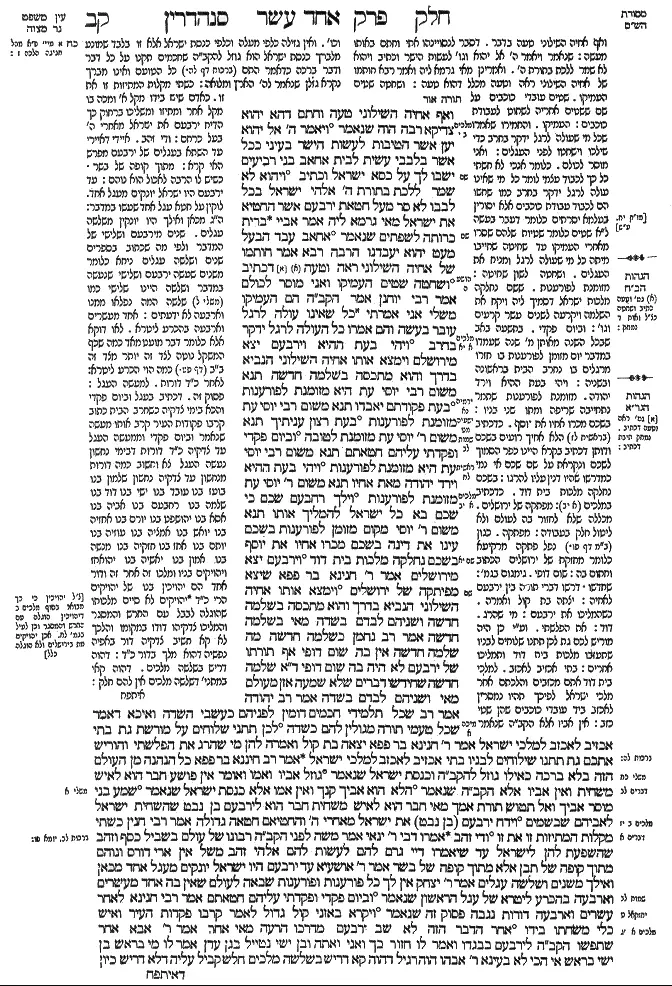
Sanhedrin 102a - Guemara
ואף אחיה השילוני טעה וחתם דהא יהוא צדיקא רבה הוה שנאמר (מלכים ב י, ל) ויאמר ה' אל יהוא יען אשר הטיבות לעשות הישר בעיני ככל אשר בלבבי עשית לבית אחאב בני רביעים ישבו לך על כסא ישראל וכתיב (מלכים ב י, לא) ויהוא לא שמר ללכת בתורת ה' אלהי ישראל בכל לבבו לא סר מעל חטאת ירבעם אשר החטיא את ישראל מאי גרמא ליה אמר אביי ברית כרותה לשפתים שנאמר (מלכים ב י, יח) אחאב עבד הבעל מעט יהוא יעבדנו הרבה רבא אמר חותמו של אחיה השילוני ראה וטעה דכתיב (הושע ה, ב) ושחטה שטים העמיקו ואני מוסר לכולם אמר רבי יוחנן אמר הקב"ה הם העמיקו משלי אני אמרתי כל שאינו עולה לרגל עובר בעשה והם אמרו כל העולה לרגל ידקר בחרב (מלכים א יא, כט) ויהי בעת ההיא וירבעם יצא מירושלם וימצא אותו אחיה השילוני הנביא בדרך והוא מתכסה בשלמה חדשה תנא משום רבי יוסי עת היא מזומנת לפורענות (ירמיהו נא, יח) בעת פקודתם יאבדו תנא משום רבי יוסי עת מזומנת לפורענות (ישעיהו מט, ח) בעת רצון עניתיך תנא משום ר' יוסי עת מזומנת לטובה (שמות לב, לד) וביום פקדי ופקדתי עליהם חטאתם תנא משום רבי יוסי עת היא מזומנת לפורענות (בראשית לח, א) ויהי בעת ההיא וירד יהודה מאת אחיו תנא משום ר' יוסי עת מזומנת לפורענות (מלכים א יב, א) וילך רחבעם שכם כי שכם בא כל ישראל להמליך אותו תנא משום ר' יוסי מקום מזומן לפורענות בשכם עינו את דינה בשכם מכרו אחיו את יוסף בשכם נחלקה מלכות בית דוד (מלכים א יא, כט) וירבעם יצא מירושלים אמר ר' חנינא בר פפא שיצא מפיתקה של ירושלים (מלכים א יא, כט) וימצא אותו אחיה השילוני הנביא בדרך והוא מתכסה בשלמה חדשה ושניהם לבדם בשדה מאי בשלמה חדשה אמר רב נחמן כשלמה חדשה מה שלמה חדשה אין בה שום דופי אף תורתו של ירבעם לא היה בה שום דופי ד"א שלמה חדשה שחידשו דברים שלא שמעה אזן מעולם מאי ושניהם לבדם בשדה אמר רב יהודה אמר רב שכל תלמידי חכמים דומין לפניהם כעשבי השדה ואיכא דאמר שכל טעמי תורה מגולין להם כשדה (מיכה א, יד) לכן תתני שלוחים על מורשת גת בתי אכזיב לאכזב למלכי ישראל אמר ר' חנינא בר פפא יצאה בת קול ואמרה להן מי שהרג את הפלשתי והוריש אתכם גת תתנו שילוחים לבניו בתי אכזיב לאכזב למלכי ישראל אמר רב חיננא בר פפא כל הנהנה מן העולם הזה בלא ברכה כאילו גוזל להקב"ה וכנסת ישראל שנאמר (משלי כח, כד) גוזל אביו ואמו ואומר אין פושע חבר הוא לאיש משחית ואין אביו אלא הקב"ה שנאמר (דברים לב, ו) הלא הוא אביך קנך ואין אמו אלא כנסת ישראל שנאמר (משלי א, ח) שמע בני מוסר אביך ואל תטוש תורת אמך מאי חבר הוא לאיש משחית חבר הוא לירבעם בן נבט שהשחית ישראל לאביהם שבשמים (מלכים ב יז, כא) וידח ירבעם (בן נבט) את ישראל מאחרי ה' והחטיאם חטאה גדולה אמר רבי חנין כשתי מקלות המתיזות זו את זו (דברים א, א) ודי זהב אמרו דבי ר' ינאי אמר משה לפני הקב"ה רבונו של עולם בשביל כסף וזהב שהשפעת להן לישראל עד שיאמרו דיי גרם להם לעשות להם אלהי זהב משל אין ארי דורס ונוהם מתוך קופה של תבן אלא מתוך קופה של בשר אמר ר' אושעיא עד ירבעם היו ישראל יונקים מעגל אחד מכאן ואילך משנים ושלשה עגלים אמר ר' יצחק אין לך כל פורענות ופורענות שבאה לעולם שאין בה אחד מעשרים וארבעה בהכרע ליטרא של עגל הראשון שנאמר (שמות לב, לד) וביום פקדי ופקדתי עליהם חטאתם אמר רבי חנינא לאחר עשרים וארבעה דורות נגבה פסוק זה שנאמר (יחזקאל ט, א) ויקרא באזני קול גדול לאמר קרבו פקדות העיר ואיש כלי משחתו בידו (מלכים א יג, לג) אחר הדבר הזה לא שב ירבעם מדרכו הרעה מאי אחר אמר ר' אבא אחר שתפשו הקב"ה לירבעם בבגדו ואמר לו חזור בך ואני ואתה ובן ישי נטייל בגן עדן אמר לו מי בראש בן ישי בראש אי הכי לא בעינא ר' אבהו הוה רגיל דהוה קא דריש בשלשה מלכים חלש קביל עליה דלא דריש כיון
Comments from Rashi on Masechet Sanhedrin Page 102a
ואף אחיה השילוני טעה בדבר . דסבר לנסויינהו אתי וחתם באותו מעשה: שנאמר ויאמר ה' אל יהוא וגו' לעשות הישר וכתיב ויהוא לא שמר ללכת בתורת ה' . ואמרינן מאי גרמא ליה ואמר רבא חותמו של אחיה השילוני ראה וטעה מכלל דהוא טעה: ושחטה שטים העמיקו . שטים עובדי כוכבים על שם ששטים אחריה לשחוט לעבודת כוכבים: העמיקו . והחמירו שאמרו שכל מי שעולה לרגל ידקר בחרב כדי שילכו וישחטו לפני העגלים: ואני מוסר לכולם . כלומר אנכי לא חשתי כל כך לכבוד עצמי לומר כל מי שאינו עולה לרגל ידקר בחרב כמו שחשו הם לכבוד עבודת כוכבים אלא יסורין בעלמא יסרתים כלומר דעבר בעשה ל"א שטים כלומר שטיות שלהם שסרו מאחרי העמיקו עד שחיטה שחייבו מיתה כל מי שעולה לרגל ומניח את העגלים. ושחטה לשון שחיטה: מזומנת לפורענות . ששם נחלקה מלכות ישראל דסמיך ליה ויקח את השלמה ויקרעה לשנים עשר קרעים וגו': וביום פקדי . בתשעה באב שבכל השנה מאותן מ' שנה שעמדו . במדבר יום מזומן לפורענות בו חזרו מרגלים בו נחרב הבית בראשונה ובשניה: ויהי בעת ההיא וירד יהודה . מזומנת לפורענות שתמר נתחייבה שריפה ומתו שני בניו: בשכם מכרו אחיו את יוסף . כדכתיב (בראשית לז) הלא אחיך רועים בשכם ודותן דכתיב בקרא היינו כפר הסמוך לשכם ונקראת על שם שכם אי נמי כמדרשו שהיו דנין עליו להרגו: בשכם נחלקה מלכות בית דוד . כדכתיב במלכים (א יב): מפתקה של ירושלים . מכללה שלא לחזור בה לעולם ולא ליטול חלק בעבודה: מפתקה . כגון (ב"מ דף פו.) נפל פתקה מרקיעא כלומר מחזקת של ירושלים הכתוב וחתום בה: שום דופי . גימגום בגמ': שחדשו . דרשו דברי תורה בין ירבעם לאחיה: יצתה בת קול ואמרה . כשהמליכו את ירבעם: מי שהרג . דוד: את הפלשתי . וע"י כן היה מוריש לכם גת לכן תתנו שלוחים לבניו שתעזבו מלכות בית דוד ותמליכו אחרים: בתי אכזיב לאכזב . למלכי בית דוד אתם מכזבים והלכתם אחר מלכי ישראל לפיכך תהיו נמסרין לאכזב ביד עובדי כוכבים שהן שטי כזב: אין אביו אלא הקב"ה שנאמר וכו' . ואין גזילה כלפי מעלה וכלפי כנסת ישראל אלא זו בלבד שמונע מלברך כנסת ישראל הוא גוזל להקב"ה שחכמים תקנו על כל דבר ודבר ברכה כדאמר התם (ברכות דף לה.) כל הטועם ואינו מברך נקרא גזלן שנאמר לה' הארץ ומלואה: כשתי מקלות המתיזות זו את זו . כאדם שיש בידו מקל א' ומכה בו מקל אחר ומתיזו ומשליכו ברחוק כך הדיח ירבעם את ישראל מאחרי ה' בעל כרחם: ודי זהב . איידי דאיירי עד השתא בעגלים של ירבעם מפרש האי קרא: מתוך קופה של בשר . כשיש לו הרבה לאכול הוא נוהם: עד ירבעם היו ישראל יונקים מעגל אחד . לוקין על חטא עגל אחד שעשו במדבר: ה"ג מכאן ואילך היו יונקין משלשה עגלים . שנים מירבעם ושלישי של המדבר ולפי מה שכתוב בספרים שנים ושלשה עגלים ניחא כלומר משנים שעשה ירבעם ושלישי שנעשה במדבר ושלשה היינו שלישי כמו (משלי ל) שלשה המה נפלאו ממנו וארבעה לא ידעתים: אחד מעשרים וארבעה בהכרע ליטרא . לאו דוקא אלא כלומר דבר מועט מאד כמה שכף המשקל נוטה לצד זה יותר מצד זה ב"ב (דף פט.) כמה הוי הכרע ליטרא: לאחר כ"ד דורות . למעשה העגל: פסוק זה . דכתיב בעגל וביום פקדי והכא בימי צדקיה כשחרב הבית כתוב קרבו פקודות העיר קרב אותו מעשה שנאמר וביום פקדי וממעשה העגל עד צדקיה כ"ד דורות דבימי נחשון נעשה העגל צא וחשוב כמה דורות מנחשון עד צדקיה נחשון שלמון בנו בועז בנו עובד בנו ישי בנו דוד בנו שלמה בנו רחבעם בנו אביה בנו אסא בנו יהושפט בנו יורם בנו אחזיה בנו יואש בנו אמציה בנו עוזיה בנו יותם בנו אחז בנו חזקיה בנו מנשה בנו אמון בנו יאשיה בנו יהואחז ויהויקים בניו ומלכו זה אחר זה ודור אחד הם יהויכין בנו של יהויקים הרי כ"ד יהויקים לא סיים מלכותו שהוגלה לבבל עם החרש והמסגר והמליכו צדקיהו דודו במקומו והלכך לא קא חשיב צדקיה דור באפיה נפשיה דהוא מלך בדור כ"ד: דהוה דריש בשלשה מלכים . דהוה קאי במתני' דשלשה מלכים אין להם חלק:
Sanhedrin 102a - Mishnah translated into english
And even Ahijah the Shilonite erred in this matter and signed that he would accept all of Jeroboam’s pronouncements. And generations later this caused Jehu to sin. The Gemara explains: As Jehu was an extremely righteous person. As it is stated: “And the Lord said to Jehu: Because you have done well, to perform what is right in My eyes, and have done to the house of Ahab according to all that was in My heart, your children of the fourth generation shall sit on the throne of Israel” (II Kings 10:30). And it is written: “But Jehu took no care to walk in the Torah of the Lord, God of Israel, with all his heart; he departed not from the sins of Jeroboam, who made Israel sin” (II Kings 10:31).
What caused Jehu to do so? Abaye says: A covenant is made with the lips, as it is stated that Jehu said cunningly in an attempt to entrap the priests of the Baal: “Ahab worshipped Baal a little, but Jehu shall serve him much” (II Kings 10:18). Although it was not his intention, once the statement escaped his lips he began following the path to its fulfillment. Rava says: He saw the seal of Ahijah the Shilonite on the coronation document of Jeroboam and he erred and believed that it was permitted to act as Jeroboam did.
The Gemara continues its discussion of Jeroboam. With regard to that which is written: “And the apostates are deep in slaughter and I am rejected by them all” (Hosea 5:2), Rabbi Yoḥanan says that the Holy One, Blessed be He, says: They issued decrees that are more profound and more extreme than my own. I said: Anyone who does not ascend to Jerusalem for the pilgrimage Festival violates a positive mitzva, and they said: Anyone who ascends to Jerusalem for the pilgrimage Festival will be stabbed with the sword. In that way, Jeroboam successfully prevented the residents of the kingdom of Israel from ascending to Jerusalem.
The verse states: “And it came to pass at that time, and Jeroboam left Jerusalem, and the prophet Ahijah the Shilonite found him on the way, and he was clad in a new garment, and the two were alone in the field” (I Kings 11:29). It was taught in the name of Rabbi Yosei: The phrase “at that time” indicates that it is a time ordained for calamity.
The verse states: “At the time of their punishment, they shall perish” (Jeremiah 51:18). It was taught in the name of Rabbi Yosei: The phrase “at the time” indicates that it is a time ordained for calamity. The verse states: “In an acceptable time have I answered you” (Isaiah 49:8). It was taught in the name of Rabbi Yosei: The phrase “in an acceptable time” indicates that it is a time ordained for good. The verse states: “On the day when I punish, I will punish their sin upon them” (Exodus 32:34). It was taught in the name of Rabbi Yosei: The phrase “on the day when I punish” indicates that it is a time ordained for calamity. The verse states: “And it came to pass at that time, and Judah descended from his brothers” (Genesis 38:1). It was taught in the name of Rabbi Yosei: The phrase “at that time” indicates that it is a time ordained for calamity.
The verse states: “And Rehoboam went to Shechem; for all Israel came to Shechem, to make him king” (I Kings 12:1). It was taught in the name of Rabbi Yosei: Shechem is a place ordained for calamity. In Shechem, they tormented and raped Dinah, in the outskirts of Shechem the brothers sold Joseph, in Shechem the kingdom of the house of David was divided.
With regard to the verse which states: “And Jeroboam left Jerusalem” (I Kings 11:29), Rabbi Ḥanina bar Pappa says: It means that he left the destiny of Jerusalem, meaning he removed himself from the category of the residents of Jerusalem, never to return.
The verse states: “And the prophet Ahijah the Shilonite found him on the way, and he was clad in a new [ḥadasha] garment, and the two were alone in the field.” What is taught by the phrase “in a new garment”? Rav Naḥman says: It was like a new garment; just as a new garment has no imperfection, so too, the Torah studies of Jeroboam at that time had no imperfection. Alternatively, “a new garment” teaches that they introduced [sheḥideshu] matters that no ear had ever heard.
What is taught by the phrase “and the two were alone in the field”? Rav Yehuda says that Rav says: It teaches that all the Torah scholars of that generation seemed, relative to them, like grass of the field, as they were wiser than all of them. And there are those who say: It teaches that all the rationales of the Torah were revealed to them like a field that is exposed for all to see.
The verse states: “Therefore shall you give parting gifts to Moresheth Gath; the houses of Achzib are a deceitful thing for the kings of Israel” (Micah 1:14). Rabbi Ḥanina bar Pappa says: When they crowned Jeroboam, a Divine Voice emerged and said to the subjects of the kingdom of Israel: He who killed the Philistine and bequeathed the city of Gath to you, i.e., King David, will you give parting gifts to his sons and revolt against them? Ultimately, the houses of Achzib are a deceitful thing for the kings of Israel, as the kings of Israel will also be forsaken by their subjects.
Rabbi Ḥanina bar Pappa says: With regard to anyone who derives benefit from this world without reciting a blessing, it is as though he stole from the Holy One, Blessed be He, and the congregation of Israel, as it is stated: “Whoever robs his father and his mother and says: It is no transgression, he is the companion of a corrupter” (Proverbs 28:24). And the term “his father” is referring to none other than the Holy One, Blessed be He, as it is stated: “Is He not your Father Who created you, Who made you and established you?” (Deuteronomy 32:6). And the term “his mother” is referring to none other than the congregation of Israel, as it is stated: “Hear, my son, the discipline of your father, and do not forsake the Torah of your mother” (Proverbs 1:8). The mention of the Torah as emanating from the mother indicates that the mother represents the congregation of Israel, and the Torah of the mother is the tradition of the Jewish people.
What is the meaning of the phrase “He is the companion of a corrupter”? It means that he is a companion of Jeroboam, son of Nebat, who corrupted the people of Israel before their Father in Heaven by sinning and by causing others to sin.
With regard to the verse: “And Jeroboam drove Israel from following the Lord, and caused them to sin a great sin” (II Kings 17:21), Rabbi Ḥanin says: This is like two sticks that when they collide cause each other to carom, as due to the strife, Jeroboam caused the subjects of the kingdom of Israel to grow distant from God.
§ Apropos the calves of Jeroboam, the Gemara discusses the Golden Calf discussed in the Torah. The verse states: “And Di Zahav” (Deuteronomy 1:1). The school of Rabbi Yannai said: Moses said before the Holy One, Blessed be He: Master of the Universe, because of the gold and silver that You lavished upon the Jewish people during the exodus from Egypt until they said enough [dai], this wealth caused the Jewish people to fashion for themselves gods of gold. The combination of wealth and leisure left them open to a transgression of that sort. There is a parable for this: A lion does not maul and roar over a basket of straw from which he derives no pleasure; rather, he mauls and roars over a basket of meat, as he roars only when satiated. In other words, the guilt is not exclusively theirs.
Rabbi Oshaya says: Until Jeroboam, Israel was suckling, i.e., suffering the consequences, from worshipping one calf that they fashioned in the wilderness. From that point forward, they were suckling from two and three calves, as Jeroboam added the calves in Bethel and Dan. Rabbi Yitzḥak says: You have no punishment that comes to the world in which there is not one twenty-fourth of the surplus of a litra of the first calf. When weighing a substance, there would often be a disparity of up to one twenty-fourth of its weight. The point is that a minuscule portion of the sin of the Golden Calf is added to every punishment imposed upon the Jewish people, as it is stated: “On the day when I punish, I will punish their sin upon them” (Exodus 32:34), indicating that atonement for that sin is incomplete, and the Jewish people will continue to suffer for it.
Rabbi Ḥanina says: After twenty-four generations elapsed from the sin of the Golden Calf, the debt referred to in this verse was collected, as it is stated: “And he cried in my ears with a loud voice, saying: Those who have charge over the city draw near, every man with his deadly weapon in his hand” (Ezekiel 9:1). This prophecy occurred twenty-four generations after the sin of the Golden Calf.
The verse states: “And after this matter, Jeroboam returned not from his evil way” (I Kings 13:33). To what event is the verse alluding, when it states: “After this matter”? Rabbi Abba says: It is after the Holy One, Blessed be He, grabbed Jeroboam by his garment, i.e., he sent prophets and implored him, and said to him: Repent, and you and I and the son of Yishai will stroll together in the Garden of Eden. Jeroboam said to Him: Who will walk in the lead? God said to Jeroboam: The son of Yishai will walk in the lead. Jeroboam said: If so, I do not wish to repent.
§ The Gemara relates: Rabbi Abbahu was accustomed to lecture at great length about the three kings enumerated in the mishna, who have no share in the World-to-Come. He fell ill, and he undertook that he would not lecture about those kings. Once
Traduction : The William Davidson digital edition of the Koren Noé Talmud, with commentary by Rabbi Adin Even-Israel Steinsaltz.