 Talmud Bavli
The learning on the whole site is dedicated : L'ilui Nishmat Jamila bat Chlomo Abensour
The learning on the whole site is dedicated : L'ilui Nishmat Rav Chlomo Ben Jamilla
The learning on the whole site is dedicated : L'ilui Nishmat Reuven ben Rivka SEBBAG
Sanhedrin 101a : Youtube
Daf TubeYoutube
2 video classes :
Sanhedrin Page 101a
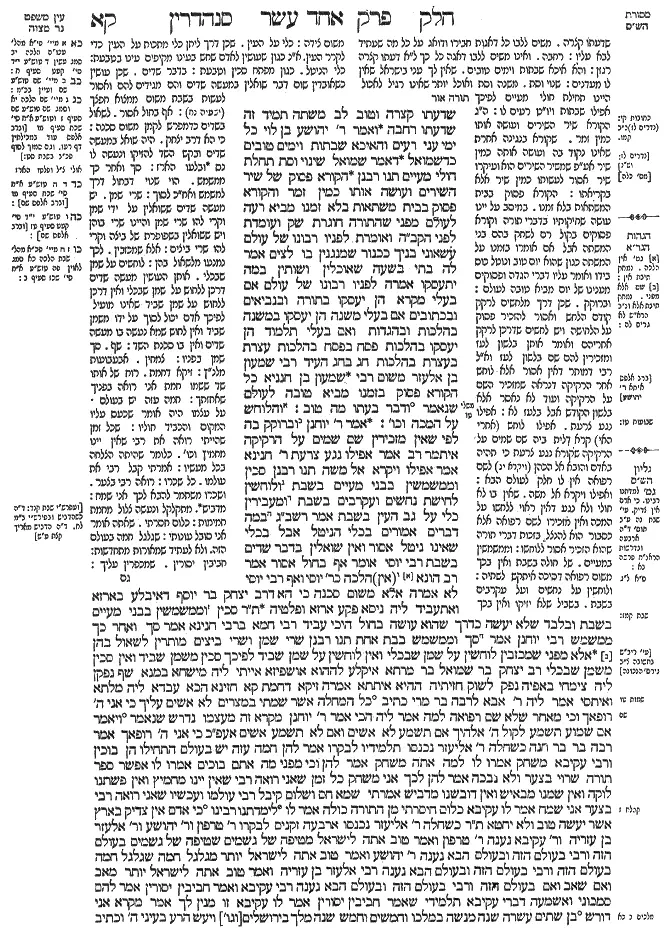
Sanhedrin 101a - Guemara
שדעתו קצרה וטוב לב משתה תמיד זה שדעתו רחבה ואמר ר' יהושע בן לוי כל ימי עני רעים והאיכא שבתות וימים טובים כדשמואל דאמר שמואל שינוי וסת תחלת חולי מעיים תנו רבנן הקורא פסוק של שיר השירים ועושה אותו כמין זמר והקורא פסוק בבית משתאות בלא זמנו מביא רעה לעולם מפני שהתורה חוגרת שק ועומדת לפני הקב"ה ואומרת לפניו רבונו של עולם עשאוני בניך ככנור שמנגנין בו לצים אמר לה בתי בשעה שאוכלין ושותין במה יתעסקו אמרה לפניו רבונו של עולם אם בעלי מקרא הן יעסקו בתורה ובנביאים ובכתובים אם בעלי משנה הן יעסקו במשנה בהלכות ובהגדות ואם בעלי תלמוד הן יעסקו בהלכות פסח בפסח בהלכות עצרת בעצרת בהלכות חג בחג העיד רבי שמעון בן אלעזר משום רבי שמעון בן חנניא כל הקורא פסוק בזמנו מביא טובה לעולם שנאמר (משלי טו, כג) ודבר בעתו מה טוב:
והלוחש על המכה וכו':
אמר ר' יוחנן וברוקק בה לפי שאין מזכירין שם שמים על הרקיקה איתמר רב אמר אפילו נגע צרעת ר' חנינא אמר אפילו ויקרא אל משה תנו רבנן סכין וממשמשין בבני מעיים בשבת ולוחשין לחישת נחשים ועקרבים בשבת ומעבירין כלי על גב העין בשבת אמר רשב"ג במה דברים אמורים בכלי הניטל אבל בכלי שאינו ניטל אסור ואין שואלין בדבר שדים בשבת רבי יוסי אומר אף בחול אסור אמר רב הונא (אין) הלכה כר' יוסי ואף רבי יוסי לא אמרה אלא משום סכנה כי הא דרב יצחק בר יוסף דאיבלע בארזא ואתעביד ליה ניסא פקע ארזא ופלטיה ת"ר סכין וממשמשין בבני מעיים בשבת ובלבד שלא יעשה כדרך שהוא עושה בחול היכי עביד רבי חמא ברבי חנינא אמר סך ואחר כך ממשמש רבי יוחנן אמר סך וממשמש בבת אחת תנו רבנן שרי שמן ושרי ביצים מותרין לשאול בהן אלא מפני שמכזבין לוחשין על שמן שבכלי ואין לוחשין על שמן שביד לפיכך סכין משמן שביד ואין סכין משמן שבכלי רב יצחק בר שמואל בר מרתא איקלע לההוא אושפיזא אייתי ליה מישחא במנא שף נפקן ליה צימחי באפיה נפק לשוק חזיתיה ההיא איתתא אמרה זיקא דחמת קא חזינא הכא עבדא ליה מלתא ואיתסי אמר ליה ר' אבא לרבה בר מרי כתיב (שמות טו, כו) כל המחלה אשר שמתי במצרים לא אשים עליך כי אני ה' רופאך וכי מאחר שלא שם רפואה למה אמר ליה הכי אמר ר' יוחנן מקרא זה מעצמו נדרש שנאמר (שמות טו, כו) ויאמר אם שמוע תשמע לקול ה' אלהיך אם תשמע לא אשים ואם לא תשמע אשים אעפ"כ כי אני ה' רופאך אמר רבה בר בר חנה כשחלה ר' אליעזר נכנסו תלמידיו לבקרו אמר להן חמה עזה יש בעולם התחילו הן בוכין ורבי עקיבא משחק אמרו לו למה אתה משחק אמר להן וכי מפני מה אתם בוכים אמרו לו אפשר ספר תורה שרוי בצער ולא נבכה אמר להן לכך אני משחק כל זמן שאני רואה רבי שאין יינו מחמיץ ואין פשתנו לוקה ואין שמנו מבאיש ואין דובשנו מדביש אמרתי שמא חס ושלום קיבל רבי עולמו ועכשיו שאני רואה רבי בצער אני שמח אמר לו עקיבא כלום חיסרתי מן התורה כולה אמר לו לימדתנו רבינו (קהלת ז, כ) כי אדם אין צדיק בארץ אשר יעשה טוב ולא יחטא ת"ר כשחלה ר' אליעזר נכנסו ארבעה זקנים לבקרו ר' טרפון ור' יהושע ור' אלעזר בן עזריה ור' עקיבא נענה ר' טרפון ואמר טוב אתה לישראל מטיפה של גשמים שטיפה של גשמים בעולם הזה ורבי בעולם הזה ובעולם הבא נענה ר' יהושע ואמר טוב אתה לישראל יותר מגלגל חמה שגלגל חמה בעולם הזה ורבי בעולם הזה ובעולם הבא נענה רבי אלעזר בן עזריה ואמר טוב אתה לישראל יותר מאב ואם שאב ואם בעולם הזה ורבי בעולם הזה ובעולם הבא נענה רבי עקיבא ואמר חביבין יסורין אמר להם סמכוני ואשמעה דברי עקיבא תלמידי שאמר חביבין יסורין אמר לו עקיבא זו מנין לך אמר מקרא אני דורש (מלכים ב כא, א) בן שתים עשרה שנה מנשה במלכו וחמשים וחמש שנה מלך בירושלים [וגו'] ויעש הרע בעיני ה' וכתיב
Comments from Rashi on Masechet Sanhedrin Page 101a
שדעתו קצרה . משים ללבו כל דאגות חבירו ודואג על כל מה שעתיד לבא עליו: רחבה . ואינו משים ללבו דאגה כל כך ל"א דעתו קצרה רגזן: והא איכא שבתות וימים טובים . שאין לך עני בישראל שאין לו מעדנים: שנוי וסת . משנה וסת ואוכל יותר שאינו רגיל לאכול היינו תחילת חולי מעיים לפיכך אפילו שבתות ויו"ט רעים לו: ה"ג הקורא שיר השירים ועושה אותו כמין זמר . שקורא בנגינה אחרת שאינו נקוד בה ועושה אותה כמין שיר אע"פ שמשיר השירים הוא ועיקרו שיר אסור לעשותו כמין שיר אלא בקריאתו: הקורא פסוק בבית המשתאות בלא זמנו . במיסב על יינו עושה שחיקותיו בדברי תורה וקורא פסוקים בקול רם לשחק בהם בני המשתה אבל אם אומרו בזמנו על המשתה כגון שהוא יום טוב ונוטל כוס בידו ואומר עליו דברי הגדה ופסוקים מענינו של יום מביא טובה לעולם: וברוקק . שכן דרך מלחשים לרקק קודם הלחש ואסור להזכיר פסוק על הלחישה ויש לחשים שדרכן לרקק אחריהם ואומר אותן בלשון לעז ומזכירין להם שם בלשון לעז וא"ל רבי דמותר דאין אסור אלא לוחש אחר הרקיקה דנראה שמזכיר השם על הרקיקה ועוד לא נאסר אלא בלשון הקודש אבל בלעז לא: אפילו נגע צרעת . אפילו לוחש (אחרי האי) קרא דלית ביה שם שמים על הרקיקה שקורא נגע צרעת כי תהיה באדם והובא אל הכהן (ויקרא יג) לשם רפואה אין לו חלק לעולם הבא: ואפילו ויקרא אל משה . שאין בו לא חולי ולא נגע דאין ראוי ללחשו על המכה ואין מזכירו לשם רפואה אלא כסבור הוא להנצל בזכות דברי תורה שהוא הזכיר אסור ללוחשו: וממשמשין במעיים . של חולה בשבת ואין בכך משום רפואה דסיכה איתקש לשתיה: ולוחשין על נחשים ועל עקרבים בשבת . בשביל שלא יזיקו ואין בכך משום צידה: כלי על העין . שכן דרך ליתן כלי מתכות על העין כדי לקרר העין. א"נ כגון שעושין לאדם שחש בעינו מקיפים עינו בטבעת: כלי הניטל . כגון מפתח סכין וטבעת: בדבר שדים . שכן עושין כשאובדין שום דבר שואלין במעשה שדים והם מגידים להם ואסור לעשות בשבת משום ממצוא חפצך (ישעיהו נח): אף בחול אסור . לשאול בשדים כדמפרש לקמן משום סכנה: כי הא דרב יצחק . היה שואל במעשה שדים ובקש השד להזיקו ונעשה לו נס ובלעו הארז: סך ואחר כך ממשמש . הוי שנוי דבחול דרך למשמש ואח"כ לסוך: שרי שמן . יש מעשה שדים ששואלין על ידי שמן וקרי להו שרי שמן והיינו שרי בוהן ויש ששואלין בשפופרת של ביצה וקרי להו שרי ביצים: אלא שמכזבין . לכך נמנעו מלשאול בהן: לוחשים על שמן שבכלי . אותן העושין מעשה שדים דרכן ללחוש על שמן שבכלי ואין דרכן ללחוש על שמן שביד שאינו מועיל לפיכך אדם יכול לסוך על ידו משמן שביד ואין לחוש שמא נעשה בו מעשה שדים ואין בו סכנת השד: שף . סך שמן בפניו: צמחין . אבעבועות מלנ"ץ: זיקא דחמת . רוח של אותו שד ששמו חמת אני רואה בפניך שאחזתך: חמה עזה יש בעולם . על עצמו היה אומר שכעס עליו המקום והכביד חוליו: שכל זמן שהייתי רואה את רבי שאין יינו מחמיץ וכו' . כלומר שהיתה הצלחה בכל מעשיו: מדביש . מתקלקל ונעשה צלול מחמת חמימות: אמרתי קבל רבי את עולמו . כל שכרו: רואה רבי בצער . ושכרו משתמר להבא לכך אני שמח: כלום חסרתי . שאתה אומר אני סובל עונותי: שגלגל חמה בעולם הזה . ולא לעתיד שמאורות מתחדשות: חביבין יסורין . שמכפרין עליך:
Sanhedrin 101a - Mishnah translated into english
one who is intolerant [da’ato ketzara] of others acting against his will. “And for the good-hearted it is always a feast”; this is referring to one who is tolerant and accepts the actions of others. And Rabbi Yehoshua ben Levi says with regard to the verse “All the days of the poor are terrible”: But aren’t there Shabbatot and Festivals, when he rests and eats festive meals? This can be explained in accordance with that statement of Shmuel, as Shmuel says: A change in routine in terms of eating and rest causes the onset of an intestinal ailment. Due to the dramatic deviation on Shabbat from the poor person’s routine he suffers.
§ The Sages taught: One who reads a verse from Song of Songs and renders it a form of secular song, and not a sacred text, and one who reads any biblical verse at a banquet house, not at its appropriate time, but merely as a song, introduces evil to the world, as the Torah girds itself with sackcloth and stands before the Holy One, Blessed be He, and says before Him: Master of the Universe, Your children have rendered me like a harp on which clowns play.
The Holy One, Blessed be He, says to the Torah: My daughter, during the time that they are eating and drinking, in what should they be engaged? The Torah says before Him: Master of the Universe, if they are masters of the Bible, let them engage in the study of the Torah, Prophets, and Writings. If they are masters of the Mishna, let them engage in the study of the Mishna, in the study of halakha, and in the study of aggada. And if they are masters of the Talmud, let them engage in the study of the halakhot of Passover on Passover, in the study of the halakhot of Shavuot on Shavuot, and in the study of the halakhot of Sukkot on Sukkot. They should not treat the Torah with contempt by using it for their own entertainment. Rabbi Shimon ben Elazar testified in the name of Rabbi Shimon ben Ḥananya: Anyone who reads a verse at its appropriate time and in the appropriate manner introduces good into the world, as it is stated: “And a word in its season, how good is it” (Proverbs 15:23).
§ The mishna teaches: And among those who have no share in the World-to-Come is one who whispers invocations over a wound. Rabbi Yoḥanan says: And that is the case only where he spits into the wound while he whispers, as one does not mention the name of Heaven over spittle, and doing so is an act of contempt for God. It was stated that Rav says: Even the verse: “When a leprous mark is in a man, then he shall be brought to the priest” (Leviticus 13:9), in which there is no mention of the name of God, may not be whispered as an invocation. Rabbi Ḥanina says: Even a verse that is unrelated to the specific illness in question, for example: “And He called to Moses” (Leviticus 1:1), may not be whispered as an invocation.
The Sages taught in a baraita: One may smear oil on and rub the intestinal area on Shabbat to ease pain, and it is not prohibited as a form of healing. One may whisper incantations of snakes and scorpions on Shabbat to ease the pain of their bite. And one may pass a cool vessel upon an infected eye on Shabbat, to soothe the inflammation. Rabban Shimon ben Gamliel says: In what case are these matters stated? They are stated in the case of a vessel that may be moved on Shabbat. But with regard to a vessel that may not be moved, it is prohibited to pass it upon the infected eye on Shabbat. And one may not consult the words of demons on Shabbat. Rabbi Yosei says: Even during the week it is prohibited to consult demons.
Rav Huna said: The halakha is in accordance with the opinion of Rabbi Yosei. The Gemara notes: And even Rabbi Yosei did not say that it is due to the Torah prohibition of witchcraft that it is prohibited during the week; rather, it is prohibited due to danger, lest the demons harm him. This could happen, as in that incident concerning Rav Yitzḥak bar Yosef, who consulted a demon and as a result was swallowed into a cedar tree, and a miracle was performed for him and the cedar split and expelled him.
The Sages taught in a baraita: One may smear oil on and rub the intestinal area on Shabbat, and it is not a forbidden form of healing, provided that he does not do so in the manner in which he does during the week. The Gemara asks: How then does one do so on Shabbat? Rabbi Ḥama, son of Rabbi Ḥanina, says: One first smears oil and afterward rubs the body. And Rabbi Yoḥanan says: One smears oil and rubs the body simultaneously.
The Sages taught in a baraita: With regard to demons of oil and demons of eggs, i.e., demons consulted by means of oil and eggs, respectively, it is permitted to consult them; but it is futile to do so, due to the fact that they deceive. One may whisper an incantation for healing over oil that is in a vessel and one may not whisper an incantation over oil that is in one’s hand. Therefore, one may smear oil on his body from oil that is brought to him in another’s hand, and there is no concern that perhaps someone whispered over it; and one may not smear oil that is brought to him in a vessel, as perhaps someone whispered over it and it will cause him harm.
The Gemara relates: Rav Yitzḥak bar Shmuel bar Marta happened to come to a certain inn, and they brought him oil in a vessel. He rubbed it on his face, and boils developed on his face. He went out to the marketplace, and a certain woman saw him and said: I see here the evil spirit of Ḥamat on your face. She performed an action, i.e., whispered an incantation, for him, and he was healed.
Rabbi Abba said to Rabba bar Mari that there is an apparent contradiction in a verse. It is written: “All the disease that I placed in Egypt I shall not place upon you, for I am the Lord, your Healer” (Exodus 15:26). And since God does not place the disease upon the Jewish people, why is healing necessary? Rabba bar Mari said to him that this is what Rabbi Yoḥanan says: This verse can be interpreted and the contradiction resolved from the contents of the verse itself, as it is stated: “And He said: If you will diligently hearken to the voice of the Lord, your God” (Exodus 15:26). If you hearken to God’s voice, I will not place the disease upon you, and if you do not hearken to God’s voice, I will place the disease upon you. Nevertheless, even if you do not hearken to the voice of God, and I place the disease upon you, know that I will heal you, “for I am the Lord, your Healer.”
§ Rabba bar bar Ḥana says: When Rabbi Eliezer fell ill, his students entered to visit him. Rabbi Eliezer said to them: There is intense wrath in the world, and it is due to that wrath of the Holy One, Blessed be He, Who is angry at His world, that I am suffering from these afflictions. His students began to cry due to their teacher’s suffering, and Rabbi Akiva was laughing. They said to him: Why are you laughing? Rabbi Akiva said to them: And for what reason are you crying? They said to him: Is it possible that Rabbi Eliezer, who is as much an exemplar of Torah as a Torah scroll, is afflicted with pain and we will not cry?
Rabbi Akiva said to them: It is for that reason that I am laughing. As long as I would see for my teacher that neither does his wine ferment and spoil, nor is his flax stricken, nor does his oil spoil, nor does his honey turn rancid, I would say to myself: Perhaps, Heaven forfend, my teacher has already received his world in reward for the mitzvot that he fulfilled, and will not receive a reward in the World-to-Come. But now that I see my teacher overcome with suffering, I am happy. He is receiving punishment in this world for the few transgressions that he might have committed, ensuring that he will receive a complete reward in the World-to-Come. Rabbi Eliezer said to him: Akiva, have I failed to fulfill any portion of the entire Torah? Rabbi Akiva said to him, you taught us, our teacher: “For there is not a righteous man upon earth who does good and sins not” (Ecclesiastes 7:20).
The Sages taught in a baraita: When Rabbi Eliezer fell ill, four Sages entered to visit him: Rabbi Tarfon, and Rabbi Yehoshua, and Rabbi Elazar ben Azarya, and Rabbi Akiva.
Rabbi Tarfon responded to the situation with words of encouragement and said: You are better for the Jewish people than a drop of rain, as a drop of rain provides benefit in this world, and my teacher provides them benefit in this world and in the World-to-Come.
Rabbi Yehoshua responded and said: You are better for the Jewish people than the sphere of the sun, as the sphere of the sun provides benefit in this world, and my teacher provides benefit in this world and in the World-to-Come.
Rabbi Elazar ben Azarya responded and said: You are better for the Jewish people than a father and mother, as a father and mother provide benefit in this world, and my teacher provides benefit in this world and in the World-to-Come.
Rabbi Akiva responded and said: Afflictions are cherished. When Rabbi Eliezer heard this he said to his attendants: Support me so I can sit and hear the statement of Akiva my student, who said: Afflictions are cherished. Rabbi Eliezer said to him: Akiva, from where do you derive this? Rabbi Akiva said: I interpret a verse in order to derive it. It is written: “Manasseh was twelve years old when he began to reign and he reigned fifty-five years in Jerusalem…And he performed that which was evil in the eyes of the Lord” (II Kings 21:1–2). And it is written:
Traduction : The William Davidson digital edition of the Koren Noé Talmud, with commentary by Rabbi Adin Even-Israel Steinsaltz.